some nights i, molested by some
morbid desire, stand before my mirror
and examine myself: my chest, my breasts,
two halves divorced, barren land between.

some nights i, molested by some
morbid desire, stand before my mirror
and examine myself: my chest, my breasts,
two halves divorced, barren land between.

Isn’t every fruit soft, if you wait? In small bodies the time is softly passing. Peach had a twilight air. It wore a yellow curling-up sticker that read ‘gog de magog’ in black print (something from The Bible I think) with a picture of a purple desert tree and ‘the fruit of paradise’ in tiny print across the top and ‘paradiesisches obst’ along the bottom. Continue reading “Peach On The Beach by Kate Feld”

Marrakesh, Old Town
Everyone seemed to have rotten, black, and missing front teeth. They were friendly and kept smiling and that’s how I saw they mostly had rotten, black and missing front teeth.
I couldn’t see a lot of the women’s teeth, only their eyes, and often not even. There were many women dressed from head to ankle, in long black fabrics, with layer upon layer covering skin, hands, hair, and some that covered the eyes, and with only a marginally thinner veil, so that everything was hidden, nothing to determine soul, being, nor Continue reading “Nothing Dries Sooner Than A Tear* by Joanna Pickering”

On the vast land of a hospital in Tokyo, there is a pond filled with plenty of water. Water springs up not only in the pond, but here and there. It is the source of a river. The underground water passes through the downtown of Tokyo and flows into Tokyo Bay. No one knows this is a water land and I’m dreaming of the ocean through the vapor. Continue reading “Waiting For The Ocean by hiromi suzuki”

Once young
The land meant everything
Patches of green and brown
Wild things and half wild critters
Cross our path
As we made our way along
Collecting small mysteries Continue reading “Wonderment by Tara Lynn Hawk”

Burning House Press are excited to welcome C.C. O’HANLON as our third guest editor! C.C. will take over editorship of Burning House Press online for the full month of April – when he will then hand over the reins to our fourth guest editor for the month of May.
Submissions for C.C. are open from today – 1st April and will remain open until 23rd April.
C.C. will be responding and publishing your submissions on a rolling basis during the month of April – and has chosen his themes for submissions!
C.C.’s Themes are
Place: Movement, Escape, Exploration, Architecture.
C.C. has introduced the themes himself for your guidance:
“The act of journeying contributes to a sense of physical and mental well-being, while the monotony of prolonged settlement or regular work weaves patterns in the brain that engender fatigue and a sense of personal inadequacy…”
– Bruce Chatwin, from Nomad Invasions
Overall, I’m not looking to reassure, but rather, to some extent, to unsettle.
For submissions, C.C. is looking for your poetry, short stories, flash fiction, prose poems, art, collage, painting, photography – as well as non-fiction submissions: essays, reviews, commentary, features, interviews.
Submission Guidelines
All submissions should be sent as attachments to guesteditorbhp@gmail.com
Please state the theme and form of your submission in the subject of the email. For example: ARCHITECTURE/POETRY
Poetry and Fiction
For poetry submissions, submit no more than three of your best poems. Short stories should be limited to 1,500 words or (preferably) less. We encourage flash fiction submissions, no more than three at a time. Send these in as a .doc or .docx file, along with a short third-person bio, and (optional) photograph of yourself.
Art
Submit hi-res images of your works (drawings, paintings, illustrations, collages, photography, etc) with descriptions of the work (Title, Year, Medium, etc) in the body of the email. Files should be in .JPEG unless they are GIFs or videos, and should not exceed 2MB in size for each work. File names should correspond with the work titles. Video submissions can be uploaded onto Youtube or Vimeo for feature on our website. Send these submissions along with a short third-person bio, and (optional) photograph of yourself.
Non-fiction
Non-fiction submissions (essays, reviews, commentary, interviews, etc) should be no more than 1, 500 words and sent as a .doc or .docx file along with your third-person bio/and optional photograph.
Submissions are open from 1st March til 24th March – and will reopen again on 1st April for our third guest editor.
BHP online is now in the capable hands of the amazing C.C. O’HANLON – Friends, send him your best!
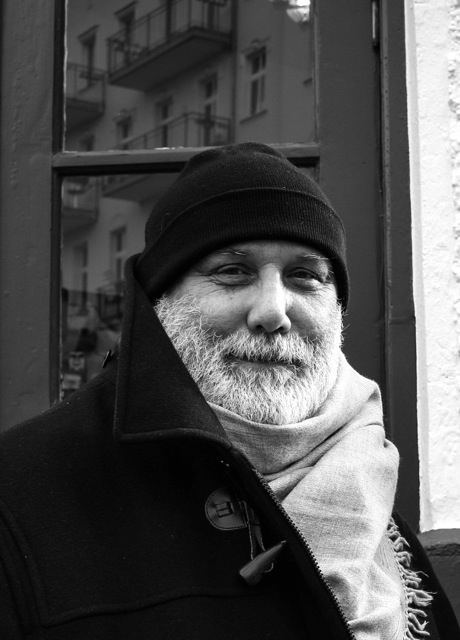
C.C. O’Hanlon is a relentless traveller, polymath and occasional diarist. His work has been featured in numerous publications, including The New York Times, Ernest, Minor Literatures and The Learned Pig. It has also been included in several anthologies and ‘best of…’ collections. Born in Sydney, and raised nearly everywhere else, he has lived for the past five years in Berlin. He is now en route to somewhere else.

Burning House Press are excited to welcome Amee Nassrene Broumand as our second guest editor! Amee will take over editorship of Burning House Press online for the full month of March – when she will then hand over the reins to our third guest editor for the month of April.
Submissions for Amee are open from today – 1st March and will remain open until 24th March.
Amee will be responding and publishing your submissions on a rolling basis during the month of March – and has chosen her themes for submissions!
Amee’s Themes are Masks // Transformations // Cosmos // Personal Myth.
Amee has introduced the themes herself for your guidance:
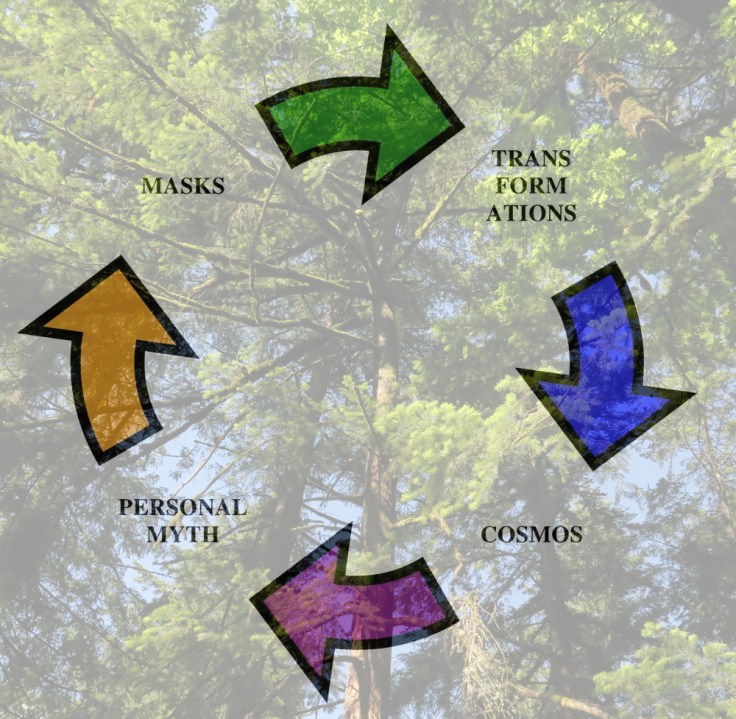
Wrestle with illusion, seek truth. See your various aspects as masks; consider their individual appearances & reflect upon why they’re shaped as they are. We all have masks; what are yours? Play with this idea, infuse it with mystery. Perhaps make yourself a new mask, one that taps into important yet hidden aspects of your life or mind. Create something that intrigues you, not as a product but as a catalyst for personal transformation. Make something magical; give yourself chills. Mark it with the fire that comes from grappling with your own consciousness. “We are made of star stuff.” –Carl Sagan. Create work inspired by astronomy or cosmology. Contemplate time & the universe & how it all began. Consider the origins of matter & your place in All This. Note the night sky, the turning earth, auroras, eclipses, & the solar system; contemplate nebulae where stars form over eons, contemplate supermassive black holes brooding like giant spiders in a great intergalactic web. Forge a connection to the vastness; create a personal myth that integrates your own mind / dreams / experiences / family / heritage / community / culture / local plants or animals or natural landmarks with the universe at large. Become a drop swimming in an ancient & sublime night. Astrophotography welcome!
GENERAL SUBMISSIONS: If you have work that doesn’t fall into any of these categories, submit it anyway! Hybrid, experimental, & highly imaginative work encouraged. My taste in all media is eclectic but tends towards the strange (in both subject & style). I love clarity, complexity, intelligence, genuineness, introspection, mystery, risk, & symbolism. If it’s too weird for the average literary journal, send it my way; if you walk to the beat of your own drum, I want to hear from you.
NOTE: I especially encourage submissions from women, POC, immigrants, members of the LGBTQ community, the neurodiverse, and other traditionally marginalized groups.
* * *
For submissions, Amee is looking for your poetry, short stories, flash fiction, prose poems, art, collage, painting, photography – as well as non-fiction submissions: essays, reviews, commentary, features, interviews.
Submission Guidelines
All submissions should be sent as attachments to guesteditorbhp@gmail.com
Please state the theme and form of your submission in the subject of the email. For example: MASKS/POETRY
Poetry and Fiction
For poetry submissions, submit no more than three of your best poems. Short stories should be limited to 1,500 words or (preferably) less. We encourage flash fiction submissions, no more than three at a time. Send these in as a .doc or .docx file, along with a short third-person bio, and (optional) photograph of yourself.
Art
Submit hi-res images of your works (drawings, paintings, illustrations, collages, photography, etc) with descriptions of the work (Title, Year, Medium, etc) in the body of the email. Files should be in .JPEG unless they are GIFs or videos, and should not exceed 2MB in size for each work. File names should correspond with the work titles. Video submissions can be uploaded onto Youtube or Vimeo for feature on our website. Send these submissions along with a short third-person bio, and (optional) photograph of yourself.
Non-fiction
Non-fiction submissions (essays, reviews, commentary, interviews, etc) should be no more than 1, 500 words and sent as a .doc or .docx file along with your third-person bio/and optional photograph.
Submissions are open from 1st March til 24th March – and will reopen again on 1st April for our third guest editor.
BHP online is now in the capable hands of the amazing Amee Nassrene Broumand– friends, send her your best!

And… that’s a wrap! Florence’s month as guest editor of Burning House Press online finishes today, and she has presented her final selected pieces on the site.
We would like to thank every single person who took the time and had the faith and trust to submit your work to Burning House Press – we appreciate every single piece of work sent to us and all who take the time to engage with our submission calls.
And, we want to say a massive thank you to Florence Lenaers – for choosing the three fantastic themes of Languages // Letters // Lists – which inspired so many wonderful responses – and also for the incredible way she has selected, curated and presented the work, and the impeccable way she has dealt with the general tasks and interactions of her editorship – we are sure that all who engaged with Florence through the submission process can testify to her approach.
THANK YOU SO MUCH, FLORENCE!
Now, the keys and the reins of BHP online are handed over to our second guest editor, who will take over for the month of March…
***
Here it is, the Languages // Letters // Lists edition, enjoy!
“I’m not one of these people, buuuuuuuuuuuuuuuuuuuuuuuuuuuuuuuuuuuuuuuut, there are some gay people that won’t like you comparing being bi to the same as being gay.”
Good observation. However, I specifically said non-heterosexual in my poem, or did that bewilder you? Besides, I thought it was LBGT? What do you ponder that B stands for?

The question of the contract is a secondary question that has come in the awareness of the fact that there are things to take account of – that these things as such are given to begin with. That the question is impossible to answer once for all may be acknowledged in considering the fact that the conception of the contract as the ground of that which is will necessarily exclude that it be given as a thing to take account of. Rather it is thought of as already left behind by the awareness of the presence of the debt that it has grounded – which includes this very thought about the contract.
The translation of the contract from one language to the next is an internal disposition of the contract to extend itself to any other region. There is not a single language that exclusively precedes its operation, but a limitless potential to express itself in language, and the languages in which it is expressed are untranslatable between them. Thus from world to world the words that would refer to the phenomena that presuppose the terms are not equatable constructions, and so cannot be transferred from any one to any other, unless it be by losing their significance – but the contract will allow for the expression of its terms in any language. It follows that there is no one authoritative translation to depend on.
Continue reading “Notes on the Translation of the Contract, by Christopher Clifton”
Burning House Press are excited to welcome Florence Lenaers as our first guest editor! Florence will take over editorship of Burning House Press online for the full month of February – when she will then hand over the reins to our second guest editor for the month of March.
Submissions for Florence are open from today – 1st February and will remain open until 21st February.
Florence will be responding and publishing your submissions on a rolling basis during the month of February – and has chosen her three themes for submissions!
Her Themes are Languages, Letters, Lists. Continue reading “Submissions Are Open!!! from 1st Feb – until 21st Feb – for our first guest editor Florence Lenaers!!!”

From 1st February 2018 and for that whole month Burning House Press online will be edited by our very first guest editor – the amazing Florence Lenaers!
More info on submission details forthcoming – stay tuned – and a massive welcome to Florence to BHP!!! Prepare to send Florence your work…

I’m an optimist with a shadow who pops in now and then
Just to let me know he’s still around.
He lies dormant like a bindweed vein in winter,
Waiting,
Watching for that glimmer of light
Always looming,
Anticipating his chance to make an entrance Continue reading “2 Poems by Fay Deller”

The silence of grammar. The silence of morning fog. The silence of a tiger’s paw. Wandering silence. The I told you so silence. The silence of violence. The silence of the catacombs contained in a sheet of paper. The shimmer of summer night stillness silence. The ruins of love silence. The silence of God.

On the release of her latest poetry collection – blud – Adrianna Robertson interviewed Rachel McKibbens for Burning House Press.
I first contacted Rachel McKibbens because I had been—as I often am—considering what it means to write about mental illness. I wanted to have more conversation about why it matters to write poems about mental health, how it factors into one’s identity as a human and a writer, and what it is to attempt to put the experience of it into words. At the same time, I was reading more and more of Rachel’s work (I picked up Pink Elephant and couldn’t put it down) and I felt like I had to tell someone—or as many people as possible, that these poems were opening a door. The new poems in blud left me with that same breathless feeling. Again, I found myself reading them aloud, handing them to friends and my students. Yet, when I sat down to type my questions for this interview, I knew it was impossible to say all I wanted to say—how to describe all that these poems bring forth in me: sorrow, heartbreak, awe, kinship…and always surprise. Finally, I settled on some questions and what follows are Rachel’s eloquent and evocative answers, though they would have been this regardless of what I had asked. And, perhaps more important than any perfect word I could come up with to describe this collection, is this: we need these poems and I am so grateful to Rachel for writing them.
All we misfits, weirdos, black sheep, outcasts and witches who have managed to crawl out of the mud and hold our faces up to the light are family.
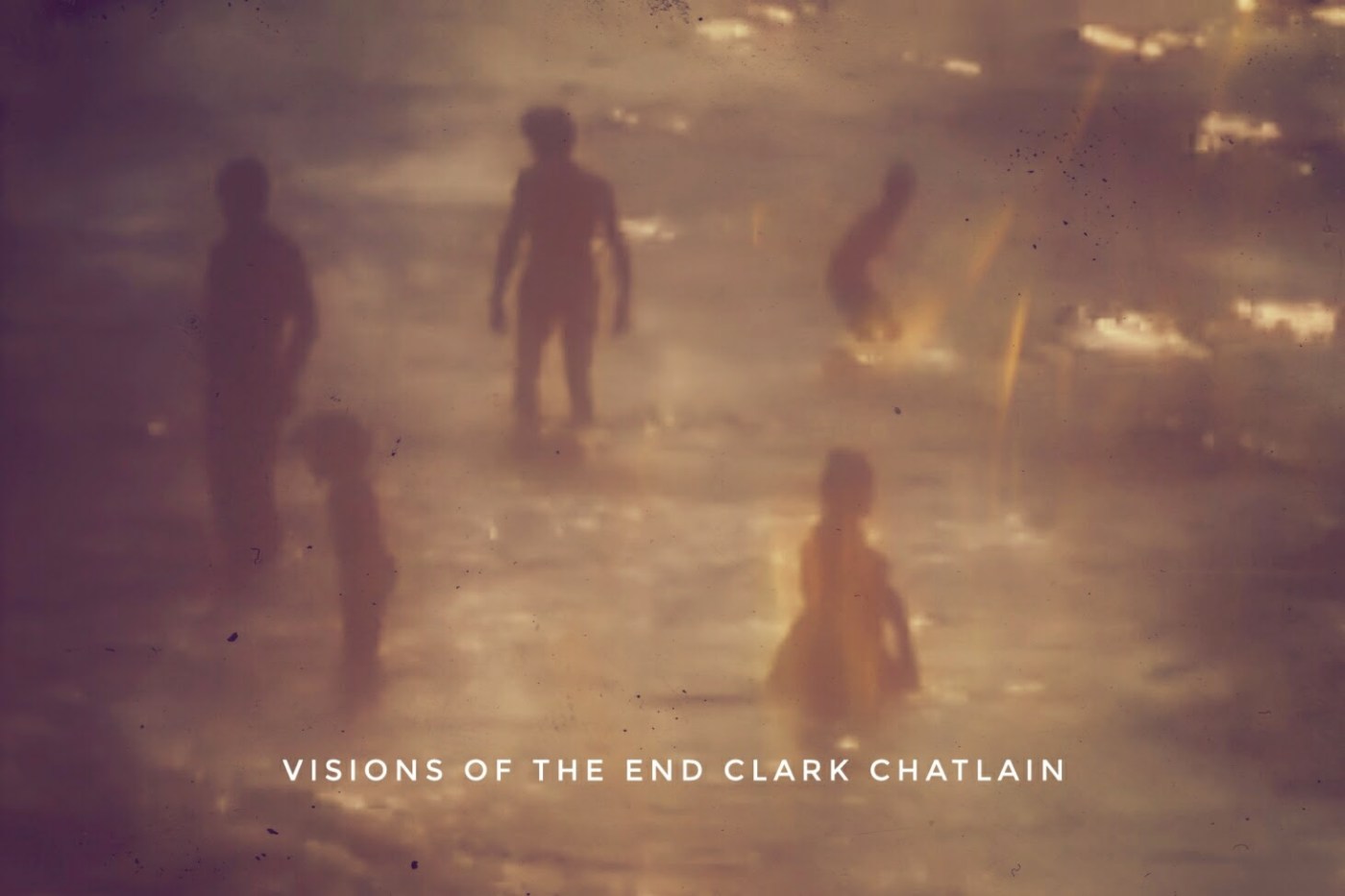
we live today with the sense that the apocalypse is underway. our world is a world lit by revelation. we believe we have seen our own end, that it has been revealed to us, for that is one meaning of the term apocalypse: to reveal, to uncover. when John of Patmos narrated his vision he gave us his apocalypse, and though it was rooted in his Christianity and even more in his time and his world, it is still now our most common exemplar of an apocalypse. this meaning of apocalypse, this revelation and uncovering of the end, is closer to our understanding of our world than we might think. while the generations and centuries before us found themselves, for the first time, living in a disenchanted universe, we are today the generations that hear and read daily that our world is ending. Continue reading “‘visions of the end’ by Clark Chatlain”
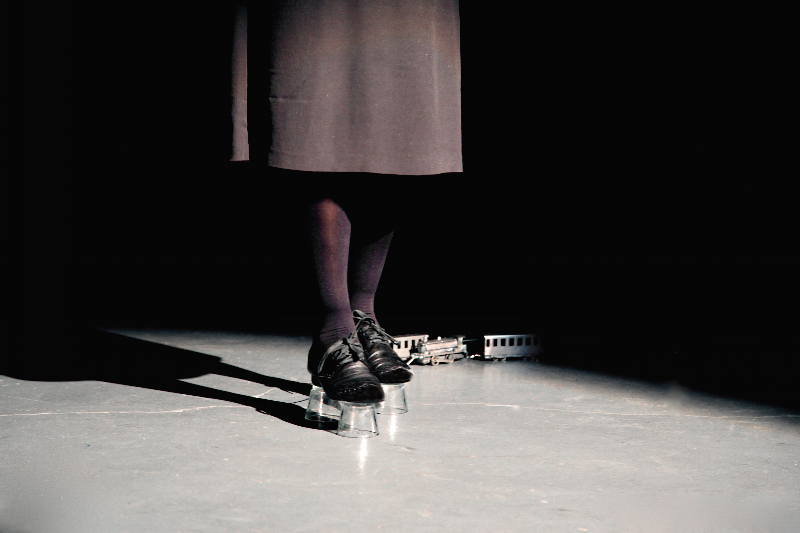
“Liz Zumin is an artist whose practice stems from an interest in contagion, suggestion and imitation. Through visual metaphor and physical experience she explores the duel between the isolated individual and the shared awareness of the group, the forming of relations, and how affect is transmitted between bodies and becomes enacted at a neurological, chemical and anatomical level.”
Earlier this year Liz Zumin answered some questions for BHP, an edited version of her interview was featured in The Arsonist magazine, which was published by Burning House Press a few months ago. We now make the full transcript of the interview available for BHP online.
Firstly, why make art?
I find it difficult to define and delineate what is art, perhaps because what art expresses and evokes is in part ineffable. I suppose that for me there has always been a fascination with the way that artists have the capacity to transform and alter things, to reverse the meaning of a sign, an object or a cultural form. For my part, I find that I am constantly collecting things; texts, fragments, images, ideas from all around, so in that sense, going back to the question why make art? It’s about sharing the way I experience the world and a way that I have of trying to make sense of it all. Continue reading “Liz Zumin Interview”


 BURNING HOUSE PRESS
‘Boredom’ by Liz Zumin
Boredom
I find myself thinking about boredom. Boredom, is a feeling that seems to be prevalent amongst the modern world’s most dominant social experiences of fatigue, depression and various neuroses which are effected in today’s society. It is an inevitable consequence of modern technological advancement where the borders between work and life have become blurred, the world made smaller by the internet, and the news broadcast continuously twenty four hours a day, extending even further into our subjective experience.
Continue reading “‘Boredom’ by Liz Zumin” →
Share this: