A mural of a massive wave
painted on a concrete wall
can’t provoke a disaster,
can it? Fenced off so no one
can smut it with graffiti,
this careful reproduction
Continue reading “Under A Wave Off Kanagawa by William Doreski”

A mural of a massive wave
painted on a concrete wall
can’t provoke a disaster,
can it? Fenced off so no one
can smut it with graffiti,
this careful reproduction
Continue reading “Under A Wave Off Kanagawa by William Doreski”
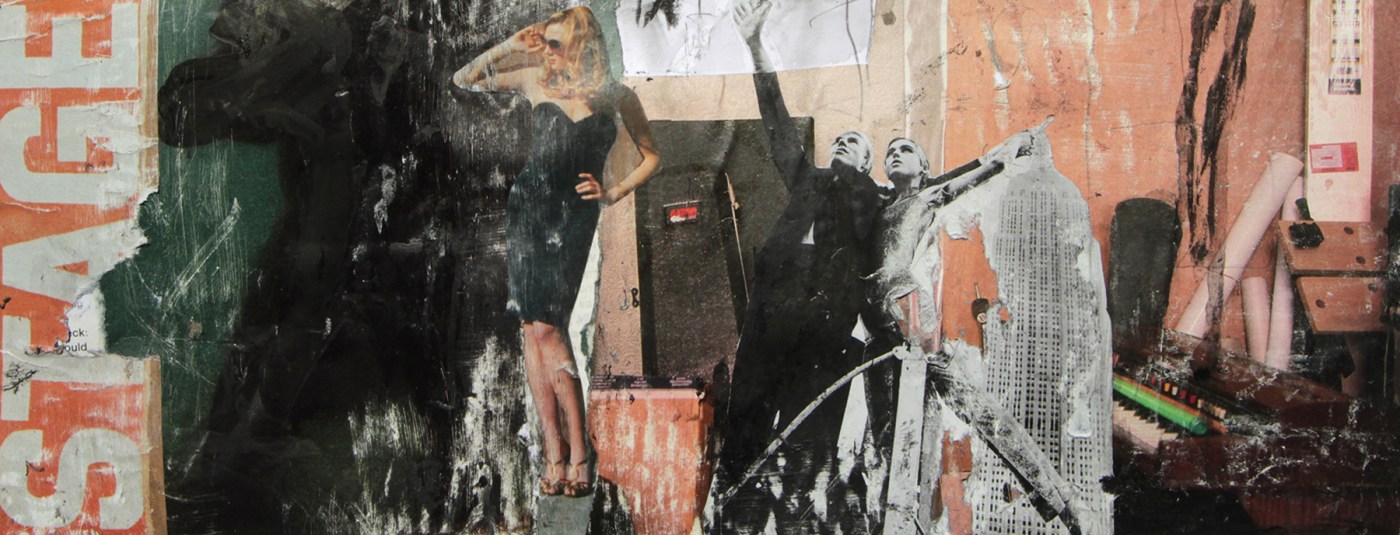
I started work on The Catskills Dream series after creating the first collage – The Catskills Visitor.
I’d visited New York several times but on one visit, I became intrigued by an area well to the north of it, known as the Catskills. I didn’t go there but I began to research it: stories of the old Borscht Belt, the summer circuit for Jewish entertainers, abandoned hotels and motels, retired lives, old secrets, broken promises.
Continue reading “The Catskills Dream by Anna Louise Simpson”
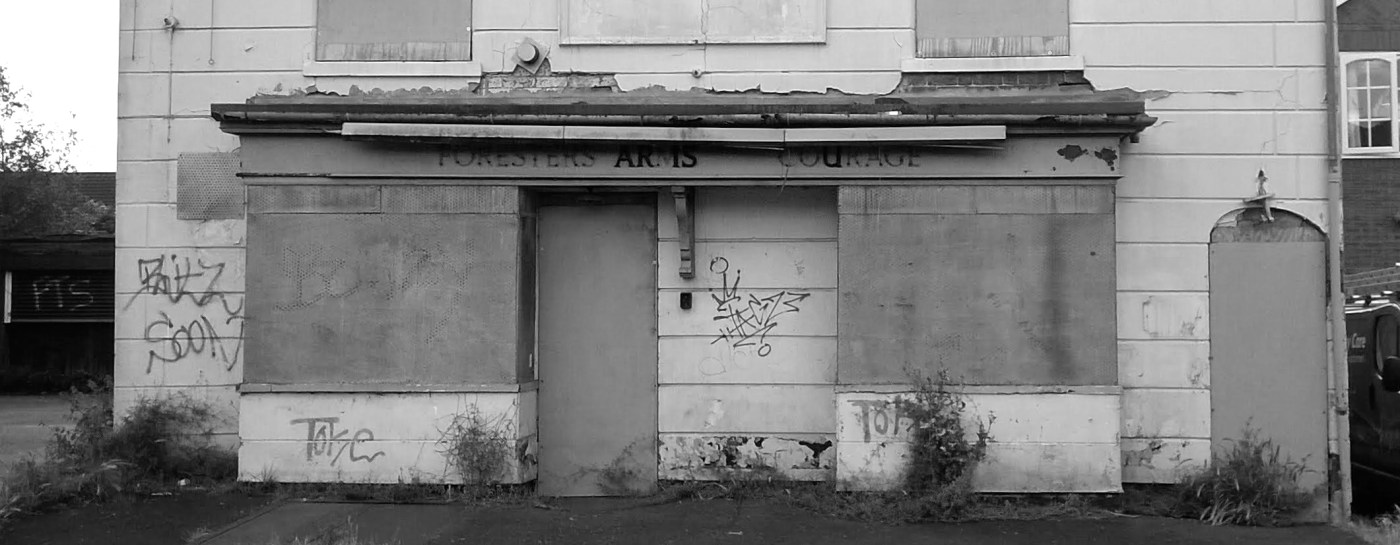
Mayfield Road
I wander Dudley streets – old canals and factories. All faces are sad now. I take a road I’ve never been down before. Continue reading “In Dudley by R.M. Francis”

15:20 backlit wisps and railroad tracks in the sky. flashes of starlings’ wingtips. I look at the river too long, and now see it every time I blink. Continue reading “Writing A Winter Sunset by Oliver Cable”

some nights i, molested by some
morbid desire, stand before my mirror
and examine myself: my chest, my breasts,
two halves divorced, barren land between.

Isn’t every fruit soft, if you wait? In small bodies the time is softly passing. Peach had a twilight air. It wore a yellow curling-up sticker that read ‘gog de magog’ in black print (something from The Bible I think) with a picture of a purple desert tree and ‘the fruit of paradise’ in tiny print across the top and ‘paradiesisches obst’ along the bottom. Continue reading “Peach On The Beach by Kate Feld”

We arrived in a thunderstorm: lightning fingers shot down, pinning horizon
to dark highway. Then the low rumble. Taut Dakota midnight. For weeks
you’d made me promise to avoid photos, insisting I see firsthand the slopes
of ancient clay rising from the prairie. Rain fought the roof of our rental; Continue reading “Badlands by Betsy Housten”
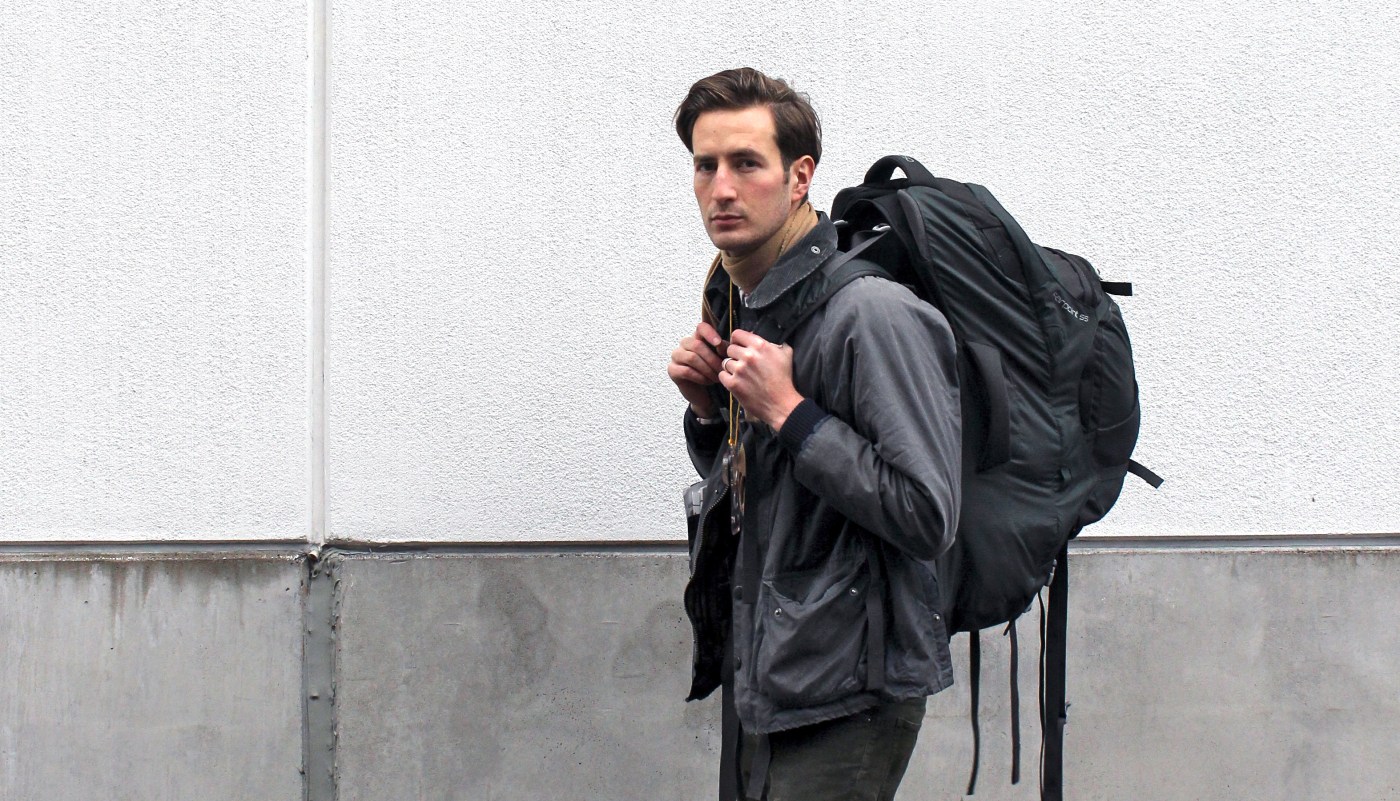
Tom Jeffreys is an English author, critic, and editor. He is also, in his own words, “a reluctant traveller”.
In 2013, he was made redundant just as he and his wife – artist and writer Crystal Bennes – had to leave their flat in east London. They travelled for six months in South America, then lived for two years in Helsinki, where Crystal completed a masters’ degree in fine art. There was a year in Paris after that. Now they’re in Edinburgh. Continue reading “Tom Jeffreys: In Conversation with C.C. O’Hanlon”

Marrakesh, Old Town
Everyone seemed to have rotten, black, and missing front teeth. They were friendly and kept smiling and that’s how I saw they mostly had rotten, black and missing front teeth.
I couldn’t see a lot of the women’s teeth, only their eyes, and often not even. There were many women dressed from head to ankle, in long black fabrics, with layer upon layer covering skin, hands, hair, and some that covered the eyes, and with only a marginally thinner veil, so that everything was hidden, nothing to determine soul, being, nor Continue reading “Nothing Dries Sooner Than A Tear* by Joanna Pickering”

On the vast land of a hospital in Tokyo, there is a pond filled with plenty of water. Water springs up not only in the pond, but here and there. It is the source of a river. The underground water passes through the downtown of Tokyo and flows into Tokyo Bay. No one knows this is a water land and I’m dreaming of the ocean through the vapor. Continue reading “Waiting For The Ocean by hiromi suzuki”

Once young
The land meant everything
Patches of green and brown
Wild things and half wild critters
Cross our path
As we made our way along
Collecting small mysteries Continue reading “Wonderment by Tara Lynn Hawk”

You claim to make a new life
Then proceeded to backtrack
As you stay deep inside your edwardian
cottage of decay and old newspapers Continue reading “Chainsaw Demolition Waltz by Tara Lynn Hawk”

Burning House Press are excited to welcome C.C. O’HANLON as our third guest editor! C.C. will take over editorship of Burning House Press online for the full month of April – when he will then hand over the reins to our fourth guest editor for the month of May.
Submissions for C.C. are open from today – 1st April and will remain open until 23rd April.
C.C. will be responding and publishing your submissions on a rolling basis during the month of April – and has chosen his themes for submissions!
C.C.’s Themes are
Place: Movement, Escape, Exploration, Architecture.
C.C. has introduced the themes himself for your guidance:
“The act of journeying contributes to a sense of physical and mental well-being, while the monotony of prolonged settlement or regular work weaves patterns in the brain that engender fatigue and a sense of personal inadequacy…”
– Bruce Chatwin, from Nomad Invasions
Overall, I’m not looking to reassure, but rather, to some extent, to unsettle.
For submissions, C.C. is looking for your poetry, short stories, flash fiction, prose poems, art, collage, painting, photography – as well as non-fiction submissions: essays, reviews, commentary, features, interviews.
Submission Guidelines
All submissions should be sent as attachments to guesteditorbhp@gmail.com
Please state the theme and form of your submission in the subject of the email. For example: ARCHITECTURE/POETRY
Poetry and Fiction
For poetry submissions, submit no more than three of your best poems. Short stories should be limited to 1,500 words or (preferably) less. We encourage flash fiction submissions, no more than three at a time. Send these in as a .doc or .docx file, along with a short third-person bio, and (optional) photograph of yourself.
Art
Submit hi-res images of your works (drawings, paintings, illustrations, collages, photography, etc) with descriptions of the work (Title, Year, Medium, etc) in the body of the email. Files should be in .JPEG unless they are GIFs or videos, and should not exceed 2MB in size for each work. File names should correspond with the work titles. Video submissions can be uploaded onto Youtube or Vimeo for feature on our website. Send these submissions along with a short third-person bio, and (optional) photograph of yourself.
Non-fiction
Non-fiction submissions (essays, reviews, commentary, interviews, etc) should be no more than 1, 500 words and sent as a .doc or .docx file along with your third-person bio/and optional photograph.
Submissions are open from 1st March til 24th March – and will reopen again on 1st April for our third guest editor.
BHP online is now in the capable hands of the amazing C.C. O’HANLON – Friends, send him your best!
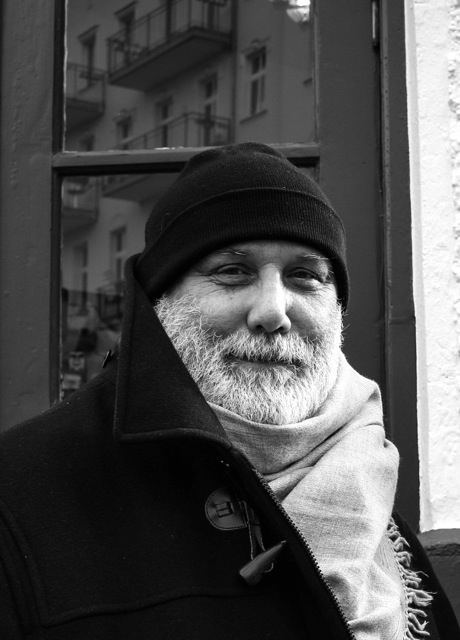
C.C. O’Hanlon is a relentless traveller, polymath and occasional diarist. His work has been featured in numerous publications, including The New York Times, Ernest, Minor Literatures and The Learned Pig. It has also been included in several anthologies and ‘best of…’ collections. Born in Sydney, and raised nearly everywhere else, he has lived for the past five years in Berlin. He is now en route to somewhere else.

Guest Editor: Amee Nassrene Broumand
Professional Mermaid by Megan Dunn
After the 10th Date by Sam Frost
gibbous moon waxing by Lewis Ellingham
Three Poems by Jared A. Carnie
Charon’s Amusement Arcade by BR Williams
Three Poems by Laura Potts
Plastic Eggs by C.B. Auder
Night Photos of Newstead Village & a Poem by Sophie Pitchford*
L’Idole by Laura Izabela
Two Poems by Annette Skade
A Bacon Sandwich by Jim Gibson
Solitaire by Attracta Fahy
Three Poems by Ivan de Monbrison
Forgotten Astronaut by Spangle McQueen
What Else Can I Do? by Rob True
How to Tell Men Apart by Breslin White
Invitation To Move On by Jonathan Humble
Two Poems by Kate Garrett
Stealing Sleipnir by Alison Lock
The Transformation by Emma McKervey
Three Poems by Samuel J Fox
Sing a Song of Ever Changing Perception by Michelle Diaz
Photographs of Bristol & a Poem by Jason Jackson*
When Food Goes Bad by Kelly Froh
Two Poems by Anna Wall
7yrs bad luck by Richard Biddle
Jack by Gene Farmer
Two Pieces by Erin Calabria
genesis by Clark Chatlain
Baroclinic Instability by katillac tweed
A Catalogue of Small Shatterings by Makensi Ceriani
Bear off a Leash by Stephen Lightbown
Photographs of New Orleans by Julia Skop*
Two Poems by Kate Dlugosz
Interminatus by Cory Willingham
The Boyfriend Pinch by Christopher John Eggett
Dissociation in a Museum Café by Belinda Rimmer
Two Poems by Soodabeh Saeidnia
The Linen Man Suite by Lorie Broumand
An Interview with Poet Laura Potts by Amee Nassrene Broumand*
Featured Image: Solar Eclipse from Salem, Oregon 2017 by Amee Nassrene Broumand
Individual featured images by Amee Nassrene Broumand unless marked with an asterisk

Hello Laura, thank you for taking the time to speak with me here on Burning House Press! I love the complex music of your work. What’s your relationship to sound and the oral tradition of poetry?
Always, in testament to its fundamentally oral heritage, sound has stood at the forefront of my work: that is, I have always tried to pay homage to the ancient verbal roots of poetry with an acute focus on just how moving sound can be. It is probably, in the words of Harold Bloom, my own anxiety of influence: the writers that haunt me the most are those who expand the malleable state of sound. There is no single prescriptive path which sound can take in poetry, and I think that appeals to the rebel in me. And I’ve studied it quite intensely really: I often apply scansion to Latin poetry to see the specific moments of gravity and levity which bring a line alive. And, of course, I always read my work out loud as I write: it may have one life on the page but it has another one aloud.
“the writers that haunt me the most are those who expand the malleable state of sound”
You had the chance to work at Dylan Thomas’s birthplace in Swansea. What was that like?
My summer there was the single most academic season of my young life. At first I’d planned to stay for a week or so, but that soon turned into a couple of months and I’m sure I learnt the equivalent of a whole degree in that time. I travelled from a small village in Carmarthen to Swansea each day, where I walked up the old hill of Cwmdonkin Drive and through the small black gate of number five which Dylan had pushed so many times. My time was largely spent reading, writing and researching his work. I wrote essays for The Dylan Thomas Society and saw a performance of Under Milk Wood. I drank in the pubs he drank in. I slept in his bedroom a night or two, with the old gas lamp still burning. I visited the boathouse in Laugharne which he shared with his wife, and even interviewed an old neighbour once. Yes, my broken old bookcase still models three rows of Dylan and always will. It was the summer to always remember. Continue reading “An Interview with Poet Laura Potts”
The linen man was having a sale. The townspeople got up early to buy linens.
The linen man had boasted of his sale for seven years, and the townspeople were driven by a rabid impatience. They’d pressured him to hold it now, and then now, and so on.
On the day of the sale, the town was caught up in a colossal heat. It was uncommon, so early in the summer, and the townspeople swung their limbs in wretchedness. Henny and Ida claimed the temperature had increased daily as the sale neared.
Others noticed this, too; worse, the air took on a density that smelled of flowers. It was clear from the smell these flowers had flourished in the heat, grown large in it, and died. The townspeople chose not to say anything, as it was unpleasant in a variety of ways. They held handkerchiefs over their faces as they walked to the linen sale.
The sun hadn’t come up yet, and all but one of the streetlights along the linen man’s street had gone out. It was too hot to fix them, so no one had, and the solitary light turned the air an uncomfortable green.
“There’s something linen-like about that shade of green,” said Mrs. R.
“It’s not the shade of green you’re noticing, it’s that machine sound,” said Mr. L.
“It’s the smell,” said Ms. X, “which is clearly linen in nature.”
Mr. L and Ms. X were notoriously confident about the superiority of their perceptions.
Townspeople streamed into the linen man’s street. The machine sound was very loud there, and a large object shook under a piece of plastic.
Near the object was a crate of cubes.
The townspeople needed dishcloths, bedclothes, curtains, and shirts. But they saw none of this—merely the cubes, and the density in the air.
Mrs. R drew a line through the air, an involuntary motion.
“Linen sale,” called the linen man. He ushered the townspeople with his hands.
This
This is
This isn’t
This isn’t a
This isn’t a nice
This isn’t a nice, cool
This isn’t a nice, cool dream
This isn’t a cool dream
This isn’t a dream
of a sunny day in
a Cimmerian
night
This may
This may be
This may be even
This may be even worse
This may be even worse than
This may be even worse than a nightmare
This may not be worse than
This may be the worst
This is the worst
ever
the worst ever monster
the worst ever monstrous
the worst ever monstrous, cool
the worst ever monster, nice, cool
dream, which turned into a
nightmare, since we
didn’t wake up

I can pinpoint the moment.
A sudden silence of traffic,
and voices
weaving a scary tale,
far away,
then further still.
Under the fluorescent lights,
I folded.
I didn’t catch anyone’s eye
but breathed deeply.
It didn’t help.
I’d ended up on the ceiling
looking down on myself.
My heavy blue beads
clunked and swung
with each swivel of my neck.
No one noticed.
Below, the other me had finished her tea
and was sorting change from her purse.
I called out. She didn’t glance up.
Rivulets of condensation
on the steamy window
seemed to tell me to follow, follow
as if droplets of water
could guide me home.
Continue reading “Dissociation in a Museum Café by Belinda Rimmer”

It was a surprise to see the danger red, tango orange, white mottle. All the other shellfish she had seen that day in the rock pools had been dark browns, some black elegant creatures. This was a lobster that looked like it was half-cooked, but alive and well, a naturally appealing dinner invitation.
She felt like a child squatting down next to the rock pool. How had he got washed up here, so beautiful against the wrinkled rocks and sighing sand. The day, sunny but with a wind that ran through her ankles and up her skirt occasionally, should have been about observing. She thought she would spend some time looking at the rock pools, looking at the creatures in them, grey and black and brown—crabs moving amongst the husks and wrappers of their dead comrades. Never take a step back, pick up claw from a fallen brother.
She was going to be detached today, she’d promised. She wasn’t going to get involved with anything, she said the creative writing course was helping, but there needed to be more material, more distraction. She’d been told by the tutor that she was a natural journalist, scornfully. Always ready to get involved and meddle in someone else’s story, rather than secretly skimming off the best bits from a distance.
So she would observe today. It was a bit like when she had been dumped by her boyfriend. Ex-boyfriend. The idea was to stay single for a while, to observe the others doing the dance and check she knew the steps.
But here, with this orange lobster in the black bowl of a Welsh rock pool, she decided to engage with it. She started by giving it a nudge with a stick to see how active it was. It was beautiful, so could be dead. It moved and whirled around to look at her, pointedly. She was surprised, and didn’t expect it to be so forward, it was a rare thing and therefore should be shy in her world. Continue reading “The Boyfriend Pinch by Christopher John Eggett”
I
If I should die before I wake
I pray the lord my soul to take.
But if my dreams some wonder show
I ask him that he let me go.
Space wrecks hell on mortal minds.
II
Last night, I closed my eyes
around midnight
and slept for unknown eons.
I travelled up
and up and up
and made claws of my hands
to tear through the atmosphere.
I floated serene across silent spans
of violet shadow
dots of light seen mostly by night
expanding to fill my view—
and then I met the moon.
 BURNING HOUSE PRESS