Search

BURNING HOUSE PRESS

Not For Profit/For Prophecy

Category

Uncategorized

‘Pairty’ by A.G. Kayman

Pairty


Goat an invite fae the boy up the stair. A wee pairty he wis huvin fur his birthday, an he wondered if Ah fancied comin up fur a couple o beers. At first Ah thought, Christ, a room fu o folk Ah dinnae ken, drinkin, gettin pished, mibbie talkin aboot fitba or politics or that. Ah cannae be daein wi aw that cairry oan. Continue reading “‘Pairty’ by A.G. Kayman”

Announcement: BHP’s 2nd book to be published 2018

Burning House Press are proud/excited to announce our 2nd publication in 2018 will be the 1st poetry collection by the amazing Anna Wall. More details to follow shortly Xx


annawall2018

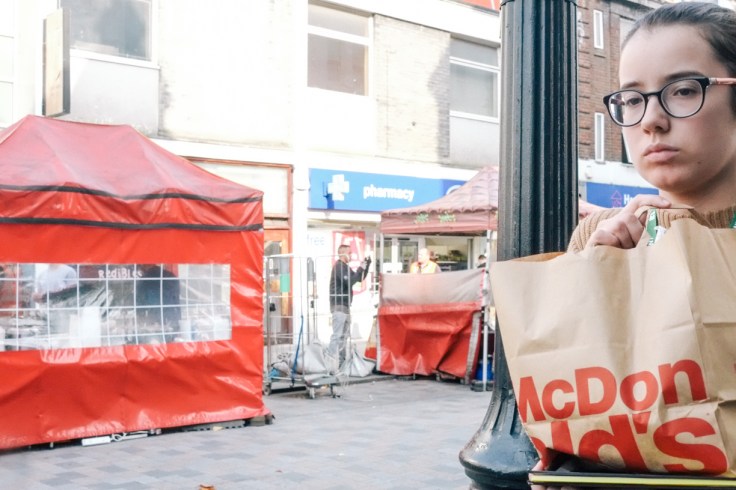
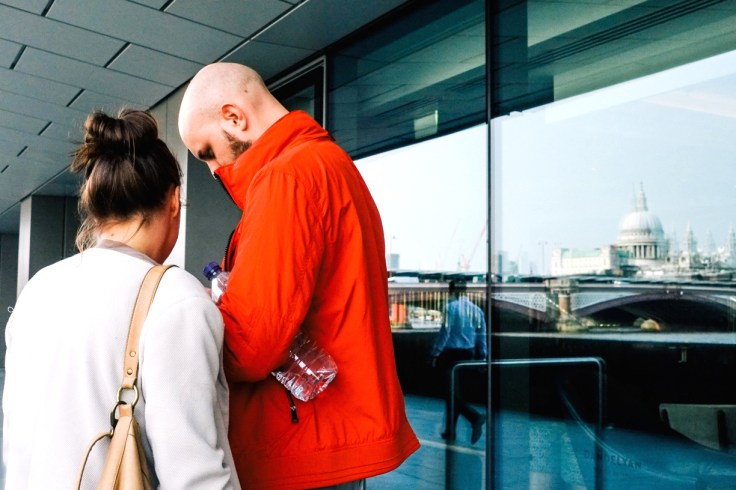
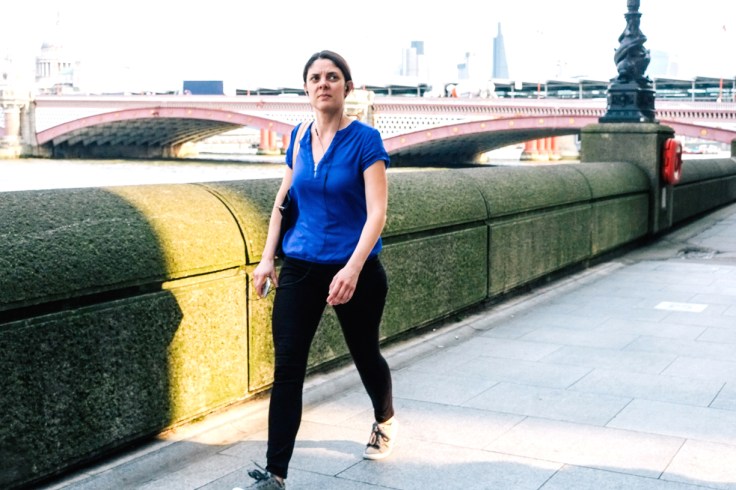
‘Strange Light’ – London 16th October 2017 – photo-essay by Miggy Angel

“London was cloaked in a strange orange glow after Storm Ophelia caused a dust phenomenon and turned the sun red.”

* * *

“Keep a red heart of memories
Under the great gray rain sheds of the sky,
Under the open sun and the yellow gloaming embers.
Remember all paydays of lilacs and songbirds;
All starlights of cool memories on storm paths.Out of this prairie rise the faces of dead men.
They speak to me. I can not tell you what they say.” – from ‘Haze’ by Carl Sandburg


edits from london trip oct 20171

edits from london trip oct 20172

edits from london trip oct 20173

edits from london trip oct 20174

edits from london trip oct 20175

Continue reading “‘Strange Light’ – London 16th October 2017 – photo-essay by Miggy Angel”

Hi-Vis Press Podcast – Interview With Miggy Angel

Hi-Vis Press interviewed Burning House Press’ chief Arsonist Miggy Angel – Covering the subjects of art, recovery, class, mental health and addiction, and his journey from South London to become a writer and poet – check it out here! Xx


Shrinking Ultraviolet by Rebecca Bird – reviewed by Adam Steiner

Shrinking Ultraviolet

by Rebecca Bird

(Eyewear, 2017)


Rebecca Bird’s first poetry collection is a fierce, accomplished and empowering call to find your own identity.


What makes one writer different from another? As much as any poet is unique and their writing is particular to them, they still work within (and out of) forms and conventions.  

For me, all writing bears the fingerprint of its author’s character, even though we are often using the same building blocks of language – and this is what I find most inciting and insightful in Shrinking Ultraviolet. Continue reading “Shrinking Ultraviolet by Rebecca Bird – reviewed by Adam Steiner”

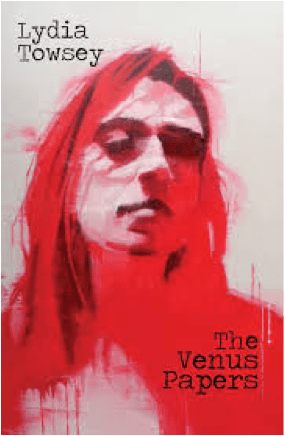
A Burning House Press Interview With Lydia Towsey

Lydia Towsey interviewed by Trevor Wright for Burning House Press 


lti01

We first met at the launch of the Refugee anthology, Over Land, Over Sea. Poems for those Seeking Refuge (Five Leaves Press 2015). What was that project like for you?

It’s been very positive – a great idea. As an ordinary citizen, especially, or even in our current political climate, it’s easy to feel powerless. Ambrose (Musiyiwa) whose poem The Man Who Ran Through the Tunnel stimulated the anthology) thought this would be a way to mobilise lots of voices, not just from Leicester but from across the country and the world. Continue reading “A Burning House Press Interview With Lydia Towsey”

Book Publication Announcement

Burning House Press are excited to announce that our first book publication forthcoming in 2018 will be ‘Gospel Of Aberration’ by Rob True – his first full collection of stories. More details to come.


3 Poems by Debra Watson

A Woman Needs A Coat


A woman needs a coat

And a hat

And a roof

A woman needs a friend

And an enemy Continue reading “3 Poems by Debra Watson”

Visions Of Morandi

By Fredric Nord

I realize how this obsession has gone too far. I’m on a bus cutting through Stockholm, it’s a smug city but easy on the eyes. I’ve dressed up for this. I’m on my way to see Morandi at Artipelag, beautifully situated in the archipelago. My expectations are high, feeling a bit too happy for paintings, a bit nervous. I’ve seen so few of his works in real life, only once before, and they affected me so profoundly that the big painting next door, some ceiling job by some dude named Michelangelo, left me cold and meh. I seem to have something at stake here.
And for this text, I will be Don Quixote de la Costanza.

Continue reading “Visions Of Morandi”

An Interview with David Naimon

In the last few years, podcasts have exploded in popularity. Perhaps it’s something about hearing the human voice and feeling that connection with another person. Like many people, I have podcasts that I regularly listen to. One of my favorites is David Naimon’s Between the Covers. On his radio show, Naimon interviews a wide range of writers, from those who are household names to those who are just starting out. He engages deeply with each writer’s work and always gives his listeners a new way of thinking about complex issues related to literature, life, and society. Between the Covers is essential listening for anyone who loves books and thought-provoking, even life-changing, conversations. Just as his show is illuminating, so too was this interview. We talked about writing across difference, what role writers play in these difficult times, and much more.

–Caitlin, Nonfiction Editor for Burning House Press


Burning House Press: Thanks so much for agreeing to this interview! How did Between the Covers get started? Were you already in radio or was this new to you?


David Naimon: I was already hosting a non-literary show at the radio station (KBOO 90.7FM in Portland, Oregon) before hosting Between the Covers. At some point the programmers of all the shows started receiving emails with inquiries like “Rick Moody is coming to town, anybody available to interview him?” It made me wonder if that show was all of a sudden in need of hosts. It turned out that one of the main hosts of the show had left and that my interest in filling that void was a welcome one. My first interview was with Anthony Doerr. At the time he was a writer’s writer, not the household name he is today, but he was so warm and responsive and enthusiastic that it was infectious. I never looked back.

Continue reading “An Interview with David Naimon”

‘Relax’ by A.G. Kayman

Relax

‘Ye’re so fuckin tense,’ he says. An in ma heid Ah’m like, whit the fuck, if ye want tae make somebdy less tense then the worst thing ye kin say is ‘Ye’re so fuckin tense’. Ah mean, whit guid is that gonnae dae?

Ah actually feel like sayin that tae him, bit Ah dinnae want tae end up back oan the rock ‘n’ roll, so fuck that fur a game o soadjurz. Jist huv tae grin an bear it Ah suppose – minus the grin obviously.

‘Seriously, man, jist relax,’ he says. ‘Ivryhin’s easier when ye relax, take it fae me.’

Ah take a deep breath an look at the flair. ‘Yes, chef,’ Ah say.

‘Look at me when ye’re talkin tae me,’ he says. Continue reading “‘Relax’ by A.G. Kayman”

‘1st Weekend’ by Terence Corless

1st Weekend


Billy and Ian are walking along opposite sides of the high street in Cambridge, pretending to throw an imaginary ball across the cars that glide by in the darkness. It’s really windy so if there was a ball, it would have flown off in the wrong direction by now, but these boys don’t seem that concerned by the laws of reality at the moment – the party in their fuzzed up heads is much better than what’s going on out here. Continue reading “‘1st Weekend’ by Terence Corless”

‘Walking Towards Death’ – 5 Essays on Mortality by Arathi Devandran

Part 5: ‘Dear Younger Me’

Dear Younger Me,

The first, and most important thing I want to tell you is this – growing up is hard, but things will always work out in the end.

Becoming older will teach you a couple of big lessons about life.

There will be times where you will wonder if you will ever recover from some of these experiences – heartbreak, failure, bad habits, illnesses. The answer is, yes, you will. You may not be the same person at the end of the experience, but you will recover, and you will find that you will be better for it.

Often, even as you are growing older, you will feel like a child – lost and confused. You will wonder if you’ll ever stop feeling this way. You won’t, not really. But you will get better at dealing with it.

Continue reading “‘Walking Towards Death’ – 5 Essays on Mortality by Arathi Devandran”

‘Walking Towards Death’ – 5 Essays on Mortality by Arathi Devandran

Part 4: ‘Fighting Ageing’

My father stopped taking his cholesterol tablets for two weeks. At his regular health check-up, his cholesterol levels were higher than usual; that was when he confessed that he had decided to abstain from his tablets, just to “see how it goes”. Needless to say, it did not go very well – he was promptly chastised by his doctor and his wife, and he’s been dutifully taking his tablets again.

Then there was the time when he thought it was a good idea to take virgin coconut oil everyday – a spoonful a day goes a long way, or so he was told. As most things in life go, too much of anything is never a good idea, and so he ended up with a hacking cough and cold that lasted for weeks.

My father does this often. He tests the boundaries of what he should and should not do, being purposefully stubborn and insistent in doing certain things his own way (be it right or wrong), and then suffering the consequences of his actions. There is a stubborn mule headedness to him that is usually absent in his demeanor.

My father’s not the only one.

Continue reading “‘Walking Towards Death’ – 5 Essays on Mortality by Arathi Devandran”

“She Begins Again To Live in the Past”: On The Ravishing of Lol Stein by Marguerite Duras

I don’t know how to write about Lol Stein. I’ll start there, with an admission of my own limitations, a confession that any review that I write will fail to encompass all that I felt while reading it and all that I feel all these months and years later. Anything I write about it will be mired in my own history and my own memories.

I hate writing reviews because words never touch the experience of reading a book. This review can’t make you feel what I felt, holding the book in my hands, discovering the words on the page, all the moments in which images and scenes have flashed in my mind. But I want to say something about this book. I have so much that I want to say.

Continue reading ““She Begins Again To Live in the Past”: On The Ravishing of Lol Stein by Marguerite Duras”

‘my body is not my body’ by Nadia Gerassimenko

my body is not my body


when i’m held mouth wide open, blood oozing, dreading your extraction of part of my body. i’m only six. i’m not asleep. i never forgot.

i’m eighteen. adult, or so they say. part of my body breaks so more space is filled with you & all you carry. it hurts. in retrospect, it always hurt. it always will. Continue reading “‘my body is not my body’ by Nadia Gerassimenko”

The Pool by Orawan Cassidy

The Pool


The water in the pool

was not the same blue

when summer faded.


Colors of autumn

was a confusion–

when green became brown.


Waves of the wind,

Reflection of emotion,

unable to be translated. Continue reading “The Pool by Orawan Cassidy”

‘Jem’ by Kate Jones

Jem


‘Bet I can climb to the top’, Jem Mason says, round blue eyes burning in a sun-touched, freckled face. We all stare up at the roof of the almost finished house.

‘No way,’ Cory Sullivan says.

‘Bet you three strawberry laces I can,’ Jem says, already pacing towards the gates of the building site.

The bet was on. Continue reading “‘Jem’ by Kate Jones”

An Interview with Helen McClory

Helen McClory is a Scottish writer whose stories are multi-faceted gems, filled with atmosphere, mystery, and vivid detail. I discovered her work through Twitter and instantly loved it. Her flash fiction is collected in On the Edges of Vision, and you can read some of the pieces at her blog, Schietree. Her first novel, Flesh of the Peach, is forthcoming this year. McClory was kind enough to answer some of my questions. In our discussion, we talk about gender, Sylvia Plath, unlikable women, and much more.

– Caitlin
Nonfiction Editor of Burning House Press


Helen, thank you so much for taking the time to answer my questions. I am such a fan of your writing, and I’m so excited to have this discussion with you. First, I would just like to ask you some general questions about life and writing.

What are you currently reading? What made you want to read it?

I’m currently reading Alan Garner’s The Stone Book Quartet, a book ostensibly for children (like most of his work) that is composed of economical, brilliant sentences weighted with folkloric meaning. I loved his writing as a child myself and wanted to revisit his work (though I don’t think I ever read this one) because I’m writing a sort of fantasy/folklore novel myself and thought I’d look to one of the masters of the form.

Continue reading “An Interview with Helen McClory”

‘Walking Towards Death’ – 5 Essays on Mortality by Arathi Devandran

Part 3: ‘Discussing Death’

My first memory of death is linked to a man I never knew. My mother’s father died of a heart attack before I was born; the irony is that I know more about his death than I do about his life.

The entirety of the man has been reduced to a single black-and-white obituary photograph that my mother faithfully keeps at her prayer altar. Then, there are the stories. The stories of what an influence he was in my mother’s life, how he used to work with the British Royal Navy (this was in the 1940s and 1950s, in a pre-independent Singapore that seems as much of a myth as my late grandfather), and of course, the stories about how he died, and how that changed his entire family’s life.

It is funny, what death does. It slowly morphs to form the central narrative of a person’s life, as if only through death did his life gain meaning and importance and weight.

Continue reading “‘Walking Towards Death’ – 5 Essays on Mortality by Arathi Devandran”

Blog at WordPress.com.

Up ↑