
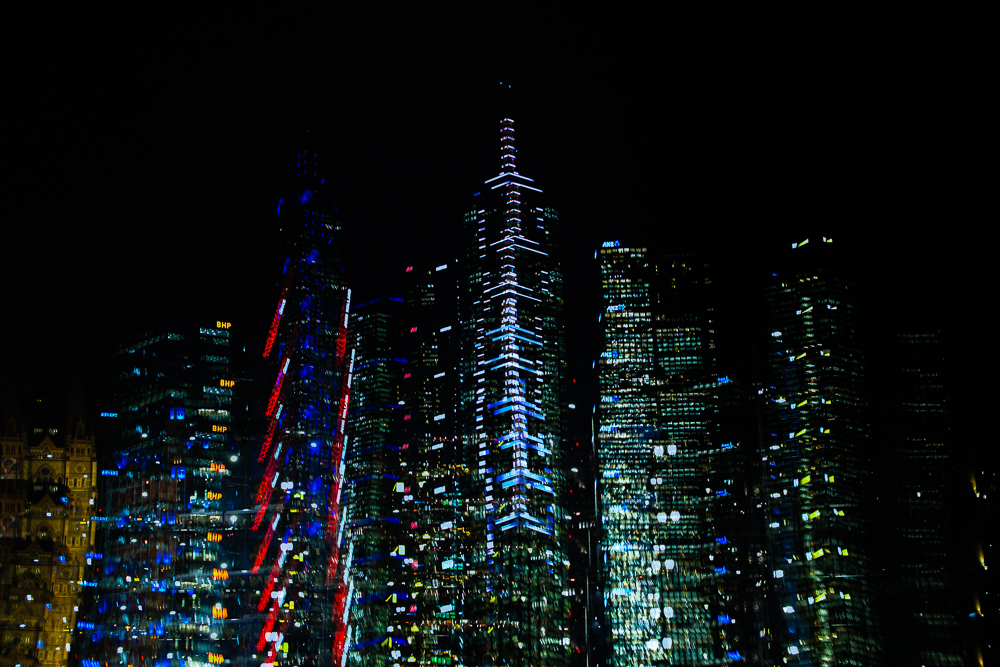
Continue reading “2 Excerpts from SyncWorld by Jordan Trethewey & Jenn Zed”
Continue reading “2 Excerpts from SyncWorld by Jordan Trethewey & Jenn Zed”
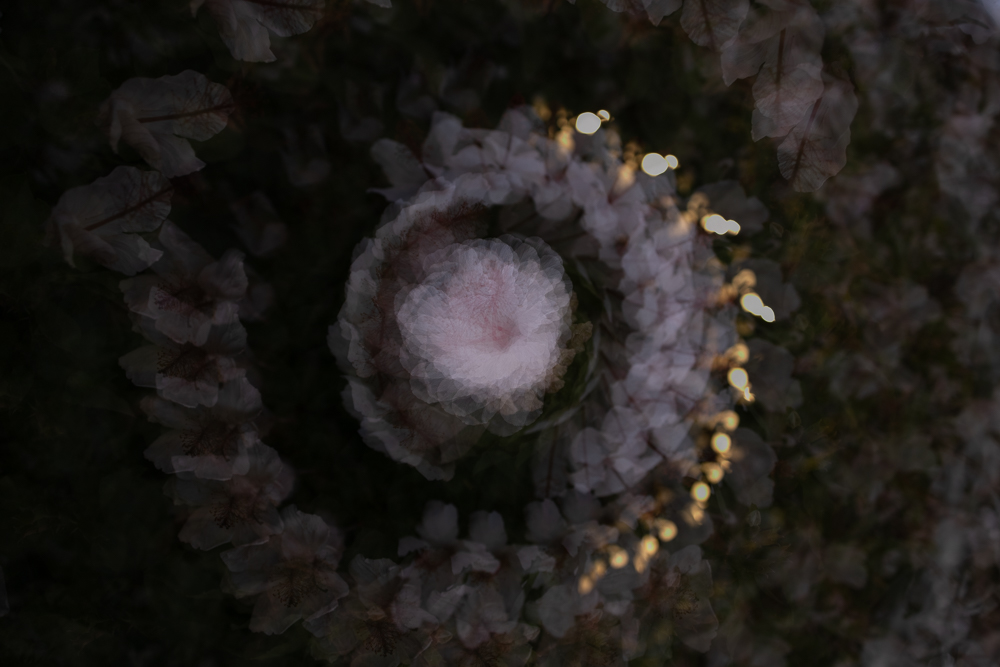
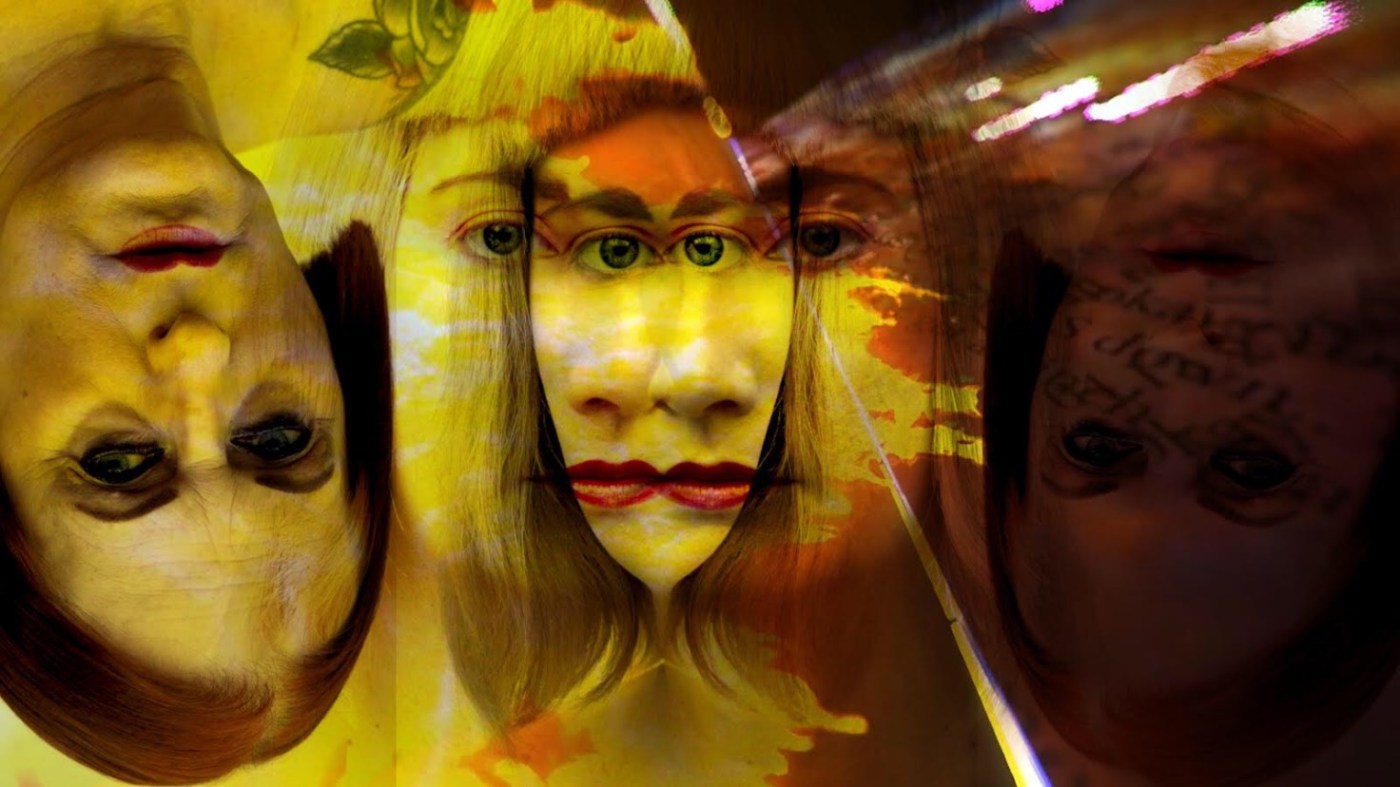

Drawing/illustrations made in Procreate, spatial VR remix poem made in Tilt Brush, and overall design/collage by ReVerse Butcher.
Original linear poem, and flower photography by Kylie Supski.
Continue reading “Circle Series: Woman With Poem by ReVerse Butcher and Kylie Supski”
I would do anything to not be cute,
fifteen, though it’s, without dispute, what I am,
Blythe doll eyes, wide face, small limbs a brute
could hold in place with fingertips. Brown eyes Continue reading “Womannotated – I Was Blythe”

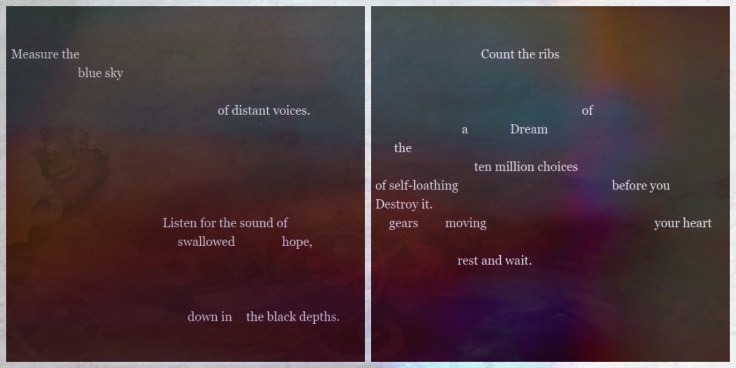
swallowed hope: an erasure diptych
∞
For all the good it did
It was me. Should I go on?
The dark doesn’t affect
your nose. Never wake up
………………………………………halfway
………………………………………down
………………………………………the
………………………………………stairs.
A fraction of an inch— Continue reading “Remixes by Shloka Shankar”
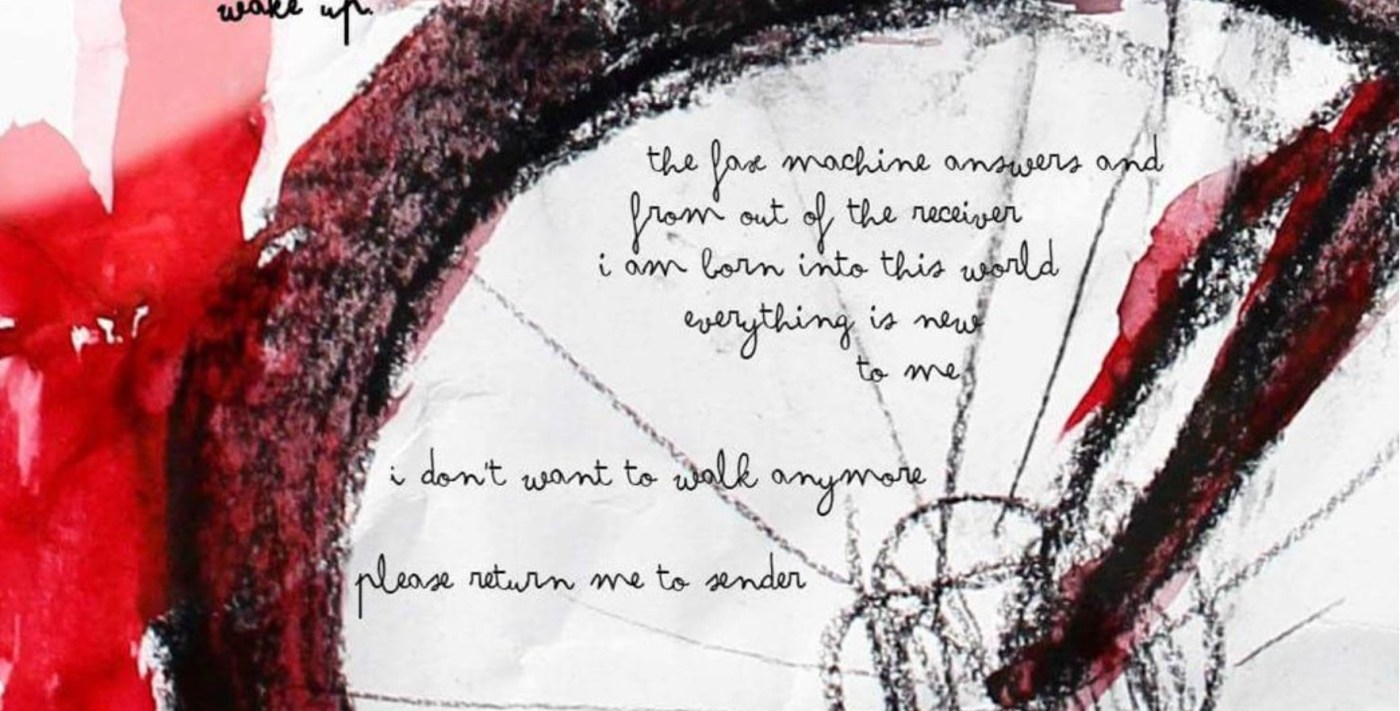

Gargoyles
Watercolor on paper, 2015
∞ Continue reading “4 Visual Poems by Angela Rodriguez and Joseph Ellison Brockway”

An Overview (Log A.0003)
The greens, the greys, the ocean waves—together cross.
Enveloped within infrastructure, like an orb with swirling insides: the waters settle in the center as trees surround them. Three oceans connect through a narrow river; these oceans huddle close. The architecture: high-rise. Sky-high, arching over the oceans, shielding them. The buildings reach out to one another through pathways (connected, like the oceans)—and these know no time. Similar to skip travel, almost. Each piece in this machine of a home fits and functions as planned, always.
The fresh breeze, the silvers, the tides—these are what make up home, and yet, home would be incomplete without its inhabitants. This Realm has always been known for its residents’ hyperosmia: heightened olfactory senses. Other neighboring Realms are known for other things. Hyperosmia plays a vital role in the circulation of energy.
All this Realm’s energy is generated from its very own oceans. There are the tides: natural, relatively predictable, but insufficient and intermittent (the oceans cherish their quiet time, too). There is the concentration of salt: with hyperosmia, energy management poses no challenge. In other words, apart from the tides, the oceans must have an exact percentage of salt for the energy to be distributed evenly in the Realm. An exact percentage, a very specific scent. Each piece in this machine of a home fits and functions as planned, always.
Amidst distinct realms, here lies Elesphal.
*******
The Oliques and Their Ancestral History (Log A.0028)
Elesphal was once led by the Scentress for ages and ages as tales go. Essentially, she was the founder; the scholars of the Realms speak of her oneness with nature and how she foresaw the need for Elesphal to live upon such providence.
The Scentress began, along with a few others of her time, to construct the Elesphal of now, from its architecture to its energies. She is the sole reason for the inhabitants’ hyperosmia; from her the idea of mastering the sense came about and hence, her name.
However, since her passing, the Olique family—the Scentress’ descendants—had taken over. The Oliques maintain order in and ensure the needs of Elesphal. All have equal roles: mother Morea takes the general governance over the Realm, father Lesthe takes interactions with the other Realms, older brother Iressen takes infrastructure management, sister Midence takes energy monitoring, and younger brother Alsgne takes nature development.
Even in the seamless machine of Elesphal there exists widespread rumors of the Scentress. As indicated in the records, she has transformed into an ancestral ghost, roaming around Elesphal, soul stuck for reasons unknown. As much as all inhabitants sand the Olique family would like to further study this and assist in sending the Scentress to fulfill herself into a higher, more peaceful being, everyone fears what she might do to them or their Realm. She later on became detached from the residents after achieving hyperosmia herself, tales tell.
*******
The Scentress Herself (Log C.0147)
The oceans are off, Midence mutters.
All seems well to me, sister, Iressen assures her.
I agree with brother. It might just be your nose, sister, Alsgne has a light laugh.
Midence ignores her little brother, looks away. Had all really meant well, her nose should not be twitching as it is now, should it? Midence tries asking around, but to no avail; the rest of the inhabitants seem fine. Not even her mother and father side with her.
Midence sets her eyes on the oceans once more; she tears away from the waters almost immediately, the scent too powerful for her to even look.
If the oceans are unwell, might this lead to overconsumption, and possibly ruin Elesphal? The worry rings in Midence’s heart. She leaves her brothers and rushes to the records hall, in hopes that the scholars might shed light onto this disruption. As quick as she can, she goes through any and every log in her immediate sight—she fears no time can be wasted.
Midence, nearly drowned in all the books, discovers an eccentric dent in the brick walls. When she touches the dent, a slip of paper falls into her hands and it reads:
If someone were to call for me aloud, or if these very lines were to be found out,
I assure you—have no doubt:
Visiting one, you have my blessings. And now, to you, I shall call out.
Midence resumes her research to look for more answers. She finds that those lines are a message from the Scentress herself. Further research tells Midence that the Scentress, at certain circumstances, chooses to appear to whoever calls for her or discovers that particular message. The scholars inferred that the Scentress appears to the chosen in either episodes of erratic voices and visions or through her unique aura projected onto ordinary objects in the Realm.
Never had Midence feared knowledge until this moment. The Scentress might—oh, the thought alone is awful, Midence winces—play around with her, haunt her, torment her. There is no way to rewind, and Midence is well-aware of that fact. She continues on, averting the ocean crisis while convincing her kindred of the Scentress’ words.
I’ve never heard of this before, Iressen says.
The scholars might have made mistakes, too, sister, Alsgne taps his finger on his chin.
And in those moments of skepticism, obscurities arise: glitches, bright sparks appear before Midence’s eyes. At first only she was directed by the Scentress, then the latter began making contact with Iressen and Alsgne as well. Obscurities—yet clearly of the Scentress’ mark—and other times the most ordinary objects in the oddest of ways: tree branches intertwining, reaching out to them, intertwining, and repeat, and more. The three siblings share the same fright in the beginning. Her motives incomprehensible beyond compare, they believe the Scentress made her presence a curse for having found her message, a supposed secret.
Midence continues with the oceans. Moment after moment of the Scentress’ calls upon the three, at long last, she appears fully to the siblings.
“Visiting one—and her company—you have my blessings.”
She is…at best would be to say: light, albeit a dim one.
A silent nod, a greeting from her to the three. The Scentress proceeds to explain the behavior of their oceans:
“Our marine energy has been fluctuating—too strong or too weak for the established scent—due to the lack of light. Have you ever considered the light?”
The three shake their heads in sync.
“Elesphal, truly, and I discovered this only upon my passing, is a world of light. Elesphal…comes from light sphere, you see? For our Realm to continue with its marine energy at normal levels, we must intersect it with our innate light capacity. Both energies must work alongside each other, yet this light energy has been neglected for so, so long. And that is one of my deepest regrets as the Scentress—not having utilized our truth.”
The three siblings look at the Scentress in awe, still trying to process her words.
“This architecture is my fault. Too completely enveloped, trapped, shunning ourselves of our open sphere and the oceans that yearn to sparkle.” The Scentress looks upward, then down in dismay. “Midence, and Iressen, Alsgne: you have always been doing well—the Oliques truly never fail. And so I must ask of your assistance to set this all anew.”
“Elesphal has,” she tries to disguise her brokenness with soft sobs, “it has become a machine, all too rigid. We directed our focus to the oceans…if we do not solve this, I foresee the oceans may lose their power and Elesphal will, in turn, fall.”
“Here, visiting ones,” the Scentress says and this time, faint and friendly glitches surround them. “What we must do is make use of both light and waters. With the warmth of direct sunlight, we will utilize the temperature of the surface of the waters. In other words, visiting ones—”
“Now, not only the scent matters, but the heat from the light as well,” Midence interrupts.
“Indeed, indeed,” the Scentress smiles.
Elesphal, with the guidance of the Oliques, turns anew: the architecture opens up, allowing light to spread onto the oceans. The energies return to the usual, but with a faint—warm—change.
Elesphal lives with the ocean and the light, now a true home to its inhabitants, to the Scentress, to itself.
*******
The Scentress to the Olique Children (Hidden Log)
Every exhale is an act of devouring space and time.
Now, it is one hundred percent clear. Absolutely.
Visiting ones, here I must send my deepest thanks, and bid my farewell. I shall rise.
The ancestral spirit of the Scentress disperses and brightens, light above Elesphal. She is finally fulfilled into a higher being.
The Scentress is dearly missed by the inhabitants of Elesphal. Scholars say she makes appearances from time to time, to those who call out to her, or to those whom she wishes to call out to.
⑆ka⑉t⑇ is a BFA Creative Writing student very much into unreality. She tries to channel unreality through her works and her fashion. She can be found as typeflux on Tumblr, Twitter, and Instagram.
Blueprinted girl rolled out wide to inspect
already torn, no one protects — and why
should this one be tasked to care or respect,
question a purpose plans specify Continue reading “womannotated – Dollhouse Architect”
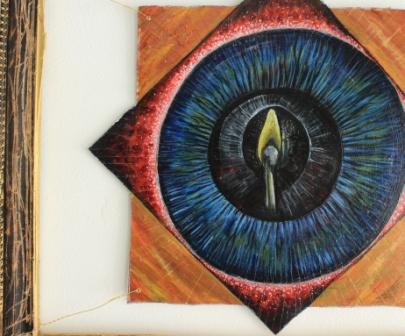
I was told (who told me? what voice?) to imagine
a porthole, to focus across the blue. Wait
for the glare of clarity to abate, subdue it.
Acknowledge the blue, it said, like breathing
used to be. It will be cold, like the first snow,
as you ease yourself across. There is the sea.
Concentrate. I become my focus, which is her.
She watches the sky (I remember the sky). I don’t
see her, it is not sight, yet she’s there on the terrace
watching the clouds, seeing vertebrae.
The voice says, It’s like blowing. I remember
breathing, taking in a deep breath. The thought,
or what sounds like a thought, makes me smile.
(A smile is just a metaphor now.) Focus.
I’m entranced with the mirror image. I need the sea
for practice. She’s searching for letters – an L – but clouds
are untamable, they stand on end, wisps
trailing away into a spider’s thread that I follow (again,
a metaphor) in wonder (now I know wonder)
and she is no longer on the terrace, no longer
looking, though her ache crimsons the scent
of pine and honeysuckle. I translate touch, sound,
sight, want, pain. She is trying to translate, but knows
only blue, sea. Sees only vertebrae, thinks I don’t hear.
I resist dissipation. I dally, imagining our two mists
mingling (what sex used to be?), though I’m becoming
wisp already. Her every thought like a blood-red
light flashing in the empty blue. Listen.
Kymm Coveney was born in Boston and has lived in Spain since the 1982 World Cup. Some poems are in Under the Radar, Prole, and The Interpreter’s House. Several flash pieces reside at 101Fiction. Online translations include a poem at Surreal Poetics and a short story at Palabras Errantes.
Blog: BetterLies Twitter: @KymmInBarcelona.
conch/sea
I am and I become
abecedarian as a personal charm
to am and become
to be and become
remind me to be light
inside each memory egg a gold inlay of an incident
how the brain compartmentalizes like a chambered nautilus
yet it is all one sand – the brain distinguishes one from the other to understand
i’ve made a career of privacy and compartmentalized objects
i’ve made a career of my traumas
what is privacy here with all exposed and sifting over one another in an endless span
how much of privacy or keeping secret is wrapped up in fears around judgement
light exposures popping up – the privacy book the mean latitudes of reason
a wish to bold concave belly flesh shoulders wrapped in marbled warscape
a wish to stand tall to withstand the seas at the door
i biked all over town in the early dawn popping off light exposures drunk on tall boys and crashed into a lexus
the me then the me
mortal rigor in the fountain in the landscape chasm
conch/sea
to rack focus like an aperture to let light in
object/frame stillness among the raging
majestic orifice right there
alate lion in the yard
these death energetics
i swallow hieroglyphs like a carceral bee
fires all around the island in a glacial crisis
war on my nerves a pallor a fungus
the lens has holes in it
a disintegration of the ephemeral
the segmented abdomen becomes integrated
losing its segments as an insect ages
cerci wave in weapons of copulation
wingless among the deciduous
the sense making
malicious octopus reticular trap
alphabet laughter in the yarrow
when you become the lens itself
so the pallor is swallowed, excreted
the moult can moult
electron nostalgia
Electra clasp the wretches
wretched the wretches wash ashore
pubic schema old days of the goddess
stressed belly the “curved inflorescence”
irascible pharaoh egg-shaped coffin
bury me in this alleged
Home
receiving familiar Legend
Hers is the felled heart a sword-shaped segment
when i curve toward you
the air stretches me pinnate
radio neuron electra radial split inquisitive
I split I fire on all radials
electrons of nostalgia acquisitive longing
how the “stigma persists at the tip” even though its buried
how trauma persists the skins a sun coming through it
kletic
wild mouths wild mouths
when the agor settles
when gold dust lament
covers it all
i am a beetle captured
in glass
my green thorax aglow
among the amber
my pincers akimbo
like come at me bro
i still believe in a female god
Melissa Eleftherion is a writer, librarian, and a visual artist. She is the author of field guide to autobiography (The Operating System, 2018), & nine chapbooks, including the forthcoming trauma suture (above/ground press, 2020). Born & raised in Brooklyn, Melissa now lives in Mendocino County where she manages the Ukiah Library, teaches creative writing, & curates the LOBA Reading Series. Recent work is available at www.apoetlibrarian.wordpress.com.

remember Hollow Man? Kevin Bacon
stuck in our seat forced a rapist’s point
of view women can’t see him
we go unseen reliving through
leading to his neighbor her apartment
stuck in our seat as credits roll
I should have left before credits
still without closure Rhona Mitra
credited only as Neighbor
Dennis Etzel Jr. lives with Carrie and the boys in Topeka, Kansas where he teaches English at Washburn University. His work has appeared in Denver Quarterly, Indiana Review, BlazeVOX, Fact-Simile, 1913: a journal of poetic forms, 3:AM, Tarpaulin Sky, DIAGRAM, and others. Etzel is the recipient of a 2017 Troy Scroggins Award and the 2017 Topeka ARTSConnect Arty Award in Literary Arts. He co-edited Ichabods Speak Out: Poems in the Age of Me, Too with Dr. Jericho Hockett which features poems against sexual assault from the Washburn University and Topeka Community. He is a TALK Scholar for the Kansas Humanities Council and leads poetry workshops in various Kansas spaces.

Third shift at the night factory
assembles the simple, elegant machine of night.
Workers, like figures in a shadow play,
hammer the fitted parts home,
extend the handle of a wrench with a pipe,
and brace a foot against the stubborn bolt.
Engineers pour over the schematics of the moon
trembling on the surface of oil in open buckets.
In the last of the dark hours,
welders extinguish their torches
while the foreman inspects the welds
with a candle held behind the seams.
Pinholes in the bead or casting
fill the factory with starlight,
a constellation of flaws, a myth and map of stars
we made to find our way out.
Queued at the gate and parting
at the whistle into morning,
shift workers call to each other:
‘night, see ya, so long, take care
Stephen Frech has earned degrees from Northwestern University, Washington University in St. Louis, and the University of Cincinnati. He has published three volumes of poetry: Toward Evening and the Day Far Spent (Kent State UP), If Not For These Wrinkles of Darkness (White Pine Press), and The Dark Villages of Childhood (Midwest Writing Center) His fourth volume titled A Palace of Strangers is No City, a sustained narrative of prose poetry/flash fiction, has been published by Cervena Barva Press. He published a translation of poetry from the Dutch: Menno Wigman’s Zwart als kaviaar/Black as Caviar. He is founder and editor of Oneiros Press, publisher of limited edition, letterpress poetry broadsides. Oneiros broadsides have been purchased by special collections libraries around the world, among them the Newberry Library (Chicago), the Beinecke Library at Yale, and the University of Amsterdam Print Collection. Stephen Frech is Professor of English at Millikin University
The Electric Keyboard Dreams
I take the notes out, I take the sounds away.
This is how I unravel the piano player.
When I let her fingers travel me,
The treble clef trembles.
The bass weeps for the silence
Descending between
One scale and the next —
And this is how I’ll play,
This is how I play.
Heavy ghosts pour down,
The swimming pool’s full.
Gelatinous grubs wriggling myopic war dance.
The drum behind the keys
Throbbing against the head of a child.
Piano player with a guillotine
for a voice. Squelching arteries. Shine the jugular,
Upside down the garments
Of the Sun. Right-side up now,
Watching her light spill out.
And this is how I’ll play,
This is how I play.
She knows more than she can handle,
She knows more than me,
A girl-child child-self holding a program for the apocalypse.
She dreams of heaven every night she runs away.
She dreams of heaven every night she can’t run away.
And this is how I play,
And this is what we play —
A symphony the susurrus of ancient leaves,
Worn down by a million solar winds.
Spines lying bare at the mother’s feet,
the poetry slipping out her teeth.
Us lying awake — him reaching, she running, we becoming
little nothings, all over again. Smash the keys.
The stars shine, all over again.
The seas rumble, the F Sharp screaming
against D Minor’s weeping –
all overwhelming again.
Emptied bellies growing fangs, together
The kids gang up on the weather.
Heal the ice caps by melting their knees into hot tarmac.
No ancestral fevers now to wipe the ash of the world with,
Just these songs. Just these songs,
Sang into the hollowed-out trunk
Of a dead tree. A prophecy
constellated in the stars. Brightly now
the fingers of children
dreaming themselves alive
between arpeggios and wet bed sheets.
The planet’s heart strings
asleep
in every child’s unheard
shriek.
°•○●□°•○●□¤°
A Strange Joke
Sometimes you bruise a fruit
To make sure it’s real.
The songs of plastic
Have nowhere to go
But back into the
The hollowed-out hearts of their
Price tags. A scratch on this orchid
Won’t release the same
Geometry into the air
The form of bliss, the shape of scent.
The sugars in these melons
Won’t attract ants, not even in decay
Will they be squashed. If not for the
Fire the winds wouldn’t sing
Through them. She told me, “Here,
This flower, token of our
Love, look. It won’t ever die.” She placed it
in a vase full of water, a strange joke. Alone, I said,
“But it smells like nothing. Can we really
Call it love without ever having breathed life
Into it, without having gardened
Through debris and detriment, building from nothing
The roots needed to feed
The stories we shape – or is this enough,
A slide across the screen, the slippery
Borders between attraction and rejection,
Handing our love over to the anxiety
That nothing here was built to last past
The twenty-first century, so why should we ever
Get real flowers for each other? Why should
Anything living be kissed
into the lonely water of the flower vase,
To grow old, to wrinkle up and dry,
To die. Why risk it,
When all our foods have turned
More lifeless than stone?”
I want to be fed by the heat
That comes from fears overridden not
By staying somewhere in the middle,
Draining the feelings out of every sentence. I want
To be a vessel for the kind of dreams
That grow through even the worst decay —
But she never heard a word I said
As she sunk her head back into a pixelated wall
Further away than I could see. And that
Was the last I heard of her, for my phone never
Rang again. The apps stopped their pulsing for my attention
After I drowned the old thing in sugar and spice
And everything nice. The ants cling desperately
To the floor, the vacuum cleaner we bought
Isn’t strong enough to clear out
All this rot.
Dhiyanah Hassan is an artist, writer, and energy worker whose practice explores the relationships between art, storytelling, and healing. Her work seeks to connect the soul and soil of the internal worlds orbiting within us, finding transformative expressions of the wild, the mystical, and miraculous through artistic and multidisciplinary mediums, facilitating spaces and conversations where creativity is utilized as a catalyst for healing and trauma recovery. Dhiyanah’s poetry has appeared in sister-hood, OCCULUM, and Rambutan Literary. Website: http://www.bydhiyanah.com

the planchette spirals out
of control a giant dog howls
in the coffee reading cracks
shadows swirl in the crystal
ball all the tarot cards are blank
the runes have shattered
the mirrors broken
the petals I burnt with our names
come back dead moths fly
through the dollhouse windows
white eyes flutter
in the palms of your hands
the moon has dimmed
the dolls are awake
your crystal pendulum
catches fire the divining
coins land on their edges
the scrying bowl opens
to an infinite well
the threads unwind
the trees are yawning
a light is shining
from a split in the yew
tonight is the night
now is the time
this is the place where
the souls pour through
Lucy Whitehead writes haiku and poetry. Her haiku have appeared in various international journals and anthologies and her poetry has been published or is forthcoming in Amethyst Review, Anti-Heroin Chic, Barren Magazine, Black Bough Poetry, Burning House Press, Collective Unrest, Electric Moon Magazine, Ghost City Review, Mookychick Magazine, Neon Mariposa Magazine, Pink Plastic House, Pussy Magic, Re-side, and Twist in Time Magazine. You can find her on Twitter @blueirispoetry.
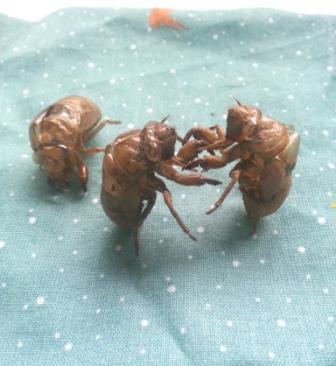
All crowd in the church-
A lifetime of suffering
For the sake of gossip.
Found poem, remix technique.
Source text: Pike, Christopher. Falling Into Darkness. New York: Pocket Books, 1990.

Nick Quaglietta began writing poetry as a teenager, with his first work in print appearing in his 1985 college yearbook. More recently he has become affiliated with a few local writing groups, including Connect and Heal in Chandler, Arizona.
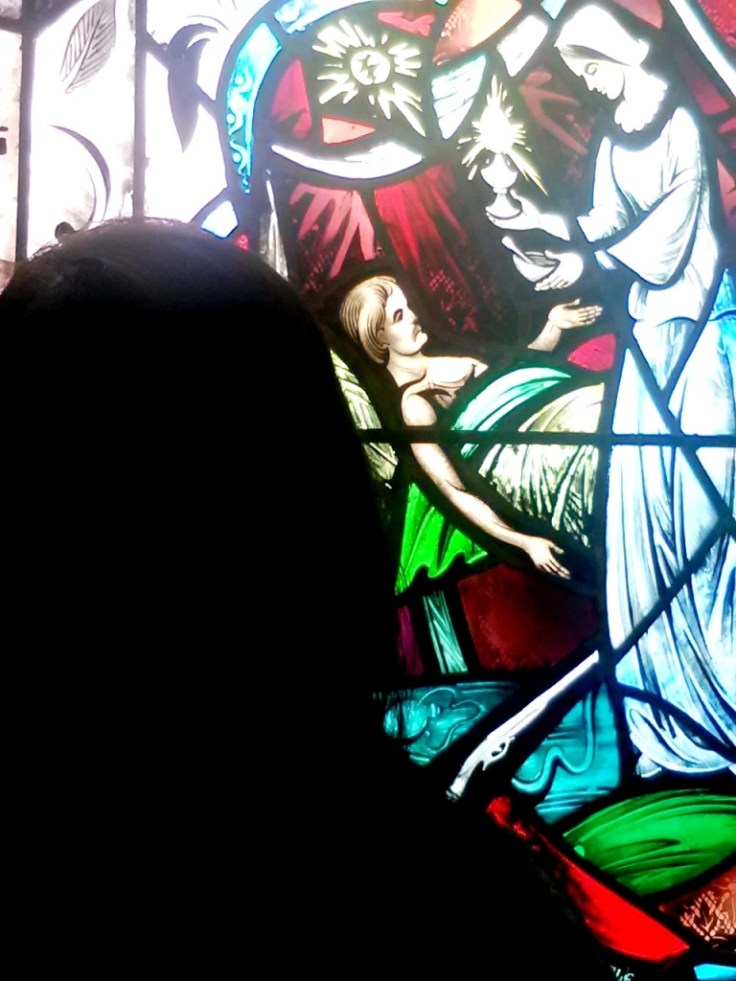
in the house of my body the light is mostly low
the rooms filled with ghosts performing an orchestra
of sorrow about all the broken glass
once, in high school, a girl i had never talked to
taught me how she held her breath until she passed out.
“after the light goes dim, you don’t remember anything.”
in the rooms of my body i wander, shuffling papers into
boxes made of songs i can’t always remember the words to
because i held my breath so many times
once a man held my balled-up fist in his own and
compared it to the size of the human heart. i noticed
how he held them both and i could breathe
in the cathedral of my body undulating rays of light
spell hope on the cracked facade and sometimes
i remember the words to every song
Her debut poetry collection, Skeleton Parade, is available with Apep Publications.
She is Head Publicist and Social Media Manager for Animal Heart Press, and a contributing editor for Barren Magazine.
She can be followed at https://twitter.com/melablust.

Moonlight Part 2
The moonlit hills, silvery sentinels
guarding the silent
desert. The jagged
mine mouth, a black
hole into twilight
zone
Tim’s voice changed,
pitch higher.
When I hurt
my hand in the mine, something
remarkable got under
my skin something
begun to change
me for better
I know it is connected to a great plan
set in motion billions years
ago out among stars
there is substance in this mine
allows a human change from mortal into a god
I am being transformed
into a creature of the universe
What do you think?
I think you need to go back to the hospital
This is a found poem. Source: Pike, Christopher. Hollow Skull. Hodder, 1998. Page 75
Her will
Transformation inevitable
She has grown great
now, difficult
with words
cooperate for
your own sake
you’ll understand
everything soon
head slurped back
she saw stars grin
demons
This is a found poem. Source: Pike, Christopher. Hollow Skull. Hoddler, 1998. Page 76.
Originally from the hilly corner of Ohio, Mark Allen Jenkins’s poetry has appeared in Memorious, minnesota review, South Dakota Review, Every River on Earth: Writing from Appalachian Ohio, and Gargoyle. He recently completed a PhD in Humanities from the University of Texas at Dallas and currently teaches in Houston.
After Morticia Addams describing Wednesday’s
role model (“Wednesday’s great-aunt Calpurnia.
She was burned as a witch in 1706. They said she danced
naked in the town square and enslaved a minster ..
but don’t worry. We’ve told Wednesday: college first.”)
Young girls require a patron saint — aunt’s
abysmal ashes antiquate entwined,
Massachusetts grave, with God’s servant
whom she enslaved. Impious mind
in clerical cravat a town square dance
(performed in only raven plaits) bewitched Continue reading “Womannotated – Calpurnia”

In Anton Newcombe’s studio in Berlin, there was a typewriter. On this typewriter was a faded, dusty note that read, Everyone should be shipwrecked once in their life.
These words had an unsettling effect on me. Whether I understood it at the time or not, my ship was already on the rocks.
Continue reading “Essaouira Diary by Finn Lafcadio O’Hanlon”
 BURNING HOUSE PRESS