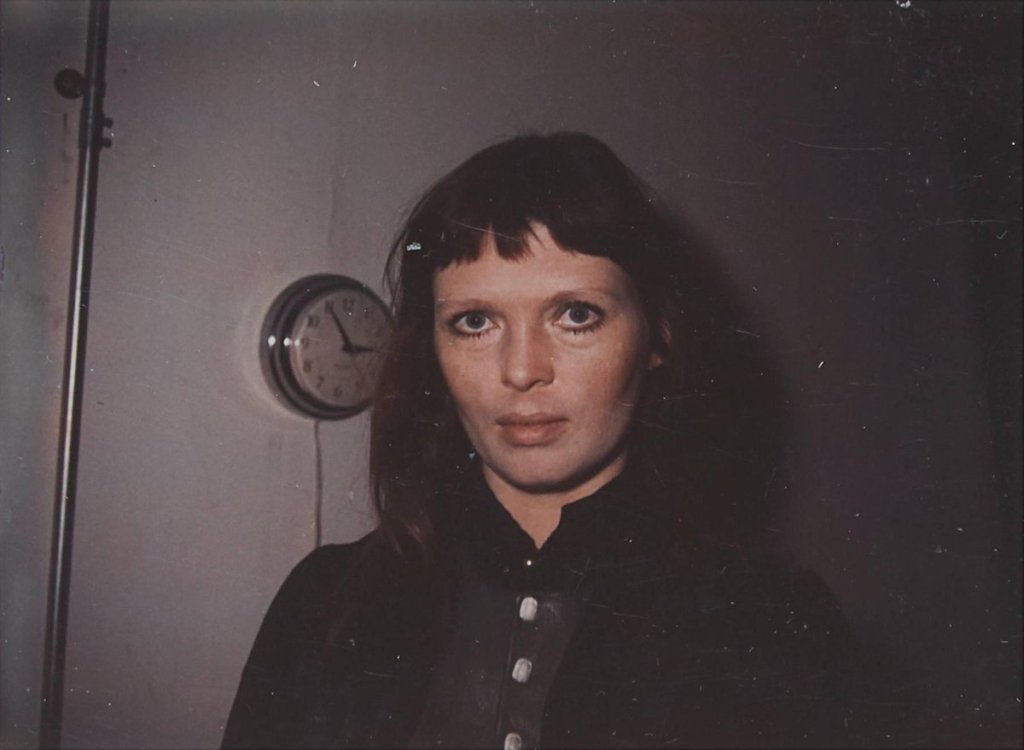
Earlier this year, I was asked to discuss Nico for a film to accompany a version of Femme Fatale on an album released in support of the Teenage Cancer Trust.
I talked on camera about my friendship with Warhol silver Factory photographer Nat Finkelstein (his picture of Lou Reed features on the back sleeve of the VU and Nico LP), who I stayed with in NYC over one crazy summer in the 80s (fictionalised in my novel Looking for a Kiss). He hated most of the Factory crowd, but respected Nico. I also talked about the strongest version of her voice – a new poetry of bleakness and sorrow – found on Janitor of Lunacy from the LP Desert Shore; and the pre-historical pagan magic (definitely disorderly magic ) that filters up in Evening of Light – my favourite Nico song – soundtrack to a short 1969 film featuring a young Iggy Pop by director François De Menil.
I also asked: where do the midnight winds go?
And I thought, and still think, about:–
Chelsea Girls on a slow/fast loop, with screen-printed souls, silver fluorescent haze, ghosts of Superstars in broken looking glass. Femme fatale in a turtleneck of shadows, lip-curl velvet, existential bravado – Nico; the kind of person you meet, in whatever way, and emerge transformed to some degree.
Beat drops. Patti-Smith bite. Siouxsie eyeliner like a midnight scythe. Clash-cut rhythm, downtown hymn – 1976, first time her voice slid into my room – contralto made of smoke, from ash and cathedral shadows – a voice too low for the baby-girl 60s, too dark for the sunshine pop factories. A voice like the world’s last cracked prayer.
Old Europe twilight. Disorderly Magic forever.
Nico sings like snowstorm silk, atonal, androgynous, thick with centuries, thick with Dresden flames impossible to forget. Wearing beauty like an insult and tossing it away like a match – one that lit bonfires. Beauty denounced as casual tyranny – darkness as armour, mystery as oxygen. Feeding flames.
And style as wound, wound as song, and song that can outlive every/any man who ever tried to claim/tame/shame.
Iggy said she taught him Beaujolais and art-school tricks disguised as lullabies. He filmed her in a field for Evening of Light, a crack-between-worlds moment where mandolins ring to viols singing, and the midnight winds land as warning. Berlin-ashram meets Michigan-gutter. Music collapsing into beautiful violence. A tribute wrapped in awe, and regret, and the kind of affection and affectation, too, that can only exist between two people who might survive, for however long, their own mythologies.
A shining light for every singer who ever needed to drop their voice below pretty, or permission; or anyone who felt that a woman doesn’t need to shine to illuminate; and who treats beauty as something breakable, burnable, something you could set down and walk away from without saying how very sorry you are; above all anyone who wants a different way to carry their own shadow.
And I am hearing dreamscapes full of dark echoes and erotic street energy. Cosmic ennui that reflects the myth back to the crowd like a funhouse mirror. In a voice that comes from somewhere deeper than the throat – somewhere prehistoric. Silence that knows too much. Whispered in harmonium breath and lullabies sharpened into razors.
Midnight winds circle.
I am also thinking 60s/70s Avant-Garde/Berlin School harmonium drones, tape hiss, proto-industrial rich deep minimalism, European nocturne atmospheres. Cold wave pulses, cabaret limelight dimmed, war-memory spectrality. All of it transposed over the years to Ibiza, New York, Los Angeles, London et al as a poem that moves like a Super-8 reel found in a basement in Kreuzberg, or somewhere like that. Yes, begin with a hiss. Analog snow falling across a broken tape. A low oscillator trembling. A train leaving some empty cold station at 3 a.m. – slow, metallic.
Then: contralto voice carved from coal-dust. The sound of a city learning to breathe after the bombs stopped but before the memory ever could.
Pulses flicker – messages to forgotten futures. Where the streets are half dream, half gaping wound, and art is the only currency. Reverberation as survival strategy.
Christa Päffgen, with Factory scars under her coat, Warhol apparitions, spirits and spooks deep in her pockets, and a harmonium strapped to her soul as life and death-support machine. Dressed all in black because colour is hope, and hope is sin.
This is not pop. This is architecture. Built from absence, steel, and memory, perhaps. Nico steps into the drone. War Memory as Original Drone. Repetition becomes revelation. Revelation as trance. Grammar of ruins turns into ritual.
I thought, and am thinking, about slick pavements, streetlamps rattling and failing like old ballroom pianos struggling to project their tone. In the silence between footsteps you can hear the rumour that darkness is not the absence of light but the cradle of it – and that some voices do not break – they remain unbroken, untranslated forever.
Where do the midnight winds go? To the end of time, of course, honey, to the end of time.
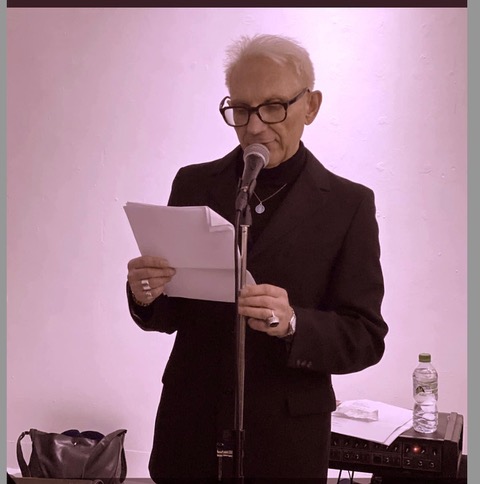
Richard Cabut is a London-based author, whose CV includes the sister books, the popular work of modern literature/poetry Disorderly Magic and Other Disturbances – ‘subterranean scenes, picturesque ruins, neon glowing, Chelsea Girls, the damned, the demimonde, the elemental, being on the edge of being pinned down by our ghosts’ – and Ripped Backsides (both Far West Press), a dreamlike, dislocated and fragmentary Situationist drift through the noir cities. Also, the Freudian 80s cult novel Looking for a Kiss (PC-Press), which has been adapted for screen. And, Punk is Dead: Modernity Killed Every Night (Zer0 Books).
He’s also a journalist – ‘NME, BBC, anarchy’ – a former punk musician, a cultural theorist, playwright and long-time chronicler of the underground. richardcabut.com
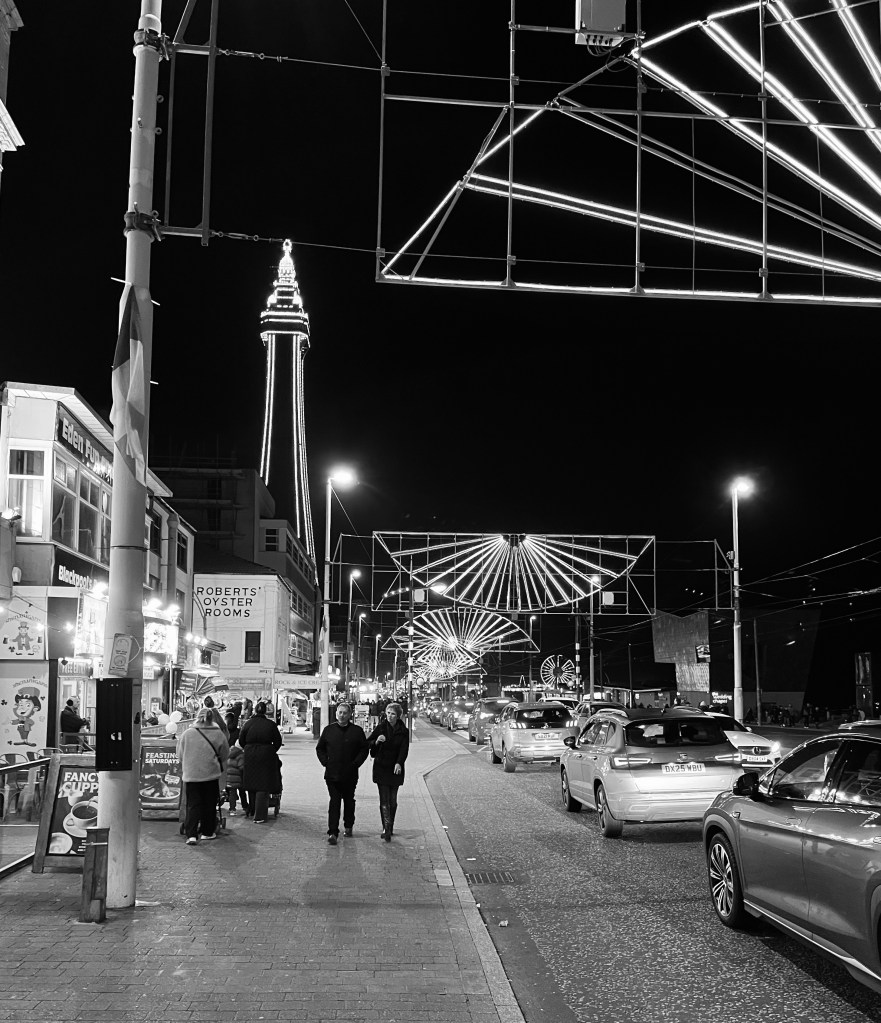
The North Shore, Blackpool. All photos by Stefan Svennson.
Every year, in the last week of June, the mills, engine rooms, and coal mines in Oldham closed down, and an exodus followed. My great-grandparents, George and Alice (both born in 1867), dressed to the nines, would board the ‘Wakes Week Special’ at the station and head for Shangri-La. The railway served as a steam-powered conveyor belt that shifted human assemblies from the factory floor to a manufactured seaside resort I had the best of reasons to return to Blackpool. It was a joke of a place where you could let rip, lose yourself and fall in love. It was my seaside heritage and had become synonymous with northern soul.
The West Coast express from Euston was packed with jovial passengers, many bursting with stories, but even before Watford Junction, I was in the zone, oblivious to my surroundings, absorbed totally in forcing sonic madeleines up to the surface. The first to return was the voice of my father, “Look, son, can you see it, there, faraway beyond Crow Wood?” From the same vantage spot on Billinge Marilyn looking out to where the skyline met the Irish Sea we had seen an island of unearthly beauty covered with trees. Once he was certain I had spotted the thin vertical silhouette that he said was the Eiffel Tower, he started to parrot, “There’s a famous seaside town called Blackpool, that’s noted for fresh air and fun, and Mr and Mrs Ramsbottom went there with young Albert, their son. “
I eventually arrived with my bucket and spade at the advanced age of eight and a half. Outside the Fun House on the South Shore, an automaton with large, round eyes, bright red lips, and a disconcerting gaze sat inside a glass cabinet. A crown was resting on its frizzy hair and a sad Pierrot sat on its lap. As it rocked on its throne, it emitted a deranged cackle that I felt compelled to imitate and which, like a nursery rhyme, would become indelible. At the Winter Gardens, I had been mesmerised by a magician in his tailcoat and white bow tie called the Amazing Yoxani who was bound, placed in a bag, and then locked in a large trunk by a female assistant. The heavy curtain fell, and when it rose moments later, there he was, bowing and smiling at the audience. He then bounded over to the trunk, unlocked it, and liberated his female assistant. I knew it was a trick, but it didn’t matter but it felt very real. Cinematic flashbacks of the wooden hut for lost children at the entrance of Pleasure Beach, the pennies that never fell from the shelves in the amusement arcade, sheets of spray spilling onto the promenade and the drawn curtains of the fortune tellers’ kiosks flooded in as the train approached Warrington. In the menagerie at the Tower, I listened to a recording of Stanley Holloway reciting his monologue of Albert and the Lion. Dressed in his Sunday best, young Ramsbottom had stuck a stick with a horse’s head handle into Wallace, the lion’s ear and paid for it with his life. My father had frightened me by telling me it was a true story.
My paternal grandparents, Ben (born 1892), a machine fitter and Doris (born 1899), had also gone to Blackpool by train from Oldham during wakes week. Granny once told me that when the Tower and the gleaming sands came into view through the carriage window , the atmosphere changed. The starchiness vanished, and the excited holidaymakers burst out singing, passing round bags of sweets. She also told me of a rainy day on the promenade when she had watched with astonishment as a group of miners she recognised from Wood Park Colliery had passed her jigging with joy.
I changed trains at Preston and on the last short leg through the flat and characterless Fylde plain a man sitting opposite me asked me if I was off to see the ‘Lights’. When I told him I was going dancing, he replied, “You’ve got the right place, pal, they even dance in the street.” Blackpool North had an end-of-the-line feel. Its platforms were deserted, and its surroundings resembled a sanitary landfill. Inside the station, there was a large concourse with no seats that served as a holding area beyond the automatic ticket barriers. Two long queues of passengers snaked round its perimeter. A gaggle of officious station foremen guarded the platforms to ensure orderly boarding for the trains to Lime Street and Manchester Airport. Outside the station, there was a connecting underpass to the tram interchange. Head down, I hurried past a group of inert heroin addicts and a man wrapped in a layer of homemade lard, clutching a can of ale. Behind me, I heard the low hum of a modern tram gliding towards the shore. Talbot Road felt edgy, cut off and run down with swathes of arrested brownfield development. Even in the town centre, there was a moribund low season feel. The many multi-storey car parks and spacious lots were almost empty and the few people in the street seemed in a hurry to get home
In a few minutes, I reached the Golden Mile . The priapic Tower was lit in indium blue, and the Prom bathed in electric sunshine. There were many live shows and music venues on the strip. At the entrance to the North Pier a middle-aged woman where I bought some sticks of rock called me ‘sweetheart’ in a cheery Lancashire brogue. The illumination and movement had lifted my spirit. Someone had written in chalk on the pavement, Yesterday is history, tomorrow is a mystery, today is a gift of God, which is why we call it the present. It was a sin to be unhappy in Blackpool. The Scots and Scouse hordes were walking the walk, and there was a hen party from Yorkshire. I could hear the sea booming in the dark dusk. Ocean Boulevard, The Esplanade and the Atlantic were the set for our shared illusion. Dray horses with jingling bells were clip-clopping towards Central Pier pulling pink Cinderella carriages sprinkled with tinsel
There was already a line of old souls outside the Tower Ballroom, intent on securing tables close to the dance floor. I walked towards Pleasure Beach, hoping to hear the bellowing mechanical laugh of the ‘King of Fun’, but all I could reconnect with was uptown Motown and Stax music coming from the crowded bars. The scaffolding of the roller coasters resembled glittering lattices in the darkness. Their cars, full of screaming late-night riders crawled up the steep inclines before shooting comet-like through a starless sky. The Blue Waves, The Windmill and The Sands were derelict, but there were still plenty of pet-welcoming boarding houses advertising Free Showers. The Sea Front Camelot Tea Rooms, which I felt I remembered from seventy years ago, was offering every permutation of the Full English breakfast.
When I returned to the Tower, the queue had been replaced by a strong smell of vinegar and fried onions. I looked up at its archways, stained glass windows and the vertiginous criss-cross lattice of iron and steel. I showed my ‘Togetherness’ wristband to the smiling doorman and climbed the stairs to Circus Walkway. As I rounded the first corner, I was hit by the sound of Frankie Beverly belting out If That’s What You Wanted. I started to mouth the lyrics with the same autonomic reflexes that compelled me to mimic heading a ball every time I watched a corner kick:
Ha! Since I’ve been left here, darling, I’ve been walking into closed doors, call yeah! I needn’t tell you how much I love you, but I just can’t take it no more, ah yeah!
The final three in the Dance Championship, Tower Ballroom, Blackpool.
The ballroom on Level 3 was rococo with Victorian knobs on. It was adorned with columns, arches, cherubs, friezes and balconies. A large crystal chandelier hung from the sliding roof. An invocation to the dance written by William Shakespeare, “Bid me discourse; I will enchant thine ear”, written for Venus in her seduction of Adonis, was emblazoned on the top of the proscenium arch. Below the stage, the Mighty Wurlitzer used to orchestrate the quickstep, tango and waltzes lay dormant for the weekend. The disc jockey, Richard Searling was tucked unobtrusively between two large LED video screens whose purpose was to magnify and project the spinning discs. The music was rawer and looser than Motown but had the same mono, four on the floor backbeat. Every record had a hook line that was repeated over and over and the beat was kept heavy. I imagined the clanking and grinding of engines, the honking of forklifts and the rhythmical high-pitched clatter of looms on the mill floor. A fervent, supercharged excitement rose from the ballroom’s sprung wooden dancefloor. The dancers’ intricate backward swerves, dervish spins, Soul Train turns, backdrops, swallow dives, and somersaults of the dancers reminded me of the amphetamine-driven rats I had studied in the speed laboratory. The music seemed timeless. Soon I was floating out on the floor, feeling the syncopated horns and strings, galvanising my thinning muscles. I was still the old modernist, making moves I didn’t know I still had in me. I owned the music, kept the faith and was not too old to dream.
The stars of the northern soul scene were black American artists, almost unknown to the general public and a handful of blue-eyed white singers like Frankie Valli, Timi Yuro and Dean Paris. The disc jockeys were unfussy magicians who constructed an illuminated reality from pieces of plastic and were able to create an illusory willing suspension of belief . Most of the favourite tracks were obscure flops from the sixties and seventies with furious melodies, heavy syncopation and powerful vocals. Years of communal connoisseurship had led to an impeccable quality control. As the hours passed, listening to the music, I fell into a trance. There were moments when I was carried back to the Abracadabra magic show with a white rabbit materialising from an empty top hat and a bunch of scarves rising in defiance of gravity. The music became a healing force that loved me back.
Around midnight on the second day, I climbed up to the sweeping upper balcony and looked down, scouring the floor for the Dopamine Dancer and for David, the Boy Miracle from Stirling, who had been brought back to life after a brainstorm by a northern soul tape. The stomping was spontaneous, improvised and high energy. There was no leader, everyone was free to express themselves in their own way but a strong sense of etiquette existed on the floor. Each dancer reacted to those in closest proximity and avoided getting too close by steering an instinctive course, which returned them to their own spot sometimes marked by a pool of sweat. Everyone was committed to having the best night ever. Fifty five years after it began northern soul was now being kept alive by the children and grandchildren of the pioneers from the iconic venues like the Torch, the Highland Room, The Casino, The Catacombs, the Pier, the Ritz and the 100 Club, Some renegades from the funk and disco scene who had belatedly found the holy grail and a few visitors from the Japanese, Australian and Canadian scenes injected new blood. Some of the old soulies were now too unwell to dance but still got high on the music, and there was still plenty of fast footwork in evidence from bald elderly men in Fred Perry shirts, vests and baggy trousers and glowing women of a certain age with long circle skirts and lightweight tops. The motion was soulful, passionate and beautiful to watch. First, I spotted David in a white shirt sitting with friends in ‘ Scotch Corner’ close to the stage on the left in front of the record stalls. Then I picked out Anne, the Dopamine Dancer freed from the shackles of Parkinson’s disease, dancing in the middle of the ballroom. Music had released her handbrake and she could dance all night
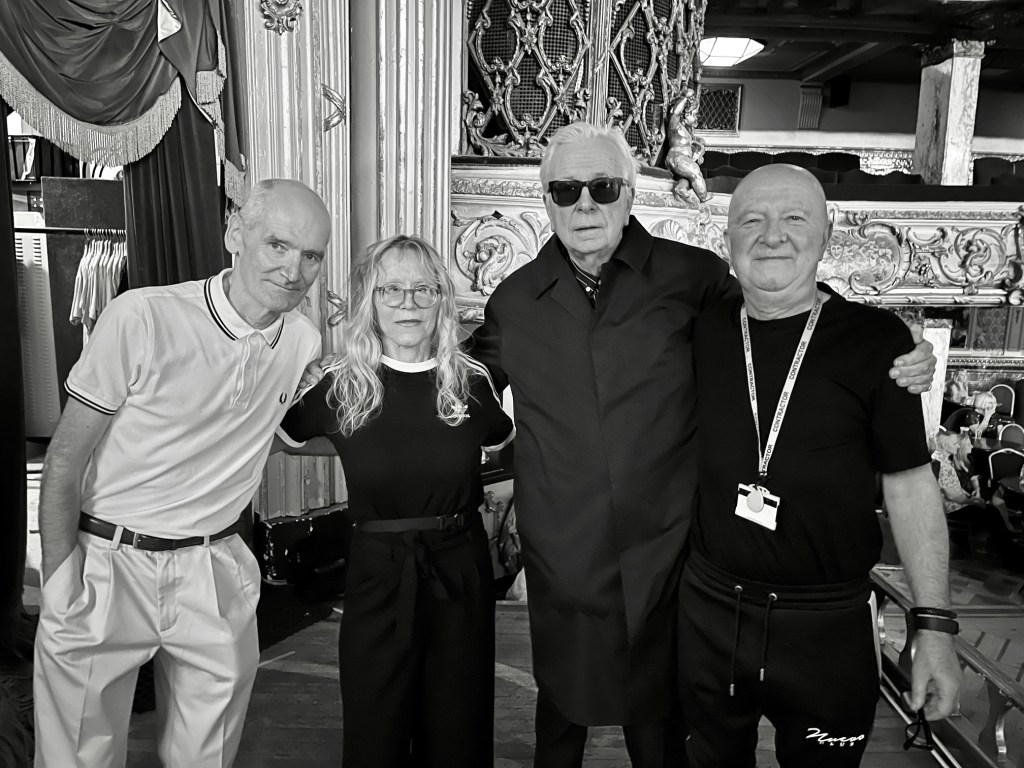
From Left to Right: David, Anne, A. J. Lees and Richard Searling, on the stage at the Tower Ballroom, Blackpool, November 8, 2025.
On Sunday afternoon, I took a tram back to the station with my heartbeat still turned up and wreathed in a glow of animation. A burly man with a loud voice told me it was a free ride then warned me to transfer my wallet to my back pocket. As my train pulled out of Blackpool North. I felt that I had become truer to myself. The invigorating make-believe world of northern soul was a portal to authenticity. It brought home that the high bogus of scientific fraud, doctored clinical trials and the sale of counterfeit medicine had dragged me down. Some technological titans who believed in the infallibility of machines were trying to reduce medicine to a measurement and I had read about unaccountable customer-friendly chatbots that encouraged the suicidal to kill themselves. Moving to the music had helped me rebuild and resynchronise. The trip to Soul Town told me I needed to take more time out to dance on the edge of volcanoes and spend time watching the sunbeams flirt with the shadows. I would continue to respect data, but I must never lose my delight in magic and faith in God
Footnote: In 1923 Blackpool football club founded in 1887 adopted a distinctive tangerine shirt with its team wearing it for the first time in a 2-2 draw against Oldham Athletic. I associate tangerine with warmth, high energy, adventure and cheerfulness.
. . .
A.J. Lees is a Professor of Neurology at the National Hospital, Queen Square and University College London. , He pioneered the use of apomorphine for the treatment of Parkinson’s disease and has received international acclaim for his expertise in the treatment of abnormal movement disorders. He is also an original member of the Highly Cited Researchers ISI database. Born in St Helens Merseyside, he qualified in medicine at the Royal London Hospital Medical College, Whitechapel in 1970 and received his training in neurology at L’Hôpital de la Salpêtrière, Paris and University College London Hospitals. His book Mentored by a Madman, The William Burroughs Experiment (Notting Hill and New York Review of Books) published in 2016 explains the unlikely association between his neurological career and the author of Naked Lunch. His latest book Open the Door to your Heart describes the importance of dance music in his own life and in the restoration of function in some of his patients.
Small, childish hands of a small, childish body. And its childish legs stood on the ledge of a grey, concrete obelisk. Big, adult clothing was hung around and hugged its body. Slithered its hands and small, childish fingers out of the long, snake-like sleeve with two needles. Threw one over the ledge and punctured the young meat of its finger with the other. In from one and out from the other end. Sew the fabric of reality into itself.
It inhaled the measured, sonic existence of the concrete forest. After its hand came out when it reached into its pocket, the weird, long, white, plastic strand of earphones was hanging from its fingers and small, cute nails.
This exclusive track, DOMINATOR, explores themes of sexual obsession and late capitalist psychology in an age of unreason.
PRIMITIVE KNOT is a Manchester (UK) based artist who explores themes of obsession, transgression and the nature of reality through a diverse selection of musical styles. Recently, he has released acclaimed albums (PURITAN, BRUTALISM) on US label Deathbed Tapes which feature an innovative fusion of industrial, power electronics and metal. Twitter// Bandcamp
before they play,
they feel a deep-boned ………………… pre-knowing …… of the legerdemain of fire
unbidden, … before they play,..they …….g listen hot in thren & s- ……………………………… way … a sorcery,
a silent infinite orrery of warmth Continue reading “4/4 by Petero Kalulé”→
‘Cybergothic,’ write the Ccru, in an essay titled ‘Unscreened Matrix’, ‘finds the deep past in the near future’. There is a Crypt, a shadow space that exists beneath the gleam of our cyber reality:
Sprawling beneath public cyberspace lies the labyrinthine underworld of the Datacombs—ghost-stacks of sedimented virtuality, spiralling down abysmally into paleodigital soft-chatter from the punchcard regime, through junk programming, forgotten cryptocultures, fossil-codes and dead systems, regressively decaying into the pseudomechanical clicking relics of technotomb clockwork. Continue reading “Cybergoth Archaeology: The Seductive Datacombs of OPN’s “Age Of” by Maria Sledmere”→
Fragment I
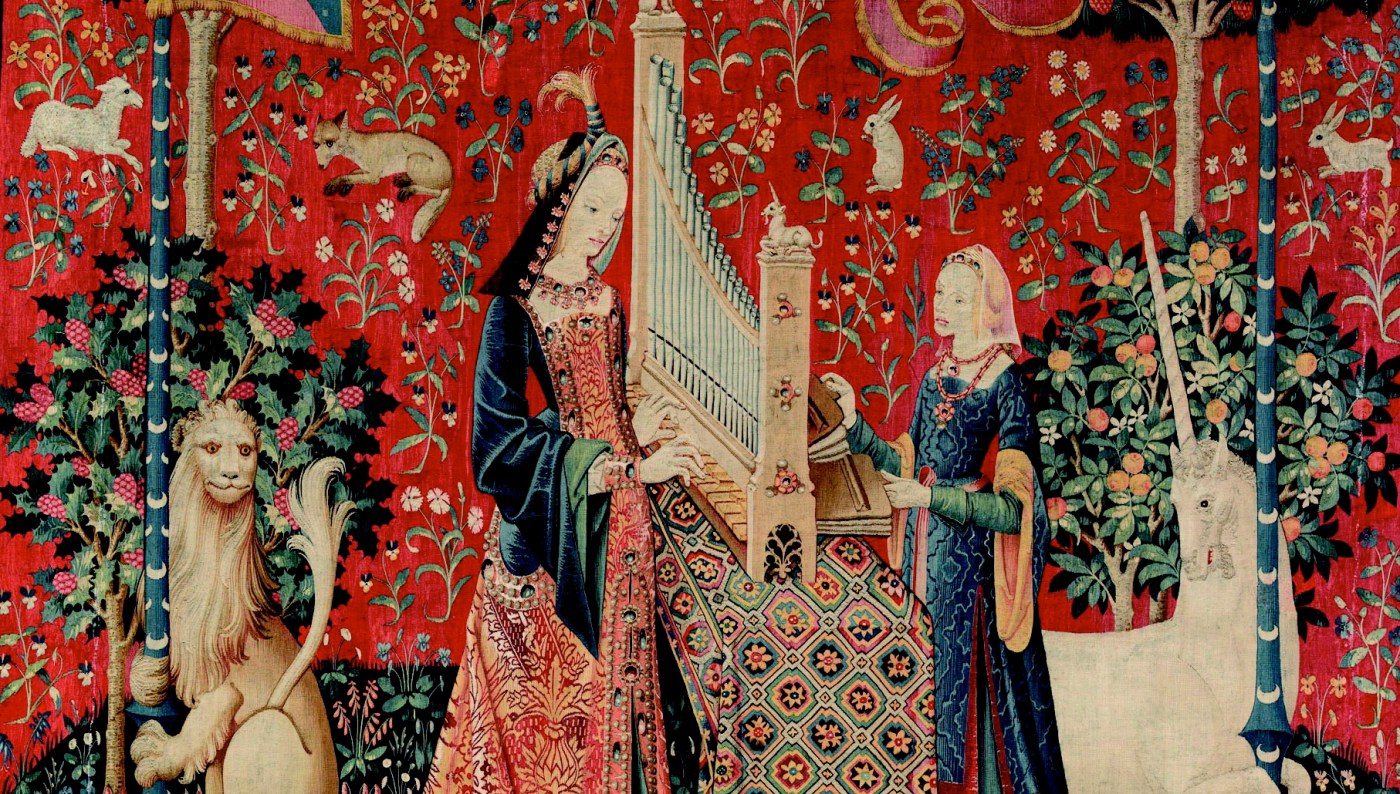
The story of a screech: it rose as the last bus of the evening crossed the borders of the city to the motorway. All seventeen of us on the top deck turned our heads. Oh yes, it was perfunctory (because on a double-decker you cannot really see what’s going on behind you on the road, even less so in the dark), but the gesture had already captivated me – the meaning, the intention. By the time all heads were turned, it was clear that we had all misjudged the nature of the screech (pitch dropping, frequency decreasing as it unwrapped). This could never come from a human throat, but rather from the strained brakes of a vehicle. Continue reading “Three Fragments On The Portative Organ* by Eva Ferry”→







 BURNING HOUSE PRESS
Cybergoth Archaeology: The Seductive Datacombs of OPN’s “Age Of” by Maria Sledmere
‘Cybergothic,’ write the Ccru, in an essay titled ‘Unscreened Matrix’, ‘finds the deep past in the near future’. There is a Crypt, a shadow space that exists beneath the gleam of our cyber reality:
Share this: