
Coming soon for 2018 on BHP – guest editors/open submission calls/and books books books…

photos & an experimental essay
by Amee Nassrene Broumand
It’s raining at the moment. Calling it rain might suggest a downpour or perhaps a steadiness of purpose, but this rain is too ambivalent for any of that relative cheeriness. This is slacker rain. This rain drizzles on and off all day, turning the landscape into a listless void. It’s hard to even tell the color of the light in such rain—is it grey, or is it a lurid shade of green?
I’ve never been sure, yet I know it well: as I child I stared out of myriad windows into this rain—into the glistening trees that slouched with waterlogged branches—and tried to imagine the sun. It didn’t work, of course; the rain had seeped into my mental eye. Instead of sunlight, the inside of my skull grew lush with moss. Forests sprang up, haunted by arboriform spirits and carnivorous umbrella monsters. Predatory ferns infected my temporal lobes and burst outwards in Medusa-like fronds, marking me as forever coiled, an absurd Beardsleyan grotesque.
The sun is out of reach. Continue reading “The Fire, the Eclipse, and the Spiders”
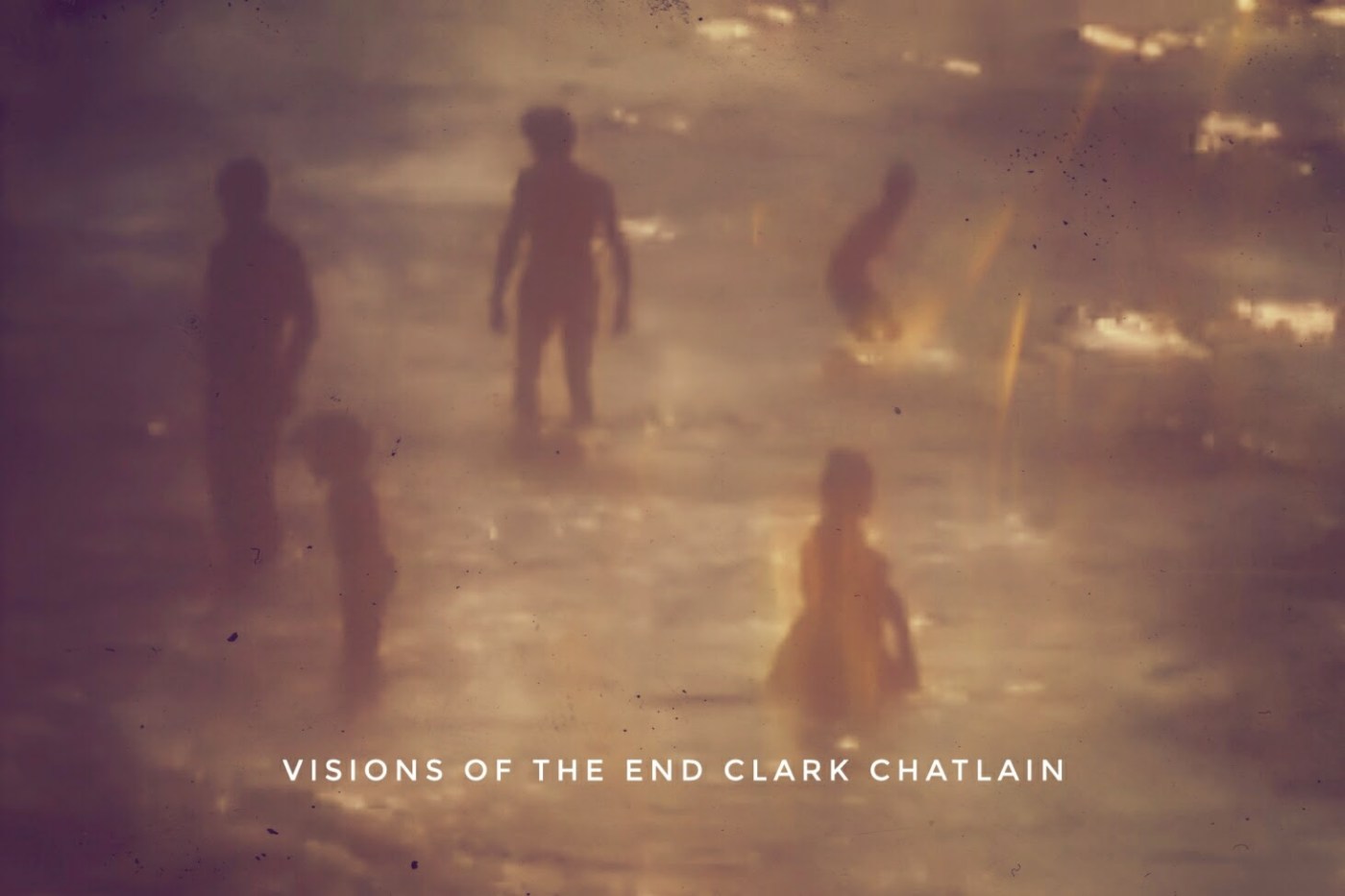
we live today with the sense that the apocalypse is underway. our world is a world lit by revelation. we believe we have seen our own end, that it has been revealed to us, for that is one meaning of the term apocalypse: to reveal, to uncover. when John of Patmos narrated his vision he gave us his apocalypse, and though it was rooted in his Christianity and even more in his time and his world, it is still now our most common exemplar of an apocalypse. this meaning of apocalypse, this revelation and uncovering of the end, is closer to our understanding of our world than we might think. while the generations and centuries before us found themselves, for the first time, living in a disenchanted universe, we are today the generations that hear and read daily that our world is ending. Continue reading “‘visions of the end’ by Clark Chatlain”


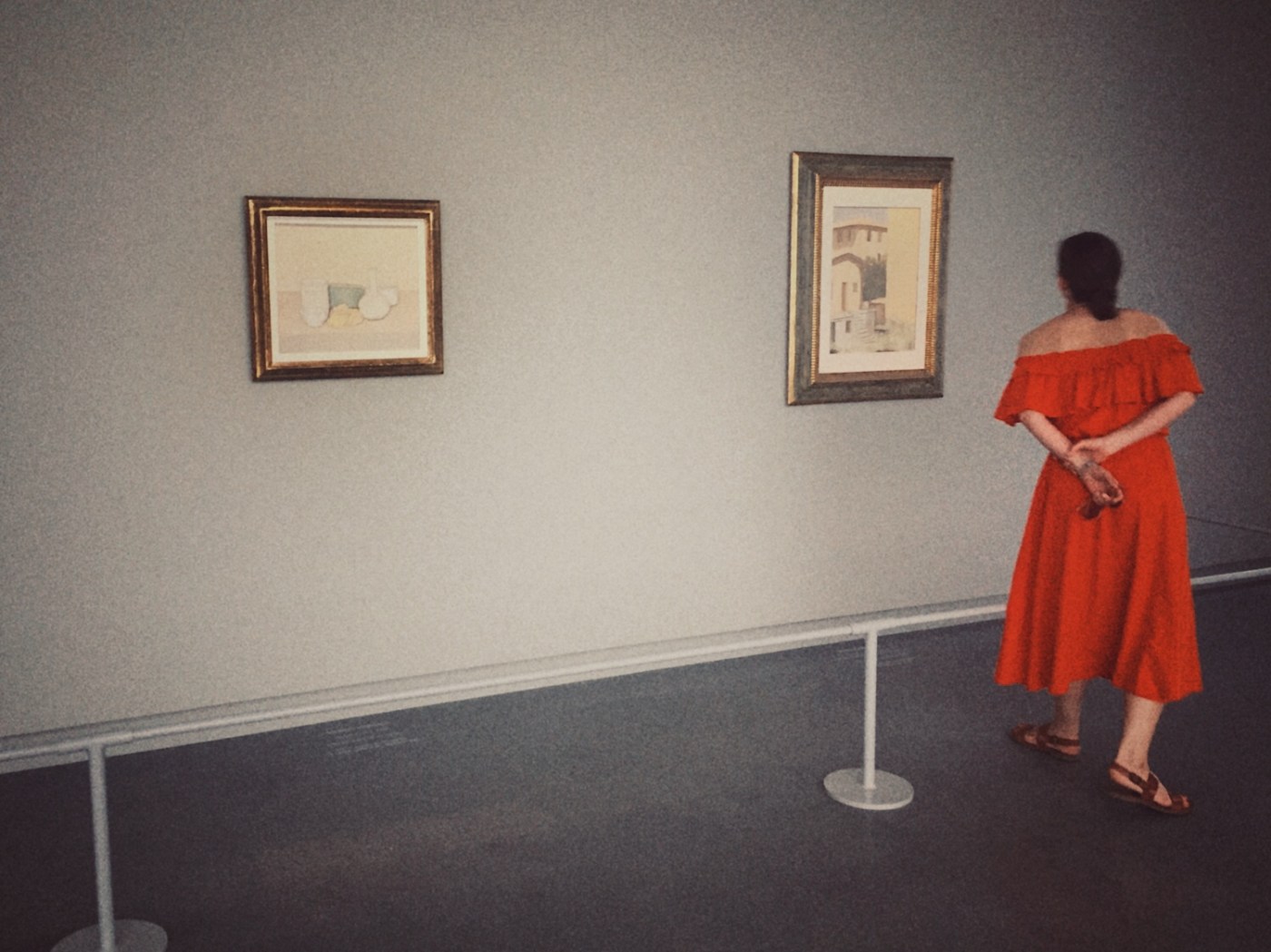
By Fredric Nord
I realize how this obsession has gone too far. I’m on a bus cutting through Stockholm, it’s a smug city but easy on the eyes. I’ve dressed up for this. I’m on my way to see Morandi at Artipelag, beautifully situated in the archipelago. My expectations are high, feeling a bit too happy for paintings, a bit nervous. I’ve seen so few of his works in real life, only once before, and they affected me so profoundly that the big painting next door, some ceiling job by some dude named Michelangelo, left me cold and meh. I seem to have something at stake here.
And for this text, I will be Don Quixote de la Costanza.

by Fredric Nord
You complete me, he says. In the movie. Manufacturing swoon and meme for the masses. Romance aside: I stare at art. I’m stunned by some lines of charcoal on paper. I’m liberated. It completes me. A moment of Eureka soft as morning. An Oh Snap gentle as the night. Our habit is of completeness: each irregularity will eventually be found by a being that seems born to complete it. Our habit is of individuality, and then overcoming it. Continue reading “What trumps love”
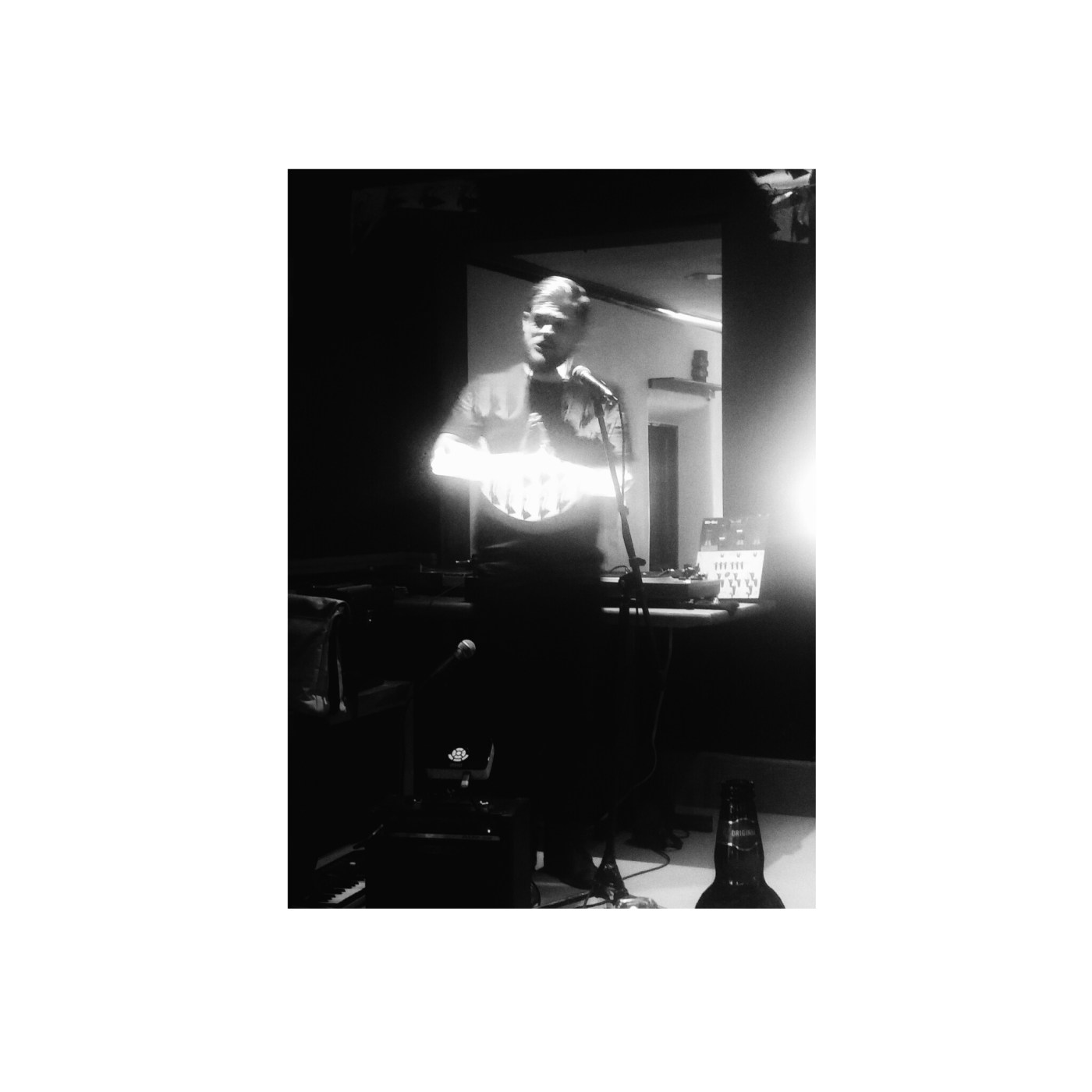
Bill Moran (Good Ghost Bill) is a poet, performer and writer from Austin, Texas – and Bill was in Nottingham to perform for us at Speech Therapy whilst on his recent European tour back in May. Continue reading “‘The Good Ghost Bill Moran’ by Miggy Angel”

I don’t know how to write about Lol Stein. I’ll start there, with an admission of my own limitations, a confession that any review that I write will fail to encompass all that I felt while reading it and all that I feel all these months and years later. Anything I write about it will be mired in my own history and my own memories.
I hate writing reviews because words never touch the experience of reading a book. This review can’t make you feel what I felt, holding the book in my hands, discovering the words on the page, all the moments in which images and scenes have flashed in my mind. But I want to say something about this book. I have so much that I want to say.

The Arsonist Magazine Edition 01 – available to purchase here

Featuring the best poetry, flash fiction, photography, art, interviews and features from around the world, including the UK, Japan, Canada, USA, Malaysia, India, Philippines, Sweden:
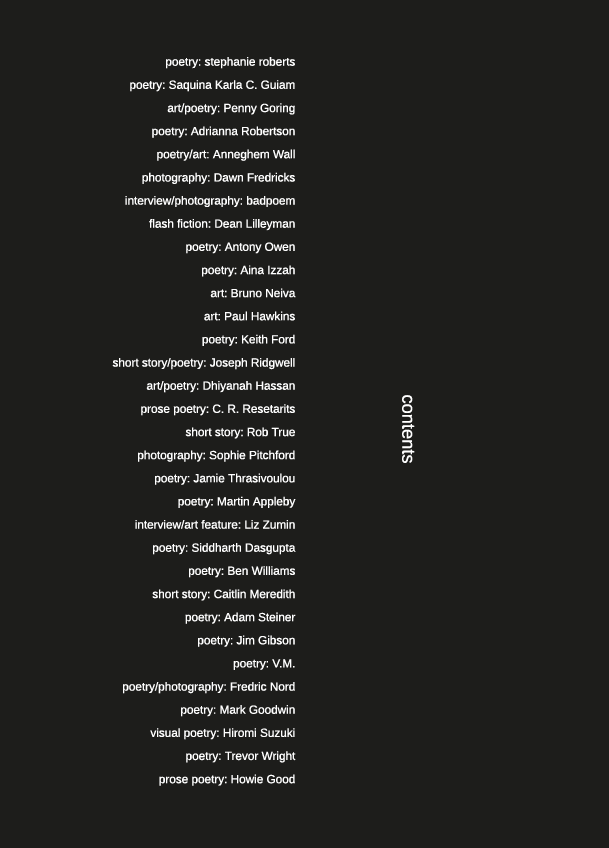
stephanie roberts – Saquina Karla C. Guiam – Penny Goring – Adrianna Robertson – Anneghem Wall – Dawn Fredericks – badpoem – Dean Lilleyman – Antony Owen – Aina Izzah – Bruno Neiva – Paul Hawkins – Keith Ford – Joseph Ridgwell – Dhiyanah Hassan – C. R. Resetarits – Rob True – Sophie Pitchford – Jamie Thrasivoulou – Martin Appleby – Liz Zumin – Siddharth Dasgupta – Ben Williams – Caitlin Meredith – Adam Steiner – Jim Gibson – V.M. – Fredric Nord – Mark Goodwin – Hiromi Suzuki – Trevor Wright – Howie Good
The Arsonist Magazine Edition 01 is a 92 page full colour/b&w matt/gloss perfect-bound A5 magazine (this is a limited edition and, being the inaugural print publication from Burning House Press, is sure to be a collectible item)
The Arsonist Magazine Edition 01 – available to purchase here
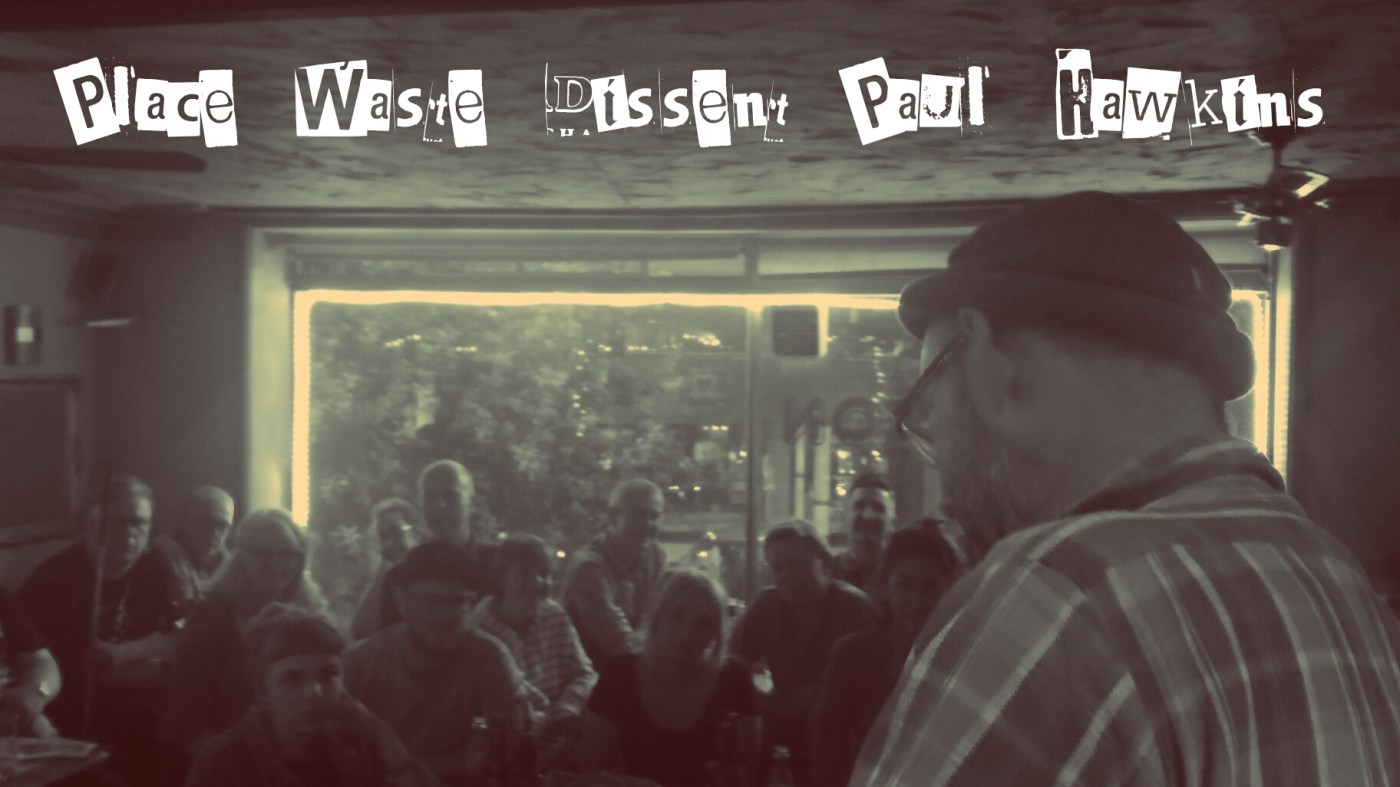
Between the years 1990 – ’93, the poet Paul Hawkins was squatter/occupier/protestor in one of the most contested of spaces in the U.K.’s recent and past history of place-and-occupancy wars. Claremont Road, in London’s East End, was an occupied site and scene for the protests of the ‘No M11 Link Road Campaign’. Paul Hawkins was there, and has documented what took place in his book, Place Waste Dissent, published by Influx Press.
In the foreword to the book, Alice Nutter refers to Claremont Road as ‘the symbol of resistance to the road-building programme of the early ’90s’ – Place Waste Dissent operates not only as flame held close as intimate torchlight illuminating that symbol, but as intravenous entry point into the sign itself. An immersive invocation of the sign and the times it symbolises, a border-shamanic reanimation act that brings Claremont Road back breathing bleeding spitting and bounding into the now. Into the Now that requires reckoning with what was and is still its Then.


Part 3: ‘Discussing Death’
My first memory of death is linked to a man I never knew. My mother’s father died of a heart attack before I was born; the irony is that I know more about his death than I do about his life.
The entirety of the man has been reduced to a single black-and-white obituary photograph that my mother faithfully keeps at her prayer altar. Then, there are the stories. The stories of what an influence he was in my mother’s life, how he used to work with the British Royal Navy (this was in the 1940s and 1950s, in a pre-independent Singapore that seems as much of a myth as my late grandfather), and of course, the stories about how he died, and how that changed his entire family’s life.
It is funny, what death does. It slowly morphs to form the central narrative of a person’s life, as if only through death did his life gain meaning and importance and weight.
Continue reading “‘Walking Towards Death’ – 5 Essays on Mortality by Arathi Devandran”

The Arsonist Magazine edition 01 – featuring flammable materials from 30 international writers artists photographers – Coming Soon

I started reading Margaret Atwood’s The Handmaid’s Tale after the 2016 election. The book felt timely as we, as a people, confronted an uncertain political future. To be honest, I was gutted by what happened. I was troubled and grief-stricken that a man who boasted about sexually assaulting women, a man who dehumanized every group of people except straight white men, a man who lied every time he opened his mouth, was elected President of the United States. I know many of us are still reeling, maybe we’re even numb.
I decided that I would turn to literature as a way to cope with what happened. Writers give me hope. Writers are always dangerous because they ask us to empathize with The Other and they engage in complex, critical thinking. At least the best writers do. They challenge the status quo. They force us to rethink our assumptions, prejudices, and traditions.
Continue reading “On Margaret Atwood’s The Handmaid’s Tale and Yearning”

SUBMISSIONS FOR THE 1ST EDITION OF THE ARSONIST MAGAZINE NOW OPEN – SEND US YOUR BEST – CANT WAIT TO SEE WHAT YOU MADE X
Part 2: ‘Mixing Memories’
One of my most beloved memories is that of gnarled hands plaiting my long, curly hair, fingers slowly sifting through tangles, gently unfurling errant curls, and tucking them neatly into the beginnings of a French plait. In my ear, the sound of my grandmother’s voice softly admonishes me, telling me to sit still if I want my French braid to turn out properly.
My grandmother was very good at French plaits, and, as her beloved youngest granddaughter, I took it upon myself to have my hair done whenever I could. It was one of the many perks that came with living with my grandmother, who was my principal caretaker during my childhood years, while my parents were off working and doing other adult things.
Continue reading “‘Walking Towards Death’ – 5 Essays on Mortality by Arathi Devandran”

Barbara Loden is Wanda, as they say in the movies. Her inspiration for the screenplay was a newspaper story she had read about a woman convicted of robbing a bank; her accomplice was dead and she appeared in court alone. Sentenced to twenty years in prison, she thanked the judge. Interviewed when the film came out, after it had been awarded the International Critics Award at the 1970 Venice Film Festival, Barbara would say how deeply affected she had been by the story of this woman—what pain, what hopelessness could make a person desire to be put away? How could imprisonment be relief?
–Nathalie Léger, Suite for Barbara Loden
From an early age, I knew I wouldn’t make it in this world. So I connected with women who, in my mind, shared that feeling. Plath and Woolf with their suicides speaking of a deep pain. Barbara Loden and her film Wanda in which the title character wanders alone and unloved.
Wanda is poor and she is voiceless and she is invisible. I understand the not-thereness of her.
Nathalie Léger felt a connection to Wanda as well. Tasked with writing an encyclopedia entry about actress Barbara Loden, she quickly became obsessed and expanded her inquiry, writing Suite For Barbara Loden, a gorgeous and dizzying investigation and excavation. Léger delves into Loden’s life, at times embellishing and inventing, and analyzes every layer of Loden’s only film, Wanda. The book is fact and fiction and memoir and film criticism; it is a love letter to Loden and the singular film she created.
Continue reading “On Nathalie Léger’s Suite for Barbara Loden“
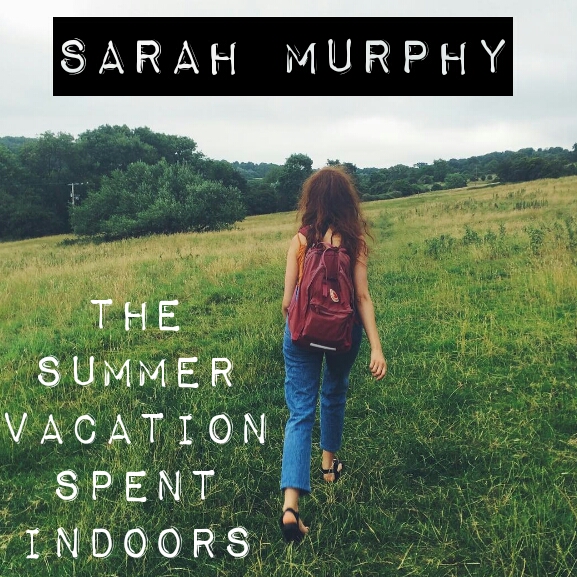
‘What a fine weather today! Can’t think whether to drink tea or hang myself.’ – A.P. Chekhov
Three weeks after I left school for good, twenty-five Facebook messages exchanged in a group chat and eight texts doled out in the absence of Wifi later, a road trip had been planned for myself and a group of female friends. It was to symbolise the Last Summer: our final farewell to school, with the charm of gin and an Angel Olsen soundtrack which was lacking in the leaver’s dinner, in posing for umpteen photos in a lurid eBayed dress, thinking how much less gorgeous than everyone else I looked, and burying my pride in a disappointing chocolate mousse.
“It’s been a decade,” Jaya said as she arrived with Martha and Tess and the others in the road trip cohort that evening, standing in sundresses pulled over swimsuits, the car-park with the huge marina billboard and dilapidated blow-up cinema beside it looking suitably macabre for a adulthood send-off. “It’s been forever.”
“Since you’ve driven?” I asked.
“Since I’ve seen you guys.”
This was not accurate; it had been four days since our last reunion. But ever since school ended, this was how it was: impossible not to quantify everything in terms of forever. Two dollars for a bus ticket to the ends of the earth, please.
Continue reading “‘The Summer Vacation Spent Indoors’ by Sarah Murphy”
Part 1: ‘Watching My Father Age’
For as long as I’ve known him, my father has been the strong one in the family. He was indefatigable; during my teenage years, he worked several jobs, survived on three hours of sleep daily, and still had enough patience to deal with an ailing wife and a mildly hormonal teenager.
My father never fell ill. While most of my early memories of my mother are linked to hospitals and needles and antiseptic cream, my early memories of my father are of tireless hard work, and the absence of any kind of disease.
When I was younger, my father would carry me when I was sleepy. I was tall, even as a child, but that never stopped him from swinging me onto his back, hoisting as gracefully as one could a gangly, all-arms-and-legs kid, and striding to wherever it was that we had to go. He would never utter a complaint, he would never say I was heavy, and he would never turn me away.
Continue reading “‘Walking Towards Death’ – 5 Essays on Mortality by Arathi Devandran”
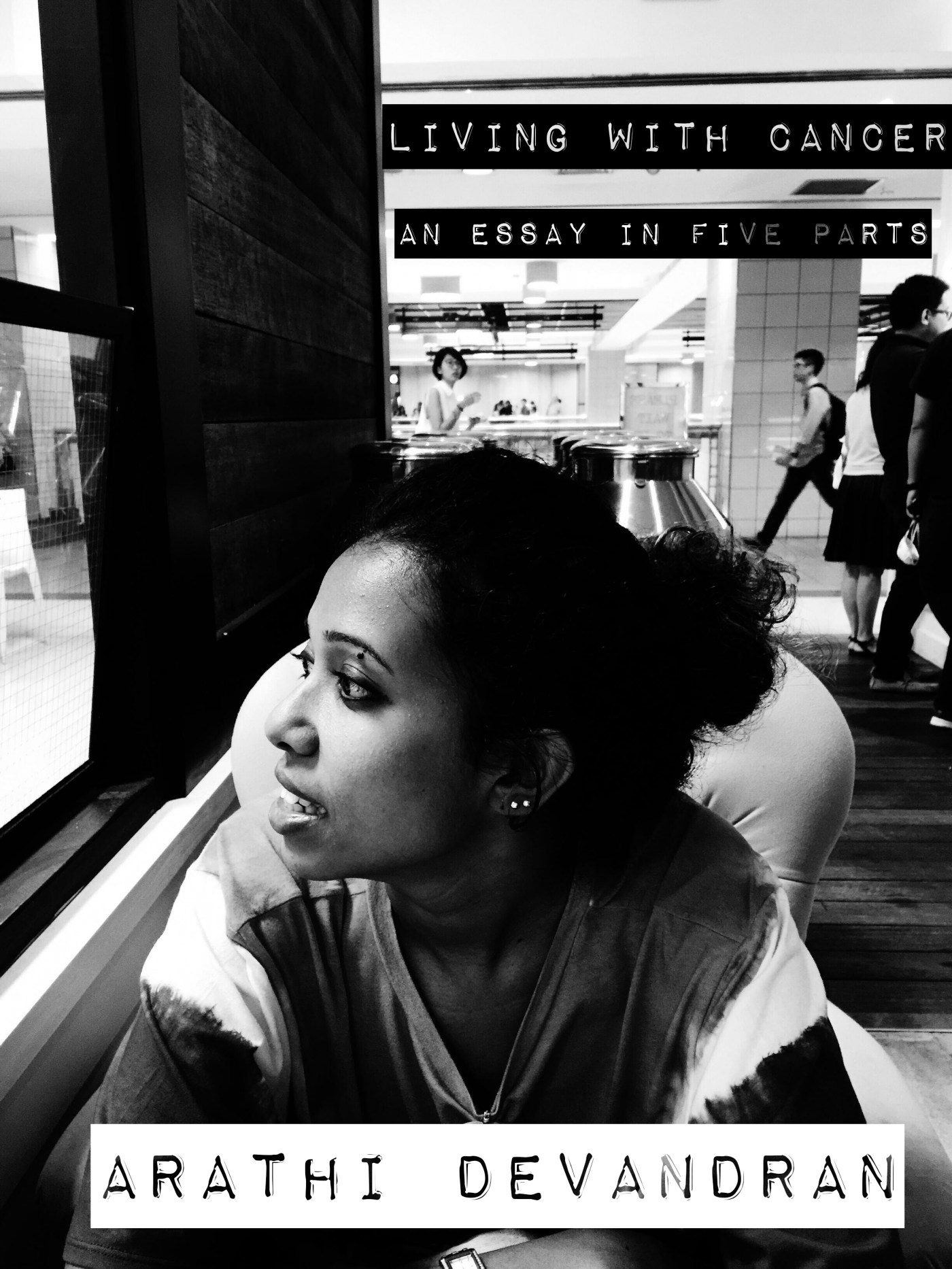
Part 5: ‘The Everyday’
I am heading home after a long day at work, and I receive a frantic text from S, a dear friend. She has received upsetting news – the father of a good friend of hers has been diagnosed with cancer.
“I feel so helpless,” S writes. “There’s not much I can do for her, except remain available for her, and provide her support.”
I pause before replying.
I had been in her friend’s position before, of being told things that had made my world come crashing down around me. Of facing the insurmountable task of needing to be strong, even though all I had wanted to do was to crawl into a hole, to hide myself from everyone, from myself.
It had taken me several years to come to terms with my mother’s diagnosis, even after she was given a clean bill of health.
Continue reading “‘Living With Cancer’ – an essay in five parts by Arathi Devandran”
 BURNING HOUSE PRESS
‘Boredom’ by Liz Zumin
Boredom
I find myself thinking about boredom. Boredom, is a feeling that seems to be prevalent amongst the modern world’s most dominant social experiences of fatigue, depression and various neuroses which are effected in today’s society. It is an inevitable consequence of modern technological advancement where the borders between work and life have become blurred, the world made smaller by the internet, and the news broadcast continuously twenty four hours a day, extending even further into our subjective experience.
Continue reading “‘Boredom’ by Liz Zumin” →
Share this: