
In Casablanca you will expect buildings to be white, based solely on the city’s name, which translates to ‘white house’. But there will hardly be a truly white building in sight. How odd is it to call a city a house? Once you spend a little time in Casablanca, it will make perfect sense. Continue reading “In Casablanca by Ganzeer”

When he died, they covered his tracks and made him hard to trace. Eighty years on, he’s the talk of a frontier town. Philosopher, critic, storyteller, Jew. A father who never knew his granddaughters, born later to an exiled son in London. Continue reading “This Is Not A Memorial, And Other Stories Of Remembrance by Alan Nance”
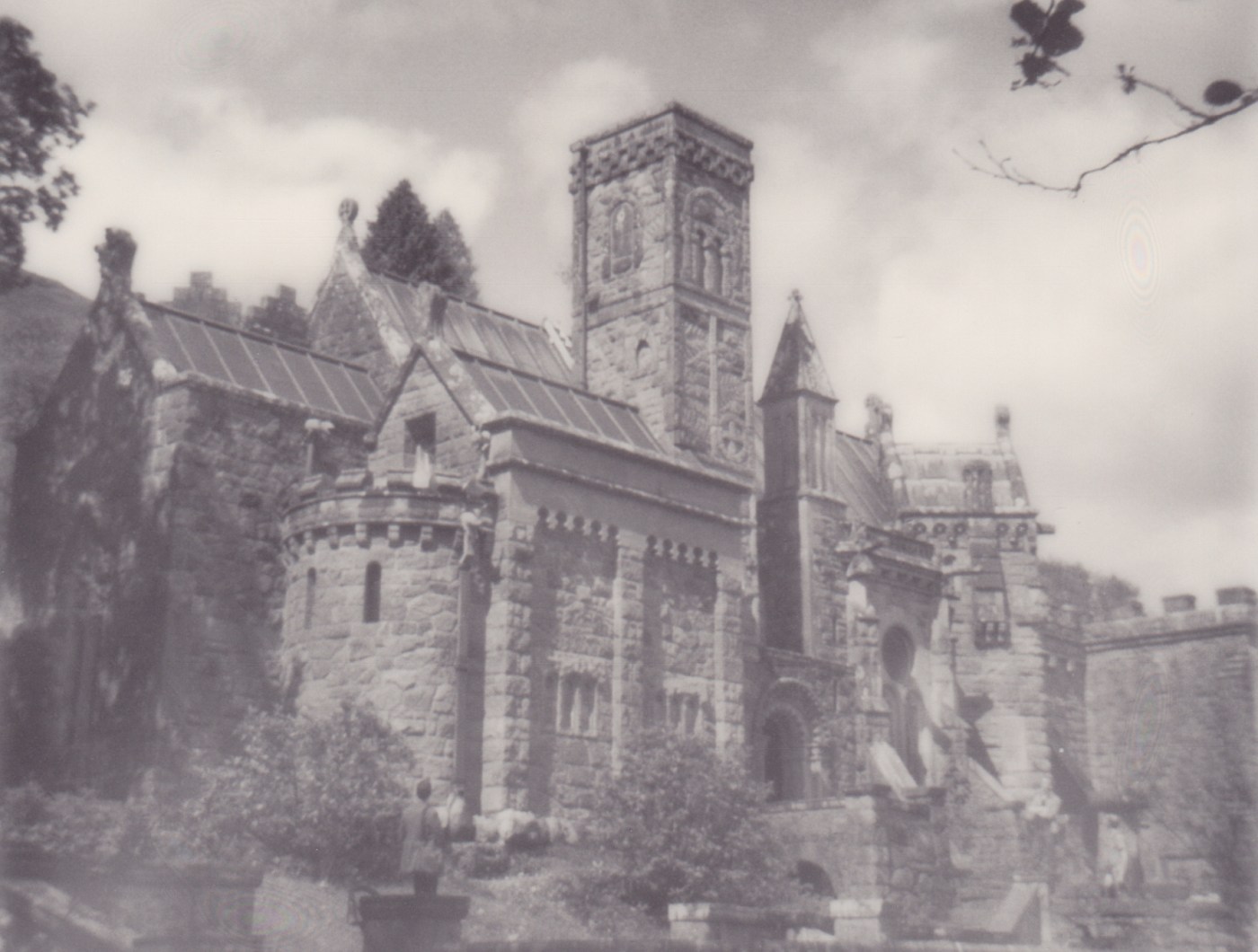
When I was nine, I dreamed of going to Mars. I dreamed of being swept away to fantastical lands. I dreamed of joining David at Groosham Grange, and travelling with Sarah in her quest to the Goblin City. I’m still a dreamer, but I no longer dream of escape. The ordinary and the fantastical inhabit the same world. There are ghosts, vampires, goblins, cyborgs, and aliens round every corner, lurking down every close. There are mermaids and krakens in the ocean, dragons in the sky. Continue reading “Dreaming St. Conan’s Kirk by Ever Dundas”

“A frontier region… the resort of brigands and bandits”
– Sir Clifford Darby, from The Medieval Fenland
Two summers ago I walked coast to coast across England and Wales, from Great Yarmouth in Norfolk to Aberystwyth on the Welsh coast. The idea was to etch a furrow in the map along a route that traced familiar haunts and places of personal significance. My aim was to rekindle the memory of places I once knew in East Anglia and the Midlands; join up the dots, to connect all the places along the way with a line made by walking – a pagan pilgrimage, if you like, a personal songline. Continue reading “The Tyranny of the Horizon by Laurence Mitchell”
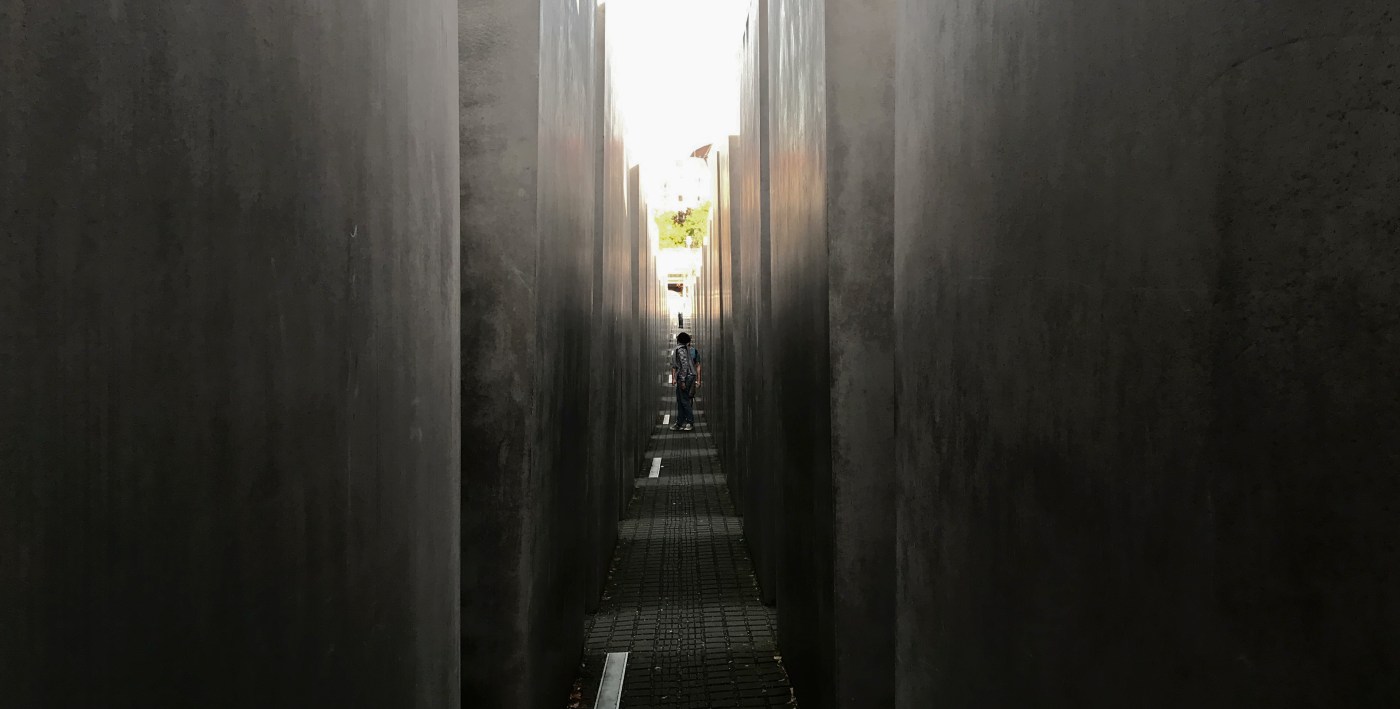
There’s a five-mile block in the northernmost part of Prenzlauer Berg that I haunted during my last weeks in Berlin. Within this five-mile block, I allowed myself to fade in and out of memories – I let past and present mingle surreptitiously. I chose it in the exact breath it chose me. Even knowing what writing my memoirs would mean, I had no idea the gravity, but each time I got too lost or too overwhelmed, one man was there to encourage me forward. Continue reading “On Becoming A Storyteller: A Berlin Memoir by Jessica Ciccarelli”

In 1976, Larry Buttrose, an Australian playwright and poet, journeyed to Deya, on the Spanish island of Majorca, to seek out the then 81-year-old British poet, author and classicist, Robert Graves, renowned for his historical novels, notably I, Claudius and Claudius The God, a memoir, Goodbye To All That, and a ‘speculative study of poetic inspiration’, The White Goddess.
I stepped out onto the steep cobbled street outside the Villa Verde. I had arrived at the hostel’s door in the wilting afternoon heat of the day before, after having taken the overnight ferry from Barcelona, and the bus up from Palma, along with the locals in breeches and headscarves carrying bound, clucking chickens on their laps. Continue reading “Meeting Robert Graves by Larry Buttrose”
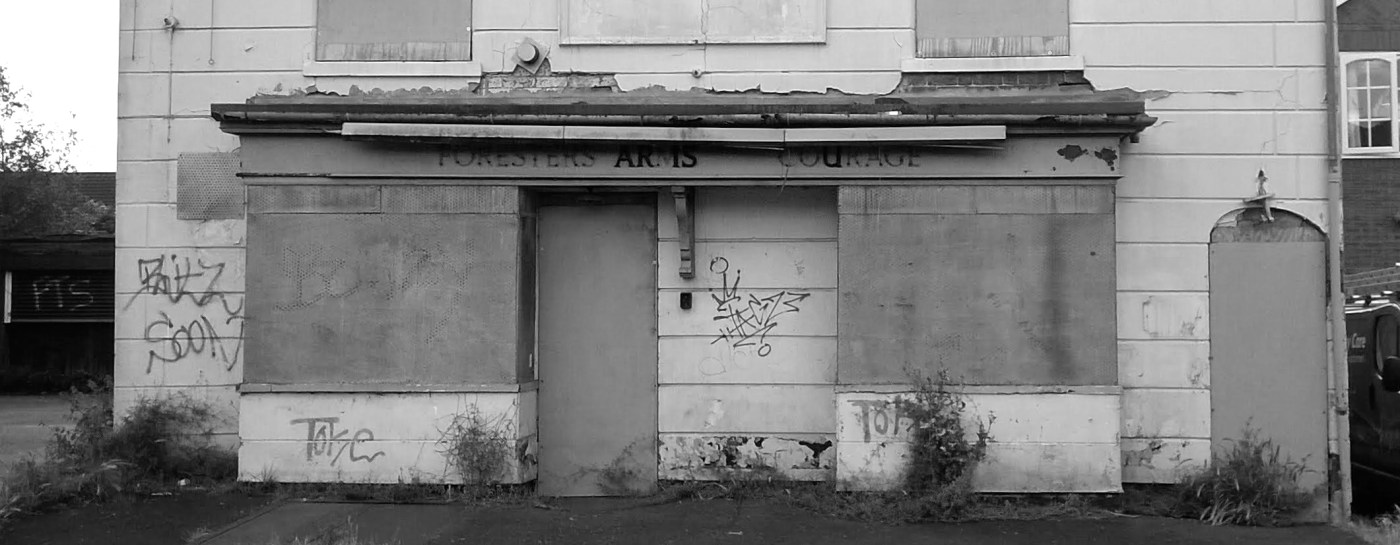
Mayfield Road
I wander Dudley streets – old canals and factories. All faces are sad now. I take a road I’ve never been down before. Continue reading “In Dudley by R.M. Francis”

Marrakesh, Old Town
Everyone seemed to have rotten, black, and missing front teeth. They were friendly and kept smiling and that’s how I saw they mostly had rotten, black and missing front teeth.
I couldn’t see a lot of the women’s teeth, only their eyes, and often not even. There were many women dressed from head to ankle, in long black fabrics, with layer upon layer covering skin, hands, hair, and some that covered the eyes, and with only a marginally thinner veil, so that everything was hidden, nothing to determine soul, being, nor Continue reading “Nothing Dries Sooner Than A Tear* by Joanna Pickering”

I have always had a fascination with transformation. With taking incongruent parts to make a whole. With cutting and stripping and building up from the bottom and the artist as self-portrait. I could easily be found in childhood obsessing over the arrangement of furniture and décor of my Laura Ashley doll house. Today this is a dining room with a red velvet tablecloth and a chandelier light that chimes a segment from the Four Seasons because my Polly Pocket is the queen and she’s having the tour group Bratz over for tea. Tomorrow it is a miniature of my family’s dining room with boxes and old paint chips and no tablecloth and striped walls that look like silk and show damage easily.
Most of my toys were dolls, the easiest to buy for a girl, the easiest to buy for a child who liked to imagine new worlds. I remember the Betty Spaghetti dolls with neon bodies and plastic hair whose arms and torsos and heads could pop out to be interchangeable. To be made anew. How many times did I snap and unshape the forms of girls to get the end result I wanted. How many times did I teach myself what is, is not always. I remember the What’s Her Face dolls with smooth, blank complexions I could stamp their expressions on. This one is surprised. This one is happy. This one has stars for eyes and an eye for a mouth. The stars were permanent marker, the eye easily removed. My mother did not buy me anymore of those dolls after that. She would tell me not to cut Barbie’s hair because it did not grow back; I could not understand her anger when I cut my own bangs with clunky construction paper scissors. I thought we both knew it would grow back. It must have been the shock, of my swift reveal from one face to another. She must not have recognized me. I was not allowed to cut my hair again. Continue reading “A Catalogue of Small Shatterings by Makensi Ceriani”
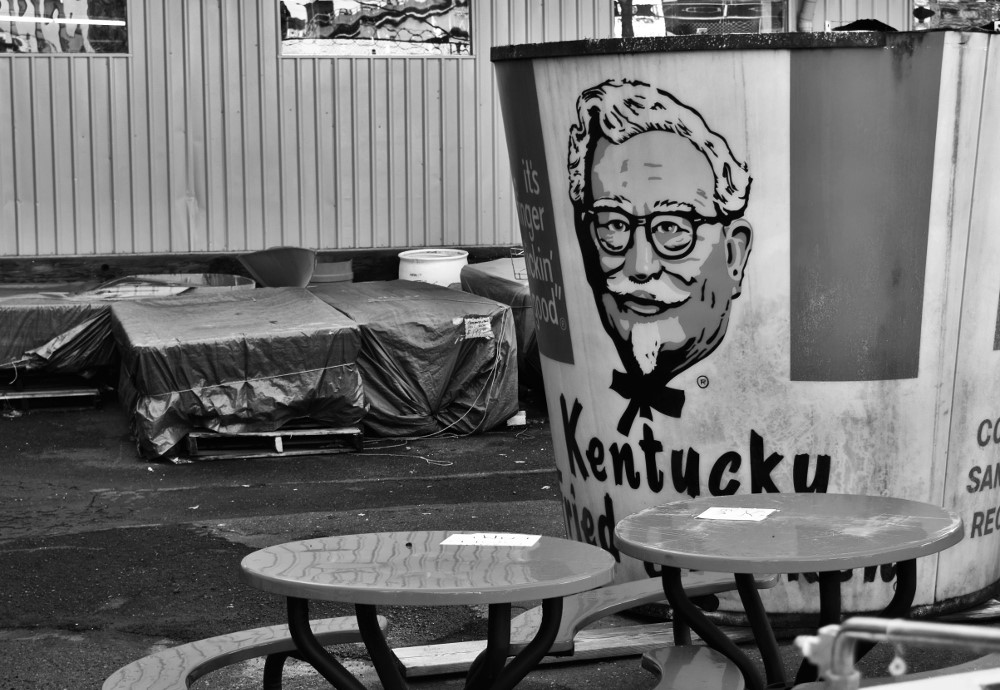
My younger brother just scheduled bariatric surgery.
They will reduce his stomach to the size of a banana.
He said he can’t go another decade being heavy.
He asked me to remember when our parents got divorced, when he was 10 and I was 15 and I said, “See ya later!” as he filled time and loneliness with dry cereal and Swiss cake rolls.
I tried to commiserate, even though I knew I risked insulting him, since his weight issues have always been much greater than mine — said we both snacked way too much, and paired it with convenience eating:
Hamburger Helper on the countertop was mom telling us what’s for dinner
And award systems:
1 visit to church on Sunday = 1 sausage biscuit with egg at the drive-thru
We fell into negative routines: Dad yelled at me, I yelled at my brother, and then we nursed our wounds together with salt, sweet, repeat. Continue reading “When Food Goes Bad by Kelly Froh”
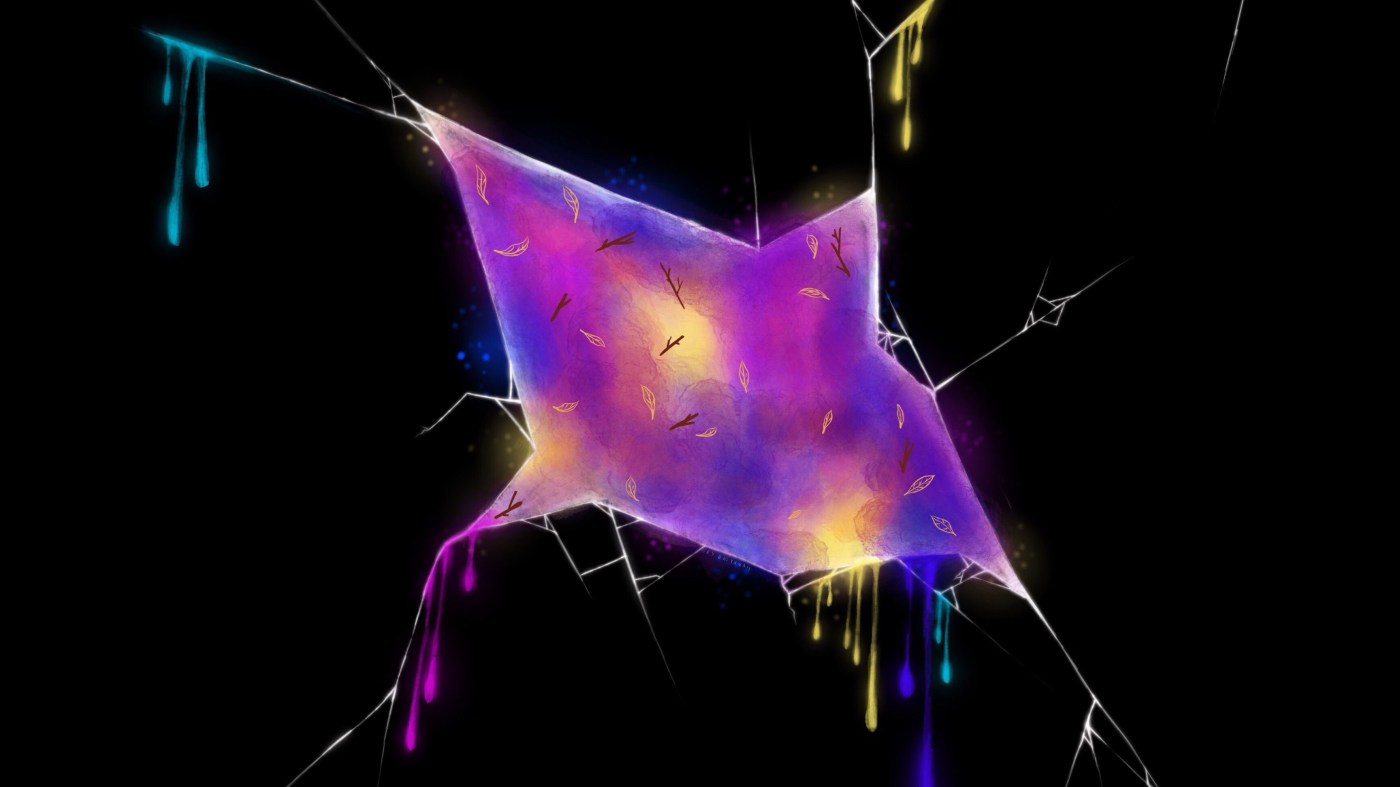
Ash and Stardust, a monthly column by artist and writer DHIYANAH HASSAN, explores the intersections of tarot with healing and creativity. These are personal essays sharing experiences of growth as someone who has recently found a deep connection to tarot. You can read the first piece here.
On a night I was forced to lose a war to my father’s rage, I stopped myself from crying by carving the word ‘HATE’ into my leg. The conclusion of these encounters with either of my parents had never meant the end of physical abuse. Their anger grew inside me like an infection.
A huge part of my history is that I grew up with adults who couldn’t protect me from their own ugliness, who refused to remember what they did after the fact, who until today won’t say anything when decades of their choices landed me in hospitals and finally on the disability spectrum.
Since childhood, I was not given the tools necessary to know how to love myself. What I saw in my parents’ eyes as my body absorbed impact after impact was what I mirrored back to myself; hate. And that ruined so much of my life, as this still does to countless children all over the world, crying quietly in places they have to call home.
Children know things on a raw and intuitive frequency before they find the language for articulation, so I knew there was something wrong with it all. To cope with the terror no one else could see, I developed imaginary worlds I’d submerge myself in for hours – days, even. In this world, I was loved by a group of adults who’d co-parent me through the perils of daily life. In the external world, I couldn’t talk about what was happening to me without being pegged as too difficult or ‘too much.’
Continue reading “Ash and Stardust ii: Trauma and The Lovers”
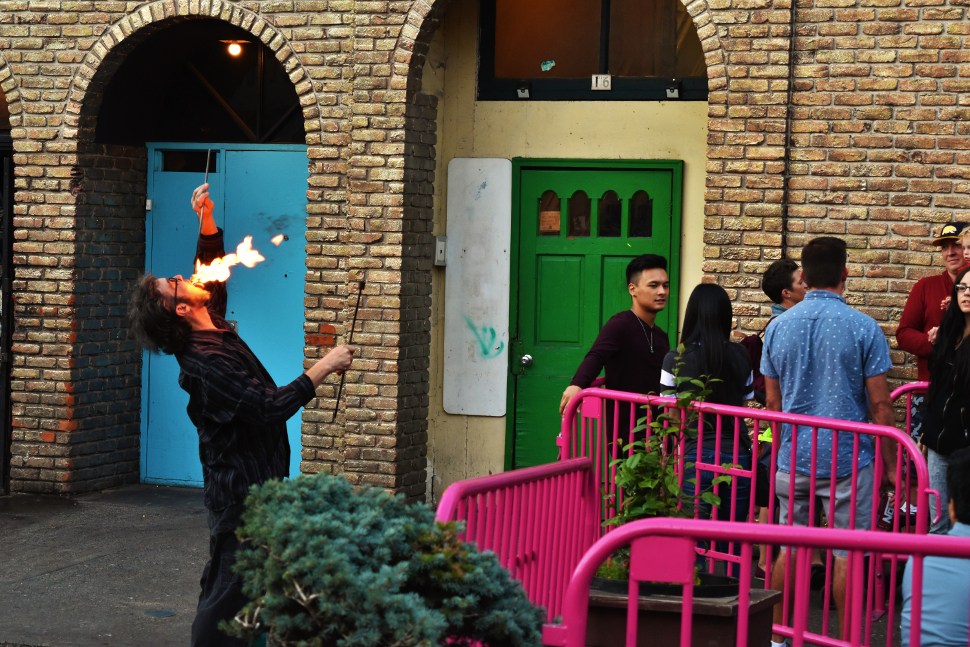
by Amee Nassrene Broumand
This isn’t an essay. It started life as an essay but then it began to twist & bristle & sprout distinctly unessaylike appendages.
The eyestalks struck me by surprise.
Perhaps it’s an insect or some sort of strange crustacean.
* * * * *
Imagine you find a giant handbag bleating in the corner like a lost lamb. You take it & shake its contents out onto the table.
What do you find?
Take a minute to think about this.

The question of the contract is a secondary question that has come in the awareness of the fact that there are things to take account of – that these things as such are given to begin with. That the question is impossible to answer once for all may be acknowledged in considering the fact that the conception of the contract as the ground of that which is will necessarily exclude that it be given as a thing to take account of. Rather it is thought of as already left behind by the awareness of the presence of the debt that it has grounded – which includes this very thought about the contract.
-
The translation of the contract from one language to the next is an internal disposition of the contract to extend itself to any other region. There is not a single language that exclusively precedes its operation, but a limitless potential to express itself in language, and the languages in which it is expressed are untranslatable between them. Thus from world to world the words that would refer to the phenomena that presuppose the terms are not equatable constructions, and so cannot be transferred from any one to any other, unless it be by losing their significance – but the contract will allow for the expression of its terms in any language. It follows that there is no one authoritative translation to depend on.
Continue reading “Notes on the Translation of the Contract, by Christopher Clifton”
This is the first instalment of Ash and Stardust, a monthly column exploring how my tarot practice intersects with self-care, healing, and creativity. Note: I don’t claim to be a tarot expert! This is me learning as I go, overcoming creative blocks along the way.
“Everyone deserves an outlet; a reservoir of safety – a comforting warmth in the ribcage – the space surrounding the heart.”
– from the guidebook of The Next World Tarot by Cristy C. Road
I can’t say exactly when I was introduced to tarot. It would appear or get mentioned in passing here and there during my teenage years. I remember once-upon-a-time friends spreading cards on bedroom floors to articulate desires and what-ifs. They’d ask if I wanted a reading done and I had always said no. It didn’t feel right. I don’t mean that I had trouble with the idea of cartomancy – the mystical world fascinated me. I was, however, having trouble seeing myself as someone who could hold these archetypes in my hands, to shuffle and create a narrative out of them that can serve not as divination, but as guidance – or even to satisfy curiosity.
In those earlier years, I was nowhere near okay enough to claim my own story, let alone see it as part of something bigger.
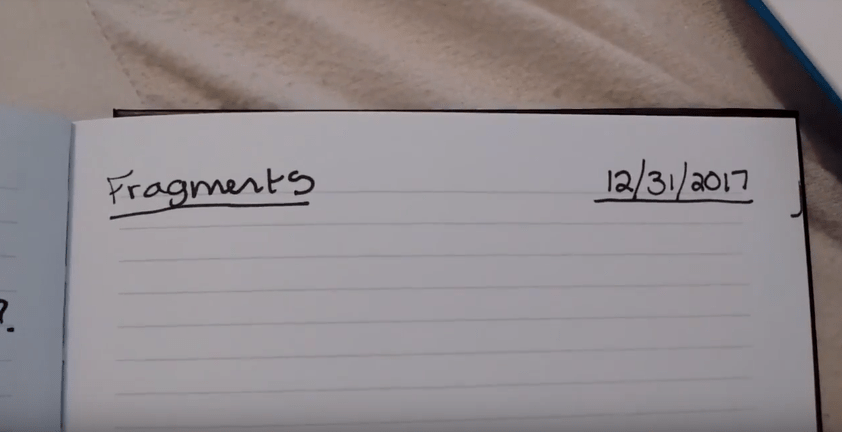
For much of my life, I’ve written in a journal. In the last few years, I’ve almost exclusively started writing fragments. I’m interested in the possibility of the form, how it allows me to write in a compact way, to capture sudden revelations and epiphanies, to acknowledge the limits of language within its very structure. Because of trauma, my mind has been changed, my way of thinking has been altered. I often describe myself as “shattered.” Fragments are the physical manifestation of that shatteredness. It is language that is in shards, but the accumulation of those shards creates a new form, creates a whole where there was once an absence or just random bits and pieces. As Muriel Rukeyser once wrote in “The Poem as Mask“:
Now, for the first time, the god lifts his hand,
the fragments join in me with their own music.
I see my own writing in that way. I am taking my brokenness and assembling my own ruins into something new, something that is still broken and cracked but alive. I view writing as a very personal act. I know other writers will have a different conception of writing, but this is mine. I want to articulate the wordlessness inside me. I want to speak the unspeakable. I want to write myself. I want to give voice to my alienation, grief, loneliness, fear, suffering, and trauma. I need to write these things not so that they will disappear or diminish–that is impossible–but so that I can bear them.
Continue reading “The Breathing Body in the Act of Creation: A Writing Experiment”

“We can forecast nothing. It arrives when it arrives. It disappears when it disappears.” (from ‘Take the Weather With You’)
The stories in this collection by Sharanya Manivannan (Harper Collins India, 2016) undulate – this book is a sea of women, each voice honoring the collective memories, hearts, and bodies of women. Earthbound, the voice of each character rises up from the pages like wind – arriving and departing, breath-giving, season-changing. We see them facing their deepest selves. We see them give space to their rawness and their desires. Fierce and utterly unforgettable.
“It’s like someone aimed a rubber band at my heart and didn’t miss. I have waited my whole fucking life for someone to call me kannamma.” (from ‘The High Priestess Never Marries’)

The Mesmerist (2003)
I used to think that art was eternal, that being an artist made you immortal. But I’ve come to realize that who and what gets remembered is often haphazard. Books are forgotten. Film reels are destroyed. So little survives.
James Young directed a 1926 silent film called The Bells, starring Lionel Barrymore and Boris Karloff. In 2003, Bill Morrison reconstructed a surviving nitrate print of the movie into a new short film, adding a soundtrack by Bill Frisell. The print is damaged, creating a fascinating distortion of the images. Faces blur. Splotches dominate many of the scenes, though there is still a story that you can follow. Morrison calls his film a “revision” of Young’s original.
In Morrison’s film, Lionel Barrymore plays a character who, on Christmas, kills a Jewish man for his money. Boris Karloff is a mesmerist who tries to get Barrymore to confess his grisly crime. Morrison destabilizes the narrative by editing Young’s original scenes together in a way that suggests that much of what we are seeing is a dream. By the end of the film, we don’t know what is real and what is not.
Continue reading “Cinematic Shadows: Fragments on Two Films by Bill Morrison”

photos & an experimental essay
by Amee Nassrene Broumand
It’s raining at the moment. Calling it rain might suggest a downpour or perhaps a steadiness of purpose, but this rain is too ambivalent for any of that relative cheeriness. This is slacker rain. This rain drizzles on and off all day, turning the landscape into a listless void. It’s hard to even tell the color of the light in such rain—is it grey, or is it a lurid shade of green?
I’ve never been sure, yet I know it well: as I child I stared out of myriad windows into this rain—into the glistening trees that slouched with waterlogged branches—and tried to imagine the sun. It didn’t work, of course; the rain had seeped into my mental eye. Instead of sunlight, the inside of my skull grew lush with moss. Forests sprang up, haunted by arboriform spirits and carnivorous umbrella monsters. Predatory ferns infected my temporal lobes and burst outwards in Medusa-like fronds, marking me as forever coiled, an absurd Beardsleyan grotesque.
The sun is out of reach. Continue reading “The Fire, the Eclipse, and the Spiders”
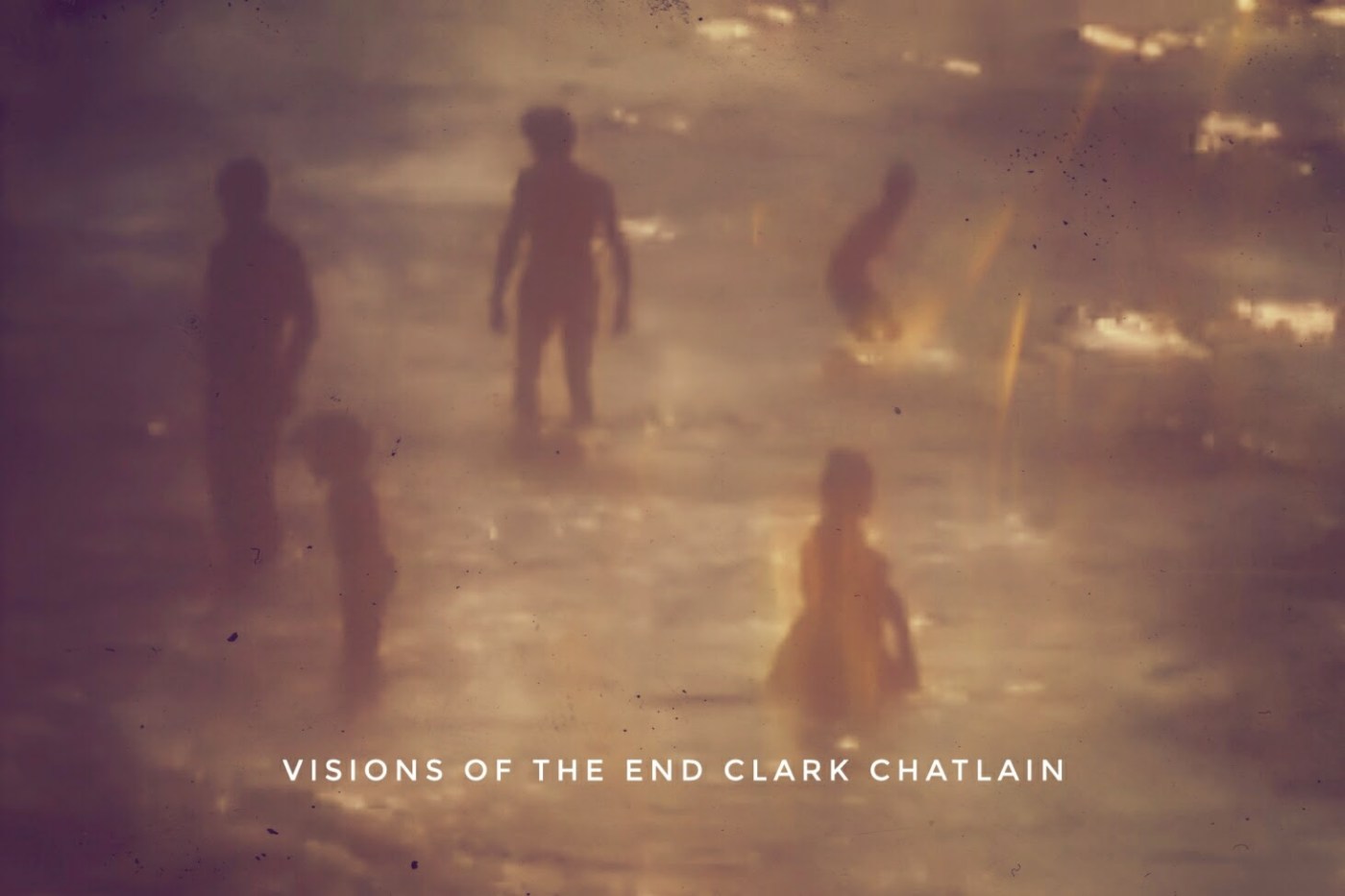
we live today with the sense that the apocalypse is underway. our world is a world lit by revelation. we believe we have seen our own end, that it has been revealed to us, for that is one meaning of the term apocalypse: to reveal, to uncover. when John of Patmos narrated his vision he gave us his apocalypse, and though it was rooted in his Christianity and even more in his time and his world, it is still now our most common exemplar of an apocalypse. this meaning of apocalypse, this revelation and uncovering of the end, is closer to our understanding of our world than we might think. while the generations and centuries before us found themselves, for the first time, living in a disenchanted universe, we are today the generations that hear and read daily that our world is ending. Continue reading “‘visions of the end’ by Clark Chatlain”
 BURNING HOUSE PRESS
‘Boredom’ by Liz Zumin
Boredom
I find myself thinking about boredom. Boredom, is a feeling that seems to be prevalent amongst the modern world’s most dominant social experiences of fatigue, depression and various neuroses which are effected in today’s society. It is an inevitable consequence of modern technological advancement where the borders between work and life have become blurred, the world made smaller by the internet, and the news broadcast continuously twenty four hours a day, extending even further into our subjective experience.
Continue reading “‘Boredom’ by Liz Zumin” →
Share this: