Safety Pin
Will a safety pin be enough
To quell the din of racism
And help those on the sharp end of abuse
Loosen xenophobia’s noose?
Are you pinning your hopes on too little?

Will a safety pin be enough
To quell the din of racism
And help those on the sharp end of abuse
Loosen xenophobia’s noose?
Are you pinning your hopes on too little?


Part 2: ‘Mixing Memories’
One of my most beloved memories is that of gnarled hands plaiting my long, curly hair, fingers slowly sifting through tangles, gently unfurling errant curls, and tucking them neatly into the beginnings of a French plait. In my ear, the sound of my grandmother’s voice softly admonishes me, telling me to sit still if I want my French braid to turn out properly.
My grandmother was very good at French plaits, and, as her beloved youngest granddaughter, I took it upon myself to have my hair done whenever I could. It was one of the many perks that came with living with my grandmother, who was my principal caretaker during my childhood years, while my parents were off working and doing other adult things.
Continue reading “‘Walking Towards Death’ – 5 Essays on Mortality by Arathi Devandran”
The one who begs
the elements
to be no more
than elemental
also prays
that his wife’s mouth
may be more
than the dust
she swallows trailing
you around
the dry seasons.
It’s simple that way.
Simple compounds
into the whole
of the universe. It
does that every time.

The hardest worked waters wore out
The rivers lost in time
Perhaps it is a way to maintain happiness without people
To fly freely from

There’ll come a time
When you’ll be going through my things
And my intimacy will be no more

some minds take pleasure in counterpoints
absently answering some deep call
they move in a hushed, ice-clear trance
and lucid, inescapable rhythms, low beneath
so to beseech them as full as for it
the inexorable growth
the signal to a sacred plea… Continue reading “‘A Natural Tendency’ by Christian Patracchini”

when we were young
and time was free,
our skin danced in bronze
crafted by sunlight’s constancy
our footsteps whispered
in fields of green and the distance
between us was a heartbeat,
caught in the hum of laughter
about something silly, I’m sure,
but now the reason is gone
as much as who we were,
once—when summer knew us best
for all I know now is heat,
how to harness it by air conditioning,
while seconds rise like goosebumps
to steal the rest of youth away

Barbara Loden is Wanda, as they say in the movies. Her inspiration for the screenplay was a newspaper story she had read about a woman convicted of robbing a bank; her accomplice was dead and she appeared in court alone. Sentenced to twenty years in prison, she thanked the judge. Interviewed when the film came out, after it had been awarded the International Critics Award at the 1970 Venice Film Festival, Barbara would say how deeply affected she had been by the story of this woman—what pain, what hopelessness could make a person desire to be put away? How could imprisonment be relief?
–Nathalie Léger, Suite for Barbara Loden
From an early age, I knew I wouldn’t make it in this world. So I connected with women who, in my mind, shared that feeling. Plath and Woolf with their suicides speaking of a deep pain. Barbara Loden and her film Wanda in which the title character wanders alone and unloved.
Wanda is poor and she is voiceless and she is invisible. I understand the not-thereness of her.
Nathalie Léger felt a connection to Wanda as well. Tasked with writing an encyclopedia entry about actress Barbara Loden, she quickly became obsessed and expanded her inquiry, writing Suite For Barbara Loden, a gorgeous and dizzying investigation and excavation. Léger delves into Loden’s life, at times embellishing and inventing, and analyzes every layer of Loden’s only film, Wanda. The book is fact and fiction and memoir and film criticism; it is a love letter to Loden and the singular film she created.
Continue reading “On Nathalie Léger’s Suite for Barbara Loden“

When people use fund-raising and donations,
As ways to pacify their rising guilt.
When trafficking destroys a generation,
And shelters are unfunded and unbuilt.
When children under ten are mutilated
For sinful natures they do not possess.
When bodies are both lusted for and hated,
And violence is blamed on how she’s dressed.

Thank you, Alexis, for submitting your works to be featured on Burning House Press! You mentioned in our email exchange that you don’t work in themes or projects, rather that the images arise in their own time – the same goes for the works’ titles. Is chance a huge factor in your photographic process?
Thank you, it’s my pleasure!
It depends what you mean by “chance”, if you mean events that happen by forces that are beyond the control of the individual consciousness then yes, chance is very important. My practice is deeply connected with this surrendering to the flow of life; this is why I mostly conceive photographs as happenings rather than doings. Today I wrote this small note which feels relevant to this question: Creativity is not a doing, it is an alignment with the cosmic unfolding, in which there is no separate doer. Continue reading “‘Variations of Presence’ – an interview with photographer Alexis Vasilikos”

‘What a fine weather today! Can’t think whether to drink tea or hang myself.’ – A.P. Chekhov
Three weeks after I left school for good, twenty-five Facebook messages exchanged in a group chat and eight texts doled out in the absence of Wifi later, a road trip had been planned for myself and a group of female friends. It was to symbolise the Last Summer: our final farewell to school, with the charm of gin and an Angel Olsen soundtrack which was lacking in the leaver’s dinner, in posing for umpteen photos in a lurid eBayed dress, thinking how much less gorgeous than everyone else I looked, and burying my pride in a disappointing chocolate mousse.
“It’s been a decade,” Jaya said as she arrived with Martha and Tess and the others in the road trip cohort that evening, standing in sundresses pulled over swimsuits, the car-park with the huge marina billboard and dilapidated blow-up cinema beside it looking suitably macabre for a adulthood send-off. “It’s been forever.”
“Since you’ve driven?” I asked.
“Since I’ve seen you guys.”
This was not accurate; it had been four days since our last reunion. But ever since school ended, this was how it was: impossible not to quantify everything in terms of forever. Two dollars for a bus ticket to the ends of the earth, please.
Continue reading “‘The Summer Vacation Spent Indoors’ by Sarah Murphy”
Part 1: ‘Watching My Father Age’
For as long as I’ve known him, my father has been the strong one in the family. He was indefatigable; during my teenage years, he worked several jobs, survived on three hours of sleep daily, and still had enough patience to deal with an ailing wife and a mildly hormonal teenager.
My father never fell ill. While most of my early memories of my mother are linked to hospitals and needles and antiseptic cream, my early memories of my father are of tireless hard work, and the absence of any kind of disease.
When I was younger, my father would carry me when I was sleepy. I was tall, even as a child, but that never stopped him from swinging me onto his back, hoisting as gracefully as one could a gangly, all-arms-and-legs kid, and striding to wherever it was that we had to go. He would never utter a complaint, he would never say I was heavy, and he would never turn me away.
Continue reading “‘Walking Towards Death’ – 5 Essays on Mortality by Arathi Devandran”

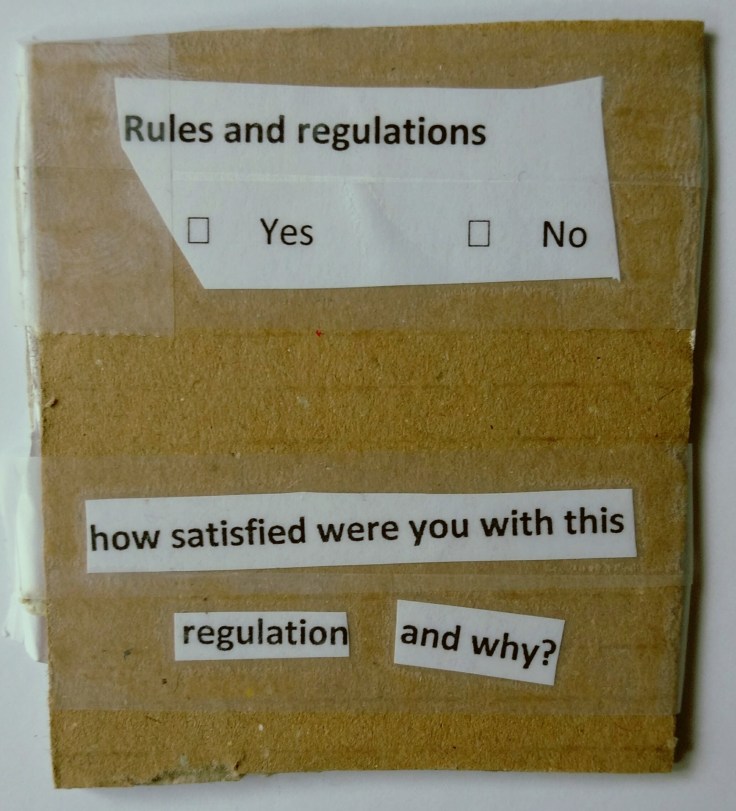
Coach House Series by Paul Hawkins
cut-up text
medium: mixed media on found card
dimensions: various
date: 2016

A woman learns when she is young
That all of her is a weapon
Against a world that is determined
To mould her softness into something
Convenient, hard, eventually,
a disappearance.

Nottingham-born Henry Normal co-wrote the Royle Family, Mrs Merton and many other television comedies, was a co-director with Steve Coogan of Baby Cow Productions and Executive Producer of ‘I Believe in Miracles’, the real life story of Nottingham Forest’s European Cup triumph. As it turns, we share educational, musical tastes and neurology – although Henry has made far better use of his – and it was a pleasure to interview him about his influences, autism, family and future plans, particularly his return to his first love, poetry.
– Trevor Wright.
You’ve recently left Baby Cow and started to re-engage with poetry. What was the thinking behind that?
I worked in television for about thirty years. I’ve always loved comedy, I think there’s something akin with comedy and poetry and it comes down to truth. I think you’re searching for truth in poetry and there are certain things you only laugh at if they’re true. Comedy is a bit like playing a musical instrument, you know when it’s off tune and you know when it’s right. Comedy is exact, whereas poetry requires a little bit more imagination, and a little bit more interpretation. Continue reading “‘Find A Way Of Saying It’ – A Burning House Press Interview With Nottingham’s Henry Normal”
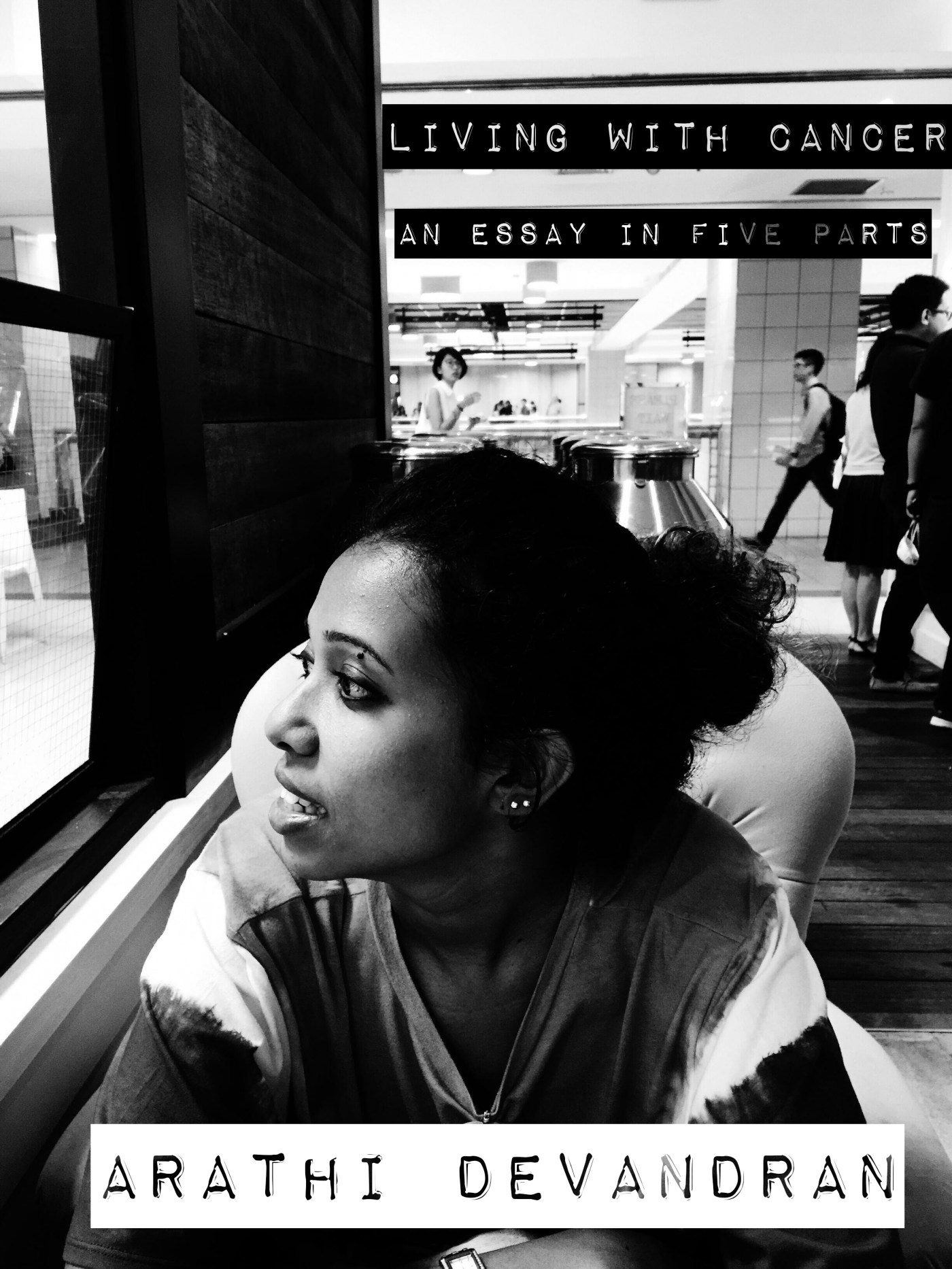
Part 5: ‘The Everyday’
I am heading home after a long day at work, and I receive a frantic text from S, a dear friend. She has received upsetting news – the father of a good friend of hers has been diagnosed with cancer.
“I feel so helpless,” S writes. “There’s not much I can do for her, except remain available for her, and provide her support.”
I pause before replying.
I had been in her friend’s position before, of being told things that had made my world come crashing down around me. Of facing the insurmountable task of needing to be strong, even though all I had wanted to do was to crawl into a hole, to hide myself from everyone, from myself.
It had taken me several years to come to terms with my mother’s diagnosis, even after she was given a clean bill of health.
Continue reading “‘Living With Cancer’ – an essay in five parts by Arathi Devandran”


 1. ‘a sigh, a sorrow, a suspicious mind’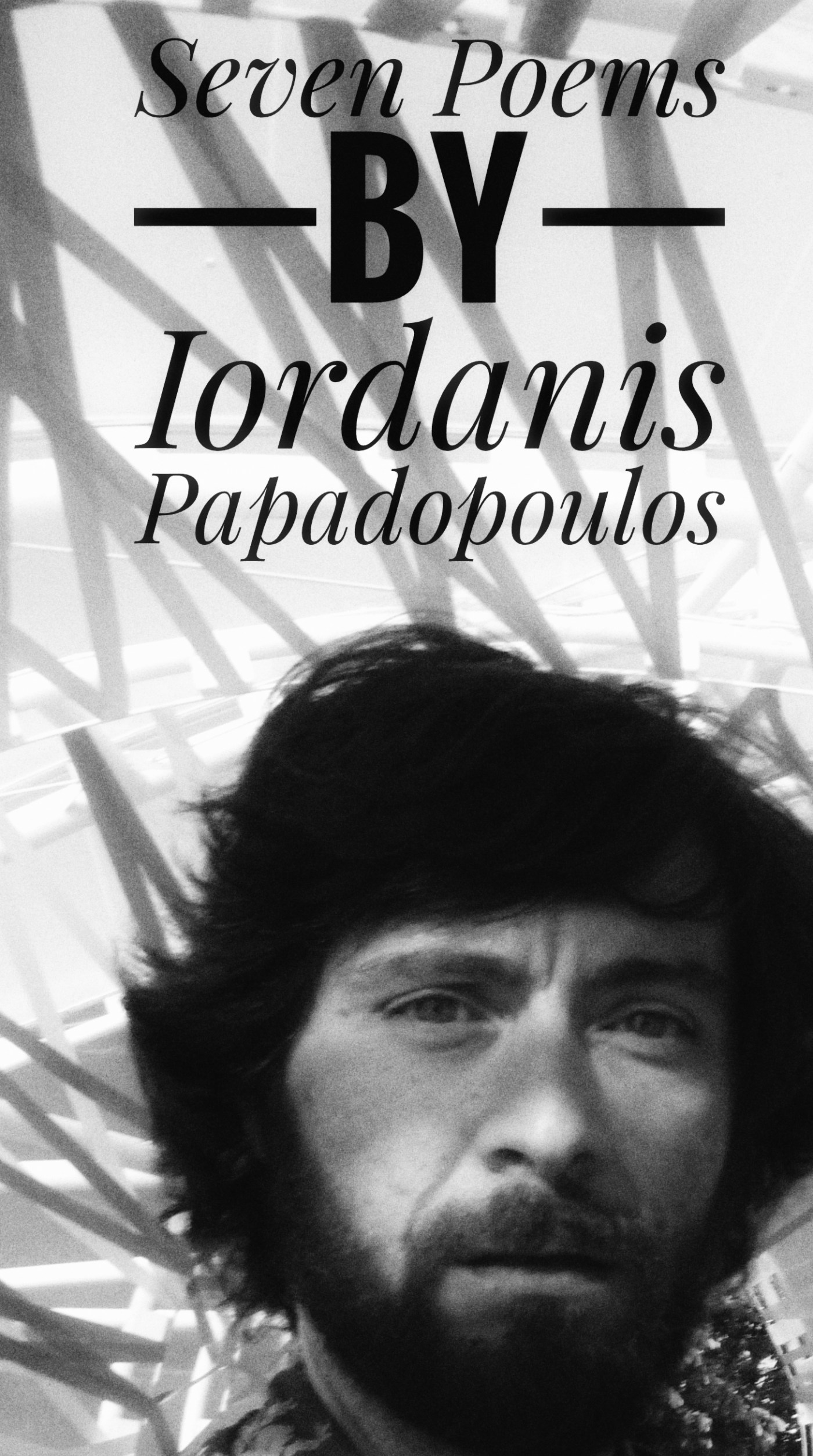

 BURNING HOUSE PRESS