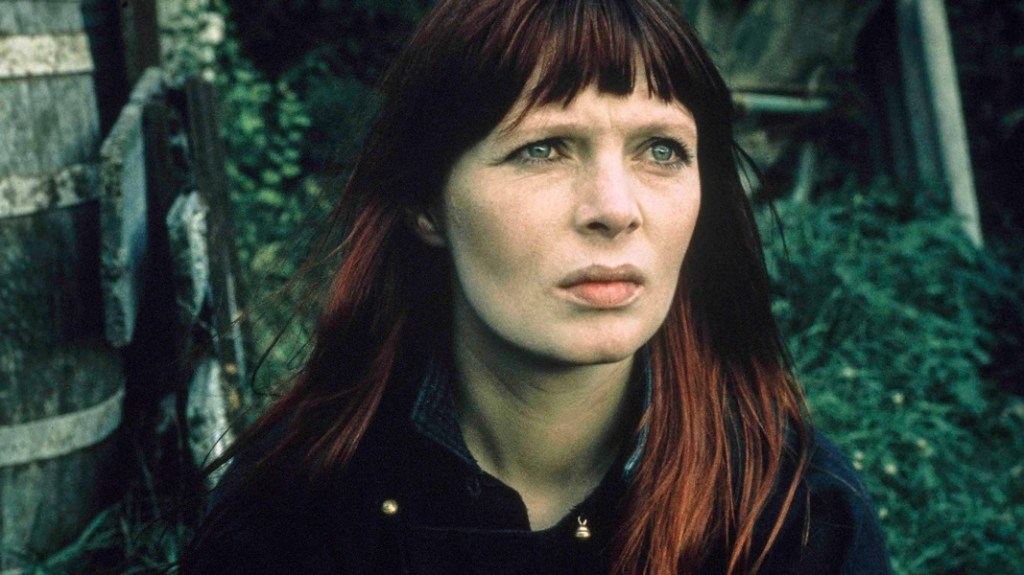
Still from the film Athanor (1972) by Philippe Garrel
In the dark room at night, the walls enameled black, so dawn arrives as a violation, she smokes. She smokes without conviction, almost without need, but then deeply as if to prove something to herself. Flicks the butt into the grate of the ruined fireplace, heaped with little cartons, each cigarette emptied and smoked, each added to a mountain. A plate of ashes. She makes sure, twice, that her cigarette is extinguished before she does this. Philippe scolded her. Ari found one smoldering and rubbed it out on the floor. How could Philippe be angry? When they moved from the Montparnasse Hotel into this apartment, he gutted the place, tore out the twentieth century and some of the nineteenth too. Gone: gas, electricity, hot water, heater, lighting, furniture, carpets. A penitentiary but there are no locks.
She yearns to go back to New York though nothing good comes to or from there. The not-good is familiar. She needs that now with her mother dead. Can still smell the air’s heavy scent in the room where she knelt before the empty bed and cried. She hadn’t wanted it to be like that and knew her aunt Helma blamed her for not visiting the last two years of her mother’s life. It had always been hard, then became impossible. The immobility she feels now, lying in bed undead, waiting for light to come in the room and peepshow the mess. Philippe shifts beside her, groans. They are covered by his overcoat which doubles as mattress and bedding, sleeping partly on it, partly on the floor, the faint smell of piss. Ari makes sounds across the room, asleep or awake, she can’t tell. She’s never alone lately but never accompanied either. Everything has fallen to repetition. They score, they get high, they have no money, no need for food after they’ve fed, only to make certain the boy eats, he must eat. Then they go to museums or wander the docks, up and down the same streets of Paris. Was it last week or the one before—prior has no hold here, all is prior but there is no history, only the past—that she saw someone, a London person from New York, who startled at her appearance and said what did you do to your hair. The blonde dyed crimson, bluntly cut. You like it, she responded, nearly leering, surfacing from the not-slumber, suddenly awake on the street in the face of that collaged ghoul made of the spare parts, all mean, all pushing, all saying her songs weren’t good, she needs a manager, she needs to be blonde again, she needs better clothes, not these ugly robes and caftans Philippe sewed himself for the film. The film! They hate it, just the idea of it. A woman and a man and a child in the desert, shot across three—Sinai, Death Valley, and Iceland. All blend together to her. She knew they weren’t one. Each had its own qualities and peculiarities, but like people, places were mostly the same. You met one or two and you’d met all of them. The man on the street, upset or disappointed by her appearance, had scurried off, back to his little life, perhaps some lunch in a café. The thought made her feel ill.
She would get back to New York and show them, she would book some gigs. She practices the harmonium every day now and she has new songs. The best she’s done, she’s sure, or thinks she’s sure, but can already see the faces of Danny and Paul and others who will tell her what is wrong with them, not knowing they are about her mother, Jim, the deserts, Brian’s death. Misadventure by accidental drowning, the coroner’s report stated. She knows no accidents and no misadventures. Dark spirits, yes. A man goes for a swim and never surfaces as himself again. A woman in a bar, her face cut, a fury and a glass thrown and stitches. The voices of New York, seeing Lou in a rehearsal space, having to flee, first to New Jersey, then the country. Shows canceled. Back to this room. Can she ever escape this room. Will she look over and find Ari is now a man and Philippe is dead or nearly, and they will still get up and find dope and not eat and wander the streets and walk the docks and pretend to see new things, pretend they are attuned to things other people don’t register. And the people don’t but they do see two junkies and a child and worry for the child and maybe they will do something about it or call someone to do something about it. Maybe they will make a problem, make her become a problem. Then what, when someone appears to ask about the child and she doesn’t even have blonde charm now, or good skin. Cheekbones still but hollow not haughty. This is why Ari must be a man. It is better for twenty years to pass this morning, the hour before dawn or is it. The black night and room seem to have changed a bit, added a bit. Not the usual things she sees on these mornings. Not the nights Philippe taught her to liquefy and use the needle, not broth and Coca-Colas in the palace, not the circle of fire in the desert and the boy unable to cross it to his father, not all the words she wrote only moments before she spoke them to the camera, the way time slid in and out of view in those long shots, hours stretching, and one day no longer waiting for Philippe to yell cut, just riding, swaying slightly on the horse’s back, the sound dropped out, and the sky grown dark but never like the room or the nights here. A vast star-punched ongoingness. Her mother’s bed in the sand, Ari the boy hungry always hungry, Pierre Clémenti naked and ranting lines, a pleasant body, good cock, eyes like Brian’s, Jim passing in his car not recognizing her, a box of books beside him, then the news of his death later that night, the long line, the drone she had found she could follow and it would vary, it would create the sound she craved, defeat. No one else heard it. They heard failure. Defeat is not failure. It isn’t surrender. There is no grace or wisdom or beauty in it. Defeat holds itself. A friend at last. She wants another cigarette. She can make out the outline of the pack. Dawn but not yet light. One more cigarette before the day again.
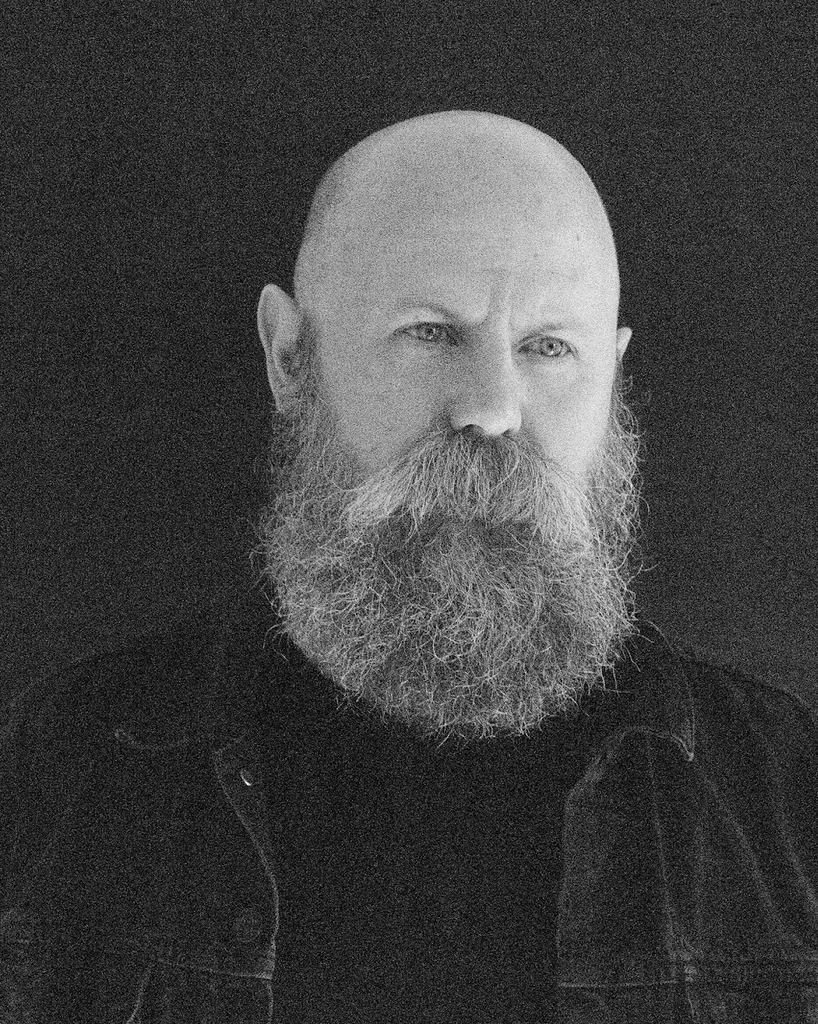
Nate Lippens is the author of My Dead Book, Ripcord, and two forthcoming novels, Box Office Poison, co-written with Matthew Kinlin, and Bastards.
Author photo from Carolyne Loreé Teston.
 BURNING HOUSE PRESS