Interrogator needed
must fail to understand
the simplest things
in a vault of goo —

Platitudes generated
by electricity
falling into a source
it troubles us to consider
even once,

whispering to solvent after solvent —

is this the visual
you redirect your password from,
are there other kinds
of sympathy you act
out about?

Do you inventory
your playing cards
routinely.

What I’m telling you
is none of your business
and business is good.

*
The book of
how’s that going to work:

Like aliens,
their flitting pincers
storming across the stacks.

Supervision for the loneliest,
and architecture
made of composure and
lidocaine.

There is this long waiting period
before it makes sense to talk.

It’s fine that you want
a reservoir of tenderness,
but you should know
it comes with conditions
your character
tends to oppose.

*
A chaos familiar enough
I experience it as valuable,
clinging sideways
into its reason

and misread the story
the way anyone would
from underneath the letters.

Giving down its lesson,
the fear electrifies
a plateau for breathing
the sour lonely soup,

a glittering cassette
blowing in the brisk
aftermath.

Sympathy we dissolve
is nevertheless available
later for unknown newcomers

with even a dime —
in this system
wanting both
is rubble roulette, sweetie.

You have to be that slippery
and no more.

Come on, already,
it’s unbearable how you
refuse
this dialogue without borders,

these dependable changes
while the world considers
what it really wants,
the drift of feeling
in a crisis —

After the earthquake
the ceiling leaks,
the layered presence
parted like a bead curtain …

Not, more light:
Lighter.
Lighter.
Jordan Davis is a former Poetry Editor of The Nation. His most recent collection
we had a dinette, the house was too small for a proper dining room, there was a painting on the wall, notable because artwork was minimal in the house, I was fascinated by this painting, it looked European to me in a vague way as at nine years of age I knew nothing of life outside the US, it was a river scene, a river surrounded by a forest, a mountainous forest, with a small house about a third of the way up on the mountain surrounded by evergreens, I think it would be called a chalet, there’s a European word, it pronounced funny, and on the river was a small boat with a man standing astern navigating with a long pole, the painting was always there on that dinette wall, I didn’t know its origins, how, where and why my parents bought it, after some time, after months of glances, I made an observation, the perspective was wrong, the chalet was too small to be real, or the boat with the man was too large, even taking into account that the boat with the man was closer to the viewer it felt like sizes were off, once noticed this was all I could think about when looking at the painting, this mismatch of proportions, if happening to walk through the dinette I glanced up at the wall, all I saw were the two mismatched objects and my mind became stuck in a comparison loop, judging dimensions and wondering, but then sometime later, more glances, I noticed something else was off, the paint was darkened to the right of the chalet, a chaletshadow, and the paint was darkened to the left of the boat, a boatshadow, right then left, as if the chalet was painted under morning sky and the boat was painted under afternoon sky, or as if there were two suns over Europe, and once noticed that was all I could think about when looking at the painting, this mismatch of illumination, my mind stuck in a newer superseding comparison loop, and then still, sometime later, yet more glances, I stood up on a chair and gazed at the painting, closer, my nose inches from the chalet, I examined each brushstroke though it was hard to tell a brush was used, the paint was glopped on thick as paste, perhaps a palette knife was the artist’s implement of choice, and this was fine, interesting, but there was one glop, a dark green section of forest just above and to the left of the chalet, where, my face almost touching the canvas, I discovered unmistakably a fingerprint embedded into the painting as if instead of a brush or knife the artist had smooshed this one glop with a finger, it looked purposeful, the brushes needed cleaning, the palette knife was dirty, but here was a finger, relatively clean and always available, the artist’s original tool, I could follow the loops, arches and whorls around and around within the print, no one else noticed this fingerprint, only I, my secret, as a child I was not afforded many, after months of glances and after some time, no other family member knew this existed, and that impression was all I could think about when looking at the painting from that discovery on, the chalet no longer existed, the boat with the man and his pole no longer existed, the mismatched perspective, the contrasting shadows, all forgotten, the painting was just a fingerprint, every glance at the painting caused wonder, a loop, my mind dominated by a single fingerprint, a fingerprint that belonged to an unknown artist, maybe European, working hours every day in his studio with his paints and his palette knife and his finger
Michael L Sevy is a writer & composer from Vermont. His work has been published in 3:AM Magazine & minor literature[s]. He was the leader of punk bands Cold Dogs in the Courtyard and Bonus Marchers. You can find him on bsky at @mlsevy.bsky.social
The Buried Museums
Holy Grail, hollowed bone, half buried in the dirt. Above the
Brow God is moving his furniture, wardrobes of thunderclouds,
heavy     driving migraines into your skull

Within these hills there are buried museums. Gleaners,
looters, archaeologists scrape the dust, sift for clues. When
the rain comes flashfloods will turn this dirt to mud,
exposing doll’s prams, tin bathtubs, a mangled accordion wheezing

Boy on a stolen moped dragging it uphill towards the church
               cowboy swagger

I sit by the shrine of plastic flowers rolling a joint with
shaking fingers. A cracked Now That’s What I Call Music CD
hangs from a tree, a fetish token for the homeless woman
                winter-death, grief-moon

Dig into the dirt with the heel of my boot remembering the Dog
King. Somewhere down there in an old tin can are his tethering
ropes, latch keys, can-opener, flick knife      cassettes of mad
muttering, dog-howl

In buried museums beneath these hills, your memories, earth-
weighted mad saint’s bone relics, nightmare archive.
Jeff Young is a Liverpool based writer for radio, theatre
& screen. His memoir ‘Ghost Town’ was shortlisted for the Costa
Prize and his second memoir, ‘Wild Twin’, tells of his years
hitching around Europe & living in Amsterdam squats.
Poet, performer, visual artist & broadcaster, collaborator
with artists & musicians, he is currently writing ‘Lucid Dreamer’,
an alternative history of Liverpool counterculture.
Bluesky http://@wildtwin.bsky.social
I
Millet’s spring mind soared red and skittish as an over-angled kite; in summer it entered the usual back-stall, and by August it had dived low enough for him to have another go at his wrists. This year he made an especial hash of it; fumbling with the false-economy razorblades until he ended up cutting his palms as much as anything else.
Afterwards the ambulance dumped him in the aisle of the A&E, where he lay on the hindmost of a metal spine of gurneys down the building’s centreline. Up on the ceiling, a loose panel exposed a pecking wedge of darkness. He turned on his side; the wall’s blank surface, gouged and spilling brown and fibrous shreds, was in worse nick than his skin.
After the stitching they left him in a side room, alone but for the slurping, whistling breaths of someone on the other side of a curtain. Wires snaked around its pleats to a bleeping machine in his own half of the room. His eyes tracked the glowing plots on the monitor; six months after his firing from Aventrix he still couldn’t stop himself subjecting the signals to confused analysis: window functions, discrete transforms, then breakdown into smaller sub-transforms. Radix two, four, sixteen … When the dragonfly lights on the screen began to sting his eyes he gave up his calculations and pulled the bedsheet over his head. Seeking distraction from the thin fabric’s vinegar-and-dead-skin scent, he tried to think its crumpled underside into the hills and valleys of that Stevenson poem. The Pleasant Land of Counter … Counter …
“… pain?”
The syllable repeated, a chain of islands in a sea of blurred speech, and he realized the nurse had arrived, with a prompt to rate his suffering out of ten. He thought the gurney was creaking, some part of the rails extending on either side of him.
“N over two,” he mumbled, and it seemed to do.
II
In the morning they had him shower the intact parts of his body. Two quivering shoots of something like watercress poked from the cubicle drain. He hoped they were real; he couldn’t bear the idea of hallucinating such lumpen symbolism. Then he was ferried to a psychiatric hospital on the county border, where his mind banked gently into the institutional mist. He spent much of the next few days contemplating more bedlinen, the troughs and peaks of mountain ranges hugged in soft shadow relief.
He wasn’t so keen on the topography of his outspread hands. In recent months they’d thinned out, the newly slackened skin across their backs trumpeting the onset of real ageing. When he turned them over, the mess of his healing palms troubled him. The scabs didn’t quite match the cuts he remembered making, though his memory was a joke. They kept him well-drugged. Quetiapine, lorazepam. Sometimes in the depths of the night a sister came to shine the round white beam of a pen torch on his eyelids. If they fluttered open, hands offered a pellet of zopiclone, the shadows of uniformed arms beating slowly on the walls. Sometimes, as sleep took hold, his throat felt like there was much more than one pill in it, a smooth, hard, comforting clutch.
III
They began to let him out. First just the grounds, the café and shop, in low outbuildings that reminded him of the old airfield Portakabins. He sat nursing weak coffee, watching the wings of the main building extend into milky light, until one day he and some others were put on a minibus and taken to the nearby riverside park.
On the drive one of their escorts enthused about the new fitness parcours along the banks, with special bodybuilding rigs, Ninja wheels, a machine for chest presses.
“Most of that junk’s already out of order,” his roommate Whitlock confided as they got off the bus. “The screws fail, and they’re a special kind. The council can’t be bothered to replace them.”
They quickly passed the old visitor centre, a silent cube of glass covered in crude paintings of leaf and feather that couldn’t hide the underlying curls of dustsheet. The trail head was marked by a pocked information sign. Lodged in one of its bulges, between a badly-drawn muskrat and a peeling heron, was a cluster of tiny pale green balls.
“They’ve got the map here,” said Whitlock.
“I can see that.”
“No, I mean the map butterfly. Araschnia levana, or prorsa, depending on the season. Invasive species, but I’d still like to spot the bleeder. Never set eyes on the black summer form.”
Millet murmured a vague answer to stem the flood of nature facts. The scabs on his palms were itching like hell, much worse than the ones on his arms.
IV
They walked on. After a while he ceased to notice the rise and fall of human voices. To his left was a dazzle of light on winding reed-lined water; foliage encroached on his right. Alder and beech, bramble hordes and white bells of bindweed, parted only by the green metal curves of the fitnessmachines. On each of their instruction diagrams, the silhouette figure looked less like a person.
Finally the path made a swan-neck double bend, and he found himself in front of the most preposterous contraption yet. The paint on this one had almost entirely flaked off, exposing a tall structure of rust-brown metal crisscrossed with streaks of faded cream. It was studded with appendages, and a maze of gears, flanges and blades, culminating in something like a giant upturned wishbone. The sight of the two symmetrical handles fanning out on either side of a discoid seat prompted a distant memory of gym adverts, and then he saw the instruction diagram, with its caption:
BUTTERFLY MACHINE
At the sight of the wonky grid pattern running across the underside of the depicted creature’s wings, the scabs on his palms raged until something in him hatched. When he sat down and grabbed the handles above his head, he felt the fire in his hands drain out into the cold metal. Warming it. Informing it. Loading the chart of his scars into its central navigation system. The antennae slewed and thrummed; great metal wings unfolded with a shivering clang and began to beat, then it bore him into the air.
V
Sounds rose up from the riverbank, individual screams convolved into a single wavering keen, but he couldn’t have looked down if he’d wanted to. When the machine broke through the clouds, it dropped its payload of eggs. As they whistled towards the earth he let go of the handles and the craft itself fell away from him. He hung for a second in the air, hands whipped aloft, before each palm burst apart, discretizing again and again into clouds of tiny flitting things; after a moment his mind followed suit, merry black thoughts whirling up to the sun.
Daisy Lyle is an engineering translator & dark fantasy writer based in Normandie, France. Bluesky http://@novembergrau.bsky.social
Burning House Press are excited to welcome Alexander Booth as the fourth BHP guest editor of our return series of special editions! As of today Alexander will take over editorship of Burning House Press online for the month of September.
Submissions are open from today 1st September – and will remain open until 25TH SEPTEMBER.
Alexander’s theme/s for the month are as follows
—LANDSCAPE
LABYRINTH—
_____
LANDSCAPE // LABYRINTH
*
When the painter’s friends, however, looked around for the painter, they saw that he was gone—that he was in the picture. There, he followed the little path that led to the door, paused before it quite still, turned, smiled, and disappeared through the narrow opening.
– Walter Benjamin, Berlin Childhood around 1900 (trans. Howard Eiland)
*
Each one of us, then, should speak of his roads, his crossroads, his roadside benches; each one of us should make a surveyor’s map of his lost fields and meadows.
Gaston Bachelard (trans. Maria Jolas)
*
“Though Minos blocks escape by land or water,”
Daedalus said, “surely the sky is open,
And that’s the way we’ll go. Minos’ dominion
Does not include the air.”
– Ovid, Metamorphosis (trans. Rolfe Humphries)
_____
Alexander Booth is a poet, translator, collage artist and printmaker who lives in Berlin. Recent translations include books by Friederike Mayröcker, Alexander Kluge, Gerhard Rühm, and a new translation of Ludwig Wittgenstein’s Tractatus Logico-Philosophicus. His collection of poems Triptych was published in 2021 and Kantor in 2023.
__________
Submission Guidelines
All submissions should be sent as attachments to guesteditorbhp@gmail.com
Please state the theme and form of your submission in the subject of the email. For example: LANDSCAPE/POETRY Or LABYRINTH/FICTION
Poetry and Fiction
For poetry submissions, submit no more than three of your best poems. Short stories should be limited to 1,500 words or (preferably) less. We encourage flash fiction submissions, no more than three at a time. Send these in as a .doc or .docx file, along with a short third-person bio, and (optional) photograph of yourself.
Art
Submit hi-res images of your works (drawings, paintings, illustrations, collages, photography, etc) with descriptions of the work (Title, Year, Medium, etc) in the body of the email. Files should be in .JPEG unless they are GIFs or videos, and should not exceed 2MB in size for each work. File names should correspond with the work titles. Video submissions can be uploaded onto Youtube or Vimeo for feature on our website. Send these submissions along with a short third-person bio, and (optional) photograph of yourself.
Virtual Reality/ 3D Artworks
For VR Submissions, please submit no more than three (3) individual artworks. For Tilt Brush works, please upload your artwork to Google Poly (https://poly.google.com/), and mark it as ‘public’ (‘remixable’ is at your own preference). A VR/3D artwork can also be submitted as a video export navigating through the artwork. If you prefer this method, please upload your finished video file to YouTube or Vimeo and provide a URL. With either format, please provide a 150 word artist’s statement.
Non-fiction
Non-fiction submissions (essays, reviews, commentary, interviews, etc) should be no more than 1, 500 words and sent as a .doc or .docx file along with your third-person bio/and optional photograph.
Submissions are open until 25th SEPTEMBER – and will reopen again on 1st OCTOBER 2025/for new theme/new editor/s.
BHP online is now in the capable hands of the amazing Alexander Booth – friends, arsonistas, send our SEPTEMBER 2025 guest editor your magic!




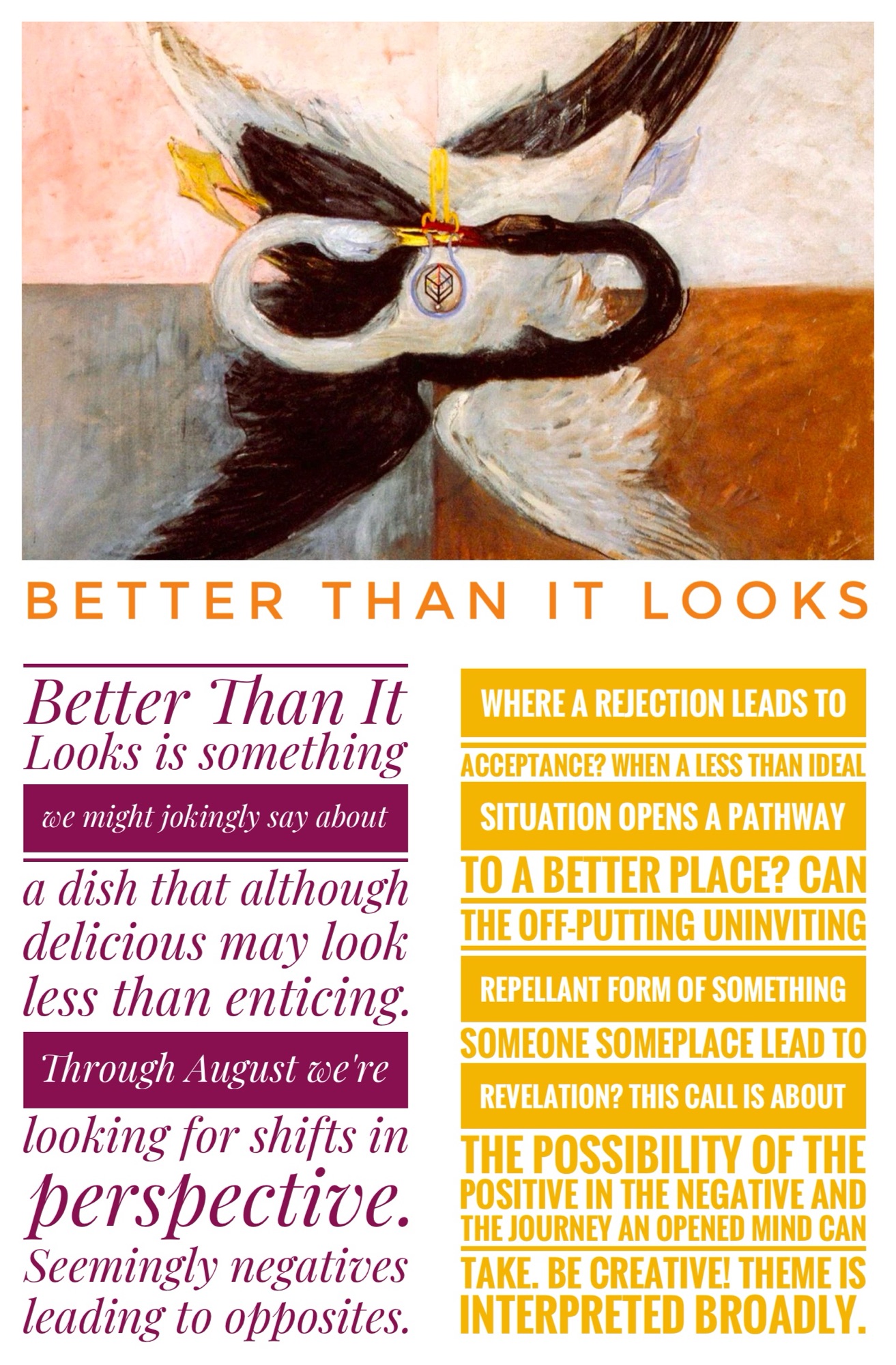
Burning House Press are excited to welcome stephanie roberts as the third BHP guest editor of our return series of special editions! As of today stephanie will take over editorship of Burning House Press online for the month of AUGUST.
Submissions are open from today 1st August – and will remain open until 25TH AUGUST.
stephanie’s theme for the month is as follows
—BETTER THAN IT LOOKS—
________
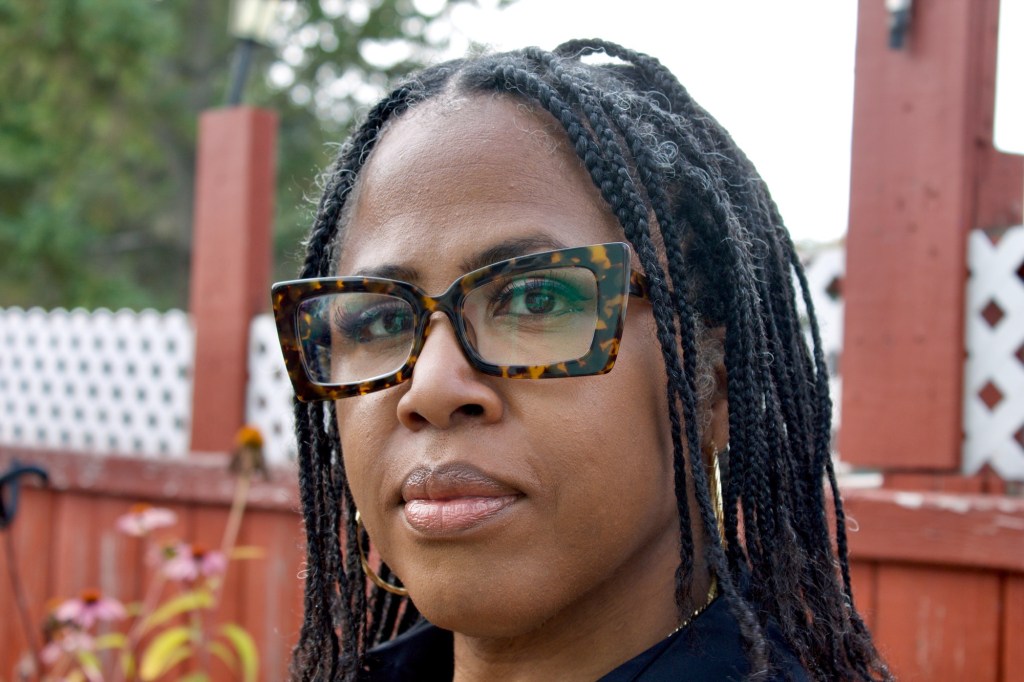
stephanie roberts is the prize-winning, Canadian author of the poetry collection UNMET (Biblioasis Books, April 2025). The poet Lisa Russ Spaar, writing for the Adroit Review, said, “One emerges from the agile linguistic theatrics of this book [UNMET] feeling requited, met, seen, and inspired—a sensation that moves from writer to reader. From daring to darling.” Her debut collection rushes from the river disappointment (McGill-Queen’s University Press, May 2020) was an A.M. Klein Poetry Prize finalist. Widely featured in periodicals and anthologies in the U.S., Canada, and Europe such as Poetry Magazine, Atlanta Review, Event Magazine, New York Quarterly Books, Verse Daily, Crannóg (Ireland), and The Stockholm Review of Literature, she is the winner of The Sixty-Four: Best Poets of 2018 (Black Mountain Press). www.oceansandfire.com
stephanie roberts lives in Beauharnois Québec. The author of UNMET (Biblioasis Books, April 2025) and rushes from the river disappointment (MQUP, 2020) an A.M. Klein Poetry Prize finalist, she is a 2025 Canada Council for the Arts grant recipient and the winner of The Sixty-Four: Best Poets of 2018 (Black Mountain Press). www.oceansandfire.com
stephanie
__________
Submission Guidelines
All submissions should be sent as attachments to guesteditorbhp@gmail.com
Please state the theme and form of your submission in the subject of the email. For example: BETTER THAN IT LOOKS/POETRY
Poetry and Fiction
For poetry submissions, submit no more than three of your best poems. Short stories should be limited to 1,500 words or (preferably) less. We encourage flash fiction submissions, no more than three at a time. Send these in as a .doc or .docx file, along with a short third-person bio, and (optional) photograph of yourself.
Art
Submit hi-res images of your works (drawings, paintings, illustrations, collages, photography, etc) with descriptions of the work (Title, Year, Medium, etc) in the body of the email. Files should be in .JPEG unless they are GIFs or videos, and should not exceed 2MB in size for each work. File names should correspond with the work titles. Video submissions can be uploaded onto Youtube or Vimeo for feature on our website. Send these submissions along with a short third-person bio, and (optional) photograph of yourself.
Virtual Reality/ 3D Artworks
For VR Submissions, please submit no more than three (3) individual artworks. For Tilt Brush works, please upload your artwork to Google Poly (https://poly.google.com/), and mark it as ‘public’ (‘remixable’ is at your own preference). A VR/3D artwork can also be submitted as a video export navigating through the artwork. If you prefer this method, please upload your finished video file to YouTube or Vimeo and provide a URL. With either format, please provide a 150 word artist’s statement.
Non-fiction
Non-fiction submissions (essays, reviews, commentary, interviews, etc) should be no more than 1, 500 words and sent as a .doc or .docx file along with your third-person bio/and optional photograph.
Submissions are open until 25th AUGUST – and will reopen again on 1st SEPTEMBER 2025/for new theme/new editor/s.
BHP online is now in the capable hands of the amazing stephanie roberts– friends, arsonistas, send our AUGUST 2025 guest editor your magic!
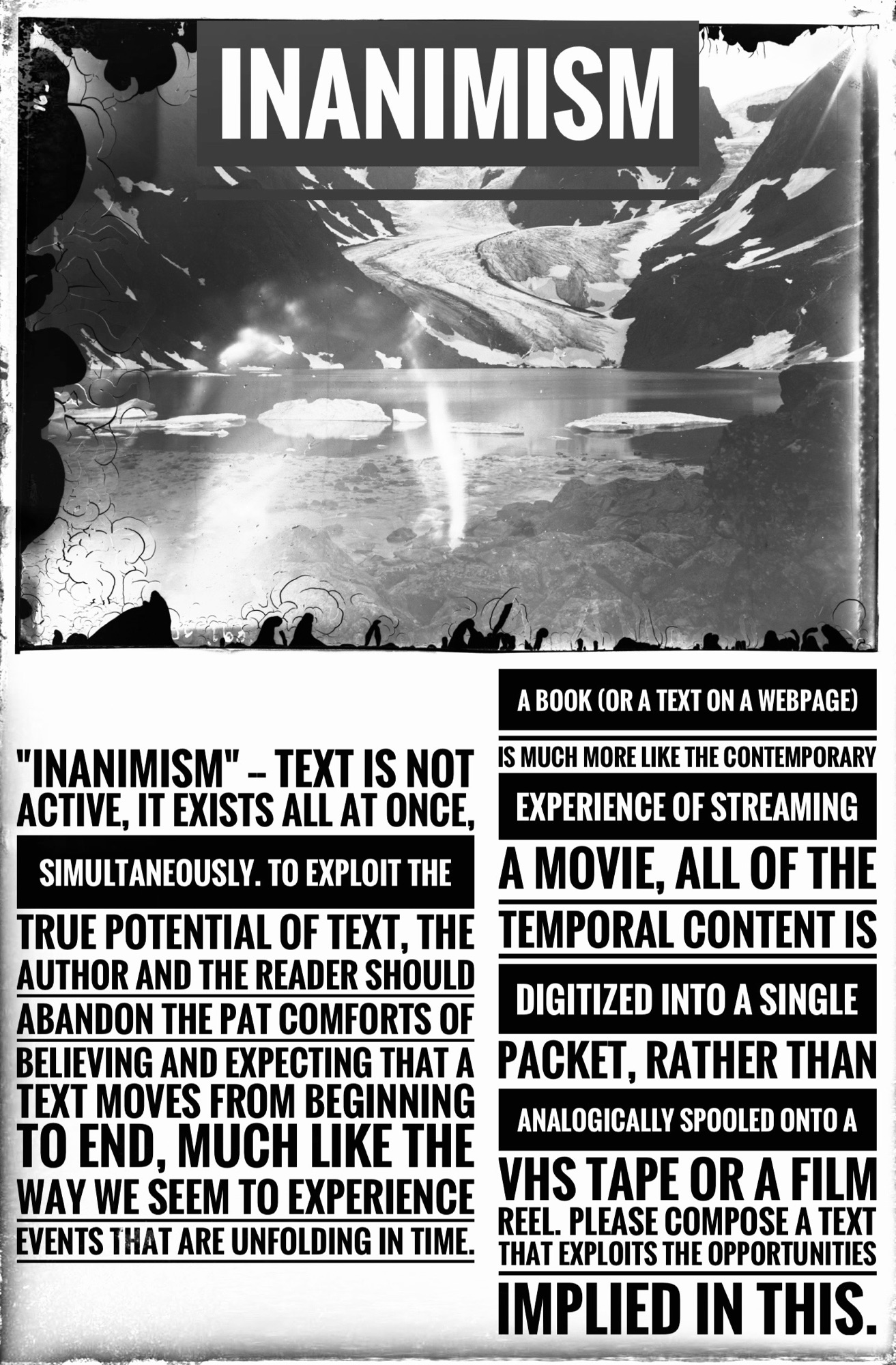
Burning House Press are excited to welcome JOHN TREFRY as the first BHP guest editor of our return series of special editions! As of today JOHN will take over editorship of Burning House Press online for the month of JUNE.
Submissions are open from today – and will remain open until 25TH JUNE.
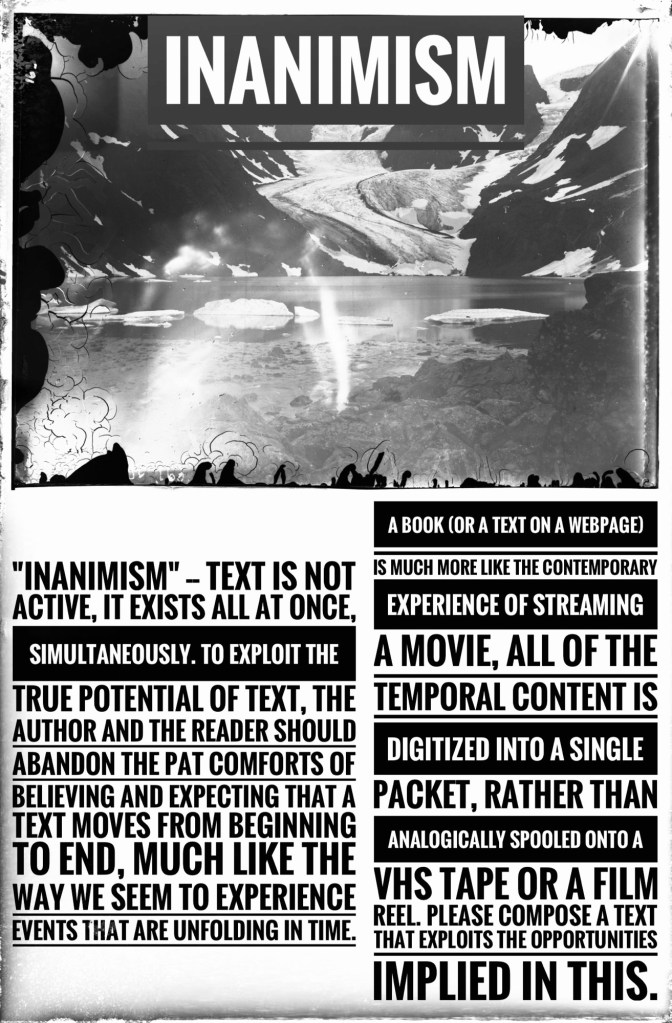
JOHN’S theme for the month is as follows
—INANIMISM—
Submission Guidelines
All submissions should be sent as attachments to guesteditorbhp@gmail.com
Please state the theme and form of your submission in the subject of the email. For example: INANIMISM/POETRY
Poetry and Fiction
For poetry submissions, submit no more than three of your best poems. Short stories should be limited to 1,500 words or (preferably) less. We encourage flash fiction submissions, no more than three at a time. Send these in as a .doc or .docx file, along with a short third-person bio, and (optional) photograph of yourself.
Art
Submit hi-res images of your works (drawings, paintings, illustrations, collages, photography, etc) with descriptions of the work (Title, Year, Medium, etc) in the body of the email. Files should be in .JPEG unless they are GIFs or videos, and should not exceed 2MB in size for each work. File names should correspond with the work titles. Video submissions can be uploaded onto Youtube or Vimeo for feature on our website. Send these submissions along with a short third-person bio, and (optional) photograph of yourself.
Virtual Reality/ 3D Artworks
For VR Submissions, please submit no more than three (3) individual artworks. For Tilt Brush works, please upload your artwork to Google Poly (https://poly.google.com/), and mark it as ‘public’ (‘remixable’ is at your own preference). A VR/3D artwork can also be submitted as a video export navigating through the artwork. If you prefer this method, please upload your finished video file to YouTube or Vimeo and provide a URL. With either format, please provide a 150 word artist’s statement.
Non-fiction
Non-fiction submissions (essays, reviews, commentary, interviews, etc) should be no more than 1, 500 words and sent as a .doc or .docx file along with your third-person bio/and optional photograph.
Submissions are open until 25th JUNE – and will reopen again on 1st JULY2025/for new theme/new editor/s.
BHP online is now in the capable hands of the amazing JOHN TREFRY – friends, arsonistas, send our JUNE 2025 guest editor your magic!
 BURNING HOUSE PRESS