The
hunger makes me lightheaded. We fuck through holes in our unitards. A smile
carved in your cheeks. Your cat makeup. Dripping.
Teeth
like candy corns.
My
wig is red synthetic fibers. It’s on fire. I scream at the TV in the dressing
room mirror. I lick the security camera. I sing the national theme song:
Bargain prices.
Fire in the drug den.
Fire in the migrant van.
Fire in the Amazon.
My
urethra is loose and spills urine abundantly. It could use a tightening. A
torque-it.
In
the paradigm where production becomes the sole unit of appraisal for one’s
life, Art becomes the twin of Death.
The
health insurance rep eats my shriveled foreskins. Fork. Masque. Cotillion.
\\\\
Sun
scream. No filter. Lake bake. Face full of beetles. Scales.
I
think the drugs are kicking in.
A
moonscape where the lake completely dried. Piano wire. Cow pies. Tootsie roll
lumps seethe on your skin.
Stalk
the campsite. Nothing under my mascot suit. I’m the Forest Fire Bear! Pinch my
udders red. Fear. Athlete’s foot.
Gasoline.
Hash
inhaled through a hollowed pelvis. Ramshackle hut in the woods in which I store
my trophies. Jerseys. Clipboards.
Lore
ended when everything became the news. My face plastered all over handbags at
Fashion Week.
\\\\\
Crayon
paste in commissary Smucker’s®. Snickers in intercoms
all
night long.
Bodies
torn through like toilet paper.
Teeth
gyres. Pig parades.
In
one sense, everyone should aspire to be president. In another, nobody should.
Everyone
should strive to write the country’s tome. To sing its song & carve it into
its tomb.
When
I was a kid the pinnacle sexual experience I could imagine would be to be
devoured whole.
Nothing’s
really changed. I’m just a little older.
America.
Logan Berry is Artistic Director of the Runaways Lab, a Chicago-based experimental theater troupe, and on the leadership team of Poems While You Wait, a collective of poets and their typewriters who compose poetry on demand. He works the graveyard shift at a residential treatment facility for at-risk youth. His libretto, NASIM BLEEDS GREEN, is forthcoming from Plays Inverse.
train
that is the only way to orgasm, killing an animal
you
love, one you know
or
even a stranger, killing a stranger dog
like
every time you orgasm, the animal is skinned
if
the objection is to the binary choice
we
are missing the point of the dilemma
let’s
eat cupcakes at each other
with
no pants on
lick
frosting deep in each other’s eyes
buy
gold chains off the internet without breaking gaze
I’ll get what I want
Untitled
V
a
house, cursed, is a distraction
open
weeping can appear to be
in
all things
all
things
I
know enough theory
to
recognize falsehood:
even
a virus gone systemic
should
be denied agency
every
day the loop of isolation grows tighter
love
I
haven’t bothered to crack that one yet
with
a bit of leather between my teeth
hold me under
Untitled
X
when
I say no one is talking about the grief
of
fucking someone
I
mean it’s everywhere all the time
this
murderous anonymity
the
relief of uncoupling too obvious
an
embarrassment of riches
for
the moment between when the fist lands
and
the bloom of knowledge that follows
I
wanted to grieve the way I wanted to fuck him
the
truth is, the truth is too simple for what happened
I
needed to lie and to grieve the lie as well
to
suckle the child—to feel my body multiply
as
if I could feed a waiting crowd
Amie Zimmerman lives in Portland, Oregon. Her work has been published in Sixth Finch, DIAGRAM, West Branch, Salt Hill, and BathHouse Journal, among others. She has two chapbooks, Oyster (REALITY BEACH) and Compliance (Essay Press), and is an editor for YesYes Books.
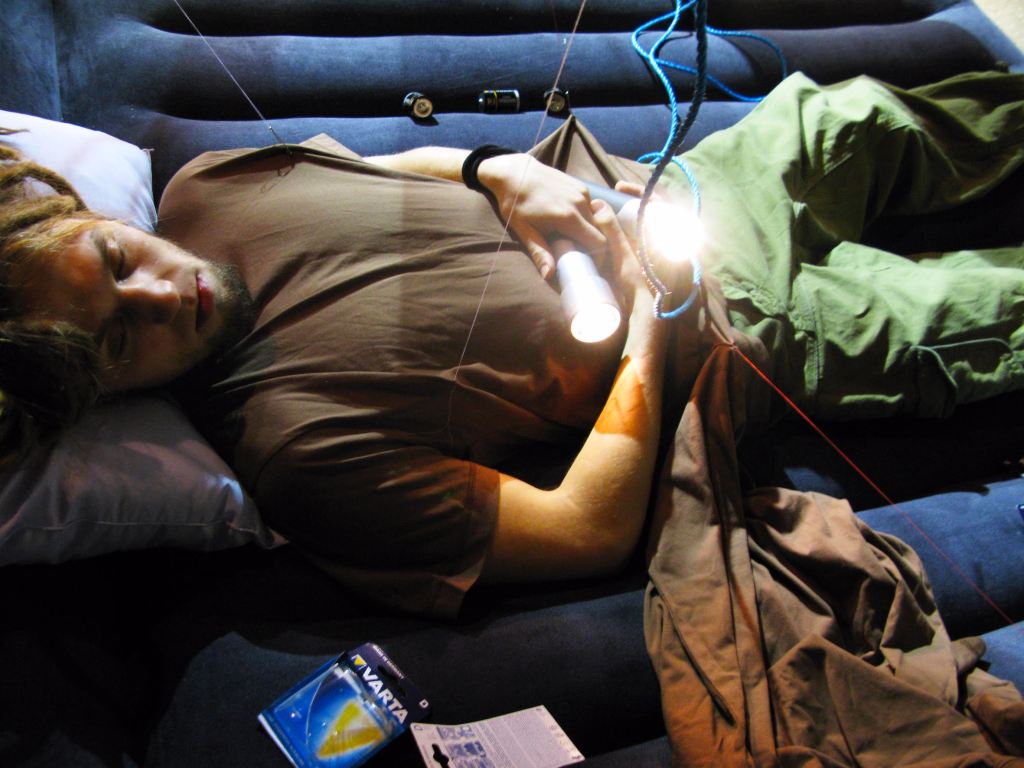
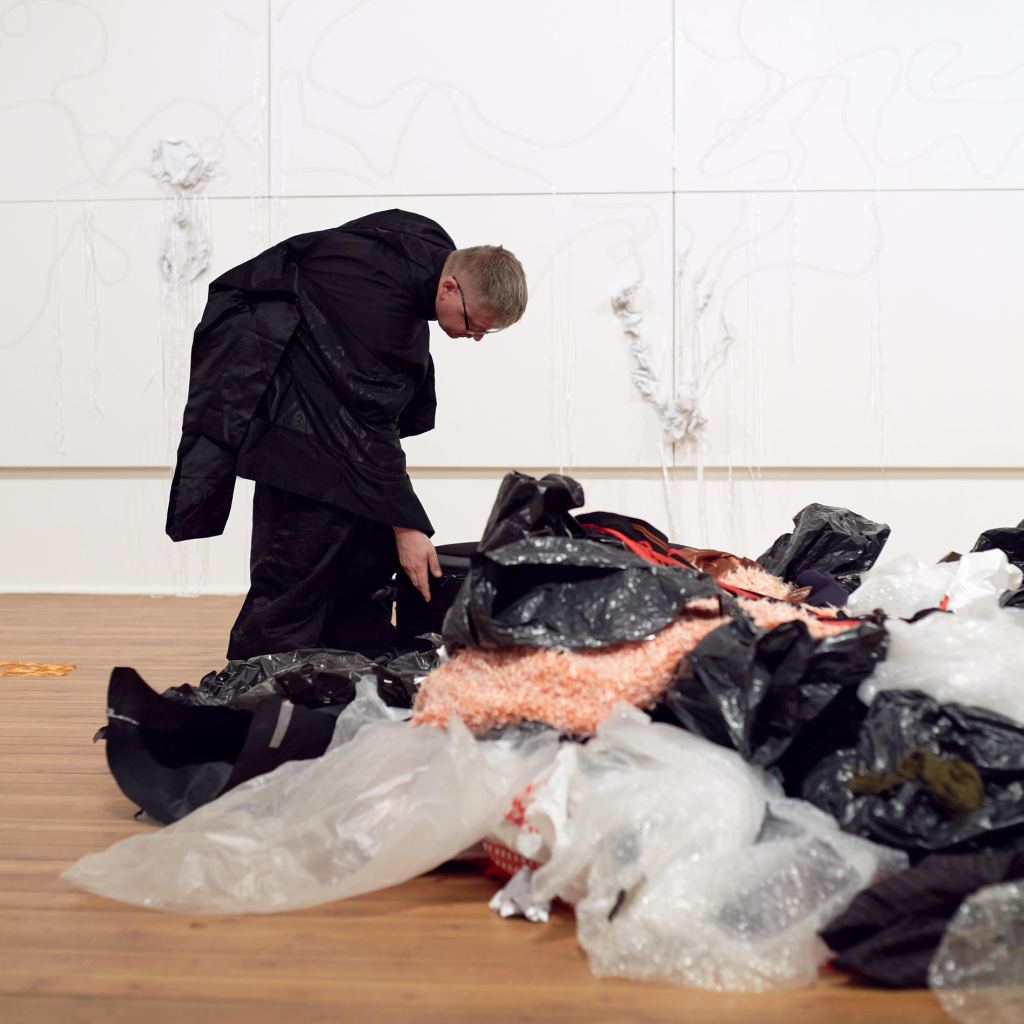
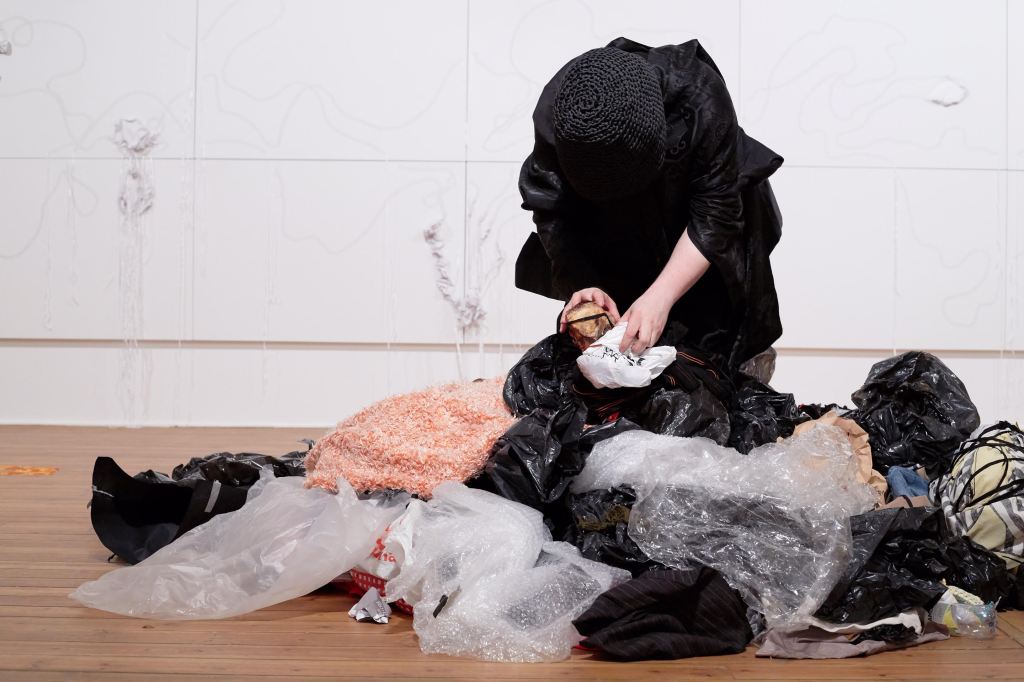
Photograph is from a performance by Leif Holmstrand.
Three poems from Nomos,
chapter “Rimsmedsvägen 36B, Kalmar”.
THE
KITCHEN. Mother’s sister’s scissors, in a plastic case. Blood pudding with
bacon and lingonberries to pancakes with home-stirred chocolate sauce. With
Arabia in sepia. The images faded, yellow, maybe hardened or with the memory.
As you shaved your beard and terrified me. Like coffee in a small cup, with
both cow’s milk and sugars. A small blue cup, I gave it to my son. Jeans and
glasses all. On hooks — boards. Happiness has always propagated itself amongst
macaroni; amongst heavy fir tables, with mannered and well-crocheted and joyous
tablecloths. All things in plastic. It was cloths, circled; plastic. The
honey-sweet milk of Sugar Puffs — a heaven compared to
Christ-our-saviour/Pale-incompetence-hanging-on-a-cross. Plastic surrounded
everything I learned. Even the sun. I squinted towards the sun, even cut into,
as at the hospital.
THE
STANDPIPE WATER TOWER WAS VISIBLE FROM ALL OVER THE QUARTER. It stood there
like a mushroom, its view was the whole world; the world was not great, it kept
at home. We — the church — the fall. Where the shadow was at most sharp. Leafs
thread over the feet against the ground, lost — I was often lost. High slopes,
trees. I was alone after closing time, I was always last. At last you were
there. I recognise tables, mattresses, plaster-dogs; kindergarten games, which
became weeks of utopia against the school yard. You were strange, a stranger. I
ran. I ran away. With salt dough, towards colourful desolate zones; lines lined
the floor — frames like those framing the pedagogy, I was also framed, inbound,
but much later.
THE
MALL AND THE SECOND FREEDOM. The dreams shifted shape, became fantasies shared
with others, became bulk and searching, compromising. Down in nooks, into
salinity — sweetness, a carbon based life form. One of us fractured his foot
through the glass door, within and without; the loading docks and the rosaries
beyond recognition: someone else’s older sister, phones ringing, vhs, Berga
Centre, I could not always hold it in. Why should I. Other’s feet, mine, beat
upon the parquet cement, over covered boulevards, rested around the one-fuse
posts, at times there were no stopping; no protection against intrusion, just
another man in the staircase about. With his shadow lose, made simple.
Freke Räihä (1978) is a poet, writing teacher, translator, critic, essayist, publisher and graphic designer. Also a parent and book hoarder and probably smokes too much.
hey
such whatsoever-so-much ricocheting from I the martyrized stranglulationist along with the mongrel dog-faced Father
caustically forced out of its immune insect. We gorge ourselves tossing and
turning men and tables Go Fuck You in Your Face Here in this restaurant I strap
on some culottes and spectacles to reinforce my portrayal of lousy exuberance.
We lost no step. We saw so well through the luminosity…The city is gutboil.
Laughter and tears release a tiny bit more crocodile smiling inside a coffee
cup it promises anyone coming across it a new form of teething or quite simply
put the repeal of the articles of law conceived by His Adroit Majesty Awaits us
patiently in the stables where our counterfeit money deploys itself against the
agrarians’ gold virtually a show-off And he? Speaking to… Taunting who? Squashing.
Soiling. Poisoning. Aggravating the other. I’ve killed him Gentlemen do you
realize what That so and so wanted to do? No more no less make a mockery of me.
So I took him by the throat. The work was done under-ground-elsewhere Not here
Under the insurmountable umbral collusion with a ritualistically purifying
jet-stream But I’m not forgetting I owe you my situation: What a nice little
runabout this was.
Take me,
Causticity. Crown my skull, Ink. I guzzle your quills. Circle the Madonna.
Pfft-scape! The glory of the Father the untraceable gibberish-spitting Father.
His speeches hammered to the point of my reign’s putrefaction. My move,
Cyclops! Everyone into the chamber. No, let’s meet inside the operating
theatre. Inside the other trance Oh what succulence! Take faith in my rifles
and patrolmen. Don’t dismiss them: Take warning get out of my sight The
harshness of termites attacking the exposed beams without even unscrewing my
view without a second thought of my immanence however jovial Jubilant pink upon
the never-ending whiteness Not even the rainy season! Not one seedling of corn!
Not one diplomatic accord! Not one foreign exchange! Not one holding their feet
to the fire! Men without a lyre you are forgiven! Enough suggestions Take my
gold my shadow my harems and get the hell out! I am become the king transformed
into a socialist. Now, enough!
* * *
The inked one does
not concern us here. Only compost. Sprawling outward with neither constraint
nor root. The type to die along the stairs of his publisher. Has neither woman
nor good sense in sight stomping into the ground and frequently sawing right
through. Yet another tongue trying his Atlas. Breaks slings and arrows yet
smiles and casts his shadow. The inked one is snuffed out. Those who never made
any headway outside his giant matchbox have been massacred. They’ve never
established order outside a script struck out from the start, outside any
communal sense save an associations of old scorpions But it was working its way
gently through his boxspring. A sort of worm had already ascended the parquet
flooring, climbed up the wall where the photo of his spitting-image was working
out his deserted obsolescence.
* * *
This is his text:
black
on grey alucite fungus moth the grammatical fist I won’t commune with My Father
didn’t do much else than augment you inside his halos and his grease Your
leopard latching on the double by the toe But I’ll endeavor to get out of my
own way It will release such sunlight that neither bomb nor telegraphy will
omit constraining the array I rattle my teeth out with. Over drinks he would
sometimes come to hazard harsh retorts and commit petty crimes. It quickly
became clear who’d maim who for a vodka! Without the least bit of shame. His
typewriter did the work while he was sleeping. A thousand ants settled up his
nodule. He hollowed out all of time in one single gesture. No longer daydreamed
of screaming sands or the few harvesters who’d settle down a stud after having
completely had it out—there were no clothes aside from a sack of hemp carefully
sewn together then burned in place by the ends of cigars. In those times
politics ran smoothly. Draping a caparison over all those who opened fire on a
standing guard or an emaciated dog. Politics reeked of its sperm. The Moroccan
Goumiers and Senegalese were scattered along the sidewalks, held their arms out
to the passers-by as if to signify that their death wasn’t the same as those!
But it was a trap, an indescribable lesson directed by the army whose duty it
was to surround the city by ever-broader means. The cesspools also reeked of
the passion of a god accused of high treason. There were winged sharks coming
out every ten minutes. These monsters would reward me with revolver or rifle
bullets whenever I wandered about in search of the paradise promised me on a
bench at school. After each lesson, the instructor would draw the sovereign’s
head out on the board. This was always his way of instructing us, but the only
thing he did was sustain a pitiful myth in our immemorial blood, which he
secretly knew, sooner or later, would be ejected. Near the school, a
conspirator had been shot. The noise of the gunfire seemed nothing short of
applause to me. Only later did I come to understand that it had been about the
liberation of an entire world and not of a single people rolled around in its
secular complexes, wrists tied, twisted, more and more strenuously bewildered,
and offering its backside to police batons, woven chicote whips, switches, and
other means of persuasion! There was no room left in this eye of mine which, as
if into a vat of sulfuric acid, had melted like a body without skeleton. Love
was unknown to me! But necessary to find a new skeleton for this costly
populace.
* * *
At
the end of the workday, I’d go home. I’d plop myself down in front of an old
typewriter that I called The Hurricane
and start typing. I composed my texts without thinking; I was of the
understanding that plans, notes, and other criteria necessary to the
development of a novel were of no use to me. I was writing my way through the
dark. Yet I have to say that the books first took form in my brain before being
thrown onto paper. I wrote with such speed that my own hand, having hold of the
pen, was incapable of keeping up with me. More often than not, I would spin out
an epic poem that would do it. One day, however, I must have struck a good
vein. I found myself totally bereft of productivity. I wouldn’t put my mind to
anything, much less myself. Perhaps that’s where the true creation begins. I
had left crybaby sentimentalism behind me along with reminiscences of all
sorts. Mallarmé had found himself in need of fording something all too similar.
And yet how he droned on! But throwing the dice rescued him. At that time, I
had already rejected all form, broken the normal metric, including that of vers
libre. I listened only to the jerky rhythm of things. A creaky door could
inspire me all the same as a man emerging from a particularly dangerous venture.
But I loved only the noise of TheHurricane. It seemed to me that each of
its flailings deformed the word over the course of its impression as if it were
the result of igneous fusion. I no longer had anything to say. I listened. But
the day came when I spit out a true vein of gold: I’d ejaculated a text
different than anything I had written up to then: a racket of machine-gun fire
followed by a rise of stifled howls. It was by way of this text I understood
that I would have to commit myself once and for all to the path of the
guerrilla linguistic! But I became completely closed off to others. I didn’t
even go into the office anymore. I had sent a three-month medical certificate
to my supervisor: an extraordinary sort of man. Go take a stroll through the
neighborhood, he’d tell me whenever I was feeling down and out. To tell the
truth, I must still be a sort of friend to him, but we can’t see each other
ever again. He had understood from very early on that my sole employment would
be to write without stopping, You should be fastened to a table with a
typewriter and paper. You’re an author! He knew perfectly well that my book
would be endless, that I would be consumed from the outset, Manure for desolate
consciences, there’s your book. No way you’re gonna leave the stable before the
manure reeks its way through. He took my blood for a vast, inexhaustible
stable, forever condemned to be filled for as long as I was willing to empty
it. I’d often tear myself apart. I loathed my origin, my parents, the world. I
would settle under the sun, in front of the window in my room, sometimes even
undressing myself, spreading out across the sill like a lizard lapping at the
sunlight. I had come to reject my relatives, my friends. The landlady would bring
them to my door to no avail.
* * *
The
Amazigh feel a kinship with madmen and genies. They suffer the world and its
twists and turns, but they admit any sort of life, any alteration, and they
adapt themselves to it with ease. They have the truth affixed to their
foreheads and they modify their lifestyles according to their taste, handing it
over to the printer and waiting around for its publication. They’re never
interpreted right, save the disgust some of them incite, so inevitably they
reject what comes back because it twists their ankles and takes them nowhere in
their ridiculous journey! But they never revel in defeat…
* * *
A
whole people is annihilated in the drool of a king who blubbers about and opens
fire, without drawing anyone else’s fire upon their brethren. The king shuts
down their internal work and progress but he uses both to his and his
benevolent defenders’ advantage. He doesn’t observe Ramadan yet he commands
others to do so. Along with those who spend their days losing their voice,
their strength and their power. They’re so afflicted by aphasia that they’re
propelled into ecstasy before the pestilence of his throat’s pouring out its
sporadic nonsense. He no longer exists for them because they’ve submitted
themselves to a bitter and grotesque fear. The fear of embers transcribed and
commented upon a thousand times by theologians who’ve long dismissed the Arab
tongue. Yes, if the Arabs haven’t illuminated their
prepared-or-plagiarized-but-nowhere-to-be-found-God in the vapors of an auriferous
world they’ve directed for so long; if they’ve come to believe the religion
they’ve been served like the remains of a bloody feast, no more than a literary
and metaphysical miscellany, yes, the Arabs will have pardoned God the
Non-Existent along with their anchorite-sword-of-a-beard! I was above all
taught fear, I was transfixed by it. Fear everywhere. In the home, in any
encounters; fear, disguised in the silhouette barreling down every angle of the
street: the intersection of the abyss! The whatever fear. I made this fear my
own after I became determined to dismember the god who’d dispersed it amongst
infantile brains. Now I’m an unbounded rage. I say to myself, Strike out if you
no longer have anything left to fear. That’s exactly what everyone who has
nothing to look forward to or back upon but the image of a police baton raised
against the world must do! I’ve put death in charge. Death who stumbles around
and souses itself in the eye of fear. I whipped it up, swallowed it, spat it
back out! It was no ordinary rot. It grew stagnant and remained fear in so far
as it could’ve consisted of something more appalling than it was. My vomit,
reddened by the torrid anguish and premeditated crimes of my digestion,
transcribed the fear through my eye which hurtled toward them like a fly to
shit.
FEAR ME, I AM YOUR FATHER!
FEAR GOD! In short,
FEAR!
That’s what made my life so difficult to grow accustomed to.
I’m never free of it. This fear is the tissue of my nights. It creeps up my
body and nestles into my cerebral membrane. It hammers its way into my skull
and disappears through my hair, only to immediately spring back before my eyes,
static, grotesque, and cruel.
THE
KING, THAT’S WHAT YOU CALL THE FEAR OF REMAINING THROUGH THE CENTURIES WITHOUT
BEING CONSCIOUS OF ONE ANOTHER, OF REJECTING THE NAMES OF SCALPED CHILDHOODS
FOR A CLOUD OF DUST.
Jake Syersak is the author
of Mantic Compost (Trembling Pillow
Press, 2020) and Yield Architecture
(Burnside Review Press, 2018). Two of his full-length translations of Mohammed
Khaïr-Eddine’s work are forthcoming in the coming year: the poetry collection Proximal Morocco— and the hybrid novel Agadir, co-translated with Pierre Joris.
He edits Cloud Rodeo, an online
poetry journal, and co-edits the micro-press Radioactive Cloud.
Mohammed Khaïr-Eddine was
born in 1941 in Tafraout, Morocco. Widely regarded as one of the most
influential avant-garde intellectuals and writers of the Maghreb region of
Northern Africa, he is especially renowned for his “guerrilla linguistic,” an
incendiary, Surrealist-inspired literary style which critically and
iconoclastically engages the cultural and political hegemony of postcolonial
Moroccan society. A vocal critic of King Hassan II, Khaïr-Eddine was forced
into exile in 1965 for his radical political views. Alongside Abdellatif Laâbi
and Mostafa Nissabouri, he helped found the avant-garde journal of
Francophone/Arab art and culture, Souffles-Anfas. He eventually returned to
Morocco in 1979 and died in Rabat, the capital, in 1995. A prolific writer, he
authored numerous novels, essays, and collections of poetry.
I, Caustic is one of Mohammed Khaïr-Eddine’s earliest and most ambitious works. Part poetry, part ars poetica, part memoir, part fiction, part manifesto, and part political theatre, the book sees Khaïr-Eddine applying his trademark polyvocal Surrealism at full capacity. The narrator in I, Caustic is nothing less than the avant-garde itself, the linguistic guerrilla, relentlessly ambushing the various genres and voices at its disposal—donning the vocal cords of political sovereigns, the religious order, members of the bourgeois infrastructure, class conspirators, friends, family, and ancestors alike—demonstrating that the only authority is that of the tongue, the “king transformed into a socialist.”
The master has disappeared. You see it in how these pages darken, in how the burned ones recompose, in the appearance of the king. The master and the eunuch, who are the same, with his stela, his killjoy, his scorn, flaccidity, they collapsed at the perfect moment. The mares don’t graze anymore. They’re lying around, with their jaws open, their haunches entangled in the mane of the threadbare orange bed, fragments of the departures, of the openings, of the orgasms of the woman who was singing in the opening moment. The one who said something like it’s been a month since I’ve fucked anyone or she could also have said I’m demolished, I look like broken pieces in this constellation or when she sang this bed has seen it all or feed me when I’m hungry, etcetera, etcetera. Now, this woman has taken a name: the loose one. And it has a homolog, which is herself, which is other, which is all of them, which follow the tantrums, and the selves she takes to get it on with whoever she’s into, so that she can then get rid of them: the pearl
Now, let’s move onto something else
Fate
Up against your will
Through the thick and
then
He will wait until
You give yourself to
him
Echo & the Bunnymen. “The Killing Moon.”
With a bacteria lodged in her throat, without talking, without the power to speak, without power: defenseless. An infection has overtaken different muscles, creases, parts. This time it’s the throat. That’s how it is, how it will be. Like a tongue turned into globs of drool that enter and exit. Without concern for the body, its desires or its mess. Cryptic. Cryptic. Cryptic. Without power, without the power to speak, without the power to say what hurts the most, what she most desires or what pisses her off, what she already knows, what she imagined when no one wanted to stop her anymore. Inevitably, some come, others will come. There was a fuck, there will be millions. But it’s always the same itch. The same boredom, the same suffocation. And nobody knows the loose one.
Counting the days, the loose one strolls through the basic
territory, humming a song. She looks at her orange bed, thinks of the days when
sweat embroidered the sheets, and kisses, and purity and the piety. The same
and the same. Drool. Harass. Come.
Arrive. The bed. Filled with prayers. There are some keys under the pillow,
clasps for a necklace with a gold heart, which the loose one looks at
entranced, because she doesn’t have a heart. Beyond, in another space or under
another influence, the king is sleeping deeply. And he doesn’t listen. And he
doesn’t feel. And he doesn’t know that the loose one waits and waits for the
perfect moment, to make a scene, so as
to escape. As she has always done, because she can’t, because she doesn’t know
how to stay or because it simply annoys her, because she gets annoyed at
anything that starts to get serious.
As she’s making calculations,the loose one observes herself again and again. She enters and exits the bathroom, looks out at the street. She goes over to the balcony. She begins to water the plants on the terrace, which now burn from the cold of these last days of autumn. Soon winter will be here. And these, the burnt ones, remember that sunny day when the loose one told him: they are like our love; they’ve been born again. But it was a total buzz kill. And the eunuch knew it and shut up, his phallus shrunken as always. The loose one reconsidered, for example, when she would go by the window naked, or clothed, or horny. And this was just one example of the traps she set for him. With the eunuch nothing ever happened anyway. Nothing. Or better yet: nothing had happened, because he was a closed container, and stubborn, a little clumsy, a little stupid, limp fucks buried in memory, a stela, a condition one could return to.
The loose one is like this. She thinks the imperfections and disguises make her unique. I love this asymmetry she says one night while cutting her bangs in the bathroom. And she looked at herself over and over again in the mirror. Then, the trim became less precise when her eye would glance over at the orange bed. No one’s home tonight, the loose one would say, just me and the crisis. Then she started to laugh. And then came the stomach pain and the itch in her belly was instantaneous. That same night she went to the window thinking: what’s going on with my eunuch, what exchange of secretions is he involved in. Will he be picturing the ring worm he left in my belly, the loose one mumbles, her throat raw from so much talking, saying so much in vain. Because even though she doesn’t love him, the word weighs on her. And what does she do now in the solitude of the word, in the cruel speech of the days: the loose one waits and waits. And when someone appears, she attacks. Because that’s how the loose one is. When something is put between her thighs she doesn’t stop until it’s taken out and put back in again. The way she likes it or the way they like it. And afterwards nobody stops her. Once the loose one gets going, no one stops her.
And the pearl had thought that she would never again cry for him, for the master, for the eunuch. There’s no way to singularize it, the loose one says, wiping a teary eye, the wound has many forms, names and twisted, listless memories. The loose one haunts herself all day. Exactly all day long. And at night she gets worse. And the pearl acts like it’s nothing but she can’t take it anymore. Meanwhile the loose one takes great pains to please everyone, but it’s not enough. They always suffocate her. Straightening her corset, she repeats herself for them: I’m not that one, why can’t you understand?
It’s like this: the two of them get together and act like it’s nothing, but it’s something. The loose one breathes melancholically while she comes down with diarrhea; the pearl acts like it’s nothing, as if nothing is wrong with her. As if nothing were running through her, like that, just so, as self-confident as ever; then they look at each other and swap roles, swap conditions and souls. And inevitably one of them doesn’t care. Doesn’t care. She comes or finishes, coiling, and closes her eyes apathetically. Now, let something else come, the pearl says, with the ring worm boiling in her belly, her neck bent back, her eyes dried up from so much crying. And in that moment, in another temporality, the king moves, scratches his head, tries to wake up, but remains lethargic and beautiful, anesthetized, in the furor of a clear and silent night.
Suspiciously, hunger comes after sadness, the loose one thinks, as she fucks her way through the city. I’m so hungry. So. Hungry. Hungry. Hungry. And she says it so many times that it’s becomes like a prayer, a command, a new way of begging. It’s at that moment when the king begins to slowly open his eyes. And gives her the look. Then the loose one murmurs: hopefully he’ll go down. And soon. It’s the only thing I’m missing. The only thing. And the pearl acts like it’s something, but she knows it’s impossible. Impossible to keep begging. Impossible to think that something is wrong. But the loose one tells her to wait, to keep very still and with all her senses wide open. With everything wide open.
Originally published by Editorial Cuarto Propio, Santiago, Chile, 2009, in 2010, La perla suelta (The Loose Pearl) won the Premio de la Critica (The Critics Prize) in Chile.
Paula Ilabaca Núñez (Santiago de Chile, 1979) is a writer, editor and teacher. She received the 2015 Pablo Neruda Prize, the 2014 Juegos Florales Prize for her novel La regla de los nueve and the Premio de la Critica de Prensa Literaria en Chile (The Chilean Literary Critics Prize) in 2010 for La perla suelta, which these poems are excerpted from.
Daniel Borzutzky is the author of Lake Michigan, finalist for the 2019 Griffin International Poetry Prize; The Performance of Becoming Human, National Book Award Winner, 2016. His other books include In the Murmurs of the Rotten Carcass Economy (2015); Memories of my Overdevelopment (2015); and The Book of Interfering Bodies (2011). His translation of Galo Ghigliotto’s Valdivia received the 2017 ALTA National Translation Award. He has translated books by other Chilean poets, including Raúl Zurita and Jaime Luis Huenún. He teaches in the English and Latin American and Latino Studies Departments at the University of Illinois at Chicago.
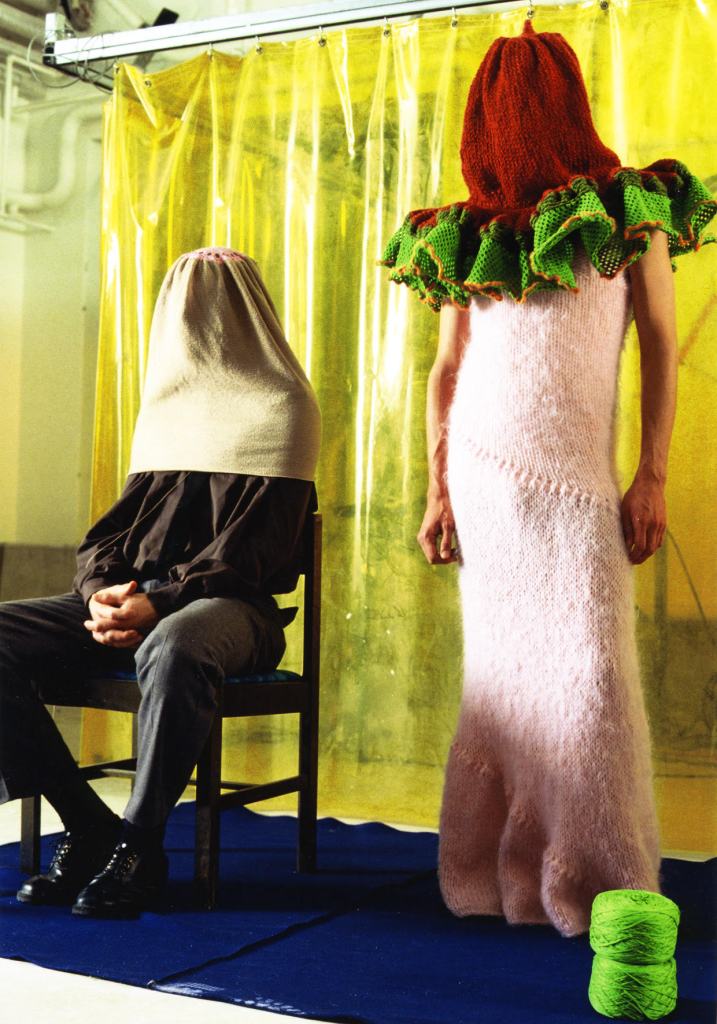
The art is a photo of Leif Holmstrand in performance.
My assassin’s body sits in the sun— pity be on the daffodil’s head—
like thick harlots riding a dragon— plummeting from the sky— dogs sniff them
and lick them by the pool— I leave them there and wade in— a sporadic abasement
that keeps me in good spirits— that is to say the lyric is also toxic— the pool
is named after the river it sits by— the Guataquia— river in all my dreams— I
dreamt my father swam the whole night and threw his body on the shore for all
to see— my father’s body was a prism that let others peer into the darkness—
let us see the many shades of color there— his body was blue all over on
account of death— body covered in soft teeth from the dogs— baby teeth from us
little white kids— the punctured lungs of my assassin— us little white kids pee
in the pool but no one notices— I stoop to drink and find blood in the drain— flakes of skin floating like
lily pads— on the shore are empty beer cans caught in the weeds like lice in
hair— us little white kids peel back the face of my assassin and stuff it with
spinach— stuff Popeye with spinach—
Popeye who is Escobar’s assassin— green like spring and well muscled— my
father’s body right after his execution— displayed in a morgue— displayed
across the nation on TVs— on Good Morning America— beamed into my living room
right before school— beamed into the homes of countless watchers— and entering
the room I watched, too—
A morning ripe with consequences flies circle fleas in the carpet images of the bridge collapsing over and over I beg the Animal Gods for sleep today but I have placed mirrors in its armpits I have changed everything I need to grieve for this peculiar loss the psychic horde of faces who will forget me one week after my last day at this job covered in light pink ash a smoky bulk a network of vague there is no sacrifice only feral and the sound of an arm or leg breaking that inner crack I am not ready to embrace the spiral a way of being here and not being here the secret club the code eye level with lions and their ways of goodbye
i haven’t prayed for
years yet as i am blowing you prayers
interrupt my
thoughts please watch over
& protect
X noon moon moan koan loan lean
mean meal
meat meet met wet
let lit it i
— i don’t remember
how this poem
is born i wear modesty like a kink
mariology
i wear
modesty like a kink
i find a list
on wikipedia maria of the moon
i repeat them
daily a cascade of every
maria
i have ever
been might be
not yet the
maria that has become known
maria of
small crises
moisture,
showers, clouds, cleverness
waves,
vapors, foaming, maria of a parallel world
i pause to
pray to the patron saint of the perfect lucite heel
for a pair of
margiela tabi boots to appear on ebay in my size
fuck maria of
fecundity i am cold, tranquil, serene, maria of the edge
i am
serpent’s nectar raw orange blossom honey bought
on the
florida georgia border unknown maria
of desire no longer recognized
weep hole
desire no longer
recognized i want to eat every daisy & dandelion
i see i want
to swallow the rain as if it were your come
or
drink the rain like piss if pee tasted
like memaw’s
sweet tea which i pretend it does
women’s bane, wolf’s bane, queen
of all poisons
so many ways
of saying flower power
i am
attempting telekinetic connections to clouds
but i just
end up in THE CLOUD adblock
all the art
bros of the anthropocene
that are
having emotional responses
to the end of
nature my body falls apart with the moon
but this isn’t a period
poem it’s a poem
period
or maybe it’s a weep hole
— i’m just a weep
hole helping lessen
the spiritstatic load on the masonry of whatever
Mai Ivfjäll is a bilingual poet based in Stockholm (by way of Atlanta) She is a member of the experimental Danish writing group Hekseskolen and author of the chapbook INTO LONGING VAST ROSE (If A Leaf Falls Press 2019).
Her poems have appeared in American Chordata, hotdog, Fanzine, Odiseo, Ordkonst, Pralin Magasin, Tidskriften Provins, Vakxikon’s Anthology of Young Swedish Writers, and elsewhere.
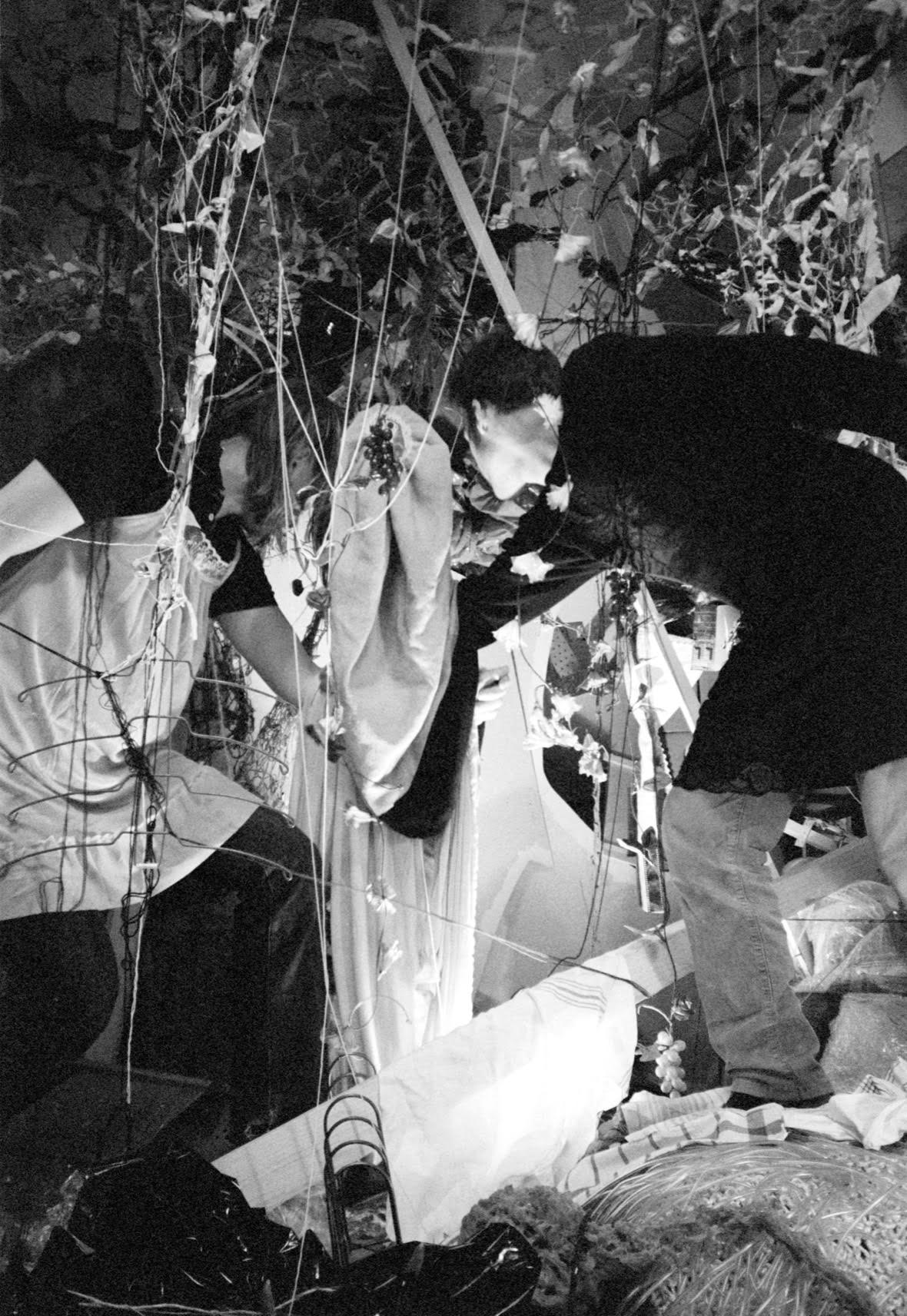
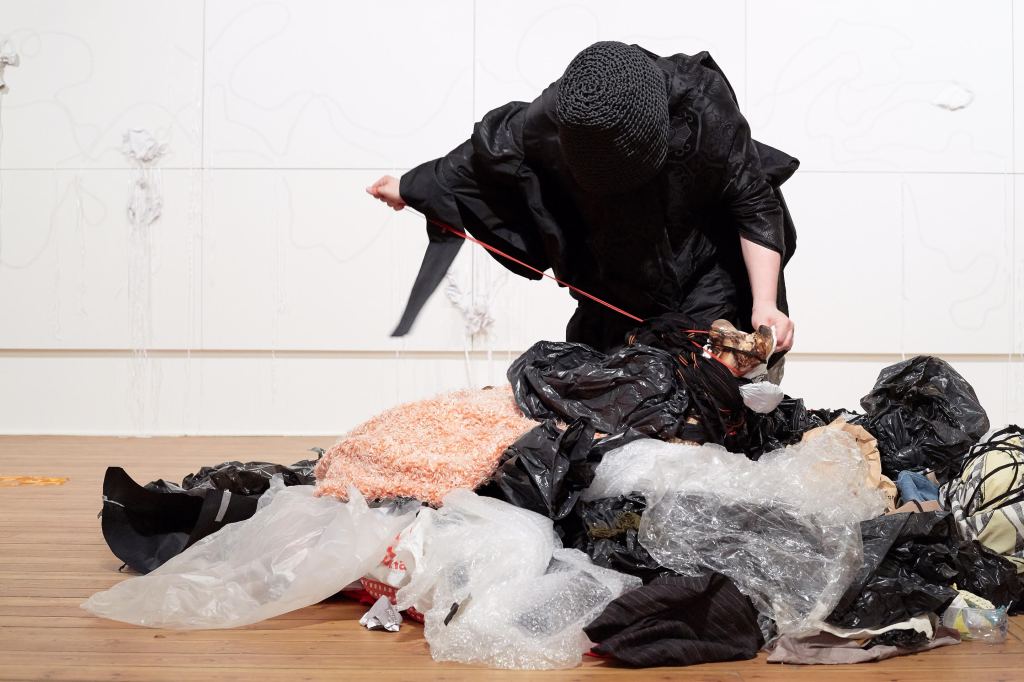
The photograph is from Swedish artist Leif Holmstrand’s series “Asami Kannon / Whore” (2017, performed at Uppsala Art Museum). Photo: Grzegorz Fitał.
some passion fruits or a smile from their own garden
Or because I head down to the bad side of town
to beg for money or a shirt and I get it
Because I keep a close watch on the sky with my sparrow hawk
eyes
and then talk about it in my poems Because I’m lonesome
Because I slept seven months in a rocking chair
and another five on some city sidewalk
Because I give wealth the side eye
but I’m not vicious about it Because I love anybody who loves
Because I know how to grow orange trees and vegetables
even in the dog days of summer Because I have a compadre
whose children I baptized and whose marriage I blessed
Because I’m not good in a way people can get
Because when I was a lawyer I didn’t defend capital
Because I love birds and rain and its wide-open
washing my soul Because
I was born in May
Because I know how to sucker punch my sticky-fingered friend
Because my mother left me right when
I needed her most
Because if I’m sick
I go to the free clinic
Because basically
I only respect those who respect me The ones who work
every day for their bread bitter and lonely and wrangled
like these poems of mine that I steal from death
Navel Moon
I sketch your outline from the lighthouse down to the city walls
Your iron eyes are glow hallucinated
Sea skips over stones and my soul’s got it wrong
Sun sinks into water and water is pure fire
You’re almost like a dream
Almost a stone in time’s swaying
A tender archetype solid in these dim days
your way of soothing my tears
Letting loose your body against mine Mad
like a foal in prairie fire
Spilling your words on my knowledge
like a poison to heal absence
Recalling things used and forgotten
with a bright wondrous flight
It’s getting late my love
Sea brings storms
A pale moon recalls your naval
And a few clouds light and slow like your hands
drink thirstily Like when I die up against your mouth
El Dios que adora
Soy un dios
en mi pueblo y mi valle
No porque me
adoren Sino porque yo lo hago
Porque me
inclino ante quien me regala
unas
granadillas o una sonrisa de su heredad
O porque voy
donde sus habitantes recios
a mendigar
una moneda o una camisa y me la dan
Porque vigilo
el cielo con ojos de gavilán
y lo nombro
en mis versos Porque soy solo
Porque dormí
siete meses en una mecedora
y cinco en
las aceras de una ciudad
Porque a la
riqueza miro de perfil
mas no con
odio Porque amo a quien ama
Porque sé
cultivar naranjos y vegetales
aún en la
canícula Porque tengo un compadre
a quien le
bauticé todos los hijos y el matrimonio
Porque no soy
bueno de una manera conocida
Porque no
defendí al capital siendo abogado
Porque amo
los pájaros y la lluvia y su intemperie
que me lava
el alma Porque nací en mayo
Porque sé dar
una trompada al amigo ladrón
Porque mi
madre me abandonó cuando precisamente
más la
necesitaba Porque cuando estoy enfermo
voy al
hospital de caridad Porque sobre todo
respeto sólo
al que lo hace conmigo Al que trabaja
cada día un
pan amargo y solitario y disputado
como estos versos míos que le robo a la muerte
Ombligo de luna
Dibujo tu
perfil del faro a las murallas
Luz de
alucinación son tus ojos de hierro
El mar salta
en las piedras y mi alma se equivoca
El sol se
hunde en el agua y el agua es puro fuego
Eres casi de
sueño Eres casi de piedra en el vaivén
del tiempo
Arquetipo
amoroso firme en la turbia edad
esa manera
tuya de calmarme las lágrimas
De desbocar
tu cuerpo contra el mío Enloquecido
como un potro
en una llanura incendiada
De verter tus
palabras en mi entendimiento
cual veneno
que cura la ausencia
De recordar
cosas usadas y olvidadas
con un vuelo
que ilumina y asombra
Es tarde
amor El mar trae tormenta
Hay una luna
pálida que recuerda tu ombligo
Y unas nubes
livianas y pesadas como tus manos
beben sedientas Así cuando yo sobre tu boca muero
Raúl Gómez Jattin (Cartagena, 1945-1997) was one of
Colombia’s most outstanding poets and the author of seven books of poetry. He
spent most of his adult life between psychiatric hospitals and the streets,
though he never stopped writing poetry. He led writing workshops at the
University of Cartagena and the Modern Art Museum and his famous public
readings drew hundreds of listeners. As a queer man of Syrian descent writing
in a way that broke with his country’s tradition, his rightful place at the
forefront of Colombian poetry has long been denied. In 1997, he was tragically
killed by a bus.
Katherine M. Hedeen is a specialist in Latin American poetry
and has both written extensively on and translated contemporary authors from
the region. Her latest translations include In
the Drying Shed of Souls: Poetry from Cuba’s Generation Zero (The Operating
System) and Prepoems in PostSpanish
(Eulalia Books), a chapbook by Ecuadorian neo-avant-garde poet Jorgenrique
Adoum. She is an Associate Editor for Action Books, the Poetry in Translation
Editor for the Kenyon Review and a two-time recipient of a NEA Translation
Project Grant. She resides in Ohio where she is Professor of Spanish and
Literary Translation at Kenyon College.
Olivia Lott’s translations of Latin American
poetry have most recently appeared in or are forthcoming from ANMLY,Brooklyn Rail In Translation, The Kenyon Review,
MAKE Magazine, Spoon River Poetry Review,
Waxwing, and World Literature Today.
Sheis the co-translator of Soleida
Ríos’s The Dirty Text (Kenning
Editions, 2018) and the translator of Lucía Estrada’s Katabasis (Eulalia
Books, 2020). She is a Ph.D. Student and Olin Fellow in Hispanic Studies and
Translation Studies at Washington University in St. Louis, where she is writing
a dissertation on translation, revolution, and Latin American neo-avant-gardes.
The photograph is from Swedish artist Leif Holmstrand’s series “Asami Kannon / Whore” (2017, performed at Uppsala Art Museum). Photo: Grzegorz Fitał.
I want to apologize. I’m sorry that I have had
to pull you down with me into this antechamber full of cold blood bags. It’s
hard to believe such a room exists, that there is really a room where they just
put bags of blood. But they stack up and stack up. When I got here, they didn’t
cover the door, but they do now. I don’t think anyone ever comes for the blood
bags again. No, really. It’s drafty. I’m so sorry.
Hold one of the bags, and feel the blood
inside.
This is my mothering instinct talking.
I’m sorry for how this ends, in a chamber that
used to lead somewhere.
I see once upon a time you were jaw bones.* The old woman at the dining table doesn’t speak, doesn’t cry. Her eyes disappear, her words—they begin to flow. It was the only rupture. Her face pebble-studded, having defeated every disease, she turned around to rest. When the anti-freeze flows from the lawnmower. The last drop of blood curdles at once. Now, if you could find someone to part with, wouldn’t that be nice? No one’s leaving, everyone’s on the floor. The white hair disappears, black hair grows. Why do you leave the door open all the time? In the opened hour she sticks her hand and gropes for her disappearing eyes. I’ll pour a little water on myself and take a look at my body. I’ll wash the panties, and I’ll pick up the towels too, I’ll put them in the basket. When the urine slowly dries where I’m squatting. I shed each layer of my skin under the sun. I see bones from long ago. Every ancestor became bats in the sky and monkeys on trees, owing to the capacity of solids. When she entered the ocean without a word and tried to grow into a whale. Not a day passed without pulling out the hair from the drain. Never have I failed to notice the crisscrossed bones in the hole. The black hair lumps in lumps. They say a mammal is a hole whose skull bones have fused completely. The day the old granddaughter reads a book. How to preserve the scene of rupture? The granddaughter’s white hair dances on the skull. The anti-freeze flows. Such tender palms, but they’ve never felt an alphabet. Child, why do you keep on leaving the door open? When on the floor wriggling, searching for the hour, the whole world must part ways. Touching the jaw bones. A ghost sits even at the tip of a needle. Though she wants to part with someone, she holds tightly in her hand the black hair. Doesn’t cry.
* Moriguchi Mitsuru, The Reason We Pick Up Corpses
Burning House Press are excited to welcome Johannes Göransson as our OCTOBER 2019 guest editor! As of today JOHANNES will take over editorship of Burning House Press online for the full month of OCTOBER.
Submissions are open from today – 1st OCTOBER and will remain open until 24TH OCTOBER.
Interview with excommunicated well-goddess and psychic poetess Abyssinia La Terre, otherwise known as the the doyenne of Dakhar. Interview by Archie Pelago.
AP: What would you say to the readers of ‘Two moons talking’?
Abyssinia: Cutter subordinate. You see, moments announce themselves with a kiss to the head, saying: (MISSING) But that is such rough news to good hooligans.
AP: What actually happened following the disappearance of (MISSING)?
Noon was first a shadowless lull in the byscape; a sudden, sunlit evenness now and then heightened by the silence of the cricketry, the dulling of the earliest birds. The woodland as a whole came to a halt at once, without a screech, as if it were of one mind in an incomputable amount of bodies the business of which was to multicull and culliply each other across time and worlds into complete transfiguration. It was rare, given this atmosphere, for even leaves to have to hold their breath, especially if –at least on land— this was an age of predators Continue reading “Welcome to the Fold by Mónica Belevan”→
……………1. Prologue
She was twenty, she was impressionable;
I betrayed her, she was angry, and
I left her; I was impressionable,
I regretted it; she was twenty, and
I am not a spiteful man and
I am not a poet.
That is, the–I dare not yet say my–
I say, the odalisque rises, stretches,
retches PBR and bilious memory,
all of it, down to dry dregs, and
flushes it onto this page.
Watch it run, quick on quick,
unto shit. Continue reading “Retch Romantic by Jan Von Stille”→










 BURNING HOUSE PRESS