Search

BURNING HOUSE PRESS

Not For Profit/For Prophecy

Category

Uncategorized

On Margaret Atwood’s The Handmaid’s Tale and Yearning

I started reading Margaret Atwood’s The Handmaid’s Tale after the 2016 election. The book felt timely as we, as a people, confronted an uncertain political future. To be honest,  I was gutted by what happened. I was troubled and grief-stricken that a man who boasted about sexually assaulting women, a man who dehumanized every group of people except straight white men, a man who lied every time he opened his mouth, was elected President of the United States. I know many of us are still reeling, maybe we’re even numb.

I decided that I would turn to literature as a way to cope with what happened. Writers give me hope. Writers are always dangerous because they ask us to empathize with The Other and they engage in complex, critical thinking. At least the best writers do. They challenge the status quo. They force us to rethink our assumptions, prejudices, and traditions.

Continue reading “On Margaret Atwood’s The Handmaid’s Tale and Yearning”

‘Safety Pin’ by Frank McMahon

Safety Pin


Will a safety pin be enough

To quell the din of racism

And help those on the sharp end of abuse

Loosen xenophobia’s noose?

Are you pinning your hopes on too little?

Continue reading “‘Safety Pin’ by Frank McMahon”

‘Walking Towards Death’ – 5 Essays on Mortality by Arathi Devandran

Part 2: ‘Mixing Memories’

One of my most beloved memories is that of gnarled hands plaiting my long, curly hair, fingers slowly sifting through tangles, gently unfurling errant curls, and tucking them neatly into the beginnings of a French plait. In my ear, the sound of my grandmother’s voice softly admonishes me, telling me to sit still if I want my French braid to turn out properly.

My grandmother was very good at French plaits, and, as her beloved youngest granddaughter, I took it upon myself to have my hair done whenever I could. It was one of the many perks that came with living with my grandmother, who was my principal caretaker during my childhood years, while my parents were off working and doing other adult things.

Continue reading “‘Walking Towards Death’ – 5 Essays on Mortality by Arathi Devandran”

‘Inevitable’ by Rehan Qayoom

Inevitable


The hardest worked waters wore out

The rivers lost in time

Perhaps it is a way to maintain happiness without people

To fly freely from


Continue reading “‘Inevitable’ by Rehan Qayoom”

On Nathalie Léger’s Suite for Barbara Loden

Barbara Loden is Wanda, as they say in the movies. Her inspiration for the screenplay was a newspaper story she had read about a woman convicted of robbing a bank; her accomplice was dead and she appeared in court alone. Sentenced to twenty years in prison, she thanked the judge. Interviewed when the film came out, after it had been awarded the International Critics Award at the 1970 Venice Film Festival, Barbara would say how deeply affected she had been by the story of this woman—what pain, what hopelessness could make a person desire to be put away? How could imprisonment be relief?

–Nathalie Léger, Suite for Barbara Loden


From an early age, I knew I wouldn’t make it in this world. So I connected with women who, in my mind, shared that feeling. Plath and Woolf with their suicides speaking of a deep pain. Barbara Loden and her film Wanda in which the title character wanders alone and unloved.


Wanda is poor and she is voiceless and she is invisible. I understand the not-thereness of her.


Nathalie Léger felt a connection to Wanda as well. Tasked with writing an encyclopedia entry about actress Barbara Loden, she quickly became obsessed and expanded her inquiry, writing Suite For Barbara Loden, a gorgeous and dizzying investigation and excavation. Léger delves into Loden’s life, at times embellishing and inventing, and analyzes every layer of Loden’s only film, Wanda.  The book is fact and fiction and memoir and film criticism; it is a love letter to Loden and the singular film she created.


Continue reading “On Nathalie Léger’s Suite for Barbara Loden

‘Living With Cancer’ – an essay in five parts by Arathi Devandran

Part 5: ‘The Everyday’

I am heading home after a long day at work, and I receive a frantic text from S, a dear friend. She has received upsetting news – the father of a good friend of hers has been diagnosed with cancer.

“I feel so helpless,” S writes. “There’s not much I can do for her, except remain available for her, and provide her support.”

I pause before replying.

I had been in her friend’s position before, of being told things that had made my world come crashing down around me. Of facing the insurmountable task of needing to be strong, even though all I had wanted to do was to crawl into a hole, to hide myself from everyone, from myself.

It had taken me several years to come to terms with my mother’s diagnosis, even after she was given a clean bill of health.

Continue reading “‘Living With Cancer’ – an essay in five parts by Arathi Devandran”

‘Living With Cancer’ – an essay in five parts by Arathi Devandran

Part 4: ‘On Hope’

I could not go with my mother to the doctor’s that day. Something urgent had cropped up at work, and I could not excuse myself in time for her appointment.

The feeling of guilt was familiar, but I had gotten used to it over the years. I had begun to understand that, as a caretaker, as part of a support system for someone with a long-term illness, I had to determine the limits of my capabilities as well. A caretaker was useless if she needed caretaking herself.

And the years of hospital visits and doctors’ appointments had almost desensitized my mother. Almost, because one can never be completely nonchalant about ill-health. But she had gotten used to it, and she had gotten used to dealing with most of it alone.

She rang me in the middle of the day while I was busy with work.

She was silent on the phone for a long time.

“The oncologist has officially declared that I’m in remission.”

Joy is a strange thing.

It hits you unexpectedly, from all directions, overwhelming, all-encompassing, until it settles so deeply inside you that you feel it radiating, throbbing, filling you.

Continue reading “‘Living With Cancer’ – an essay in five parts by Arathi Devandran”

‘Look Up’ by Adam Steiner

Look Up


I

Sovereign fires

Crane their necks thin

Hovering upon faultless feet


Weary scythes drop eaves

Overlook brothers of sleep,

Taking age to the face of day


Above brilliant margins

Drowsing sentinels

Illuminate the mainstream Continue reading “‘Look Up’ by Adam Steiner”

3 Poems by Jim Gibson

Snakehill


We grind keys on sandstone sacraments

(names dates loves and was eres)

Territorially recorded, awaiting time’s erosion

Through nights and days this hide away

For anyone escaping

Something Continue reading “3 Poems by Jim Gibson”

‘Five-Fold Symmetries’ by Liz Zumin

Five-Fold Symmetries


If I present myself to them

What of their measurement and their avoidance?

It is a survival, a learning to live

A pellicle thin as skin on black tea.

Few poets don’t wear the mask. Continue reading “‘Five-Fold Symmetries’ by Liz Zumin”

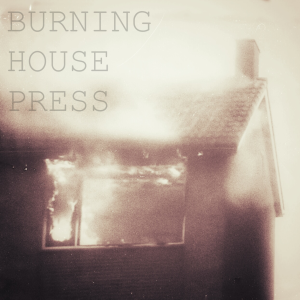
‘Living With Cancer’ – an essay in five parts by Arathi Devandran

Part 3: ‘The Scare’ 


Dearest,

You know what the worst thing about cancer is? Once you’re touched by the disease, there is no turning back.

It has been four years since Mum was diagnosed with breast cancer. Four years since she went through her treatment. Four years of living with cancer, where in one way or another, we are reminded of its viciousness every day.

There is no respite. There is no end. Because from the moment the doctors tell you that you have the disease, it affects every moment of your life thereafter. It becomes a part of you. It is the shadow you can never quite get rid of, the awful feeling in the pit of your stomach that never goes away, the thing that wakes you in the darkest hours of the night, drenching you in cold sweat.

You might think this is only the case for the patient–the person who has been branded with this dreaded disease–but what few people know is that, when cancer touches one life, it touches everyone related to its first victim.

Those things that I wrote above? I go through them too. Cancer has become an indelible part of my life, and I’m not even the one suffering through it. The haunting may be different, but it is no less difficult, no less torturous, to deal with.

A week ago, Mum had a spate of dizzy spells. We didn’t think too much of it. These things happen, and then they go away. But, in her case, the dizzy spells didn’t go away. The alarm bells began ringing, fast and furious.

They did all the tests they could. Dad and I stood by helplessly, watching as she was poked and prodded by needles, wheeled to the X-ray room and then to the MRI scanning theatre.

Hours later, the doctors came and told us they’d found a tumor in her brain. Possibly malignant. Brain cancer.

And then they left us to deal with it. While our world came crashing down, the world outside of that little ward continued at its steady pace.

I think back to that moment – me leaning against a table because my legs had suddenly lost strength, mind racing, trying to figure out how the family was going to get through this again; my father, sitting next to my mother, holding her hand while she cried; and the sound of my mother’s crying, a low keening wail that was coming from a place that seemed so broken, so devoid of hope.

Thinking back on that day, I cannot remember many things. I cannot remember what we talked about after the doctors gave us the news. I cannot remember what we wore, what we ate for lunch – nothing.

But I can remember that single scene, like a tableau etched in a dark corner of my mind, and the sound of my mother’s cry.

***

They came back into the room again, hours later. Only to tell us that they had looked at her older records from years ago, and that they had spotted this tumor then too. It wasn’t new. It wasn’t a metastasis. It wasn’t cancerous.
 

Continue reading “‘Living With Cancer’ – an essay in five parts by Arathi Devandran”

Submissions To Burning House Press On-Line Are Now Open

SUBMISSIONS ARE OPEN TO BURNING HOUSE PRESS ON-LINE PLEASE SPREAD THE WORD AND SUBMIT YOUR WORK TO US NOW

Burning House Press Whatwhywho ?

“We do this [write] because the world we live in is a house on fire and the people we love are burning in it” – Sandra Cisneros

Let us say that the house is on fire and you can only take one thing with you. So you take the fire. Burning House Press is the fire you take with you. On the night of the great fire Burning House Press escaped the crackhouse and crawled into the arthouse. Burning House Press never forgot. Burning House Press speaks from the side of its mouth, all aorta aria, loudhailer lung-song. Burning House Press is the steel spine in the feral ones. Burning House Press has one leg up one leg down on its tracksuit bottoms. Burning House Press cradles a butterfly in one hand and holds a butterfly-knife in the other. Burning House Press is the scallywag intelligentsia, the council estate oracle. Burning House Press is the Blakean grain of sand that Satan cannot find. Burning House Press portrays a crow’s cadence, is courageous enough to be mystic in these days of the septic tepid optic. Burning House Press is both concrete and quotidian and conflagration vision. Burning House Press is too verbose for the stage too vandal for the page. Burning House Press is born bookworm and baudville hooligan, voodoo and vindication. Burning House Press crawled for a thousand years on hands and knees over broken glass and molten-tarmac, just to tell you a poem. Burning House Press remembers the path to the water-well, as well as the way to the ward, and we sing them both.

Every Time

Submissions To Burning House Press and The Arsonist Magazine Opening Soon

https://burninghousepress.com/

artwork by badpoem

Blog at WordPress.com.

Up ↑