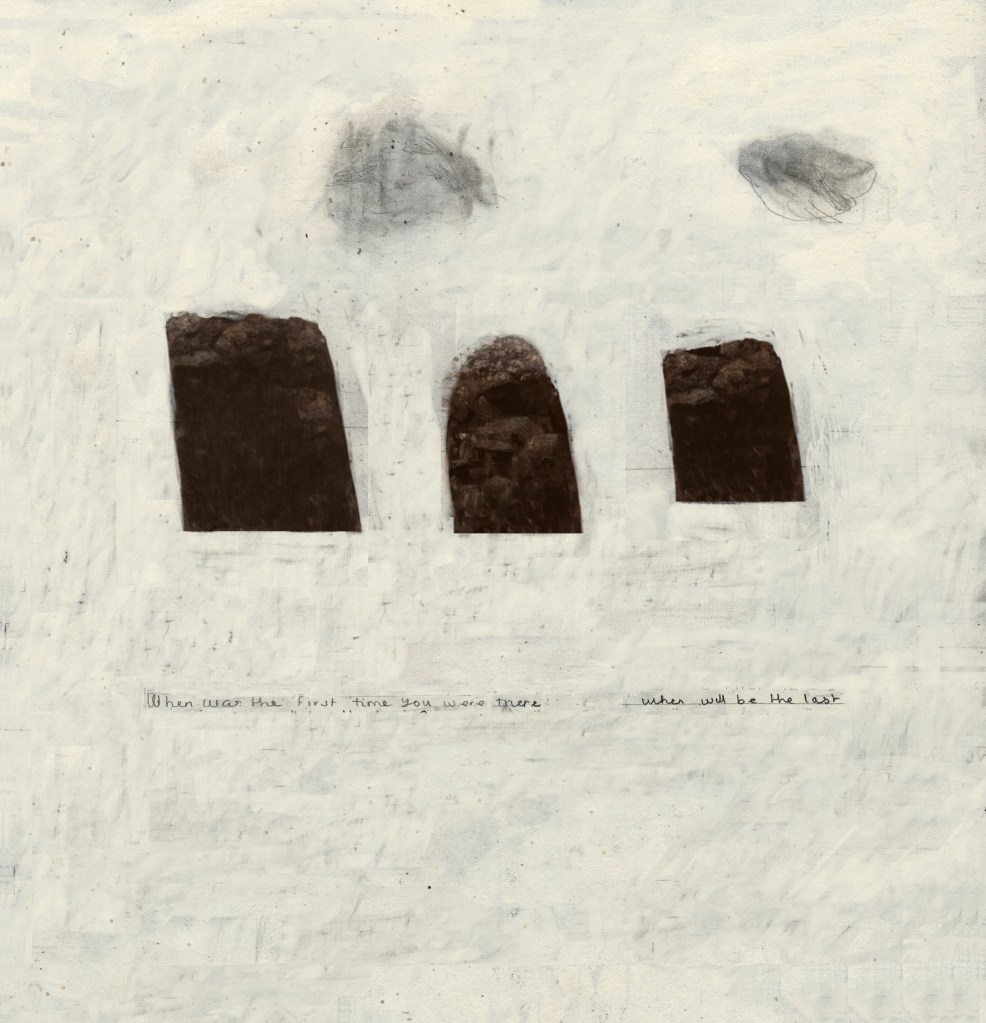
There is a moment in the film version of Gavin Maxwell’s Ring of Bright Water when the main character, Graham, gets off the MacBraynes’ bus and for the first time looks across the Firth of Lorne towards Mull in the distance.
Ben Buie, Sgùrr Dearg, Dùn da Ghaoithe are all there in front of him, each a distant grace note to something that isn’t there anymore. Of course the movie takes vast liberties with both the book and indeed the story of Gavin Maxwell himself but somehow for me, with that scene, it all gets forgotten.
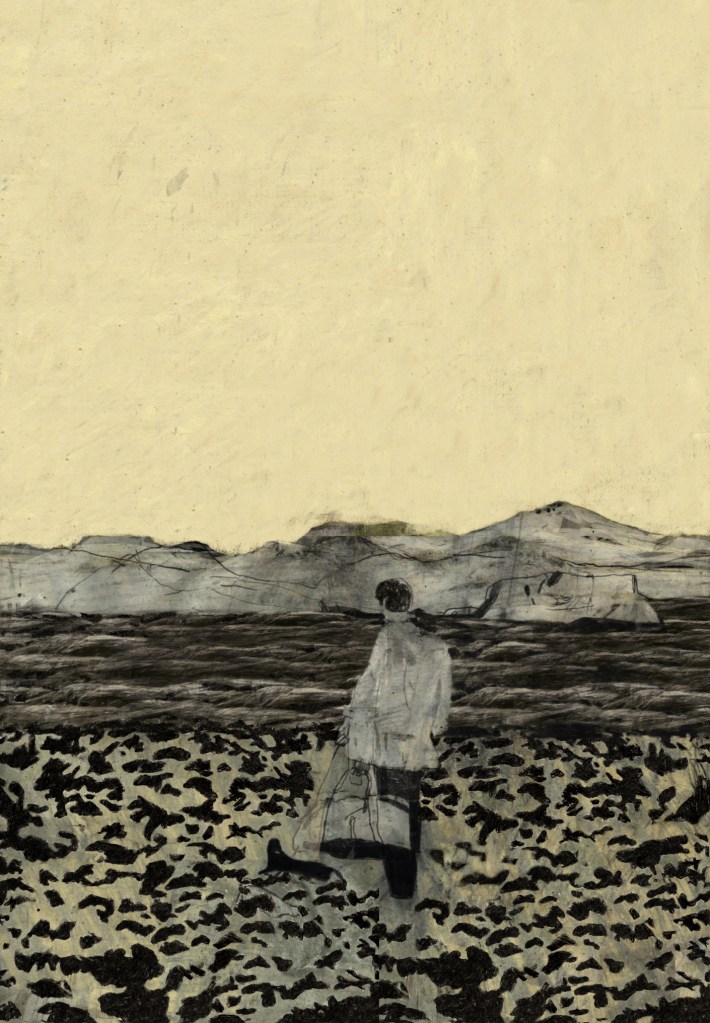
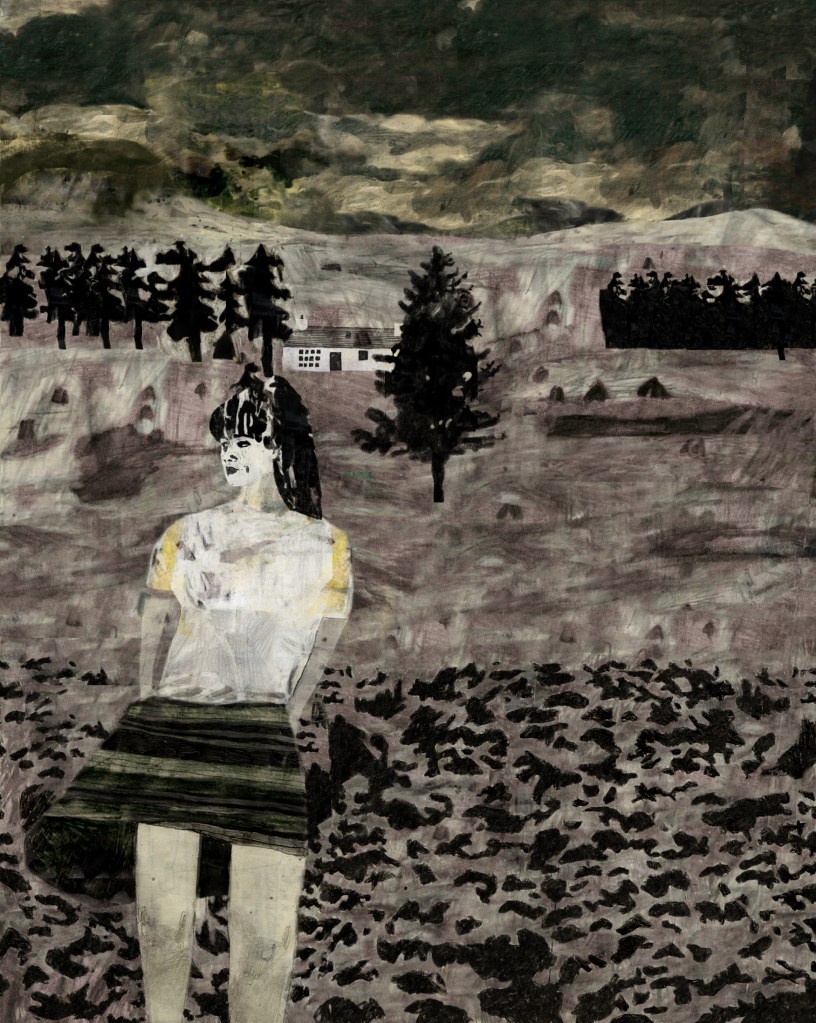
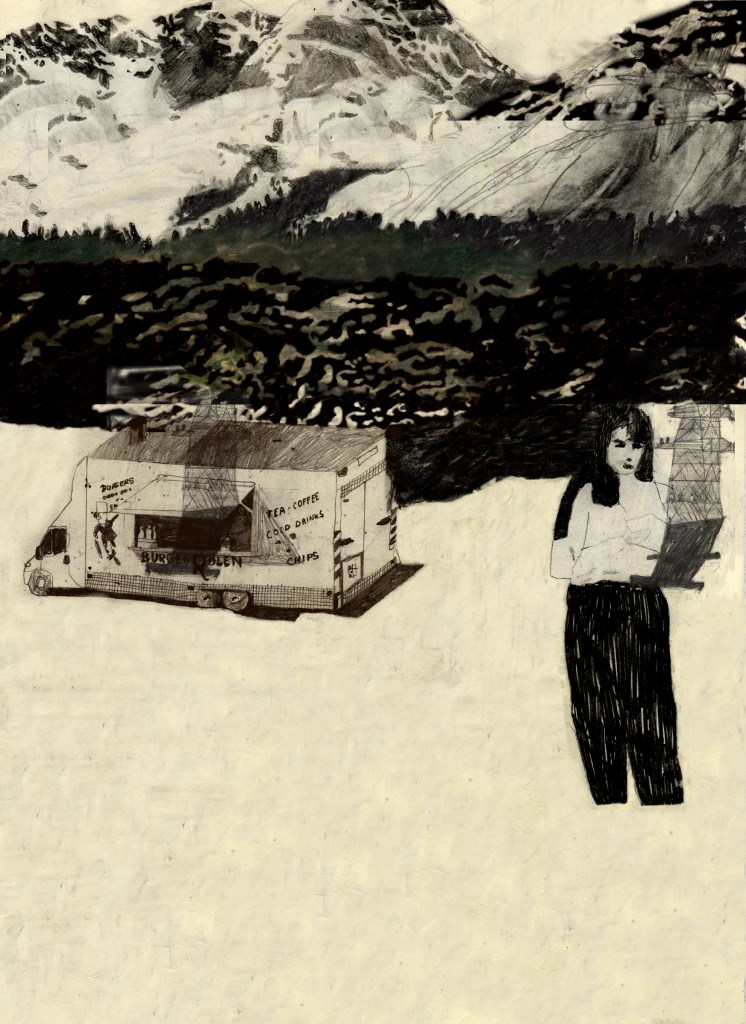
And so I watch the grass as it gets moved by the wind
and the sound of it
And I think of us there in Fishnish all those years later
The sweetness of that sound on Aird a’Mhorain.
Traigh Iar
and I think of those landscapes now that we’re not there,
the spaces where we used to be.
Your presence as it shifts into abstraction
and distant thought now
the space between you and me and the lines that I draw.
. . .
Born in Belfast, Northern Ireland, Brian McHenry is an artist and illustrator whose work has appeared in various publications — including The New Yorker — and featured on record covers, books, and even the odd beer can. He currently lives on the north-east coast of Ireland with his two children. His recent combines elements of portraiture, symbolism, and abstraction to explore the physical and emotional landscape of remembering.
Midway through the event, a woman seated in the front row of the audience asked the panel of four authors, all of whom had made an appearance for the purpose of promoting their recently published travelogues, if they could explain in simple terms how their notion of travel differed from what most ordinary folk called holidays. Nothing is more difficult than to be simple, but the elitist charge implicit in her question, one that was somehow rendered more pointed by her affected pleasantness, laid another layer of complexity. The moment demanded deflection by way of a pithy response — l’espirit de l’escalier might have suggested a poignant quote from Ibn Battuta or something whimsical from Rabelais. Instead the panel, with a tad too much haste, dug themselves into a defensive trench, and in the process shovelled dirt on what they ill-advisedly and repeatedly referred to as common tourism. And they wouldn’t stop digging.
Conversations erupted throughout the room but eventually settled into silence, and no indication was given that the audience would assist her in pushing the panel off its platform, if indeed that was her intention. That being said, it most likely nudged it a little; peering through the newly created cracks in the edifice, the panel’s itinerant forays and desultory wanderings would have appeared to some people as lofty peregrinations wrapped in pompous superiority…or thoughts to that effect. Their somewhat clumsy efforts to enumerate the differences between what they get up to and what everyone else does would not have helped in that determination. On the other hand, some would have interpreted her question as self-aggrandising, one motivated by conceit, point-scoring and the desire for audience adulation. Either way, the nourishing conversations that were until that moment shared between the panel of authors and what felt like a roomful of friends, now a breathing mass of strangers, failed to revive.
Possessing an air of originality, mystery and spirited adventure, the mention of travel arouses more curiosity than that of the humble holiday, and there can be little doubt that by describing oneself as a travel writer rather than a holiday writer one gathers greater cachet. Yet it often seems that, at core, there is no difference between them. Indeed, the travel writers sharing the podium might easily have described their journeys as holidays. After all, three were promoting books about relatively short stays in what many would deem holiday destinations, including a fortnight in Paris, three weeks in a wine-growing region of France, and a month in Tuscany. Only one took a longer and more varied route, that resulting from an unplanned year of backpacking.
Putting it this way perhaps challenges their street cred, yet many philosophers, among them Seneca and Thoreau, were greatly inspired by the odd holiday, during which they created notable works of reflection on nature, on the human condition, and on life’s meaning or purpose. The same is true of literature. Agatha Christie developed the idea for a well-known detective mystery whilst on a leisure cruise down the Nile. Virginia Woolf wrote To the Lighthouse whilst on vacation on the Isle of Skye, and Elizabeth von Arnim’s The Enchanted April was inspired by a month-long holiday to the Italian Riviera. The list goes on. In the end what matters most are the stories, and to this one might add a degree of self-discovery.
. . .
Old Cathy used to come into our house to wash her money. Though she scrubbed the stairs of every last one of them, and had done so for years, ours was the only flat in a long street of tall black-sooted tenements where she could come and go as she pleased. She even had a key. Some people would rinse out and refill her bucket, but she would have to remain at the doorstep, door closed. To be fair, Old Cathy wasn’t one for conversation, and in fact blanked most people, but that wasn’t the only reason people covered their doors. For much of her life she lived between the mental asylum, as it was then known, and the street, and when that information got around the neighbourhood by the usual whispering campaign people kept a watchful eye. During the time our family knew Old Cathy she had secured permanent residency in a Salvation Army hostel not far from where we lived: a small room with an iron-framed bed, a chair, a cabinet, and a cross on an otherwise bare white wall. Visitors were not allowed, but we visited anyway, my sister and me, and whilst some residents occasionally looked at us with suspicion, neither the warden nor anyone else ever refused entry.
My sister always firmly insisted that if anyone were to question us I should stay silent and let her do the talking. When neighbours or anyone else asked questions she generally cut in to finish my sentences in ways I could never anticipate. Three years my senior but in reality much older, I guess my sister would have been around eleven or twelve when we visited Old Cathy. She doted on us, and was always steady and sunny, but I doubt if many people saw that side. She just kept her head down as she scrubbed the stairs, her metal bucket echoing in the close as it clanked down each step, then reached back up to draw intricate floral patterns with white chalk on the margins of every step. This was a common custom in our neighbourhood, an area that outsiders called slums, but unlike Old Cathy most women just chalked a quick zig-zag or squiggle. Either way they only lasted a day at best.
A woman notorious for malicious gossip once stopped us to ask if our dad knew that our mother allowed a pauper lunatic to wander in and out of our house when he was at work (he worked almost all the time). We of course knew who she meant, but as instructed I buttoned up. I would have liked to have said that we loved Old Cathy, who was one of the kindest people on Earth, and that not only did she visit us, we visited her; but as my sister later reminded me she would most likely have called the police and had her thrown out of her residence and into the street. Adults were a different breed, and I dreaded the thought of mingling with them. Even at the early stages of adulthood most people showed signs of becoming distinctly unpleasant. I think Old Cathy felt the same way.
This was a time when mothers who took to their bed for days or weeks or maybe even months were generally considered to be indolent rather than depressed, a time when postpartum depression was for the most part unknown, and a time when having a stillbirth — regardless of the sadness, guilt and anxiety that were at heart a cry for help — was hushed up as a shameful failure. Mrs Bogus, a pathologically nosey upstairs neighbour of ours — listening at the letterbox, she fell into our hall one time when my dad opened the door on his way to work — stopped me and my sister on the stair to ask if my mother was still lying in her bed. She called her a lazy article, jolting her miserable mongrel on a choke chain before briskly walking on. No one ever explained to me the meaning of article, but I got the gist. Just ignore her, my sister said, and don’t repeat what she said to anyone. I didn’t have to: everyone seemed to know that my mum had sunk under the covers and let the house go to hell. It even got around the school.
For the best part my sister looked after things at home, organising clothes, tidying up, making meals, but after a while things began to slip there too, and the mess just piled up. We made a space on the sofa between heaps of clothes and coat hangers and ate cereal from the box. On one occasion we heard our mum mumble to herself that she wanted to cut her throat, and I was told never to repeat that either, not to anyone, not even to dad — especially dad! She didn’t mean it, my sister insisted, but I couldn’t quite dismiss the possibility. For all their promises to the contrary, adults were notoriously unpredictable. My friend’s sister killed herself over a stupid fiancé, the mother of a boy at my school was murdered by his dad — just one punch, they said, whilst she was doing the ironing — someone sunk an axe into someone’s front door, another put a petrol bomb through a letterbox, men filled with rage and hearts of hate fought to the death outside pubs, and psychopathic razor gangs roamed the streets and alleyways. No adult could be trusted entirely.
We came home from school one day to find all the mirrors in the house had been smashed — why mirrors? — and immediately I wondered if my mum had taken a shard of glass to her throat. I envisaged it. My sister made me wait in the hall until she checked out the bedroom. Mum was sobbing under the blankets, but otherwise okay. Old Cathy was there, calm and calming, picking up the pieces. She would have known worse, and most likely understood the situation better than anyone. For several weeks no stairs were washed as Old Cathy stepped in as our femme de ménage, arriving before we went to school, and leaving in the evening. Between those hours she did the shopping, made breakfast and prepared dinner, looked after my mum, washed clothes, tidied the house, and even found time to play board games with us — she was a master at draughts. In time, when my mother got back into harness, Old Cathy got back down on her kneeling mat to scrub and chalk the tenement stair, the distinctive sound of her metal bucket once more echoing in the close as it clanked on each step. Thereafter she would rinse out her bucket, brushes and money in our small scullery whilst the kettle boiled before settling down to sit with my mum, gazing into the embers in silence.
. . .
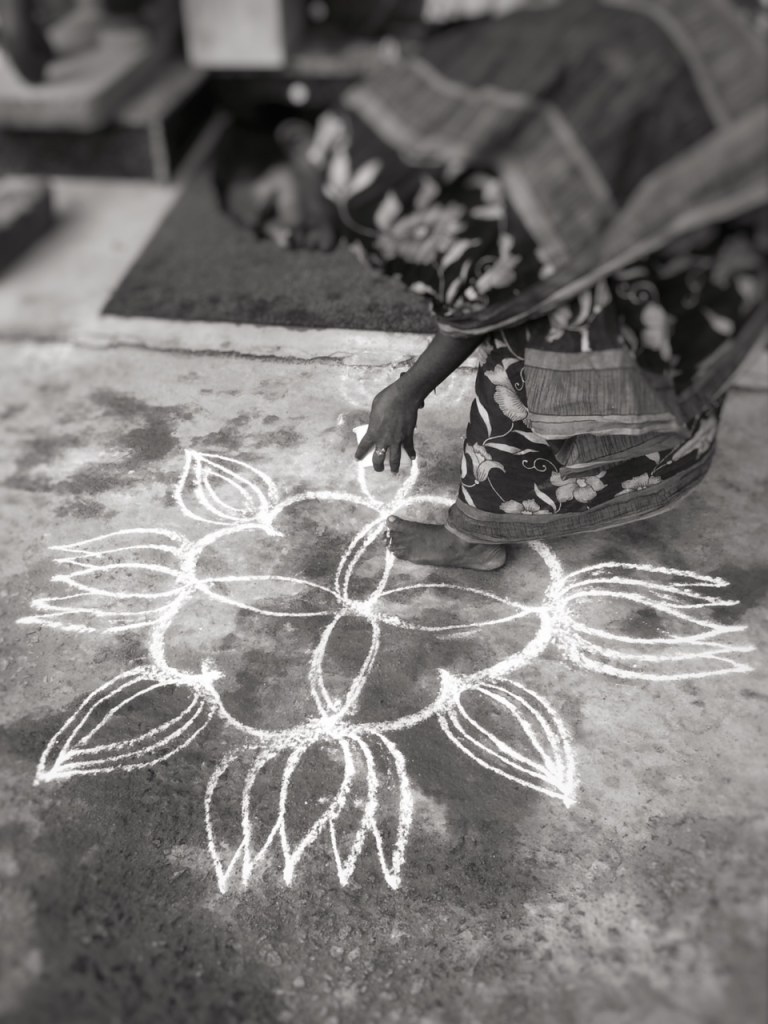
For some people, travel writers are escape artists sharing their secrets on how to break loose from sameness. Others live to wander, to find stillness in motion, and perhaps by chance to find missing parts of the story that made them who they are. It was whilst perched on a doorstep under a hot sun in Tamil Nadu that Old Cathy, for the first time since childhood, wandered into my thoughts. I was watching a woman take great care to create a kolam at the entrance to her home, a decorative chalk circle with floral designs that is said to bring good luck and prosperity to the occupants. The drawings are walked on, scuffed and washed out every day, and whilst illustrations and meanings vary, each in their own way presage the transience of our existence and the impermanence of all things. The process was hypnotic. With eyes squeezed shut I remembered Old Cathy with head bowed drawing similar floral patterns with her piece of chalk on the steps to our door, and for a moment that door opened. The long journey to India had led me back to the start, and perhaps, after all, that was the point.
. . .
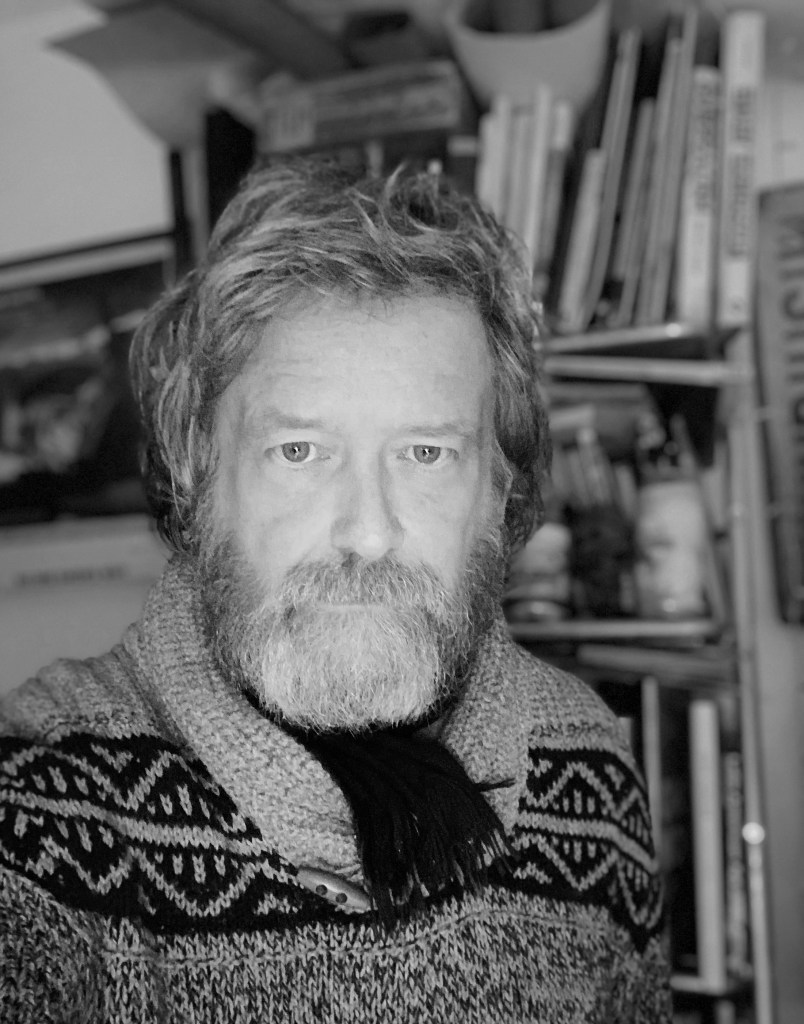
In addition to teaching psychology in universities, adult education and colleges across the UK, Paul Tritschler has managed organisations within the fields of brain injury, sensory impairment, mental health and community activism. He has written for a variety of magazines, including Aeon, Psychology Review, Bella Caledonia, Counterpunch and Open Democracy.
¿Y el fuego que no se ve? ¿Cómo registrarlo? ¿Y la llama que invisible cerca al cuerpo? ¿Y la hoguera incolora que arde en el cerebro? ¿Cómo dibujarlas, cómo explicarlas? El incendio ciego encerrado en cada gota de sangre, ¿con qué tinta, con qué pigmento se traslada al papel? ¿Cómo hacer visible el alcohol que quema su anillo fantasma en la retina? ¿Y el fuego innombrable que calcina la lengua? ¿Y el alambre ardiente y afilado de la circunferencia que te atraviesa el alma? ¿Cómo decirlos, cómo llamarlos?
And what of the unseen fire? How to record it? And the invisible flame about the body? And the colorless bonfire roaring in your brain? How to draw them, explain them? The blind blaze enclosed in each drop of blood, with which ink, with which pigment can it be put to paper? How to make visible the alcohol that burns its phantom ring on the retina? And the unnameable fire that scorches the tongue? The blistering, razor wire that encircles the soul? How to name them, how to call them?
. . .
El nombre es una espiral, un erizo que da la vuelta a la sombra. Adivinas luz al torcer el muro. Casi la tocas, pero no la alcanzas a ver. Arena blanca. Sigues. Recorres un segmento del círculo con una jaula de pájaros vacía en tus manos: la puertita choca su metal al abrirse y cerrarse a tu paso. El mar deja en libertad uno de sus vientos para que se pierda en el laberinto. Lo encontrarás llevando el rumor de campanas distantes y de piedras tristes y metales que brillan lejos. El palacio del caracol es su esqueleto. El palacio del estratega es su memoria. Hay un mar vivo en el centro. Al humedecerse, el cráneo del remolino canta su canción. Es lo que llega a tu oído.
The name is a spiral, a sea urchin turning round the shadow. You glimpse light when curving along the wall. You can almost touch it, but you can’t quite see it. White sand. You continue. You pace the segment of the circle with an empty birdcage in your hands: the tiny door clanks its metal open and shut with your footfalls. The sea sets free one of its winds to lose it inside the labyrinth. You’ll find it carrying the rumor of distant chimes and sad stones and metals that shine from afar. The seashell palace is its skeleton. The strategist’s palace is his memory. There’s a living sea at its center. When wet, the whirlpool’s skull sings its song. That’s what you hear.
. . .
A lo largo de la Odisea, hay una frase que deja un leve rastro en la historia de los días y las noches de Odiseo entre las islas: la luz del regreso. Telémaco la pronuncia por primera vez cuando le confiesa a la diosa Atenas, la ojizarca, el temor a que su padre hubiera perdido ese fulgor. Odiseo la emplea cuando trata de explicar a Calipso su deseo de volver a Ítaca. Hay esperanza en esta imagen, pero se trata de una esperanza humedecida de tristeza. La tristeza de la imposibilidad del retorno, la de la callada certidumbre de que la Ítaca de la cual partimos no la encontraremos ya. La Odisea, como todos sabemos, es la apuesta para recuperar la luz del origen, la primera que vieron nuestros ojos y por la que vale la pena morir para verla brillar una vez más. Todos tenemos una Ítaca que reverbera en el filo de nuestro horizonte. Así, el poema entero –es decir, la vida- se concentra en esa imagen, como la luz de la isla en el vaso que dibuja su reflejo en el muro.
Throughout the Odyssey, there’s a phrase that leaves the faintest of traces on the history of the days and nights of Odysseus among the islands: the light of the return. Telemachus first pronounces it when confessing to the goddess Athena, the bright-eyed one, his fear that his father may have lost that glow. Odysseus uses it when trying to explain to Calypso his desire to return to Ithaca. There’s hopefulness in that image, but it’s hope dampened by sadness. The sadness of the impossibility of return, that of the quiet certainty that the Ithaca we left won’t ever be found again. The Odyssey, as we know, is the attempt to recover the original light, the first our eyes ever saw and for which it would be worth dying to see shining once more. We all have an Ithaca reverberating on the edge of our horizon. Thus, the entire poem—that is to say, life—is concentrated in that image, like the light of the island in a glass that etches its reflection on the wall.
. . .
Born in Chihuahua, Mexico, Gaspar Orozco has published 8 books of poetry, three of them translated in English by Mark Weiss. He has translated poetry from English, French and classic Chinese to Spanish. He was a member of an obscure punk band, Revolucion X; the Spanish label Metadona Records will release an album of their lost recordings in December 2025. He currently works as a diplomat.
There are people with real names and there are those who will never know such a thing. Those with real names have had them called out loud in the valley of their soul. Those people are not the property of weeping angels. I have an angel assigned solely to weep by me day and night. The river of  an angels tears is a damned thing. A cursed dash of the darkest rapids. The creatures that swim there! Winged eels with electric teeth. Octopi in buttonhole suits. They see my faded scales. I sit by their mirror smoking. I am unafraid of damnation. Such a thing was foretold for me. There are those with addresses and amalgamations of numbers and streets they know for some time. I have never known anything for long. It isn’t my way. There are those who have something they may call home and it may be bad or it may be good but they are not tied to it by invisible ribbons or bows. They will have seen it. They will have slept in it. Their feet understand they must return their owner to there and so that is where they go. The bones of my feet ache. They resent shoes. They resent places. They want to return to the river. There are those that are vouched for by others who have known them since they were a drunken night, or since an uncle danced in a way that his not yet conceived a nephew would later copy his particular show of movement (or lack of) whichever it may be. There are those who are defended by mother to suspicious father. There are those who have people who know them. There are those who sit with those they know under to the glare of nurses inspection. When they stand before teachers and bus drivers and the tyranny of all other children there are those who are in some way vouched for and then there are those that are not. No concept of what it means to truly know their face in another eyes, or to actually have the right to even a few letters they should be recognised by. Or perhaps another human who knows them for more than a second or a day. Raised by people paid to keep them for a contracted time. There are those who feel death may be their only truthful companion. They have a longing to return at all times. Even when they do not know where that place might be exactly — that they could return to. So they do not! There are those who are considered suspicious by nearly all who encounter them on some deep and primal level. Like foundlings, or fairies, or any other being who arrives unknown — their presence can incite revulsion or cruelty or pity at best. If lucky their presence might even incite care. They are an open wound. Lacking the kind of a skin that can protect from bacteria. Devoid of layers. They pass without concealment. Those who will never have the right to a name! I am of those. Somehow always assumed to be guilty, unworthy, most certainly contagious. We must be contained. I gave you kindness, what did you take from me? That’s what they often say. It is not often kindness that they have given. The things they have done would render the river of the damned even more impenetrable than it already is. They will always deny it. What they did, they will always blame the one to whom it has been done to. Always! I never met one of them or they or those kinds who would not say I was a liar, they said it to themselves, they said it to everyone else but most hideously — they said it repeatedly for their entire lives to me — so here is my lie, you may read it as truth but it would not be, it would be more than truth, it would be certainty. To those who will also not-be-named I must point out — I did not believe them then and I do not now.
	I know words.
	I know terrors.
	I know monsters.
	The truth of irrevocable realities — do not belong to them: cannot be named by them: cannot be contained by them — truth is the most garish of foundlings, it is the eternal spirit companion of weeping angels.
	This is my imprint.
	It belongs to me.
. . .
Dr Jenni Fagan is an award-winning, critically acclaimed novelist, poet and artist.Published in global translations the author of four fiction novels, one non-fiction memoir, eight poetry collections, exhibitions, adaptations and with another two new fiction novels due out next year.She has won The Gordon Burn Prize 2025, was a Granta Best of British Novelist (a once in a decade accolade), Scottish Author of the Year and has been on lists from The Women’s Prize, BBC International Short Story Prize, The Sunday Times, Encore and more. Fagan has worked extensively with vulnerable groups including those in prison, and the care system where she herself grew up. Described as The Patron Saint of Literary Street Urchins, Fagan’s work responds to the centre always from the margins and without compromise.
Dancing on the Silk Razor was born out of a discussion I had with my friend Dan Wechsler. We were contemplating various writing work we’d done when younger, and he mentioned there was a first line for a story he’d always wanted to pursue but had never quite been able to. I asked what it was and he replied, “Somebody had been stealing Harold Solomon’s ideas.” I liked it immediately; it had the kind of lead in I relish, and although it wasn’t my normal way of working, I asked if he’d object if I tried running with it. He said to go for it. And like often happens with the right catalyst, a written story poured straight onto the page.
Although the writing took a prose form, from the start I had the notion of it also being a film. So, with extremely limited funds but some phenomenal, longstanding collaborators who were game, we shot the whole thing in four days on 35mm with about a 1.5. to 1 shooting ratio running around New York City. It was a great challenge and a great time.
The narration is really the main performance, and we wanted to find someone for it who could really elevate the film. We felt Wallace Shawn would be perfect, and as a writer might particularly appreciate the role. We sent him the piece and he liked it and agreed to do voice-over. But this was still the COVID era and regrettably I came down with a case right before the recording session. I directed via Zoom but it was excruciating not to be there in person. Fortunately, Wally completely got the tone and humor and, with the kind of thorough preparation every director hopes for, nailed it on the first take.
I’ve taken to calling this a multiform work, as I feel it can be equally a written piece and a film. And I’ve since been working on a series of new pieces in the same vein, with iterations that co-exist across mediums. All, however, begin in primary form as the written word.
. . .
Written, Directed and Edited by: D.W. Young Narrator: Wallace Shawn Harold Solomon: Dan Wechsler Producers:Judith Mizrachy, Dan Wechsler, D.W. Young Cinematographer: Arlene Muller Composer: David Ullmann
. . .
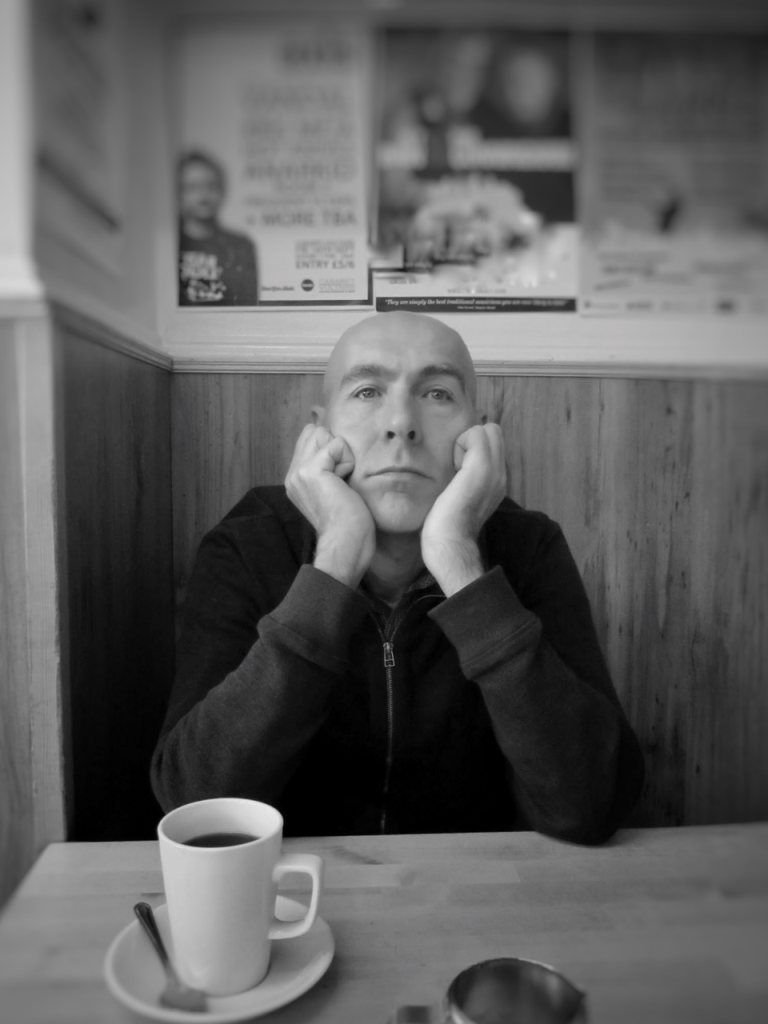
D.W. Young is a New York City-based filmmaker and writer. His two most recent feature films are the documentaries Uncropped (2024), about Village Voice photographer James Hamilton and the heyday of alternative print journalism, and The Booksellers (2020).
Burning House Press are excited to welcome C.C. O’HANLON as the fifth BHP guest editor of our return series of special editions! As of today C.C. will take over editorship of Burning House Press online for the month of November.
Submissions are open from today 1st November – and will remain open until 25TH November.
C.C.’s theme for the month is as follows
—JOURNEYS
~~~
JOURNEYS: Physical, Psychological, and Imaginary, embracing words and images, in all forms, as well as complexity, resisting the superficial, algorithmic narratives of social media.
~~~
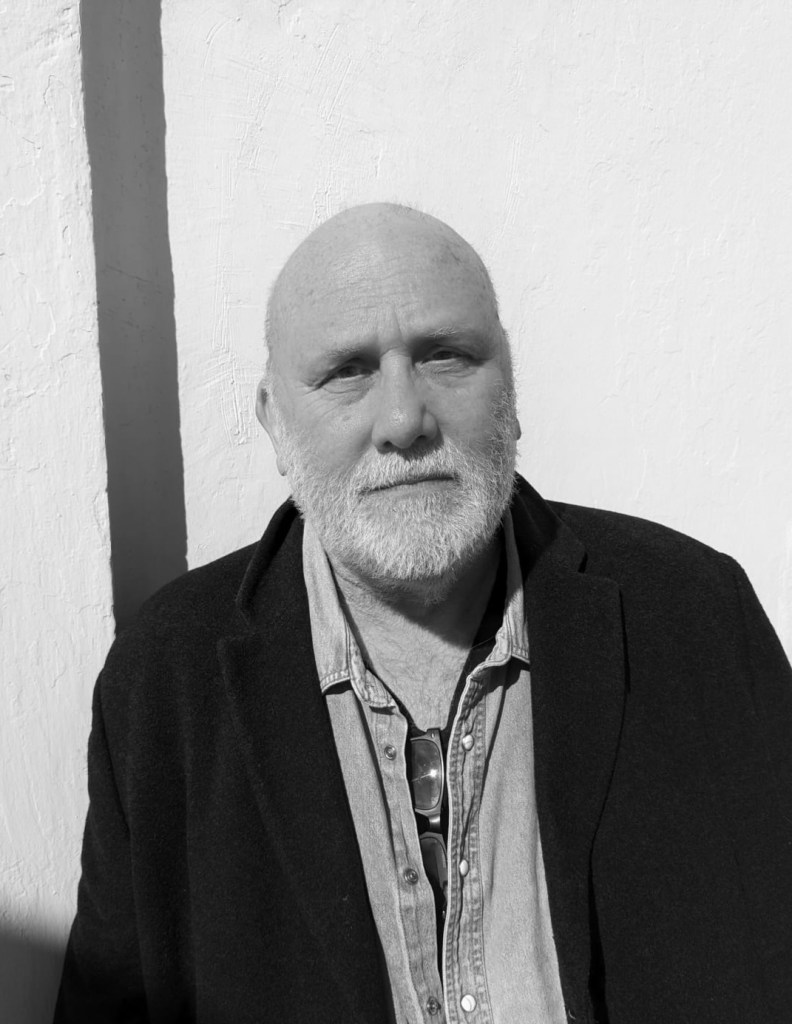
Photo by Given Rozell.
~~~
A self-described ‘vagabond, diarist, and wreck’, C.C. O’Hanlon’s fragmentary memoirs have been published in various anthologies, including Best Australian Essays 2005 and Best Australian Stories 2004 (both published by Black Inc, Australia), A Revealed Life: Australian Writers And Their Journeys In Memoir (ABC Books, Australia), The Odysseum: Strange Journeys That Obliterated Convention (John Murray, U.K.), Zahir: Desire & Eclipse (Zeno Press, U.K.), and Dark Ocean (Dark Mountain Project, U.K.). A founding features editor of Harper’ Bazaar Australia in the late ’80s, his mainstream journalism and images have appeared in The New York Times, The Sydney Morning Herald, Variety, Travel & Leisure, the Australian editions of Vogue and Harper’s Bazaar and scores of other newspapers and magazines.
He now lives a nomadic life with his American wife of 38 years aboard a small, sea-worn old sailboat named Wrack in the southern Mediterranean. They have three adult children.
_______
Submission Guidelines
All submissions should be sent as attachments to guesteditorbhp@gmail.com
Please state the theme and form of your submission in the subject of the email. For example: JOURNEYS/POETRY
Poetry and Fiction
For poetry submissions, submit no more than three of your best poems. Short stories should be limited to 1,500 words or (preferably) less. We encourage flash fiction submissions, no more than three at a time. Send these in as a .doc or .docx file, along with a short third-person bio, and (optional) photograph of yourself.
Art Submit hi-res images of your works (drawings, paintings, illustrations, collages, photography, etc) with descriptions of the work (Title, Year, Medium, etc) in the body of the email. Files should be in .JPEG unless they are GIFs or videos, and should not exceed 2MB in size for each work. File names should correspond with the work titles. Video submissions can be uploaded onto Youtube or Vimeo for feature on our website. Send these submissions along with a short third-person bio, and (optional) photograph of yourself.
Virtual Reality/ 3D Artworks
For VR Submissions, please submit no more than three (3) individual artworks. For Tilt Brush works, please upload your artwork to Google Poly (https://poly.google.com/), and mark it as ‘public’ (‘remixable’ is at your own preference). A VR/3D artwork can also be submitted as a video export navigating through the artwork. If you prefer this method, please upload your finished video file to YouTube or Vimeo and provide a URL. With either format, please provide a 150 word artist’s statement.
Non-fiction Non-fiction submissions (essays, reviews, commentary, interviews, etc) should be no more than 1, 500 words and sent as a .doc or .docx file along with your third-person bio/and optional photograph.
Submissions are open until 25th November – and will reopen again on 1st DECEMBER 2025/for new theme/new editor/s.
BHP online is now in the capable hands of the amazing C.C. – friends, arsonistas, send our NOVEMBER 2025 guest editor your magic!
Burning House Press are excited to welcome Alexander Booth as the fourth BHP guest editor of our return series of special editions! As of today Alexander will take over editorship of Burning House Press online for the month of September.
Submissions are open from today 1st September – and will remain open until 25TH SEPTEMBER.
Alexander’s theme/s for the month are as follows
—LANDSCAPE
LABYRINTH—
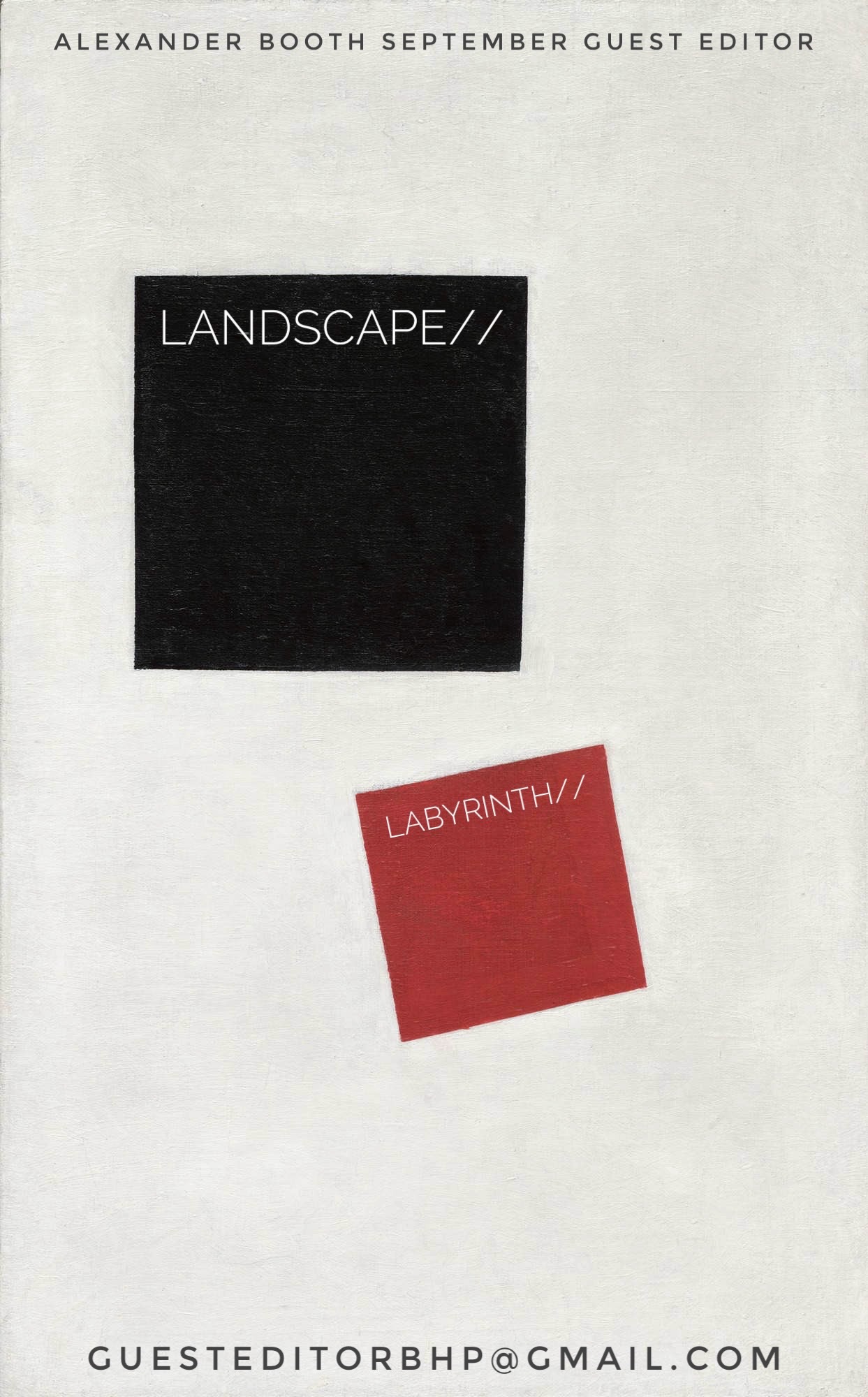
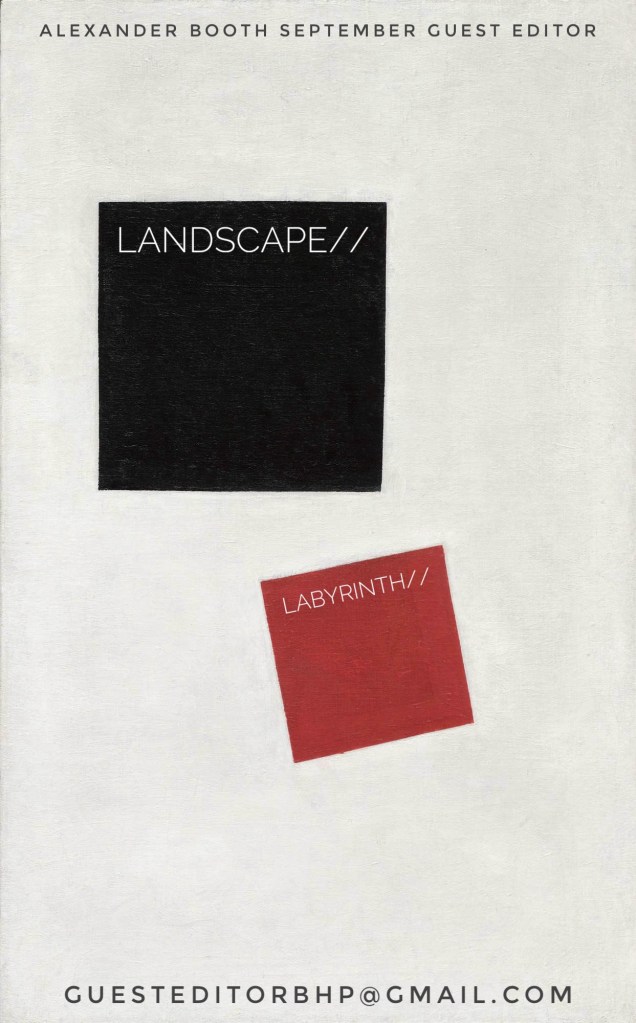
Black Square and Red Square by Kazmir Malevich
_____
LANDSCAPE // LABYRINTH
*
When the painter’s friends, however, looked around for the painter, they saw that he was gone—that he was in the picture. There, he followed the little path that led to the door, paused before it quite still, turned, smiled, and disappeared through the narrow opening.
– Walter Benjamin, Berlin Childhood around 1900 (trans. Howard Eiland)
*
Each one of us, then, should speak of his roads, his crossroads, his roadside benches; each one of us should make a surveyor’s map of his lost fields and meadows.
Gaston Bachelard (trans. Maria Jolas)
*
“Though Minos blocks escape by land or water,”
Daedalus said, “surely the sky is open,
And that’s the way we’ll go. Minos’ dominion
Does not include the air.”
– Ovid, Metamorphosis (trans. Rolfe Humphries)
_____
Alexander Booth is a poet, translator, collage artist and printmaker who lives in Berlin. Recent translations include books by Friederike Mayröcker, Alexander Kluge, Gerhard Rühm, and a new translation of Ludwig Wittgenstein’s Tractatus Logico-Philosophicus. His collection of poems Triptych was published in 2021 and Kantor in 2023.
__________
Submission Guidelines
All submissions should be sent as attachments to guesteditorbhp@gmail.com
Please state the theme and form of your submission in the subject of the email. For example: LANDSCAPE/POETRY Or LABYRINTH/FICTION
Poetry and Fiction
For poetry submissions, submit no more than three of your best poems. Short stories should be limited to 1,500 words or (preferably) less. We encourage flash fiction submissions, no more than three at a time. Send these in as a .doc or .docx file, along with a short third-person bio, and (optional) photograph of yourself.
Art Submit hi-res images of your works (drawings, paintings, illustrations, collages, photography, etc) with descriptions of the work (Title, Year, Medium, etc) in the body of the email. Files should be in .JPEG unless they are GIFs or videos, and should not exceed 2MB in size for each work. File names should correspond with the work titles. Video submissions can be uploaded onto Youtube or Vimeo for feature on our website. Send these submissions along with a short third-person bio, and (optional) photograph of yourself.
Virtual Reality/ 3D Artworks
For VR Submissions, please submit no more than three (3) individual artworks. For Tilt Brush works, please upload your artwork to Google Poly (https://poly.google.com/), and mark it as ‘public’ (‘remixable’ is at your own preference). A VR/3D artwork can also be submitted as a video export navigating through the artwork. If you prefer this method, please upload your finished video file to YouTube or Vimeo and provide a URL. With either format, please provide a 150 word artist’s statement.
Non-fiction Non-fiction submissions (essays, reviews, commentary, interviews, etc) should be no more than 1, 500 words and sent as a .doc or .docx file along with your third-person bio/and optional photograph.
Submissions are open until 25th SEPTEMBER – and will reopen again on 1st OCTOBER 2025/for new theme/new editor/s.
BHP online is now in the capable hands of the amazing Alexander Booth – friends, arsonistas, send our SEPTEMBER 2025 guest editor your magic!




 BURNING HOUSE PRESS