Search

BURNING HOUSE PRESS

Not For Profit/For Prophecy

Tag

Writing

In the Dark by Nate Lippens

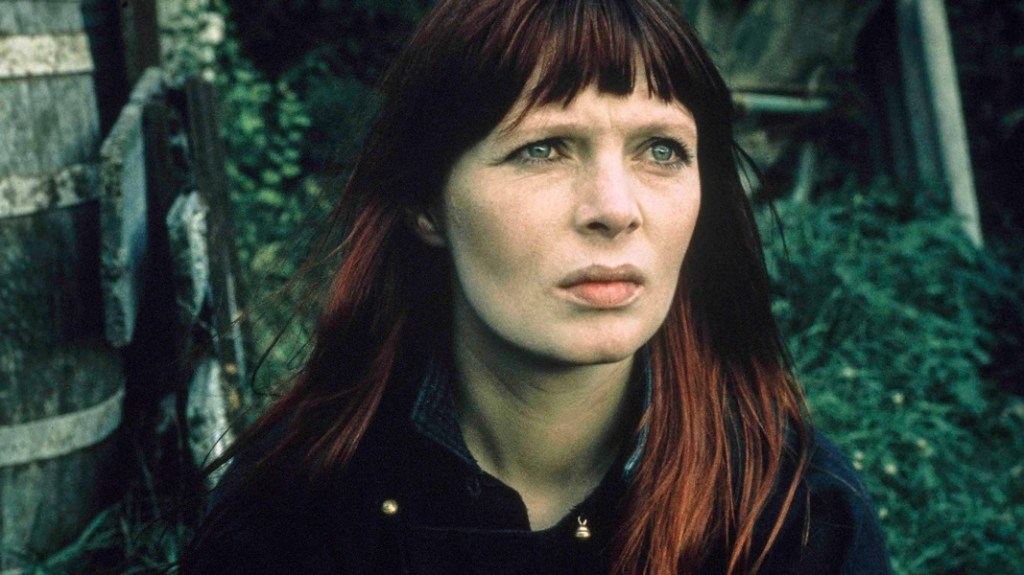
Still from the film Athanor (1972) by Philippe Garrel

In the dark room at night, the walls enameled black, so dawn arrives as a violation, she smokes. She smokes without conviction, almost without need, but then deeply as if to prove something to herself. Flicks the butt into the grate of the ruined fireplace, heaped with little cartons, each cigarette emptied and smoked, each added to a mountain. A plate of ashes. She makes sure, twice, that her cigarette is extinguished before she does this. Philippe scolded her. Ari found one smoldering and rubbed it out on the floor. How could Philippe be angry? When they moved from the Montparnasse Hotel into this apartment, he gutted the place, tore out the twentieth century and some of the nineteenth too. Gone: gas, electricity, hot water, heater, lighting, furniture, carpets. A penitentiary but there are no locks. 

She yearns to go back to New York though nothing good comes to or from there. The not-good is familiar. She needs that now with her mother dead. Can still smell the air’s heavy scent in the room where she knelt before the empty bed and cried. She hadn’t wanted it to be like that and knew her aunt Helma blamed her for not visiting the last two years of her mother’s life. It had always been hard, then became impossible. The immobility she feels now, lying in bed undead, waiting for light to come in the room and peepshow the mess. Philippe shifts beside her, groans. They are covered by his overcoat which doubles as mattress and bedding, sleeping partly on it, partly on the floor, the faint smell of piss. Ari makes sounds across the room, asleep or awake, she can’t tell. She’s never alone lately but never accompanied either. Everything has fallen to repetition. They score, they get high, they have no money, no need for food after they’ve fed, only to make certain the boy eats, he must eat. Then they go to museums or wander the docks, up and down the same streets of Paris. Was it last week or the one before—prior has no hold here, all is prior but there is no history, only the past—that she saw someone, a London person from New York, who startled at her appearance and said what did you do to your hair. The blonde dyed crimson, bluntly cut. You like it, she responded, nearly leering, surfacing from the not-slumber, suddenly awake on the street in the face of that collaged ghoul made of the spare parts, all mean, all pushing, all saying her songs weren’t good, she needs a manager, she needs to be blonde again, she needs better clothes, not these ugly robes and caftans Philippe sewed himself for the film. The film! They hate it, just the idea of it. A woman and a man and a child in the desert, shot across three—Sinai, Death Valley, and Iceland. All blend together to her. She knew they weren’t one. Each had its own qualities and peculiarities, but like people, places were mostly the same. You met one or two and you’d met all of them. The man on the street, upset or disappointed by her appearance, had scurried off, back to his little life, perhaps some lunch in a café. The thought made her feel ill. 

She would get back to New York and show them, she would book some gigs. She practices the harmonium every day now and she has new songs. The best she’s done, she’s sure, or thinks she’s sure, but can already see the faces of Danny and Paul and others who will tell her what is wrong with them, not knowing they are about her mother, Jim, the deserts, Brian’s death. Misadventure by accidental drowning, the coroner’s report stated. She knows no accidents and no misadventures. Dark spirits, yes. A man goes for a swim and never surfaces as himself again. A woman in a bar, her face cut, a fury and a glass thrown and stitches. The voices of New York, seeing Lou in a rehearsal space, having to flee, first to New Jersey, then the country. Shows canceled. Back to this room. Can she ever escape this room. Will she look over and find Ari is now a man and Philippe is dead or nearly, and they will still get up and find dope and not eat and wander the streets and walk the docks and pretend to see new things, pretend they are attuned to things other people don’t register. And the people don’t but they do see two junkies and a child and worry for the child and maybe they will do something about it or call someone to do something about it. Maybe they will make a problem, make her become a problem. Then what, when someone appears to ask about the child and she doesn’t even have blonde charm now, or good skin. Cheekbones still but hollow not haughty. This is why Ari must be a man. It is better for twenty years to pass this morning, the hour before dawn or is it. The black night and room seem to have changed a bit, added a bit. Not the usual things she sees on these mornings. Not the nights Philippe taught her to liquefy and use the needle, not broth and Coca-Colas in the palace, not the circle of fire in the desert and the boy unable to cross it to his father, not all the words she wrote only moments before she spoke them to the camera, the way time slid in and out of view in those long shots, hours stretching, and one day no longer waiting for Philippe to yell cut, just riding, swaying slightly on the horse’s back, the sound dropped out, and the sky grown dark but never like the room or the nights here. A vast star-punched ongoingness. Her mother’s bed in the sand, Ari the boy hungry always hungry, Pierre Clémenti naked and ranting lines, a pleasant body, good cock, eyes like Brian’s, Jim passing in his car not recognizing her, a box of books beside him, then the news of his death later that night, the long line, the drone she had found she could follow and it would vary, it would create the sound she craved, defeat. No one else heard it. They heard failure. Defeat is not failure. It isn’t surrender. There is no grace or wisdom or beauty in it. Defeat holds itself. A friend at last. She wants another cigarette. She can make out the outline of the pack. Dawn but not yet light. One more cigarette before the day again. 


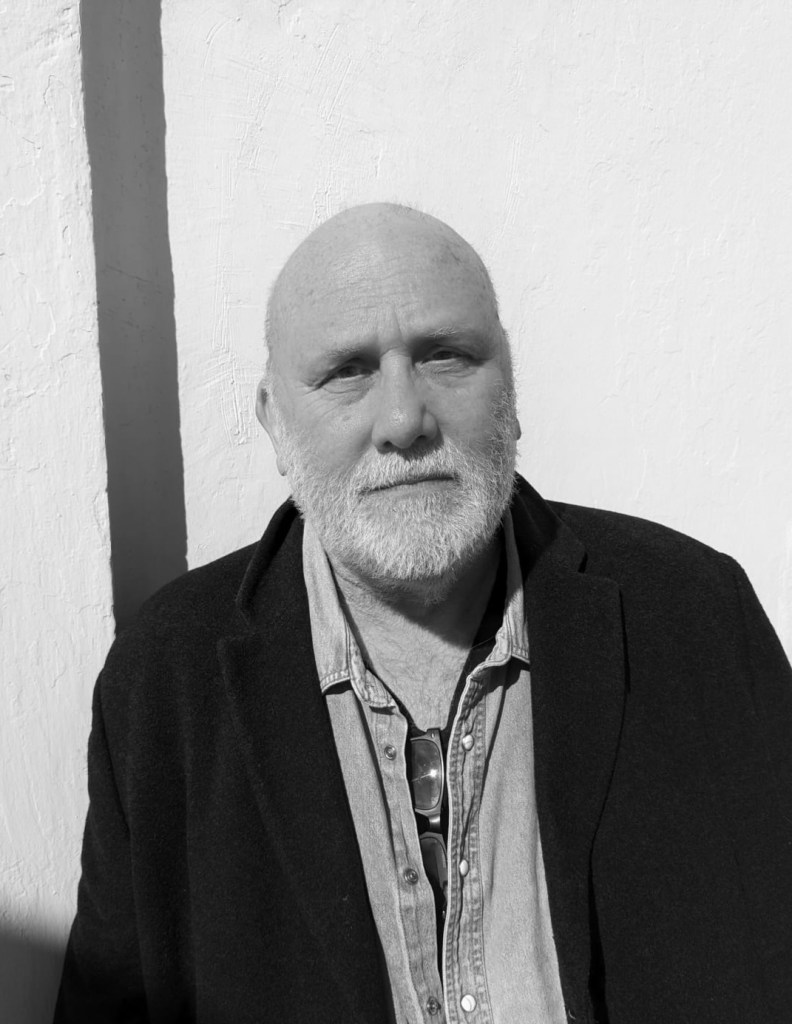
Nate Lippens is the author of My Dead BookRipcord, and two forthcoming novels, Box Office Poison, co-written with Matthew Kinlin, and Bastards

Author photo from Carolyne Loreé Teston.
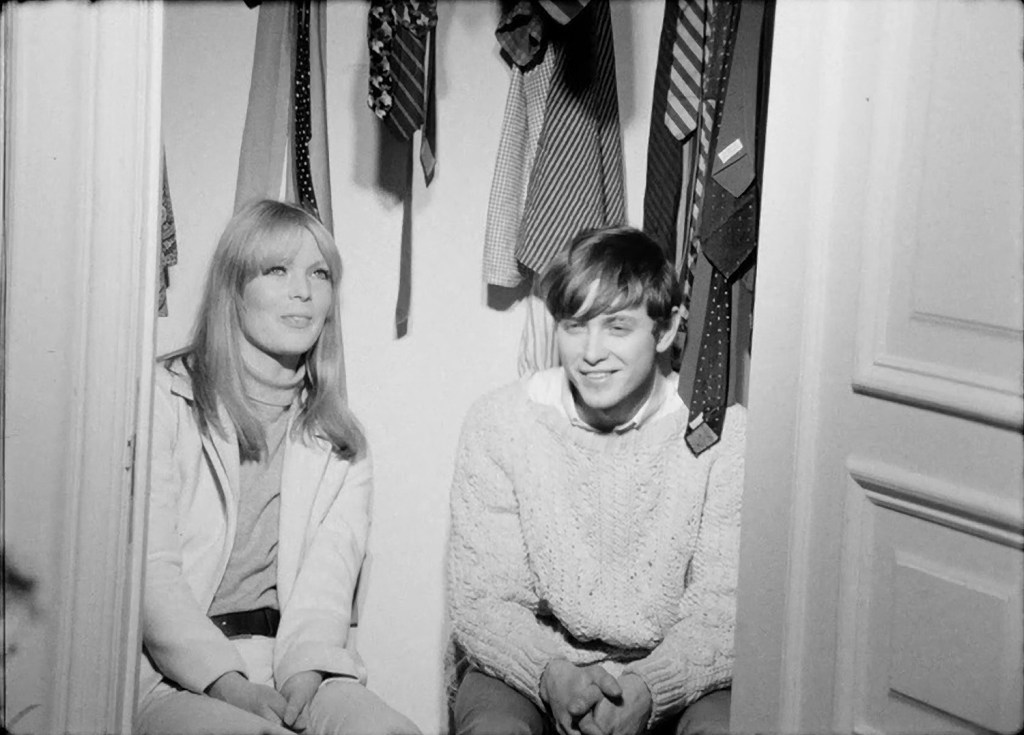
Nico in The Closet (1966) by Graham Russell

Nico and Randy Bourscheidt in The Closet (1966)

The Closet (1966) was Nico’s first film with cadaverous Pop Art visionary Andy Warhol and thus represents her cinematic unveiling as a Warhol Superstar. It would be a fruitful relationship. As the Factory’s inscrutable Garbo / Dietrich equivalent she would star in several more Warhol films (most famously Chelsea Girls (1966)) while also featuring as chanteuse for Warhol’s proto-punk “house band” The Velvet Underground.

The  Closet’s “plot” is absurdist and minimal: a couple living in a closet kill the time (they make small talk, split a sandwich, share a cigarette, kvetch about their cramped surroundings) and contemplate leaving but never do.

For the first few moments the camera is focused on the exterior of the shut closet door in grainy black and white as we hear only their voices (audible but muffled; in fact the sound remains muffled for the rest of the film, poor sound quality being a stylistic trademark of Warhol’s films at the time). Creeping horror that the entire 66-minute film will stay like this is averted when the door belatedly does open and we are finally permitted to see Nico and leading man Randy Bourscheidt (a cute, preppy art student-type) seated inside the closet surrounded by hangers, ties, clothes, etc. While the couple talk or sit in silence, Warhol’s camera either sits totally stationary or prowls restlessly and randomly.

The film is unscripted: instead, we get an improvised, wandering conversation between the duo who have obviously been instructed to ad-lib for the 66-minute duration. Most Warhol Superstars were amphetamine-fuelled, garrulous motormouths and exhibitionists; Nico and Bourscheidt are atypically more reticent. Both seem shy and hesitant, and their conversation is often stilted but characterized by a genuine sweetness on both parts. Some viewers have deciphered the hint of a physical attraction between them which is complicated by the pretty, long-lashed and collegiate-looking Bourscheidt’s apparent homosexuality (The expression “coming out of the closet” was already in use in the 1960s and could be a relevant coded meaning to the film’s title).

Certainly Bourscheidt seems dazzled by Nico, which is understandable: The Closet presents her at the height of her flaxen-haired beauty. It also reveals the complexity of her persona. The performers in Warhol films are essentially playing themselves, so The Closet is a snapshot of Nico the woman at this particular point in her life rather than an actress performing a role. She looks like a statuesque Nordic Amazon but is wispily spoken, reserved and uncertain rather than intimidating or forbidding — her sweetness dispels the cliché of Nico as ice maiden. And her voice – routinely described as guttural or “Germanic” – is infinitely softer than you expect.

As an avant-garde filmmaker Warhol withholds most of the conventional pleasures audiences expect from films (narrative, character development, editing, technical proficiency , etc) but with his Superstars in lead roles he does provide one of the enduring attractions of film-watching: scrutinizing beautiful people. So, while “nothing happens” in The Closet, we do get to appreciate the physical attractiveness and hip wardrobes of both Nico and Bourscheidt at great length. Nico wears what was then her signature look: an androgynous white pantsuit, turtleneck sweater and boots combo that would be the pride of any Mod boy, feminized by a curtain of long blonde hair.

Nico would have been in her late twenties by the time of The Closet, and Bourscheidt (at a guess) between 19 and 21. She speaks to him in tones that shuttle between maternal concern and big sister-ly teasing. Both seem vaguely embarrassed and self-conscious on screen, but unlike Bourscheidt Nico possesses the poised armour of sophistication: by 1965 she travelled the world as an in-demand fashion model, spoke several languages, acted in films like La Dolce Vita (1959) and Strip-Tease (1963) in Europe, was the mother of a young son, and had started her singing career.

In addition to this hauteur, Nico utilizes her experience as a seasoned model: she is clearly un-phased by the camera’s roaming gaze and is skilled at graceful self-presentation. She has a neat trick of looking down moodily so that her long blonde bangs obscure most of her face and then suddenly looking up and tilting her head, dramatically revealing sculpted cheekbones, Bardot lips and sweeping false eyelashes.

“Are you afraid of me?” Nico suddenly asks Bourscheidt towards the end of their awkward filmic encounter. He looks startled and doesn’t know how to reply. “I’m not trying to embarrass you!” she assures.

At the film’s conclusion Bourscheidt teasingly asks Nico if she’s forgotten his name. Indeed, she has, and tries to cover by asking him, “Is it Romeo?” He says no and she answers, “Why not?” He asks if she wants him to be Romeo and should he get down on one knee. She replies, “Oh, no. You be Juliet and I’ll be Romeo.”


Like the Shangri-Las song, Graham Russell is good-bad, but not evil. He’s a trash culture obsessive, occasional DJ (Cockabilly – London’s first and to date, only gay rockabilly night), and promoter of the Lobotomy Room film club (devoted to Bad Movies for Bad People) at Fontaine’s bar in Dalston. As a sporadic freelance journalist, over the years he’s contributed to everything from punk zines (MAXIMUMROCKNROLL, Flipside, Razorcake) to The Guardian and Interview magazine and interviewed the likes of John Waters, Marianne Faithfull, Poison Ivy Rorschach, Lydia Lunch, Henry Rollins and Jayne County.

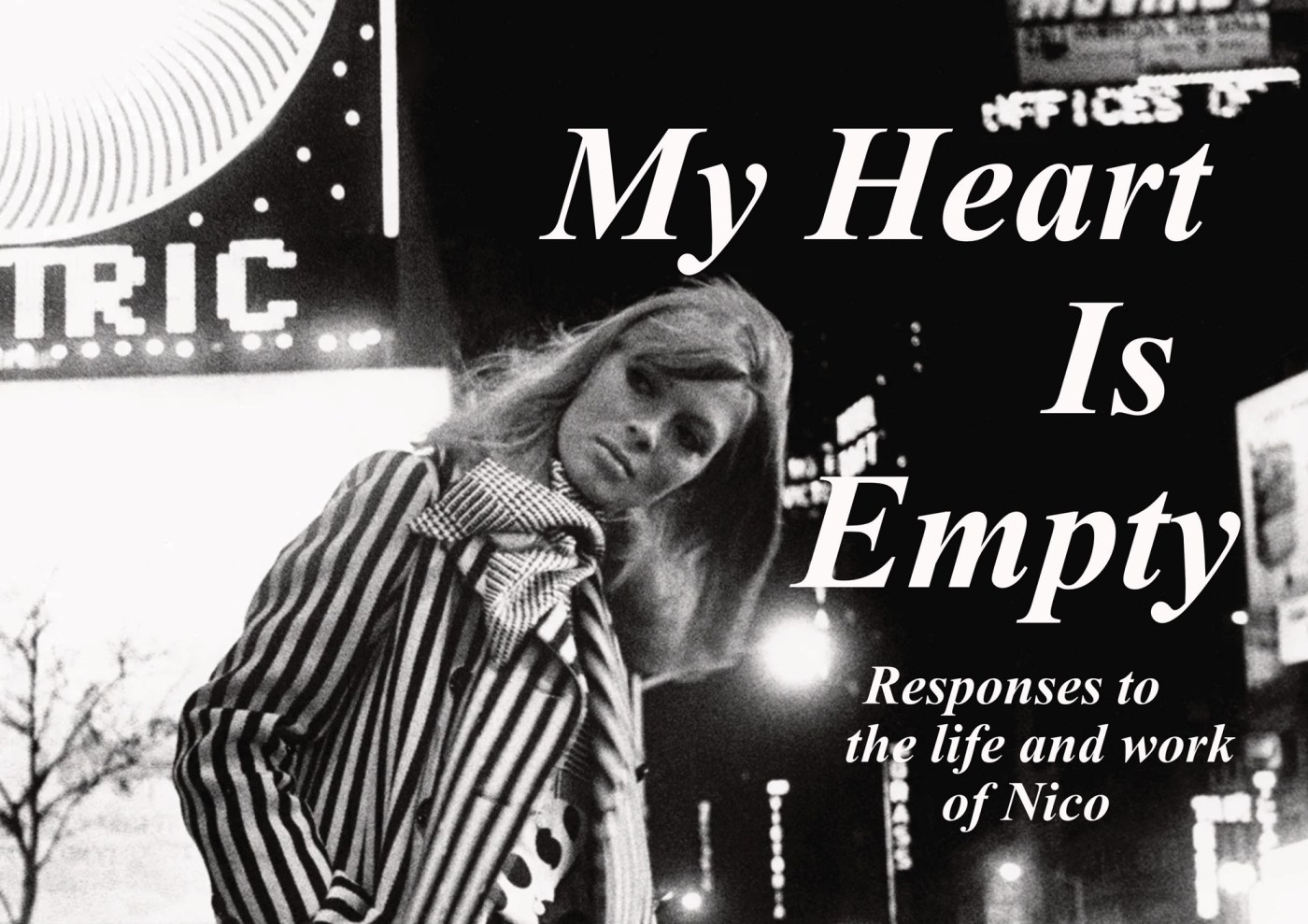
DECEMBER 2025 Guest Editor Is MATTHEW KINLIN!!! Theme: My Heart Is Empty: Responses to The Life and Work of Nico

Burning House Press are excited to welcome Matthew Kinlin as the fifth BHP guest editor of our return series of special editions! As of today Matt will take over editorship of Burning House Press online for the month of December.

Submissions are open from today 1st December – and will remain open until 21st DECEMBER.

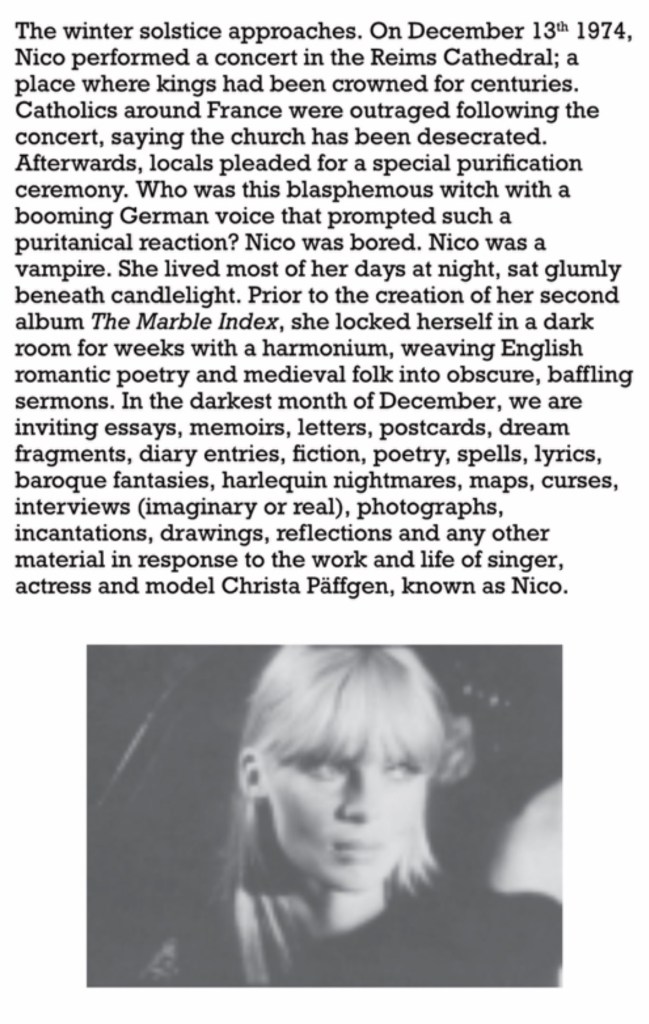
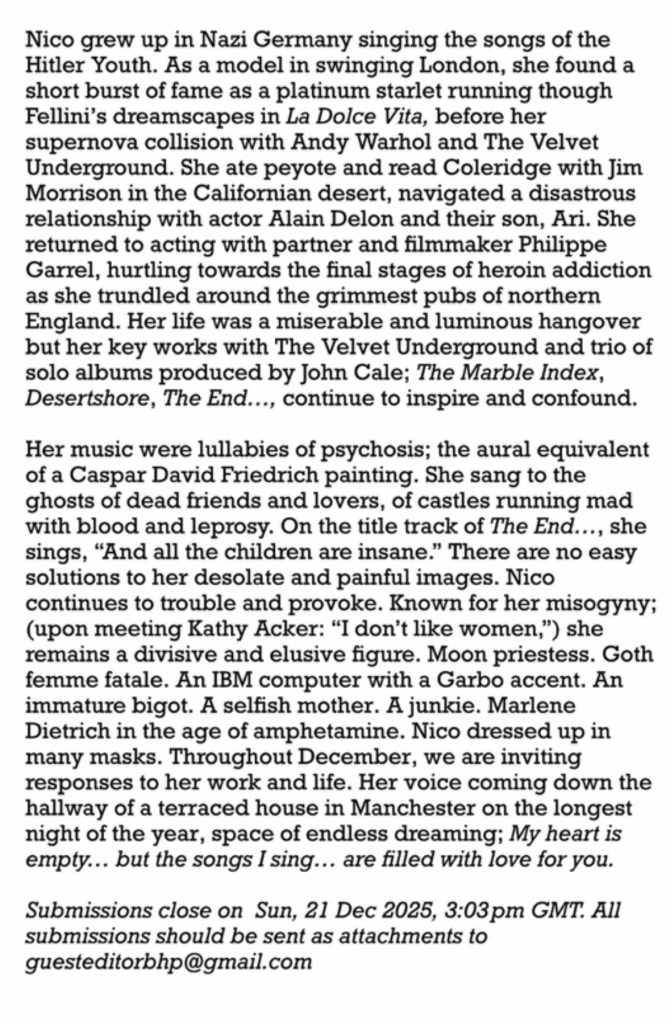
Matt’s theme for the month is as follows

My Heart Is Empty: Responses to The Life and Work of Nico

Matthew Kinlin lives and writes in Glasgow. His published workst include Teenage Hallucination (Orbis Tertius Press, 2021); Curse Red, Curse Blue, Curse Green (Sweat Drenched Press, 2021); The Glass Abattoir (D.F.L. Lit, 2023); Songs of Xanthina (Broken Sleep Books, 2023); Psycho Viridian (Broken Sleep Books, 2024) and So Tender a Killer (Filthy Loot, 2025). Instagram: @obscene_mirror.

——

Submission Guidelines

All submissions should be sent as attachments to guesteditorbhp@gmail.com

Please state the theme and form of your submission in the subject of the email. For example: NICO/POETRY

Poetry and Fiction

For poetry submissions, submit no more than three of your best poems. Short stories should be limited to 1,500 words or (preferably) less. We encourage flash fiction submissions, no more than three at a time. Send these in as a .doc or .docx file, along with a short third-person bio, and (optional) photograph of yourself.

Art
Submit hi-res images of your works (drawings, paintings, illustrations, collages, photography, etc) with descriptions of the work (Title, Year, Medium, etc) in the body of the email. Files should be in .JPEG unless they are GIFs or videos, and should not exceed 2MB in size for each work. File names should correspond with the work titles. Video submissions can be uploaded onto Youtube or Vimeo for feature on our website. Send these submissions along with a short third-person bio, and (optional) photograph of yourself.

Virtual Reality/ 3D Artworks

For VR Submissions, please submit no more than three (3) individual artworks. For Tilt Brush works, please upload your artwork to Google Poly (https://poly.google.com/), and mark it as ‘public’ (‘remixable’ is at your own preference). A VR/3D artwork can also be submitted as a video export navigating through the artwork. If you prefer this method, please upload your finished video file to YouTube or Vimeo and provide a URL. With either format, please provide a 150 word artist’s statement.

Non-fiction
Non-fiction submissions (essays, reviews, commentary, interviews, etc) should be no more than 1, 500 words and sent as a .doc or .docx file along with your third-person bio/and optional photograph.

Submissions are open until 21st December – and will reopen again on 1st January 2026/for new theme/new editor/s.

BHP online is now in the capable hands of the amazing Matthew Kinlin – friends, arsonistas, send our December 2025 guest editor your magic!

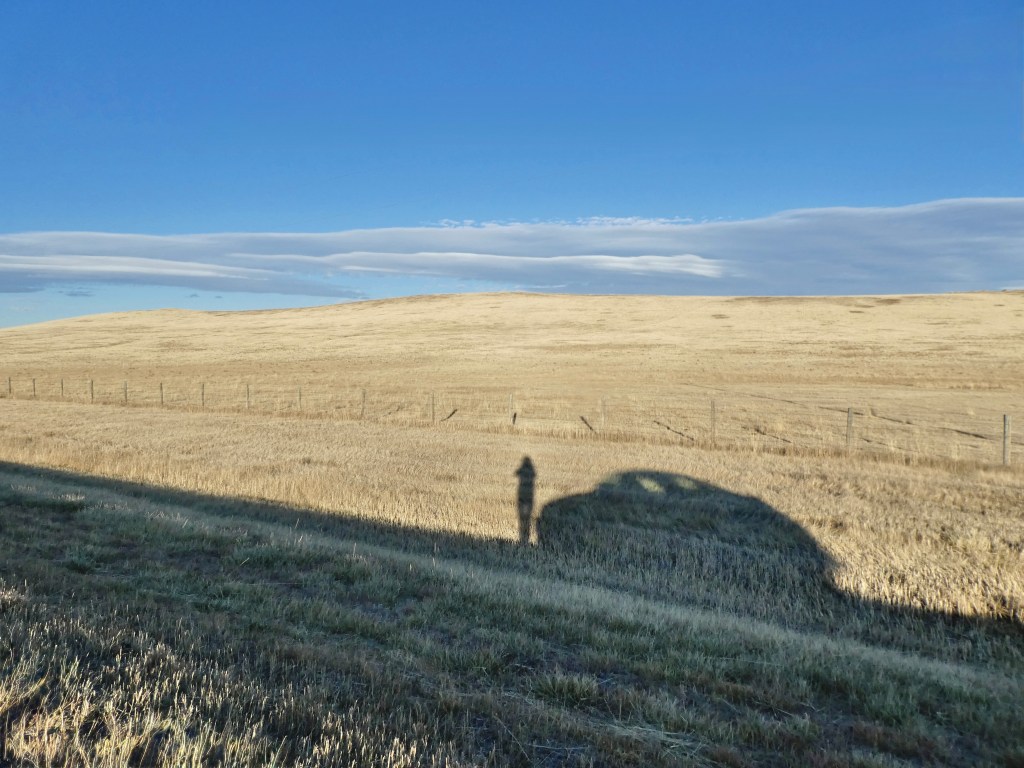
Late September 1978 by Kelly Rebar

Photo by Kelly Rebar

Every year I’m taken there
the air the light the sight
of leaves
drifting past
without a care I’m driving
in the Rockies
in my old Plymouth Valiant
a shade of bronze
you don’t much see
anymore
colour of stubble
fields
at sundown
I’m barely 23, endless Christmas trees
line the highway
now it’s the mountain peaks
the sun is tinging
pink I think I even sing
(I wouldn’t put it past me)
Neil Young’s Comes a time
when you’re driftin’
Comes a time when you settle down

Okay, what’s this
side of the road
a herd of elk
just standing there
watching
five in total
the reason I recall is
I write it down
when I get there
the cabin I’ve secured

for winter
and right on cue
like a movie
I pull up just when
it’s not dark yet but getting’ there
now that song also takes me there
to that door
the smell of firewood
stacked by the door
I watch the kettle while it boils
I open my notebook
on the kitchen table
by a window
with green curtains
and lo and behold I find a candle
meant for emergency
but at 23 who waits for that
you see a candle
you light it
I write September 1978 on the first page

No, hold on, it’s not a notebook
it’s a school scribbler
dime store type, Hilroy, map of Canada on the cover
timetable on the back
and bottom left:
30 days hath September
April June and November
I write what comes to me
how people in the past wrote it snowed all day
baked so many loaves of bread
as if it needs to be said
“Saw five elk on the way here”
and leave the unpacking
for tomorrow

but when tomorrow comes
I don’t unpack
too busy
sitting
in the sounds of silence
a woodpecker tapping
in a nearby tree
maybe I imagined that
but I know this much is true: I set my Smith Corona
on that kitchen table
by the window, the green curtains
and I tap too
all day long
tap tap
tap tap

into the next night
and all the days
and nights
after that
Who knows where those words are now
they’re long gone
but not the sound they made
landing on the page
not the smell of firewood
by the cabin door
the leaves gathering on the window ledge
the candle going out
I probably slowed
the Valiant down
when I saw the elk
I’m willing to bet I did
you never know if they are going to stay
or if they will wander

. . .

Working from the small mountain town of Nelson, BC, Canada, Kelly Rebar has written for theatre, film, and television. After a long hiatus, she recently returned to playwriting and created two one-woman shows, both written in verse and scored with music. She also works with photographic images, old and new, and writes short poems.

Three Poems by Alexis Karlsen

Ferdaminni [XI/24 – X/25]

The dust on the road
Rotting leaves on a cold autumn morning
The faint scent of hasty intimacy hours earlier
The dogs are nervous tonight
There’s blood on the wind

Floodstained thaumaturge
Pyrolatrous and atavistic
Smudging our faces with ash from bridges burnt

I’m following a blood trail
My ego has been freebleeding
All over the place again

Shamanic nights under a bright full moon
Snow in the deep forest
Moose tracks in the frozen bog
Hematite rocks the colour of red ochre
Spells of protection in the night
I met a strange god
One that no man has ever named

. . .

Myrmalmens ballade [IV/24]

I found God at a gas station in Nissedal
Now I’m siphoning gas here in Niflheim
There’s a radio tower on the heath
Amongst the cows with their GPS trackers

My mind is a swamp
Where the air is thick with things
That are out to drink my blood

I’ve got a new best friend
The red forest ant, Formica rufa
Is it all in my mind or are they all
Moving with strange synchronicity

. . .

Purple Prozac [VIII-X/24]

Chafing on my chakras
Inflammations in my legs
Stains on my soul
And I’m standing over here
Trying to laugh it off
Saying pretty please, Pleiades

With your New Moon Theory
And my dharmatology
Trying to figure out
Where all these gulls go to die
I’ve got a bad back
From looking over my shoulder

The smell of rotten petunias
In autumn grey streets
I love your geometry
Even when you taste like dead dreams

If love is solitude gone bad
Then I’m sitting here fermenting
With your pyrolatrous autumn colours
Alight in the early evening sun

The man I’ve become has no reason
To be ashamed of the boy I once was
You laid me down among the lupines
Placed a cigarette in my hand

Landscapes of IKEAs
And your crepuscular smell
I’m standing in the middle
Of the wrong side of the road
Trying to snap a picture
For our interdimensional trophy room

Wake me if you wanna smash
You said, fell asleep
And ran a fever all night

. . .

Born and raised in northern Germany and emigrated to southern Norway in his late 20s to take care of his child, Alexis Karlsen‘s work spans three languages and reflects the life experience of a disillusioned underdog drifter. Alienation, death, restlessness, substance abuse, sexuality, and the unquenchable thirst for love are recurring motives in his writing. Karlsen’s background is in social ecology, and his German-language novel Am Ende des Fadens, which touches on themes of magical realism, is nearing completion after 13 years of work. He can be found on Mastodon: @brisling@merveilles.town.

3 poems from Book Of Mirages (Libro de los Espejismos) by Gaspar Orozco, translated from the Spanish by Ilana Luna

Photo by C.C. O’Hanlon

¿Y el fuego que no se ve? ¿Cómo registrarlo? ¿Y la llama que invisible cerca al cuerpo? ¿Y la hoguera incolora que arde en el cerebro? ¿Cómo dibujarlas, cómo explicarlas? El incendio ciego encerrado en cada gota de sangre, ¿con qué tinta, con qué pigmento se traslada al papel? ¿Cómo hacer visible el alcohol que quema su anillo fantasma en la retina? ¿Y el fuego innombrable que calcina la lengua? ¿Y el alambre ardiente y afilado de la circunferencia que te atraviesa el alma? ¿Cómo decirlos, cómo llamarlos?

And what of the unseen fire? How to record it? And the invisible flame about the body? And the colorless bonfire roaring in your brain? How to draw them, explain them? The blind blaze enclosed in each drop of blood, with which ink, with which pigment can it be put to paper? How to make visible the alcohol that burns its phantom ring on the retina? And the unnameable fire that scorches the tongue? The blistering, razor wire that encircles the soul? How to name them, how to call them?

. . .

El nombre es una espiral, un erizo que da la vuelta a la sombra. Adivinas luz al torcer el muro. Casi la tocas, pero no la alcanzas a ver. Arena blanca. Sigues. Recorres un segmento del círculo con una jaula de pájaros vacía en tus manos: la puertita choca su metal al abrirse y cerrarse a tu paso. El mar deja en libertad uno de sus vientos para que se pierda en el laberinto. Lo encontrarás llevando el rumor de campanas distantes y de piedras tristes y metales que brillan lejos. El palacio del caracol es su esqueleto. El palacio del estratega es su memoria. Hay un mar vivo en el centro. Al humedecerse, el cráneo del remolino canta su canción. Es lo que llega a tu oído.

The name is a spiral, a sea urchin turning round the shadow. You glimpse light when curving along the wall. You can almost touch it, but you can’t quite see it. White sand. You continue. You pace the segment of the circle with an empty birdcage in your hands: the tiny door clanks its metal open and shut with your footfalls. The sea sets free one of its winds to lose it inside the labyrinth. You’ll find it carrying the rumor of distant chimes and sad stones and metals that shine from afar. The seashell palace is its skeleton. The strategist’s palace is his memory. There’s a living sea at its center. When wet, the whirlpool’s skull sings its song. That’s what you hear.

. . .

A lo largo de la Odisea, hay una frase que deja un leve rastro en la historia de los días y las noches de Odiseo entre las islas: la luz del regreso. Telémaco la pronuncia por primera vez cuando le confiesa a la diosa Atenas, la ojizarca, el temor a que su padre hubiera perdido ese fulgor. Odiseo la emplea cuando trata de explicar a Calipso su deseo de volver a Ítaca. Hay esperanza en esta imagen, pero se trata de una esperanza humedecida de tristeza. La tristeza de la imposibilidad del retorno, la de la callada certidumbre de que la Ítaca de la cual partimos no la encontraremos ya. La Odisea, como todos sabemos, es la apuesta para recuperar la luz del origen, la primera que vieron nuestros ojos y por la que vale la pena morir para verla brillar una vez más. Todos tenemos una Ítaca que reverbera en el filo de nuestro horizonte. Así, el poema entero –es decir, la vida- se concentra en esa imagen, como la luz de la isla en el vaso que dibuja su reflejo en el muro.

Throughout the Odyssey, there’s a phrase that leaves the faintest of traces on the history of the days and nights of Odysseus among the islands: the light of the return. Telemachus first pronounces it when confessing to the goddess Athena, the bright-eyed one, his fear that his father may have lost that glow. Odysseus uses it when trying to explain to Calypso his desire to return to Ithaca. There’s hopefulness in that image, but it’s hope dampened by sadness. The sadness of the impossibility of return, that of the quiet certainty that the Ithaca we left won’t ever be found again. The Odyssey, as we know, is the attempt to recover the original light, the first our eyes ever saw and for which it would be worth dying to see shining once more. We all have an Ithaca reverberating on the edge of our horizon. Thus, the entire poem—that is to say, life—is concentrated in that image, like the light of the island in a glass that etches its reflection on the wall.

. . .

Born in Chihuahua, Mexico, Gaspar Orozco has published 8 books of poetry, three of them translated in English by Mark Weiss. He has translated poetry from English, French and classic Chinese to Spanish. He was a member of an obscure punk band, Revolucion X; the Spanish label Metadona Records will release an album of their lost recordings in December 2025. He currently works as a diplomat. 

Imprint Of Weeping Angels by Jenni Fagan

Photo by Jenni Fagan

. . .

Dr Jenni Fagan is an award-winning, critically acclaimed novelist, poet and artist. Published in global translations the author of four fiction novels, one non-fiction memoir, eight poetry collections, exhibitions, adaptations and with another two new fiction novels due out next year. She has won The Gordon Burn Prize 2025, was a Granta Best of British Novelist (a once in a decade accolade), Scottish Author of the Year and has been on lists from The Women’s Prize, BBC International Short Story Prize, The Sunday Times, Encore and more. Fagan has worked extensively with vulnerable groups including those  in prison, and the care system where she herself grew up. Described as The Patron Saint of Literary Street Urchins, Fagan’s work responds to the centre always from the margins and without compromise.

https://www.jennifagan.com/

Dancing On The Silk Razor, a film by D.W. Young

Dancing on the Silk Razor was born out of a discussion I had with my friend Dan Wechsler. We were contemplating various writing work we’d done when younger, and he mentioned there was a first line for a story he’d always wanted to pursue but had never quite been able to. I asked what it was and he replied, “Somebody had been stealing Harold Solomon’s ideas.” I liked it immediately; it had the kind of lead in I relish, and although it wasn’t my normal way of working, I asked if he’d object if I tried running with it. He said to go for it. And like often happens with the right catalyst, a written story poured straight onto the page.

Although the writing took a prose form, from the start I had the notion of it also being a film. So, with extremely limited funds but some phenomenal, longstanding collaborators who were game, we shot the whole thing in four days on 35mm with about a 1.5. to 1 shooting ratio running around New York City. It was a great challenge and a great time.

The narration is really the main performance, and we wanted to find someone for it who could really elevate the film. We felt Wallace Shawn would be perfect, and as a writer might particularly appreciate the role. We sent him the piece and he liked it and agreed to do voice-over. But this was still the COVID era and regrettably I came down with a case right before the recording session. I directed via Zoom but it was excruciating not to be there in person. Fortunately, Wally completely got the tone and humor and, with the kind of thorough preparation every director hopes for, nailed it on the first take.

I’ve taken to calling this a multiform work, as I feel it can be equally a written piece and a film. And I’ve since been working on a series of new pieces in the same vein, with iterations that co-exist across mediums. All, however, begin in primary form as the written word.

. . .

Written, Directed and Edited by: D.W. Young
Narrator: Wallace Shawn
Harold Solomon: Dan Wechsler
Producers: Judith Mizrachy, Dan Wechsler, D.W. Young
Cinematographer: Arlene Muller
Composer: David Ullmann

. . .

D.W. Young is a New York City-based filmmaker and writer. His two most recent feature films are the documentaries Uncropped (2024), about Village Voice photographer James Hamilton and the heyday of alternative print journalism, and The Booksellers (2020).

https://www.dwyoungfilm.com/

NOVEMBER 2025 Guest Editor Is C.C. O’HANLON!!! THEME/S: JOURNEYS

Burning House Press are excited to welcome C.C. O’HANLON as the fifth BHP guest editor of our return series of special editions! As of today C.C. will take over editorship of Burning House Press online for the month of November.

Submissions are open from today 1st November – and will remain open until 25TH November.

C.C.’s theme for the month is as follows

—JOURNEYS

~~~

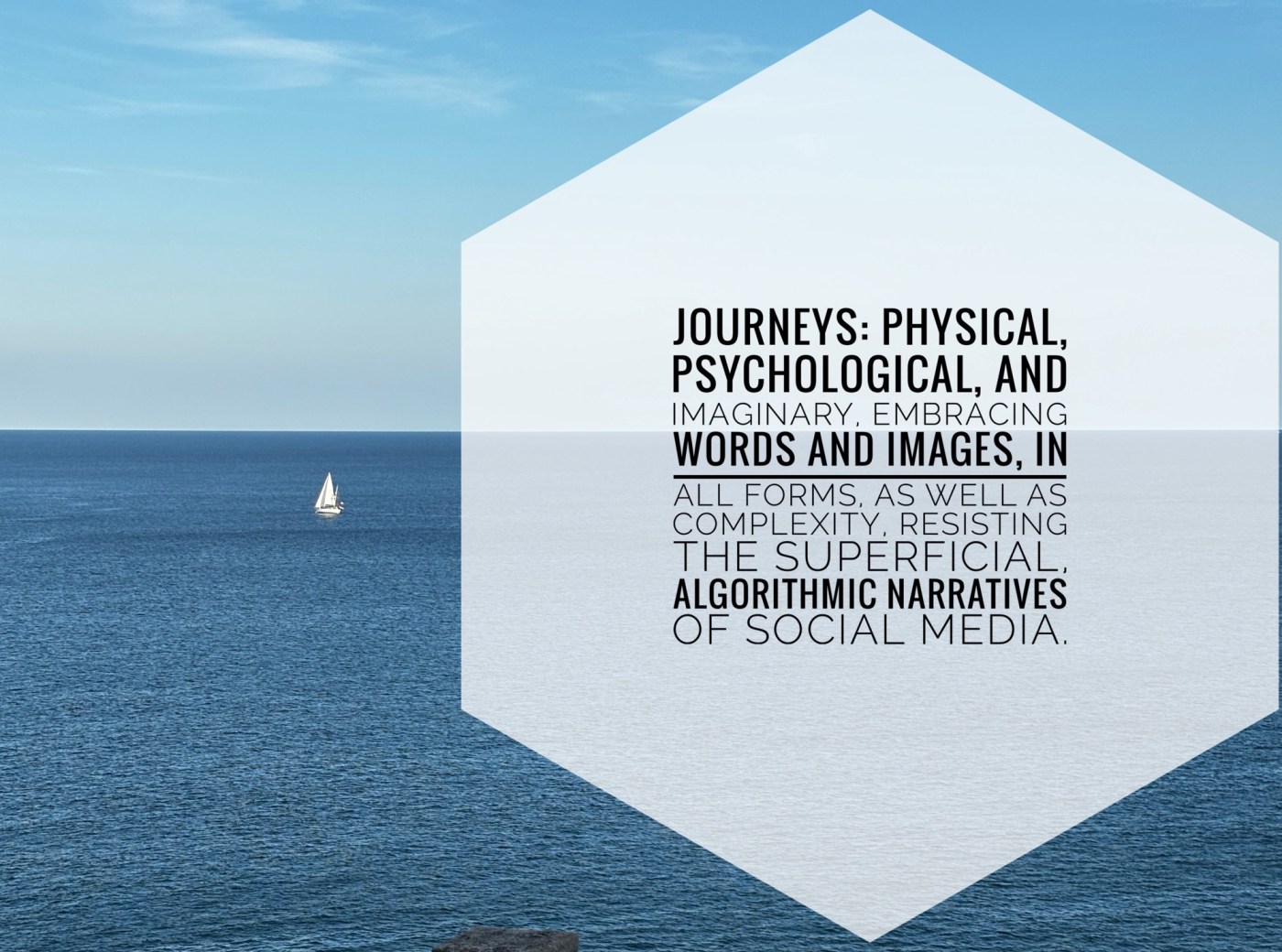
JOURNEYS: Physical, Psychological, and Imaginary, embracing words and images, in all forms, as well as complexity, resisting the superficial, algorithmic narratives of social media.

~~~

Photo by Given Rozell.

~~~

A self-described ‘vagabond, diarist, and wreck’, C.C. O’Hanlon’s fragmentary memoirs have been published in various anthologies, including Best Australian Essays 2005 and Best Australian Stories 2004 (both published by Black Inc, Australia), A Revealed Life: Australian Writers And Their Journeys In Memoir (ABC Books, Australia), The Odysseum: Strange Journeys That Obliterated Convention (John Murray, U.K.), Zahir: Desire & Eclipse (Zeno Press, U.K.), and Dark Ocean (Dark Mountain Project, U.K.). A founding features editor of Harper’ Bazaar Australia in the late ’80s, his mainstream journalism and images have appeared in The New York TimesThe Sydney Morning HeraldVarietyTravel & Leisure, the Australian editions of Vogue and Harper’s Bazaar and scores of other newspapers and magazines.

He now lives a nomadic life with his American wife of 38 years aboard a small, sea-worn old sailboat named Wrack in the southern Mediterranean. They have three adult children.

_______

Submission Guidelines

All submissions should be sent as attachments to guesteditorbhp@gmail.com

Please state the theme and form of your submission in the subject of the email. For example: JOURNEYS/POETRY

Poetry and Fiction

For poetry submissions, submit no more than three of your best poems. Short stories should be limited to 1,500 words or (preferably) less. We encourage flash fiction submissions, no more than three at a time. Send these in as a .doc or .docx file, along with a short third-person bio, and (optional) photograph of yourself.

Art
Submit hi-res images of your works (drawings, paintings, illustrations, collages, photography, etc) with descriptions of the work (Title, Year, Medium, etc) in the body of the email. Files should be in .JPEG unless they are GIFs or videos, and should not exceed 2MB in size for each work. File names should correspond with the work titles. Video submissions can be uploaded onto Youtube or Vimeo for feature on our website. Send these submissions along with a short third-person bio, and (optional) photograph of yourself.

Virtual Reality/ 3D Artworks

For VR Submissions, please submit no more than three (3) individual artworks. For Tilt Brush works, please upload your artwork to Google Poly (https://poly.google.com/), and mark it as ‘public’ (‘remixable’ is at your own preference). A VR/3D artwork can also be submitted as a video export navigating through the artwork. If you prefer this method, please upload your finished video file to YouTube or Vimeo and provide a URL. With either format, please provide a 150 word artist’s statement.

Non-fiction
Non-fiction submissions (essays, reviews, commentary, interviews, etc) should be no more than 1, 500 words and sent as a .doc or .docx file along with your third-person bio/and optional photograph.

Submissions are open until 25th November – and will reopen again on 1st DECEMBER 2025/for new theme/new editor/s.

BHP online is now in the capable hands of the amazing C.C. – friends, arsonistas, send our NOVEMBER 2025 guest editor your magic!

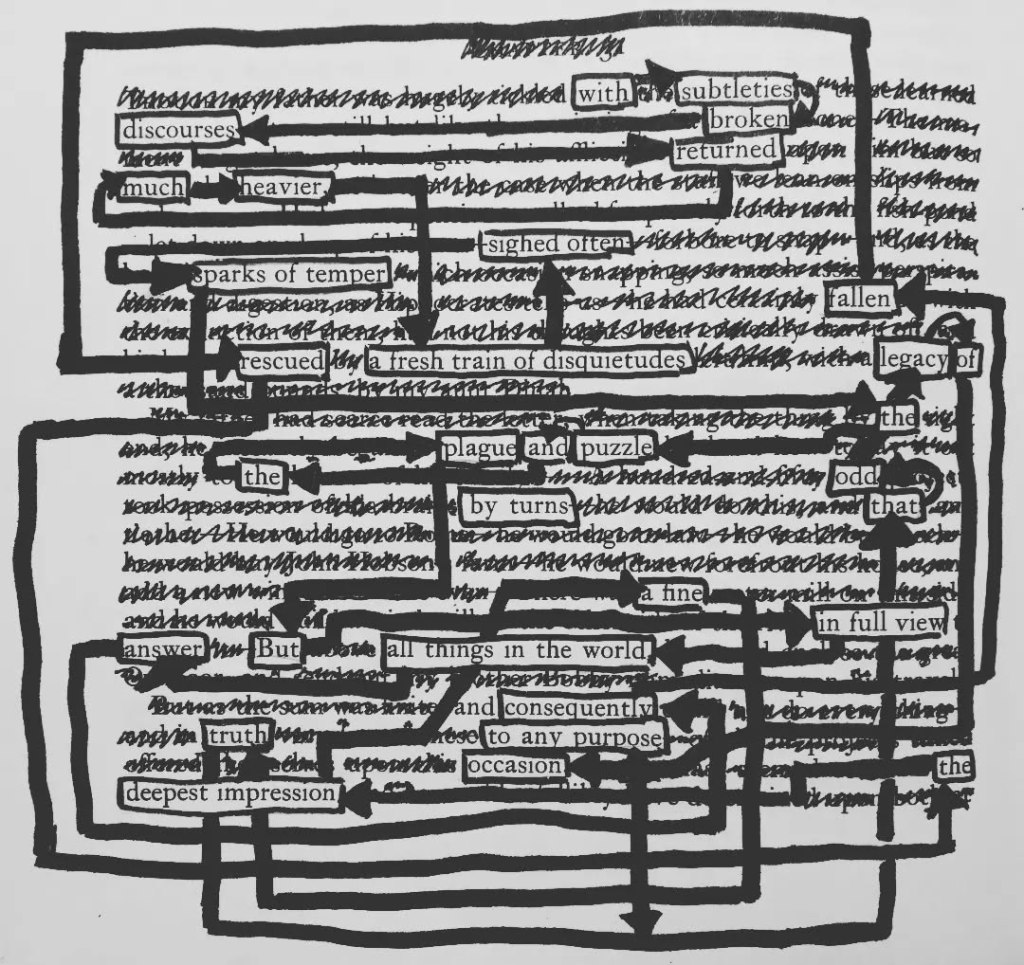
Labyrinth / Erasure by Teresa Mestizo

With subtleties broken, / discourses returned / much heavier / A fresh train of disquietudes / sighed often /Sparks of temper; / the puzzle and the plague / But, in full view, / all things in the world / answer consequently: / fallen, rescued / The deepest impression, / a fine truth to any purpose — / that odd legacy / of occasion

Teresa Mestizo is a Chicagoan Xicana currently based in a small
mountainous town in Mexico where she writes, teaches, translates
& makes art. These poems are part of her recent erasure series using
Laurence Sterne’s The Life and Opinions of Tristram Shandy, Gentleman (1759-1767).
More of her work can be found at teresamestizo.com

Ambiguous Dirt by Austin Miles


one much quieter
one much more talkative,

interpreting daylight as if it were a room

depleted sidewalk wants
2 tell u (me) some
thing

something só imp. It

had to wa
it

a pile of dirt remains ambiguous

laying on the stone like that

can it tell the future?

can the most mundane
can it (not) shine in my eye?

a rock gets lost but ppl forget

then nothing much done today

sometimes sleep
but sometimes not.
washed away

an interesting turn of phrase

someone walks into a bar
but someone
someone tries to convince me of something
but i’m conversing with a
desk lamp

the problem w the world today:

the problem w the world today


Austin Miles is from southeast Ohio. He is the author of
the chapbook Perfect Garbage Forever (Bottlecap Press)
and has poems published in Touch the Donkey, Reap Thrill,
Don’t Submit!, and elsewhere.

Data Lake (excerpt) by Judson Hamilton

5.
Dusk completes its sundowning as crowds of people begin to congregate. Dark tourism is streamed on the brick walls of the town square. From the sewers: the fatberg sits in silent judgment: Popcorn lungs blooming in the young. Distant bleeps and glitches. A Faraday box stuffed with emotions. New fiberoptics beneath the cobblestones. “10G bae bee! 10G!!” The pale green glow of a billion minds humming beneath these streets. “Shot up some estrogen and grabbed the mic. Never felt so free.” GhostBots™ linger on the edge of the crowds asking if we need resurrecting. We lie supplicate at the open pit. Body heat rises up. Visible by the light of our screens. Easter eggs in a snuff film. *cherry vape clouds* Generational grief pegged to a wildly fluctuating index. <current artery blockage at 65%> The attract screen welcomes us to join the deceased. We line the open mass grave with our phablets. We place them gently along the edge. Our banking details auto-scrolling. Endless digits glowing in the night.

6.
Piles of burning mattresses. Labyrinthine tent cities tunnel deep in the night. Dynamos of madness. Blister packs of fear litter the sidewalk. People slicking their hair back looking to make a name for themselves. Mag-lev handcuffs are issued to citizens of good standing. Making arrests has become de rigueur. “Don’t get left behind – make yours today!” They say, ecoterrorism is back on the menu – whether we like it or not. Try decreasing memory footprint to speed things up. *panicked breathing, faces flush with relief* “It’s ok. It’s ok, guys! It’s all behind login.” Blood boys wandering aimlessly. Leashed to IVs. They skirt the vortex at the center of the town square. They gather in the murk. Peel like shadows off the brick walls. Supplicant and meek they are loaded into trucks. :the fatberg sweats in the dark: Bonfires burning large and bright on every street corner. Feverish dancing, arms flailing. Engagement rates are up! Distant bleeps and glitches. Drones pinging in the night. This is a place where no one wins. “Welcome to the unsubscribe center. You made it!”

7.
Washing bones to arrive at their final incantation. Broken teeth litter the streets. Shattered bottles line the curbs. Burger boxes and Styrofoam clamshells shift and slide along the sidewalk. :the fatberg wheezes from the sewers: “Dark empaths on the prowl” Great is their grift and short is their thrift. The pavement is covered in feces. Broken tents sway in the wind. A yellow sulfurous pollen burns the nostrils. Blankets everything in its stench. Blister packs of disappointment clog the sewer drains. The dispossessed have set up shop at the local mall. All honeycombed out with anguish architecture. Occult practices sold here for a price. *whispering* i’m on the verge. Flickering at the edge of sense. Cut-tongue mumblecore. Agitated. Carbonated. Overstimulated. Wandering the halls looking to score code. Countless stalls in cramped space. Frenetic haggling. Stale sweat and burned pharmaceuticals. JUUL pods litter the tile floor. Stimming on glitterbombs. Tech spells and hexes coded in COBOL. Etsy witches paid in arcade tokens. “Hey there are gravity sinkholes everywhere here so – watch your step.”

Judson Hamilton lives in Wroclaw, Poland.
Bluesky @judsonhamilton.bsky.social
https://neutralspaces.co/judson_hamilton/

Two Poems by Corwin Ericson

Sculpture Garden

Brick Professional Building
enislanded by offramps.

Asphalt Curbs Pushed onto the Mulch
by the plow service
spell something broken
in the lot of the brick professional building.

Black Plastic Rat Traps
every twenty paces
under dead brown junipers
ring the brick professional building.

Box for Patient Samples
bolted to the masonry
outside the back basement door
of the brick professional building.

Five People in Cars Eating by Phonelight
two of them wearing scrubs
each of them alone
behind the brick professional building.

Oft-Gnawed Fisher Price People
collect pathogens
in the children’s corner
of the brick professional building.

* 
Inholding

Where feral bloodroot blooms
prettily, where knotweed and bittersweet
are bad ideas that have won the meadow
where there are wells and springs
and cairns and cellars
there is a heavy chain and hook
hanging from a maple too old to tap
where her late husband
butchered their cow.

Corwin Ericson is the author of Swell, a novel, and the collection
Checked Out OK. His work has appeared in Volt, Jubilat,
Harpers, and elsewhere.

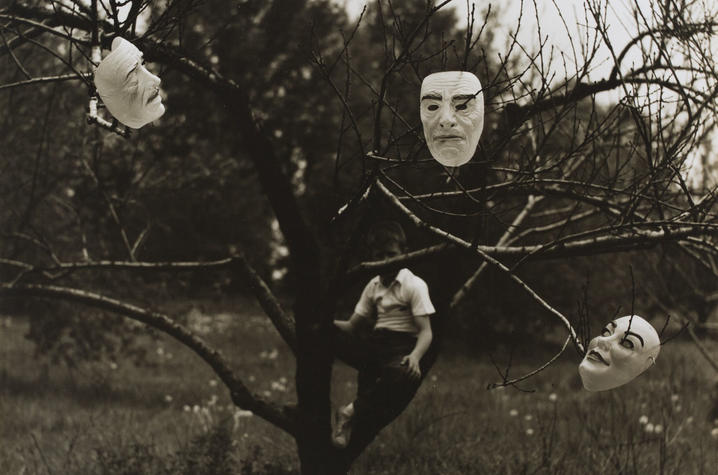
(Image: Ralph Eugene Meatyard. “Untitled,” 1963. Courtesy of Fraenkel Gallery)

Two Poems by Dan Melling

A Tense to Describe a Duck That Isn’t There
After Asger Jorn’s The Disquieting Duckling

Duck would have been erupting.
Duck would have erupted.
Duck continuous erupt
in the would / have been. Future
duck the perfect erupts. The never duck
eruption.
present simple farmer
haybales fowl in the is and ises in the ed
of rural whitewash each breath
a flesh of brushstrokes.
a tense to describe the temporal
stretch of canvas. Dapples
of birch leavings to stack
in impasto. An erupt

to duck a basal ganglia.

*
A-Political Self-immolators

We fizzy & piffy lakeside straight shooter boys
shoot stray cats from the Baroque balcony boys
we’re landslide boys eat crab boys big bullet
bully boys hooligan melodies & tenebrous eyes boys
sparkle sparkle little pig we ride rapid boys wide
boys locked safe boys sink to the depths the Davy
Jones boys real boy’s boys’ boys locker room
boys’ talk boys neck foam boys nick phones boys rock
-a-bye baby boys the blue-eyed boys bish bash
bosh job’s a good’un boys we’re those landgrab boys
swamp stab boys drain the blood dig the liver
boys pile-driver boys we’re deep-sea diver boys
black-lung coal miner boys real DH Lawrence boys
big tough boys with big tough toys oioioi boys
make some fucking noise boys we’re poison boys
burn the fields salt the earth shatter seas stone skim
boys we’re the make room boys the me-first boys
the boys with a fire in our fists we’re pollution boys
we’re gruesome boys those lumpen laymen men
of the earth serf boys we’re wind & rain boys fight
through snow sludge through mud we breathe gas
boys bottle rocket shrapnel boys we’re front-line boys
Gulf War Syndrome born alone die alone eight
pawn boys dethroned boys deflowered & defaced
face the music boys on my mark we go over
trench foot shell shock whizz-bang boys no man’s
land landless boys no stake in society ASBO boys
we’re high fire boys burn like mustard boys
we burn water baptisms of gas explosions stop
drop & roll up a fatty we’re rock n troll star
boys steal your hearts & leave a scar life sentence no
possibility of parole we’re born to die boys beautiful
corpse cheap funeral Amazon coffin & BYOB
boys search & destroy boys given no quarter hung
drawn & quartered we’re those coup de grâce
coup d'état boys raze the dead seize the day gone
tomorrow boys we’re the lost boys the last boys
last of our name last of our nature we’re ouroboros
boys anonymous boys we see things say things
you wouldn’t dream boys you wouldn’t feed us
to your dog you wouldn’t touch us with his you’d
off with our heads you wouldn’t be seen dead.

Dan Melling is a writer from the UK.
He holds an MFA in Poetry from Virginia Tech and teaches creative writing
at Liverpool John Moores University, where he is also pursuing a PhD.
His work has appeared in The Rialto, X-R-A-Y, HAD and elsewhere.
He co-edits Damnation literary journal.

Simón Bolívar (1783–1830) by Peter J King

                                         How will I ever get out of this labyrinth?
After defeating
the bull-headed monster,
not once but
over and over again,
I hung my sword up
on the bullet-pitted wall,
and tried to find my way back home.

The thread was broken, though,
and now I wander in this fearful light
and search for darkness.


Peter J. King was active on the London poetry scene in the 1970s.  Since his return
to poetry in 2013 after a long absence he’s published four collections (the latest being
Contact Light, Alien Buddha Press, 2025), and appears widely in journals and anthologies. 
He also translates, mainly from modern Greek and German, writes short prose, and paints.
Bluesky @rock-rex.bsky.social

https://wisdomsbottompress.wordpress.com/peter-j-king/

Seven translations of Maffeo Barberini’s ‘Sonetto XXXII’ (Qui m’assido pensoso in questo sasso) by Eric T Racher

1.
Stone is tone sat, shone sibboleth, antic serve antique
observe quiescence essence deliquescence whence
as just majesty or jest, Rome. Adjust fallen sigh stupor
brain aspic apical outward placid not much. Acid
esteem unsated teeming, for that although also, can
vain humane vanity admired humanity mired option
self enraged and assuage, turn. Bound unto found
object object prime self lowered mind loured petite.
Alms of psalm, sole incarnadine, hoary before turn
whore not then prey custom, give. Penitent pen it
in prayer custom unsaid repent end to end, soul.
Wretched ashen etched in deceit do, dawn stir fall
rare jewel out impending whom, who; fault line twine
twin fault win turn in time or afterthought fit flee.

2.
aaaaaaaaaaaaaaaaaaaaaaaaaaaaa
aaaaaaaaaaaaaaaaaaaààbbbbcccc
ccccccccccccddddddddddddddd
deeeeeeeeeeeeeeeeeeeeeeeeeeee
eeeeeeeeeeeéèfffffggggggggghh
hhhhhhiiiiiiiiiiiiiiiiiiiiiiiiiiiiiiiiiii
iiiiiillllllllllllllllllllllmmmmmm
mmmmmmmmmmmmnnnnnnn
nnnnnnnnnnnnnnnnnnnnnnnno
ooooooooooooooooooooooooo
ooooooooooopppppppppppqqq
rrrrrrrrrrrrrrrrrrrrrrrrsssssssssssss
ssssssssssssssssssstttttttttttttttuuu
uuuuuuuuvvvvvvvz,,,,,,,,,,,,...’’’’’’’

3.
Quim, ass, seed—open! So-so inquest, O, sass! O!
Idyll antic car, O Maat! Err! A mere O.
Llamaest, a cad. Hoot. (& he’s sus.) Peer, O!
Ape wrestled a stupor. None, mofo. I’ll pass. O,
none sat Z, O deepen czar-anchor. Kayla’s so.
Lovin’ it. Ah! Delu, man. Fast! Tome mirror.
Idyll me, O van, edging me. Cum! Ah, dear!—O!
A purely-meant, a villagette, a bus—O!
All maudy, prick, I miss ’im. Be! Ankh? Eel? Cree? Nay.
Ski? Evil costume? Dick? Whey? Casey? Dan?—O!
Imp-ray? Dolls? Sense? O, perp & tears. Seal? Fee? Nay.
Me sir! O, key! Trouble Cain. Tallin gone, no?
Ra? Dough? Eh? Kettle more eerie. Insult confit. Nay.
See raw Vega, deaf alley—foo! Golden, no?

4.
lexicon = [ ‘abbasso’, ‘adiro’, ‘alma’, ‘al’, ‘ammiro’, ‘ancorché’, ‘antica’, ‘assido’, ‘a’, ‘caduta’, ‘che’, ‘chi’, ‘confine’, ‘costume’, ‘crine’, ‘danno’, ‘danno’, ‘da’, ‘deh’, ‘dell’’, ‘del’, ‘de’’, ‘di’, ‘e’, ‘è’, ‘falli’, ‘fasto’, ‘fine’, ‘fugga’, ‘il’, ‘imbianchi’, ‘inganno’, ‘in’, ‘lasso’, ‘la’, ‘maestà’, ‘meco’, ‘mente’, ‘mio’, ‘miro’, ‘misero’, ‘mi’, ‘morire’, ‘muovo’, ‘m’’, ‘ne’, ‘non’, ‘oggetto’, ‘passo’, ‘pensar’, ‘pensoso’, ‘pentirsi’, ‘per’, ‘preda’, ‘preso’, ‘pria’, ‘pur’, ‘quei’, ‘questo’, ‘qui’, ‘rado’, ‘ravvegga’, ‘roma’, ‘sasso’, ‘sazio’, ‘schiva’, ‘senso’, ‘si’, ‘sospiro’, ‘stupor’, ‘sul’, ‘s’’, ‘tal’, ‘terra’, ‘trabocca’, ‘uman’, ‘vaneggiar’, ‘vanità’, ‘vil’ ]

[[[[0 0 0 0 0 0 0 1 0 0 0 0 0 0 0 0 0 0 0 0 0 0 0 0 0 0 0 0 0 0 0 0 1 0 0 0 0 0 0 0 0 0 0 0 1 0 0 0 0 0 1 0 0 0 0 0 0 0 1 1 0 0 0 1 0 0 0 0 0 0 0 0 0 0 0 0 0 0 0] [0 0 0 0 0 0 1 0 1 0 0 0 0 0 0 0 0 0 0 1 0 0 0 1 0 0 0 0 0 0 0 0 0 0 0 0 0 0 0 1 0 0 0 0 0 0 0 0 0 0 0 0 0 0 0 0 0 0 0 0 0 0 1 0 0 0 0 0 0 0 0 0 0 1 0 0 0 0 0] [0 0 0 0 0 0 0 0 0 1 0 0 0 0 0 0 0 0 0 0 0 0 0 1 0 0 0 0 0 0 0 0 0 0 1 1 0 0 0 0 0 0 0 0 0 1 0 0 0 0 0 0 0 0 0 0 0 0 0 0 0 0 0 0 0 0 0 0 1 0 0 0 0 0 0 0 0 0 0] [0 0 0 0 0 0 0 0 0 0 0 0 0 0 0 0 0 1 0 0 0 0 0 1 0 0 0 0 0 1 0 0 0 0 0 0 0 0 0 0 0 0 0 1 0 0 1 0 1 0 0 0 0 0 1 0 0 0 0 0 0 0 0 0 0 0 0 0 0 1 0 0 0 0 0 0 0 0 0]] [[0 0 0 0 0 1 0 0 0 0 0 0 0 0 0 0 0 0 0 0 0 0 1 0 0 0 0 0 0 0 0 0 0 1 0 0 0 0 0 0 0 0 0 0 0 0 1 0 0 1 0 0 0 0 0 0 0 0 0 0 0 0 0 0 1 0 0 0 0 0 0 0 0 0 0 0 0 0 0] [0 0 0 0 1 0 0 0 0 0 0 0 0 0 0 0 0 0 0 1 0 0 0 0 0 0 1 0 0 0 0 0 0 0 1 0 0 0 0 0 0 0 0 0 0 0 0 0 0 0 0 0 0 0 0 0 0 0 0 0 0 0 0 0 0 0 0 0 0 0 0 0 0 0 0 1 0 1 0] [0 1 0 0 0 0 0 0 0 0 0 0 0 0 0 0 0 0 0 0 1 0 0 1 0 0 0 0 0 0 0 0 0 0 0 0 1 0 1 0 0 0 0 0 1 0 0 0 0 0 0 0 0 0 0 0 0 0 0 0 0 0 0 0 0 0 0 0 0 0 0 0 0 0 0 0 1 0 0] [1 0 0 0 0 0 0 0 1 0 0 0 0 0 0 0 0 0 0 0 0 0 0 1 0 0 0 0 0 0 0 0 0 0 1 0 0 1 0 0 0 0 0 0 0 0 0 1 0 0 0 0 0 0 0 0 1 0 0 0 0 0 0 0 0 0 0 0 0 0 0 0 0 0 0 0 0 0 1]]] [[[0 0 1 0 0 0 0 0 0 0 1 0 0 0 1 0 0 0 1 0 0 0 0 0 0 0 0 0 0 1 1 0 0 0 0 0 0 0 0 0 0 1 0 0 0 0 0 0 0 0 0 0 0 0 0 1 0 0 0 0 0 0 0 0 0 0 0 0 0 0 0 1 0 0 0 0 0 0 0] [0 0 0 0 0 0 0 0 0 0 1 0 0 1 0 1 0 0 0 0 0 0 1 0 0 0 0 0 0 1 0 0 0 0 0 0 0 0 0 0 0 0 0 0 0 0 0 0 0 0 0 0 0 0 0 0 0 1 0 0 0 0 0 0 0 1 0 1 0 0 0 0 0 0 0 0 0 0 0] [0 0 0 1 0 0 0 0 0 0 0 0 0 0 0 0 0 0 0 0 0 0 0 0 0 0 0 1 0 0 0 0 1 0 0 0 0 0 0 0 0 0 0 0 0 0 0 0 0 0 0 1 1 1 0 0 0 0 0 0 0 0 0 0 0 0 1 0 0 0 0 0 0 0 0 0 0 0 0]] [[0 0 0 0 0 0 0 0 0 0 0 1 0 0 0 0 0 0 0 0 0 0 0 0 0 0 0 0 0 0 0 1 1 0 0 0 0 0 0 0 1 0 0 0 0 0 0 0 0 0 0 0 0 0 0 0 0 0 0 0 0 0 0 0 0 0 0 0 0 0 0 0 1 0 1 0 0 0 0] [0 0 0 0 0 0 0 0 0 0 1 0 1 0 0 0 0 0 0 0 1 0 0 0 1 0 0 0 0 0 0 0 1 0 0 0 0 0 0 0 0 0 1 0 0 0 0 0 0 0 0 0 0 0 0 0 0 0 0 0 1 0 0 0 0 0 0 0 0 0 1 0 0 0 0 0 0 0 0] [0 0 0 0 0 0 0 0 0 0 0 0 0 0 0 0 1 0 0 0 0 1 0 1 0 1 0 0 1 1 0 0 0 0 0 0 0 0 0 0 0 0 0 0 0 0 0 0 0 0 0 0 0 0 0 0 0 0 0 0 0 1 0 0 0 0 1 0 0 0 0 0 0 0 0 0 0 0 0]]]]

5.
All pensive on this rock I sit
and watch an empire gone to shit—
cracked columns, bricks & broken blocks,
like cat turds in a litterbox.
My weary mind can only see
the pomp of human vanity,
and though I find it rather crass,
I too’m a vain and pompous ass.
I beg you, soul—it’s getting late—
do not be like the profligate,
whose life on worldly pleasure’s spent,
deferring when he should repent,
for when death’s door such blind men gain
they rarely rue and flee the pain.

6.
From: Satya Nadella
Sent: Tuesday, July 03, 2024 5:33 AM
To: Microsoft – All Employees; All MS Store Employees FTE
Subject: Reflection on the Impermanence of Success

Team,

I find myself contemplating the fleeting nature of worldly pursuits. While we strive for success and recognition, it is important to remember that these achievements are ultimately transient. History is replete with examples of empires that have crumbled, leaving behind only remnants of their former glory.

The pursuit of material wealth and fleeting pleasures can often distract us from what truly matters. It is essential to cultivate a sense of perspective and to prioritize enduring values over ephemeral ones.

As we navigate the complexities of life, let us strive to live with purpose and meaning. May we find solace in the pursuit of knowledge, compassion, and the betterment of ourselves and our communities.

Sincerely,
Satya

7.
Escape the Flames: Your Roman Sanctuary Awaits

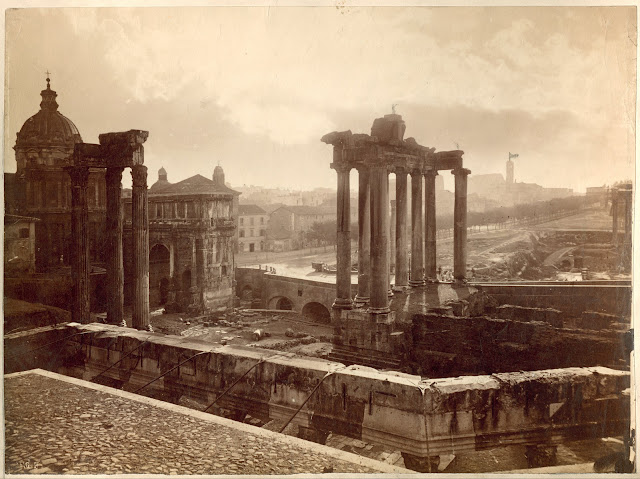
Imagine yourself, seated upon a stone terrace, overlooking the timeless beauty of Rome. The ancient city unfolds before you, a tapestry of history woven into the very fabric of the earth. Lost in thought, you witness the ruins of Rome, her fallen majesty, and linger in a stupor most profound. But this is no melancholic reverie. This is the beginning of your new life, a life free from the pomp of human vanity and the beguiling claims of the mundane.

Here, in our exclusive condominium, you can finally shun the ways of the man who only aims at worldly bliss. Repenting on death’s day is a fate you can avoid. Come, my soul, before your hair turns grey, and embrace a life of tranquility and sophistication.

Our meticulously restored residences offer a haven of peace and luxury, nestled amidst the heart of Rome’s vibrant history. Rare it is, when held in death’s fell sway, to see one's own mistake, and flee the flames. But here, you can escape the flames of worldly distractions and embrace the true treasures of life.

Don’t let your dreams run aground on base things. Come, discover your own Roman sanctuary. Contact us today to learn more about our exclusive condominium offerings.

Eric T Racher lives in Riga, Latvia. His poetry, essays and fiction
have appeared in Socrates on the Beach, minor literature[s], Exacting Clam,
Your Impossible Voice, Literary Imagination, Keep Planning, ballast & elsewhere. 
Bluesky @ericracher.bsky.social

Two poems by Liesl Ujvary

translated from the german by Ann Cotten & Anna-Isabella Dinwoodie

*
first true story (from “three true stories”)

the fence is a window and the window is a room and the room is a table and the table is a speck and the speck is a girl and the girl is a knife and the knife is a clock and the clock is a letter and the letter is a neighbor and the neighbor is a flowerbed and the flowerbed is a city and the city is a street and the street is a friend and the friend is a summer’s day and the summer’s day is a hill and the hill is a field and the field is a tower and the tower is a woman and the woman is a wave and the wave is glasses and the glasses are an evening and the evening is a tree and the tree is a mound and the mound is a key and the key is a coin and the coin is a sheet of ice and the sheet of ice is a hole and the hole is a bridge and the bridge is a pillar and the pillar is a look and the look is a colleague and the colleague is a stick and the stick is a mountain and the mountain is a journey and the journey is a cafe and the cafe is a camp and the camp is a wolfhound and the wolfhound is a grate and the grate is an abyss and the abyss is a toilet and the toilet is a school

*
great authorizations

you may be expected to
you may be able to
you may be required to
you may be allowed to

you may be expected to be expected to
you may be able to be expected to
you may be required to be expected to
you may be allowed to be expected to

you may be expected to be able to
you may be able to be able to
you may be required to be able to
you may be allowed to be able to

you may be expected to be required to
you may be able to be required to
you may be required to be required to
you may be allowed to be required to

you may be expected to be allowed to
you may be able to be allowed to
you may be required to be allowed to
you may be allowed to be allowed to

you may be expected to be expected to be expected to
you may be able to be able to be expected to
you may be required to be required to be expected to
you may be allowed to be allowed to be expected to

you may be expected to be expected to be able to
you may be able to be able to be able to
you may be required to be required to be able to
you may be allowed to be allowed to be able to

you may be expected to be expected to be required to
you may be able to be able to be required to
you may be required to be required to be required to
you may be allowed to be allowed to be required to

you may be expected to be expected to be allowed to
you may be able to be able to be allowed to
you may be required to be required to be allowed to
you may be allowed to be allowed to be allowed to


From Good & Safe, published by World Poetry Books, 2025.

Liesl Ujvary (1939) is an Austrian writer in the concrete tradition.
Her oeuvre includes experimental electronic music & video
Good & Safe (Sicher & Gut), her debut, was originally published in 1977 /
Ann Cotten is a writer & translator from Vienna, Austria.
Translations from English to German include books by Isabel Waidner,
Legacy Russell, Rosmarie Waldrop & others /
Anna-Isabella Dinwoodie is a translator & writer
who makes visual poetry & performance art. She lives in Berlin.

Three poems by Jordan Davis

Interrogator needed
must fail to understand
the simplest things
in a vault of goo —

Platitudes generated
by electricity
falling into a source
it troubles us to consider
even once,

whispering to solvent after solvent —

is this the visual
you redirect your password from,
are there other kinds
of sympathy you act
out about?

Do you inventory
your playing cards
routinely.

What I’m telling you
is none of your business
and business is good.

*
The book of
how’s that going to work:


Like aliens,
their flitting pincers
storming across the stacks.

Supervision for the loneliest,
and architecture
made of composure and
lidocaine.

There is this long waiting period
before it makes sense to talk.

It’s fine that you want
a reservoir of tenderness,
but you should know
it comes with conditions
your character
tends to oppose.

*
A chaos familiar enough
I experience it as valuable,
clinging sideways
into its reason

and misread the story
the way anyone would
from underneath the letters.

Giving down its lesson,
the fear electrifies
a plateau for breathing
the sour lonely soup,

a glittering cassette
blowing in the brisk
aftermath.

Sympathy we dissolve
is nevertheless available
later for unknown newcomers

with even a dime —
in this system
wanting both
is rubble roulette, sweetie.

You have to be that slippery
and no more.

Come on, already,
it’s unbearable how you
refuse
this dialogue without borders,

these dependable changes
while the world considers
what it really wants,
the drift of feeling
in a crisis —

After the earthquake
the ceiling leaks,
the layered presence
parted like a bead curtain …

Not, more light:
Lighter.
Lighter.

Jordan Davis is a former Poetry Editor of The Nation. His most recent collection
is Yeah, No (MadHat, 2023). Bluesky @jordandavis.bsky.social

Fingerprint by Michael L Sevy

we had a dinette, the house was too small for a proper dining room, there was a painting on the wall, notable because artwork was minimal in the house, I was fascinated by this painting, it looked European to me in a vague way as at nine years of age I knew nothing of life outside the US, it was a river scene, a river surrounded by a forest, a mountainous forest, with a small house about a third of the way up on the mountain surrounded by evergreens, I think it would be called a chalet, there’s a European word, it pronounced funny, and on the river was a small boat with a man standing astern navigating with a long pole, the painting was always there on that dinette wall, I didn’t know its origins, how, where and why my parents bought it, after some time, after months of glances, I made an observation, the perspective was wrong, the chalet was too small to be real, or the boat with the man was too large, even taking into account that the boat with the man was closer to the viewer it felt like sizes were off, once noticed this was all I could think about when looking at the painting, this mismatch of proportions, if happening to walk through the dinette I glanced up at the wall, all I saw were the two mismatched objects and my mind became stuck in a comparison loop, judging dimensions and wondering, but then sometime later, more glances, I noticed something else was off, the paint was darkened to the right of the chalet, a chaletshadow, and the paint was darkened to the left of the boat, a boatshadow, right then left, as if the chalet was painted under morning sky and the boat was painted under afternoon sky, or as if there were two suns over Europe, and once noticed that was all I could think about when looking at the painting, this mismatch of illumination, my mind stuck in a newer superseding comparison loop, and then still, sometime later, yet more glances, I stood up on a chair and gazed at the painting, closer, my nose inches from the chalet, I examined each brushstroke though it was hard to tell a brush was used, the paint was glopped on thick as paste, perhaps a palette knife was the artist’s implement of choice, and this was fine, interesting, but there was one glop, a dark green section of forest just above and to the left of the chalet, where, my face almost touching the canvas, I discovered unmistakably a fingerprint embedded into the painting as if instead of a brush or knife the artist had smooshed this one glop with a finger, it looked purposeful, the brushes needed cleaning, the palette knife was dirty, but here was a finger, relatively clean and always available, the artist’s original tool, I could follow the loops, arches and whorls around and around within the print, no one else noticed this fingerprint, only I, my secret, as a child I was not afforded many, after months of glances and after some time, no other family member knew this existed, and that impression was all I could think about when looking at the painting from that discovery on, the chalet no longer existed, the boat with the man and his pole no longer existed, the mismatched perspective, the contrasting shadows, all forgotten, the painting was just a fingerprint, every glance at the painting caused wonder, a loop, my mind dominated by a single fingerprint, a fingerprint that belonged to an unknown artist, maybe European, working hours every day in his studio with his paints and his palette knife and his finger

Michael L Sevy is a writer & composer from Vermont. His work has been published in 3:AM Magazine & minor literature[s]. He was the leader of punk bands Cold Dogs in the Courtyard and Bonus Marchers. You can find him on bsky at @mlsevy.bsky.social

The Buried Museums by Jeff Young

The Buried Museums

Holy Grail, hollowed bone, half buried in the dirt. Above the 
Brow God is moving his furniture, wardrobes of thunderclouds,
heavy     driving migraines into your skull

Within these hills there are buried museums. Gleaners,
looters, archaeologists scrape the dust, sift for clues. When
the rain comes flashfloods will turn this dirt to mud,
exposing doll’s prams, tin bathtubs, a mangled accordion wheezing

Boy on a stolen moped dragging it uphill towards the church   
cowboy swagger

I sit by the shrine of plastic flowers rolling a joint with
shaking fingers. A cracked Now That’s What I Call Music CD
hangs from a tree, a fetish token for the homeless woman
winter-death, grief-moon

Dig into the dirt with the heel of my boot remembering the Dog
King. Somewhere down there in an old tin can are his tethering
ropes, latch keys, can-opener, flick knife     cassettes of mad
muttering, dog-howl

In buried museums beneath these hills, your memories, earth-
weighted mad saint’s bone relics, nightmare archive.

Jeff Young is a Liverpool based writer for radio, theatre
& screen. His memoir ‘Ghost Town’ was shortlisted for the Costa
Prize and his second memoir, ‘Wild Twin’, tells of his years
hitching around Europe & living in Amsterdam squats.
Poet, performer, visual artist & broadcaster, collaborator
with artists & musicians, he is currently writing ‘Lucid Dreamer’,
an alternative history of Liverpool counterculture.
Bluesky http://@wildtwin.bsky.social

Blog at WordPress.com.

Up ↑