Search

BURNING HOUSE PRESS

Not For Profit/For Prophecy

Author

mattkinlin

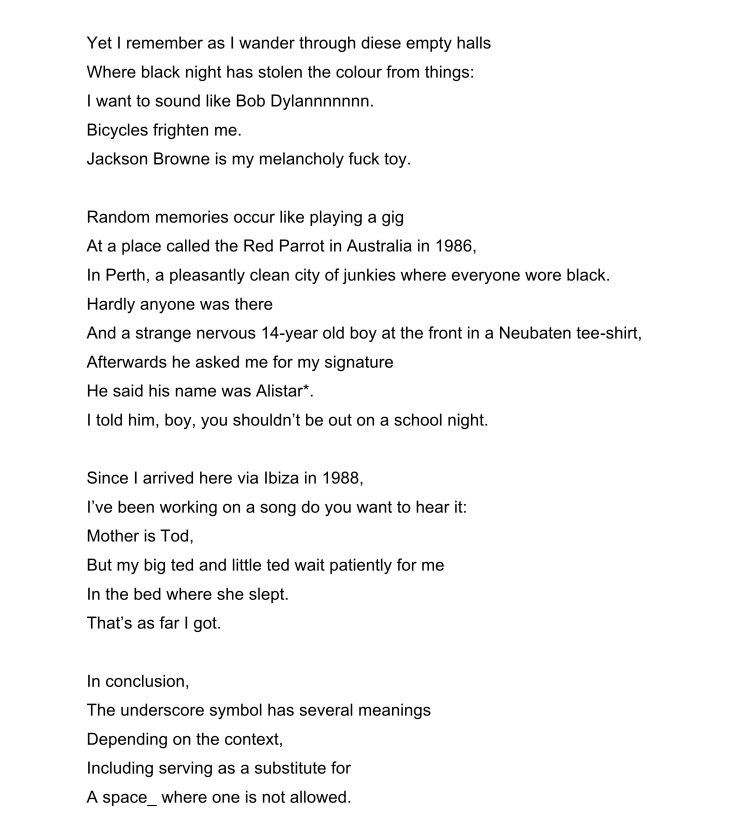
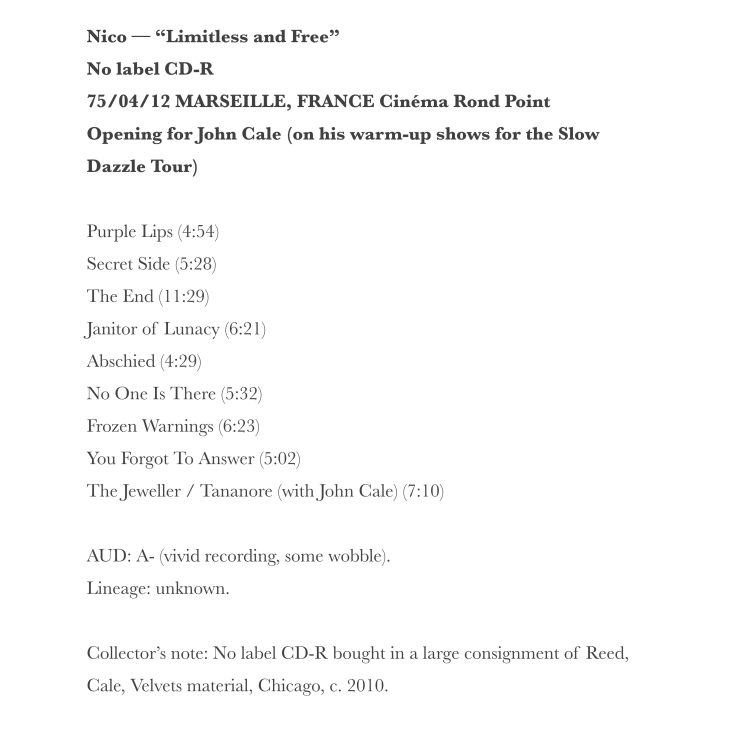
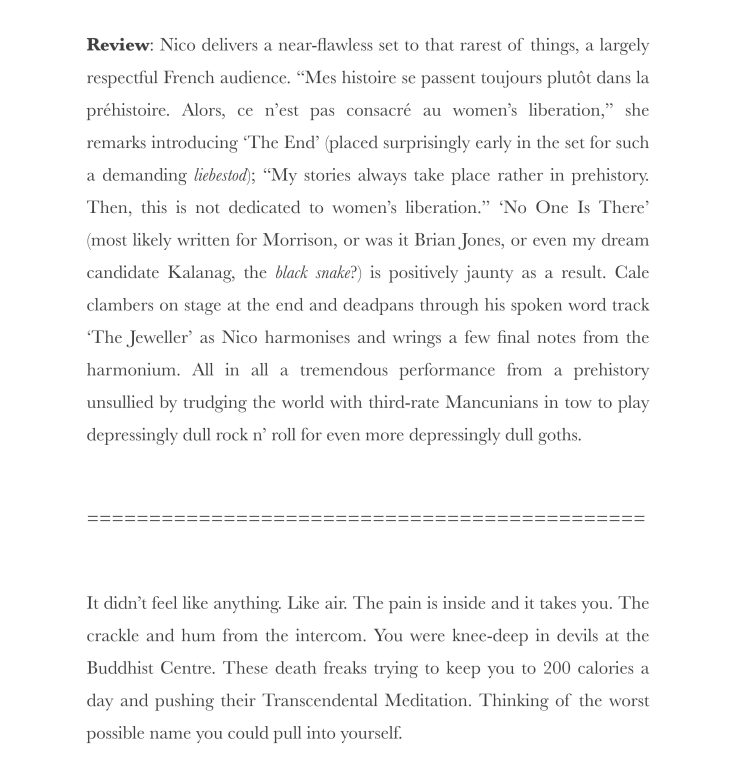
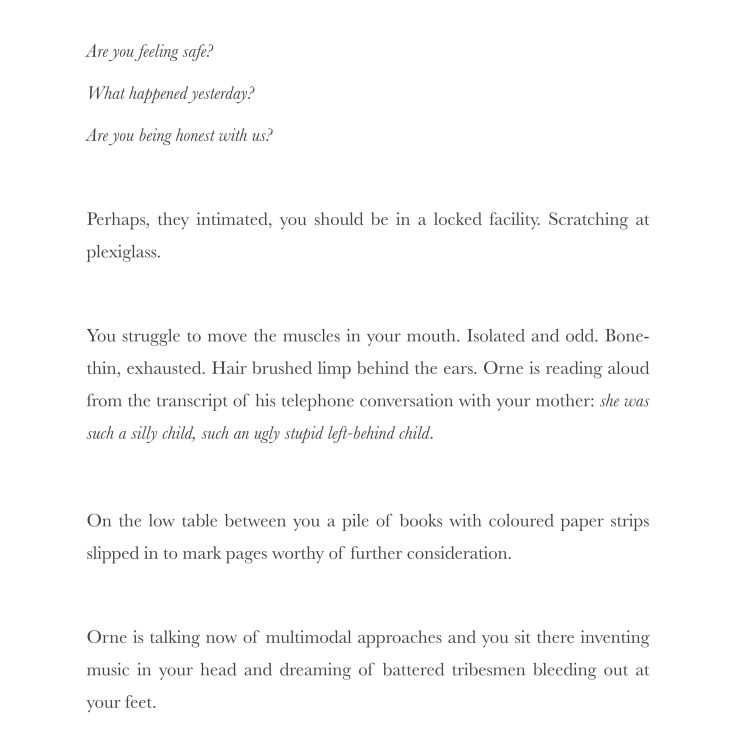
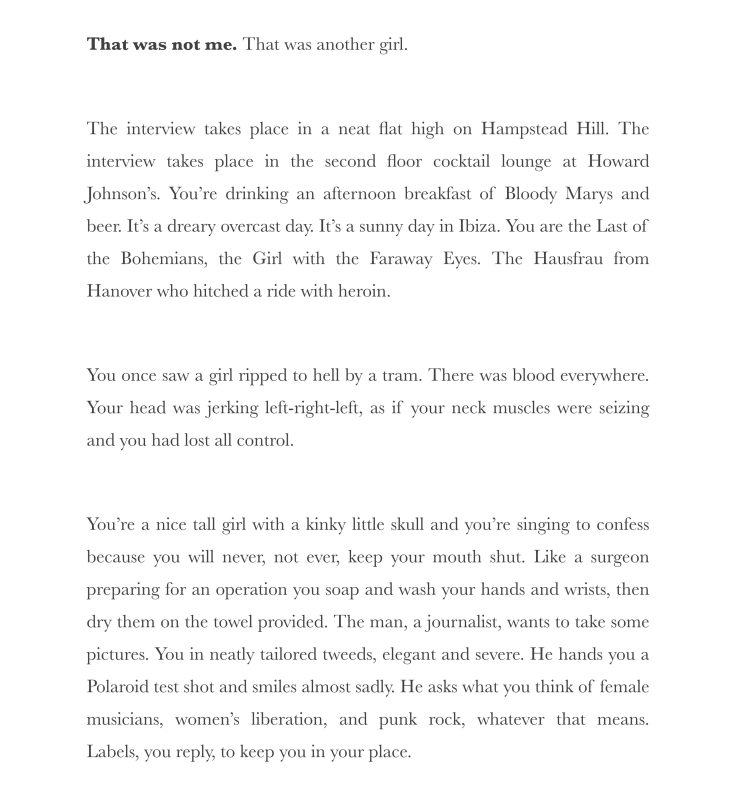
Welcome to the Under_World of Nico_ by Alistair McCartney 

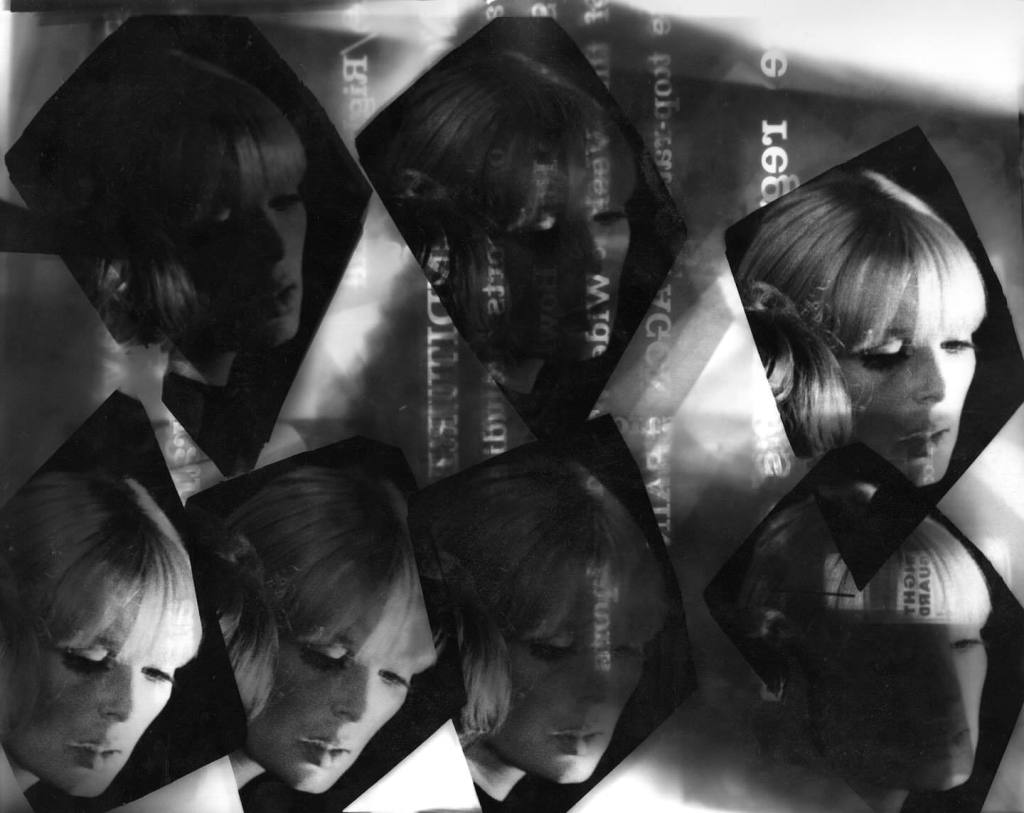
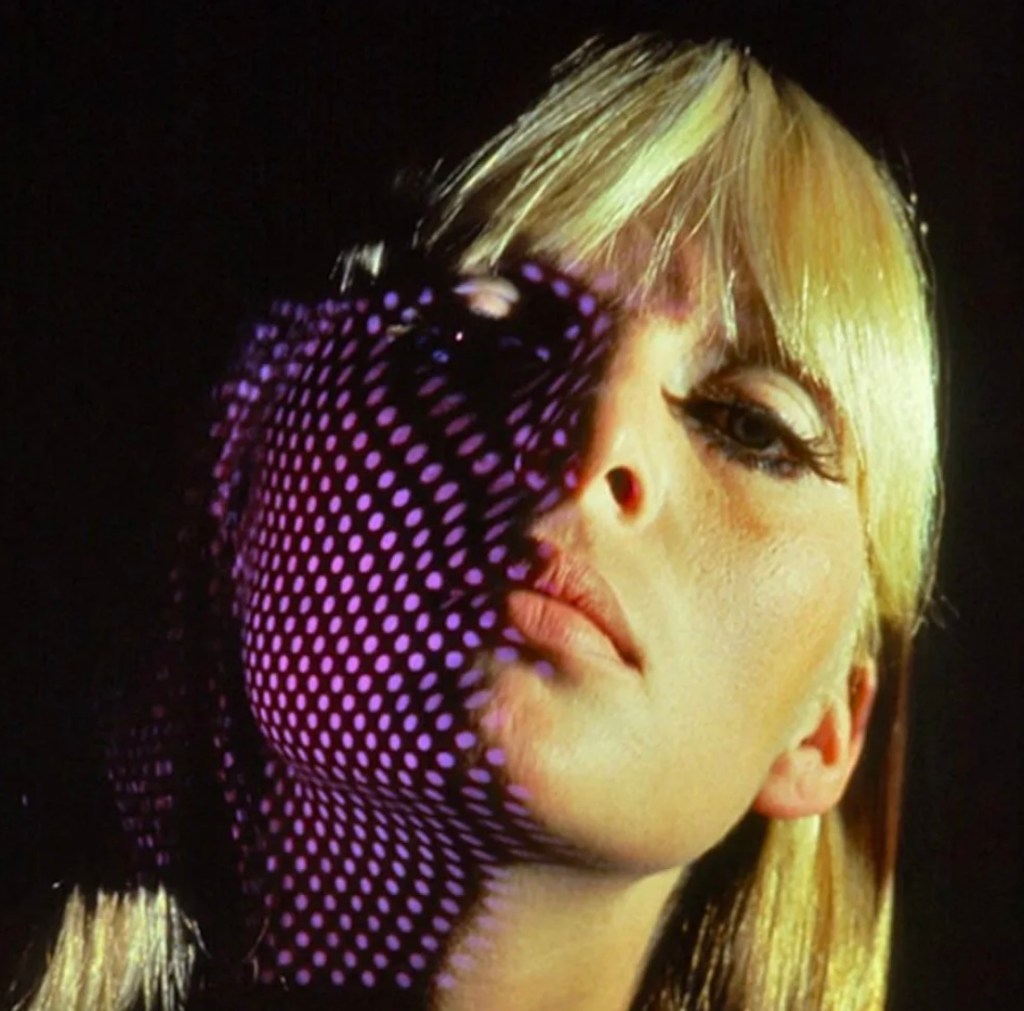
Photo collage of Nico, by Billy Name, 1967.


Alistair McCartney is the author of The Disintegrations and The End of the World Book, two experimental novels published with University of Wisconsin Press. The Disintegrations is the recipient of The Publishing Triangle’s Ferro-Grumley Award for LGBTQ Fiction. TEOTWB was a finalist for the PEN USA Fiction Award and the Publishing Triangle’s Edmund White debut fiction award. His poetry and cross-genre writing has appeared in journals such as Hotel, Deleuzine, Fence, Light/Air, LIT, Stand, 3:AM, Vestiges, Nat.Brut, Animal Shelter (Semiotexte), ExPat Press and Pilot Press’s Paul Thek and Forbidden Colours Anthologies. He is currently working on a book of poetics and a novel. Originally from Australia, he lives in Los Angeles, where he is Teaching Faculty in Antioch University’s MFA program.

Hollow Copy by Yvonne Salmon

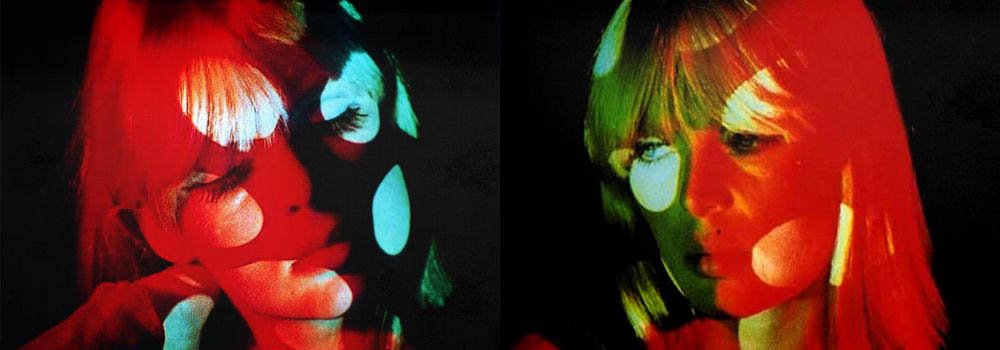
Nico in Exploding Plastic Inevitable (1967).


Yvonne Salmon is a writer, artist and filmmaker. Recent work has featured in the Ver Poetry Prize Anthology, Martello Journal and Frogmore Papers. Her study on queer sixties literature ‘Certain Circles’ appears in The 1960s: A Decade of Modern British Fiction (Tew et al eds).

Athanor by Jeff Jackson

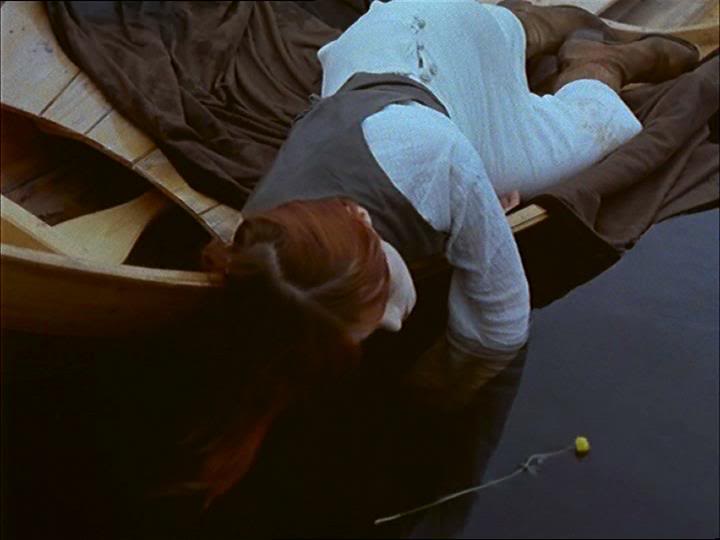
Nico in Athanor (1972).

1972 film directed by Philippe Garrel. Cinematography by Michel Fournier. 

35mm, color, silent. 20 minutes.

“I put my life on that screen, but people thought that nothing happened. Everybody was too stupid to see what’s right in front of them.”  
– Nico 

ONE.
Nico is laid out on the stone floor of an ancient castle. Her striking profile is unmistakable. Her hair is dyed red, eyes shut, one hand rests atop her chest. The gray stones around her form the pattern of a circle. In the center, someone has ceremonially placed a log. This appears to be a ritual, but nothing indicates what kind. Nico’s body remains still. The scene is entirely silent. If this is a sacrifice, has it already happened? Here at the beginning of the film, there’s already a sense that we’ve arrived too late.

TWO.
Nico sits before a stone fireplace. Her naked back is to us, her long red hair cascading over her shoulders. The unseen fire outlines her body with a subtle  glow. Is she a prisoner in this castle? Forced to submit to sadistic situations? As if she’s registering our questions from the other side of the screen, Nico shifts her head, though she refuses to suggest any answers. Her full attention is focused on the bas-relief sculpture on the wall that depicts warriors in brutal battle, brandished swords and lances, shattered armor, severed heads. A history of violence chiseled and preserved in stone.

THREE.
Another wing of the castle. Nico sits on the stairs and peers up at the fire burning brightly in a stone urn. Her arms are crossed over her exposed chest, like she’s trying to stay warm. The light from the flames undulates along the wall, flickering across her face, framing a sallow and sickly expression. Now it seems clear that she’s not a simple captive of the castle. She haunts this place, or maybe better yet, she’s haunted by it. Though perhaps for Nico that distinction is meaningless. 

FOUR.
Adorned in a silver headpiece, Nico is positioned before a stone altar. A brown falcon stands atop it. She remains motionless, as if engaged in prayer. Only her bare back and shoulders are visible. When she looks down, it’s with a theatrical gesture of shame, like she has an unspeakable secret to protect. That hint is all she offers. On the altar, the falcon bristles its feathers and swivels its head toward us. Its fierce eyes shine. 

FIVE.
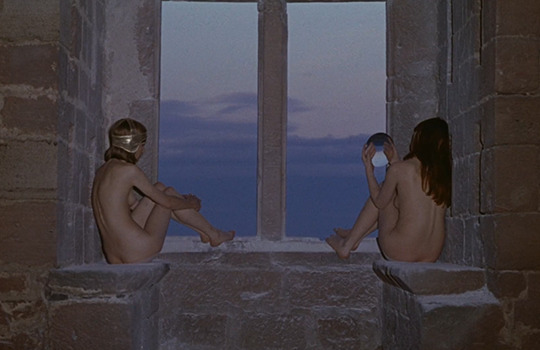
Nico sits in a large window frame that looks out upon dusky blue clouds and a purple horizon. She’s completely nude, her alabaster body turned away from us, round buttocks resting on the stone sill. She holds a glass ball, rotating it with great care, enraptured by the bits of light it refracts. She studies this transparent sphere as if it contains an entire world, one that pulls her deeper into its orbit with each rotation. She’s using it to cast a spell that she doesn’t fully comprehend, in thrall to her own powers, unconcerned about their cost. 

SIX.
Nico looks down into a mirror. On its reflective surface sits a silver ring. Though clearly tempted, she doesn’t take it. Is she deterred by a distaste for wealth? Or is it a disdain for a prize too paltry? The hawk emerges briefly at her shoulder, wings outstretched, restless. They both observe the glint of silver. When the bird flaps away, Nico looks up to follow the arc of its flight. Back in the mirror, clouds scud across the sky. The light dims several degrees. The ring remains untouched.  
SEVEN.
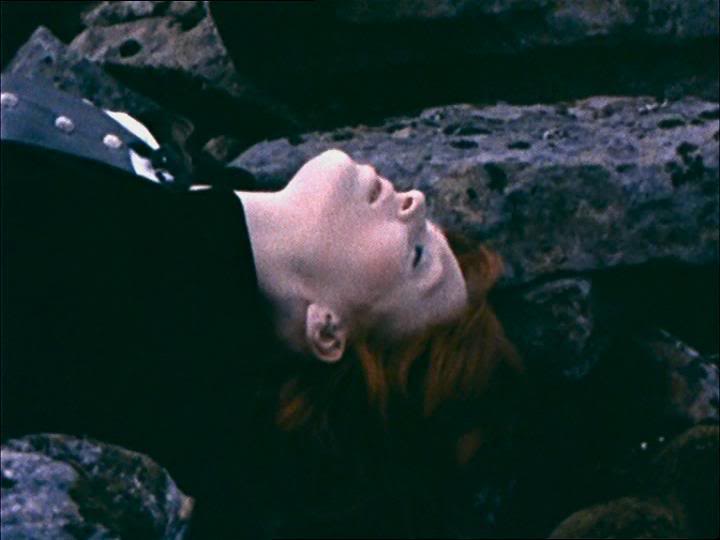
A forbidding landscape of volcanic rock. Tufts of vegetation mark the edges of a small pool of water. Nico kneels down to drink several handfuls. She’s dressed in black cape, blue blouse, long white skirt. This is the first time we’ve seen her outside the castle. It’s enticing to interpret this as an escape, an attempt to live beyond confined walls, but that’s probably too optimistic. As she sets off, it begins to rain. 

EIGHT.
Nico lies across a desolate stretch of black rocks, head thrown back, eyes shut. Her parted lips hint at both ecstasy and pain. Her body stays motionless so long that we believe she’s dead. Perhaps the water was poisoned. Just when we’re certain we’ve reached the end of the film, Nico’s eyelids flutter and she surfaces from a profound stupor. After returning to life for several indifferent seconds, Nico closes her eyes and dies once more, or at least she assumes that pose.  

NINE.
Her cape billowing behind her, Nico charts a path across an overgrown field. Stalks of purple wildflowers rise as high as her waist. Pausing to examine a particular bloom, she looks straight at us, returning our gaze, like she’s finally ready to confide. A sense of impending revelation builds. But even if she spoke, there’s no sound. 

TEN.
In a later film, Nico recites a lyric from her notebook: “Sometimes we must keep from bringing certain thoughts up to the light.” 

ELEVEN.
Nico is stretched out on a wooden dock, a river flowing languorously behind her. She’s arranged with her knees up, showing off her leather boots, but she can’t manage that position for long. Shutting her eyes, her chin starts to dip. She nods off, overtaken by slumber, tumbling deep into a dream. But aren’t we already there? Isn’t that what this is? 

TWELVE.
Nico is now out on the water, perched precariously on the edge of a wooden rowboat. She’s swaddled in her black cape, a spectral figure in danger of slipping into a realm beyond dreams. One arm is already plunged deep into the river. Her somnambulant face hovers inches above the water, but unlike Narcissus there is no reflection to admire, only a blank surface. The camera pulls back to show us the boat in the context of the current, the swirling waters slowly rotating the keel as it lists onto its side, the better to admire its polished planks and flawless structure. Its beauty fills the frame for several seconds. The person it holds inside is no longer visible. 


Jeff Jackson is the author of the novels Mira Corpora and Destroy All Monsters. He recently completed a three-part novel entitled The Disappeared. His band Julian Calendar’s debut album Speaking A Dead Language was just released on Bandcamp. 

Death Is Not the End (On the Last Bench Before Oblivion) by Mark Jay


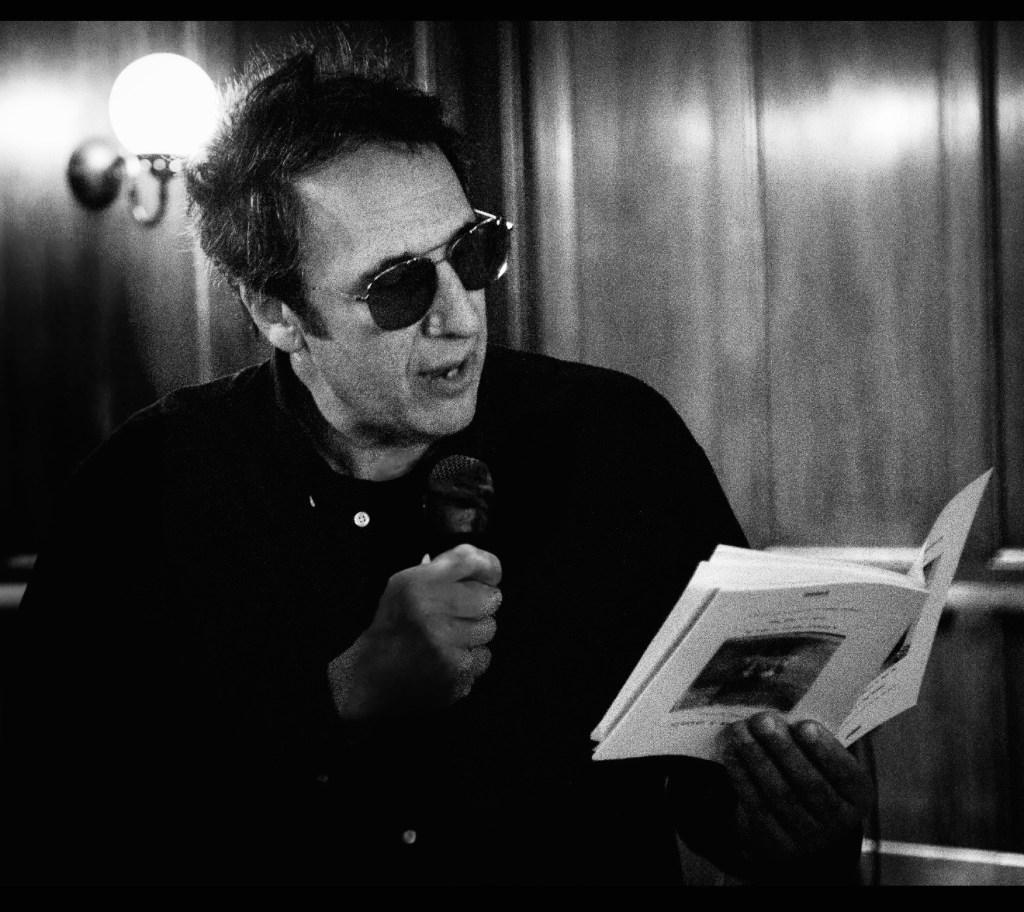
Mark Jay is a film-maker, writer and visual artist who has been causing cultural disruptions for almost half a century.  His documentary and fiction films have gained awards at international festivals and are in worldwide distribution.

Mark started SKuM ‘zine  in 1976 aged 14 after bumping into members of the Sex Pistols in Rock On record shop in Camden.  Issue #1 featured Sid Vicious’ first interview with his band The Flowers of Romance.  Mark became an early face on the UK Punk scene— getting arrested on the Pistols’ Jubilee Boat Party, designing the cartoon poster for their debut LP, and stowing- away on the Clash’s Out of Control tour.

In 1979 Mark co-produced the post-Punk poetry ‘zine All the Poets, in London and San Francisco.

Mark has recently published two Punk Poemtry volumes on the Spinners imprint available

GESHMACK X GESHEFT (Tasty X Biznez), chronicling his extra curricular escapades from 1972-78 from Skinhead Moonstomps to Dead End Career Opportunities (that never knock).

FIVE YEARS (Between the Gutter and the Galaxies), which rips into the collision of Bowie and Primal Punk—where Rebel Rebels tore through 1972–76 Britain, spawning the Hot Tramps and theYoung Dudes who would carry Bowie’s spark forward into the chaos.   

Both volumes are companions-in-spit to Mark’s forthcoming novel / Midrashic memoir of misbehaviour—THE NUDNIKS OF 1977  — to be published in 2026 by Spinners, which delves further into his back catalogue of sedition and religious disobedience.

Mark’s poemtry and prose employs an unreliable lexicon of Yinglish – a language of coughing and cursing brought over from Eastern European Shtetls in the 1880’s and stirred into the melting-pot of Cockney East London’s pie & mash emporiums.

Follow Mark’s instagram  @mark.jay6262  or schlep through his website www.markjay.tv

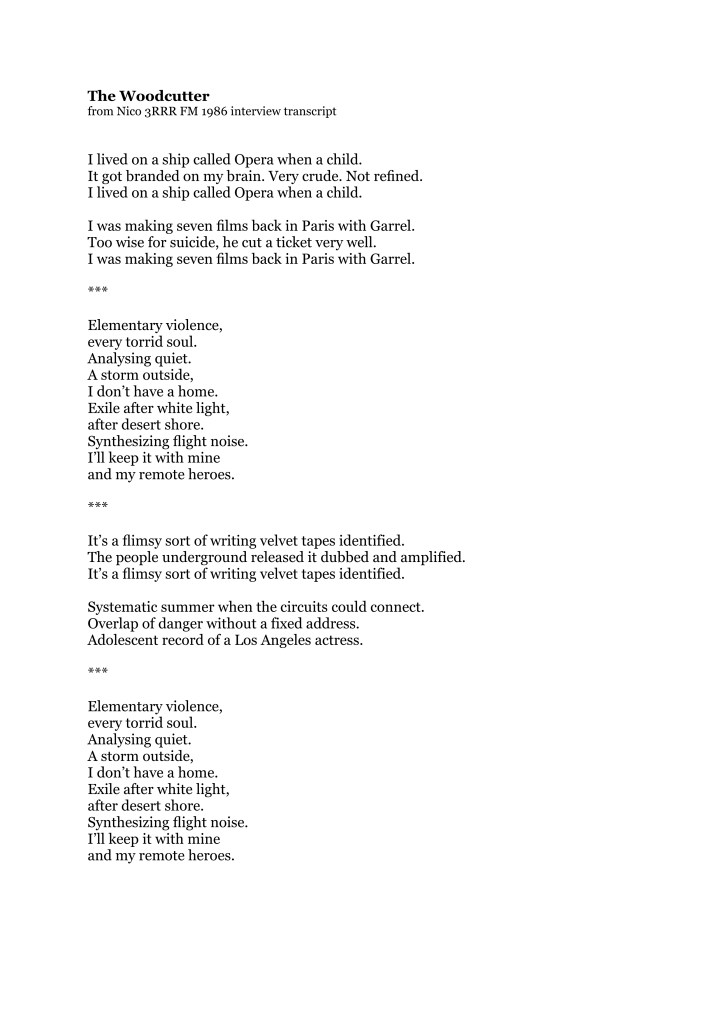
The Woodcutter by Vik Shirley

Nico (1967) by Michael Ochs.


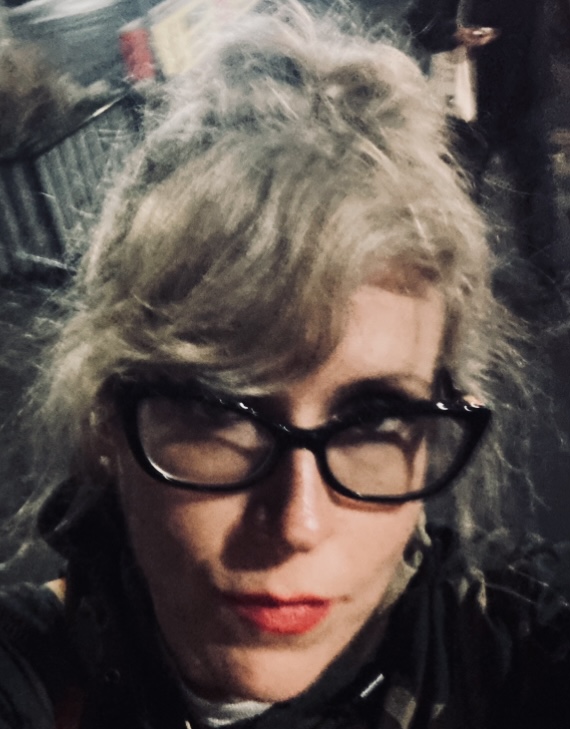
Vik Shirley is a poet and writer from Bristol living in Edinburgh . Her collections and chapbooks include: Persona Digitalia (PhotoWorks, 2025), a photo poetry pamphlet which was selected for the inaugural P5 photo poetry series, Some Deer (Broken Sleep, 2024), Strangers Wave (zimZalla, 2023) and Corpses (Sublunary Editions, 2020). Her work has appeared in Poetry LondonPN ReviewThe RialtoMagmaPerverseand 3am. She has a PhD in Dark Humour and the Surreal in Poetry from University of Birmingham. 

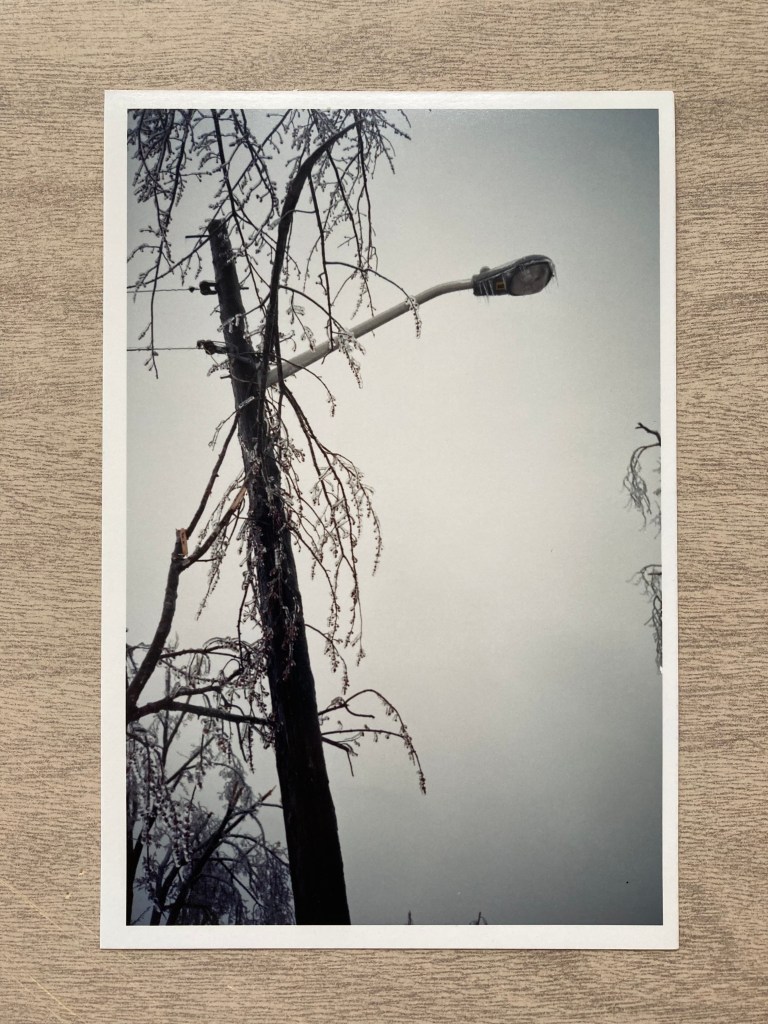
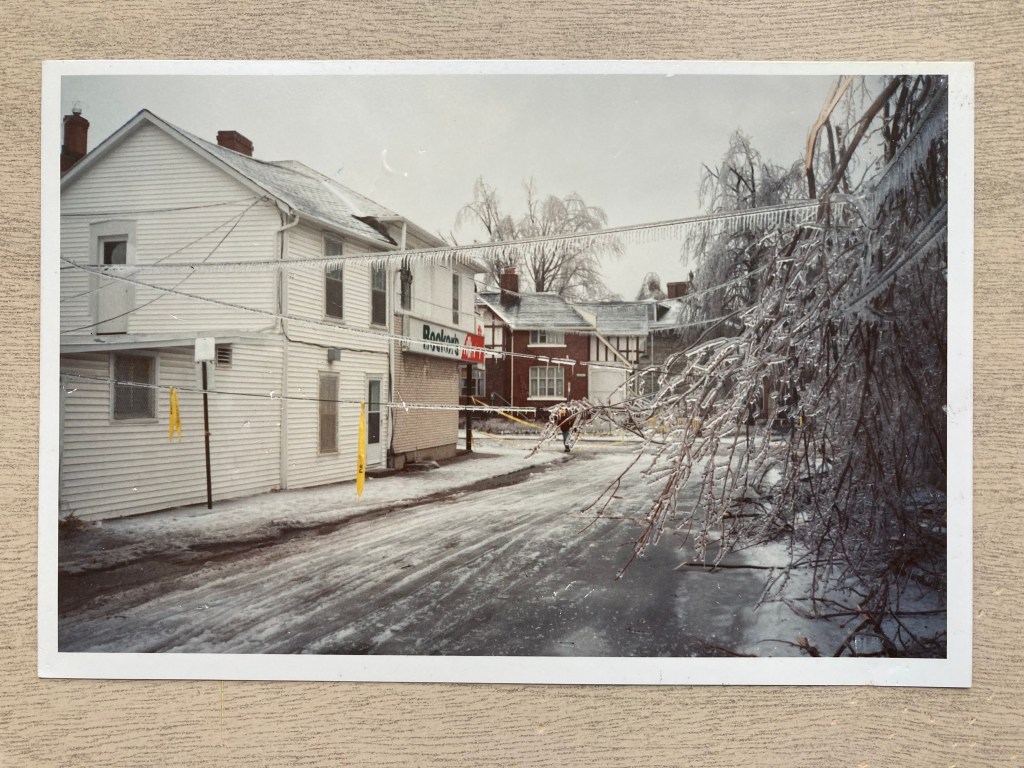
The Ice Storm by Mark Beldan

Kingston, Ontario. January 1998, Mark Beldan.

I went to art school in Kingston, Ontario.

From the name down – the king’s town – there’s a kind of colonial imposition. Rather than any big industry, it’s a city built around a series of big institutions. There’s a university, a teaching hospital, a college, a military college and a military base. There are also nine prisons. The old institutional buildings are made of local grey limestone.

I was there from 1995 to 1999. Kingston isn’t that far from Toronto or Montreal but I felt isolated from both. It’s a small city. There wasn’t much radio or internet. The only local TV station showed bingo every Saturday, endless hours of one person calling out numbers.

So culture came through friends. We’d lend each other books and music. We’d watch films together. Something would come up in conversation and I’d write down a name or a title.

Over Christmas 1997 I was visiting a friend in Toronto. She gave me a cassette she’d made. Nico’s The Marble Index on one side, a compilation of shoegazey things on the other side. She handed it over casually, maybe I’d like it.

At the start of January 1998 I listened to it driving on the 401 back to Kingston. Some of the music made me feel anxious, like it was out of sync with itself, like it was going to lead me into some sort of hideous car crash. The words of ‘Frozen Warnings’ were another caution. But the music under those words felt hopeful, coalescing into a sort of harmonious pulse as I drove across the flat grey landscape.

Frozen warnings close to mine

Close to the frozen borderline

That week it was cold in Kingston. Too cold to rain but it started raining. And then it kept raining. It was an ice storm, a rare weather phenomenon where precipitation falls as liquid but freezes on contact with the ground. Or a tree branch. Or a power line. If conditions stay cold the ice just builds up. On the third day the electricity went off around 9pm.

I was on my own, everyone else in the house had left town or crashed with friends. Even our cat had been put in a carrier and taken to a parent’s house. But I’d been too slow to get away. 

I managed to find a candle and a lighter in the kitchen and make my way upstairs. There was nothing to do so I put out the candle and got into bed. My room was on the second floor, facing onto Montreal Street. Everything was invisible in the darkness now, but there was a small churchyard with tall trees opposite. I guess the ice just got thicker and heavier and eventually each branch had a point where it couldn’t be supported. I listened to the trees falling down.

I never imagined a disaster would be like that. There were no sirens, no screams. Just things collapsing under a few centimetres of ice. The world stopped by slow processes of relentless accumulation. It was dark and somehow I fell asleep.

From without a thousand cycles

A thousand cycles to come

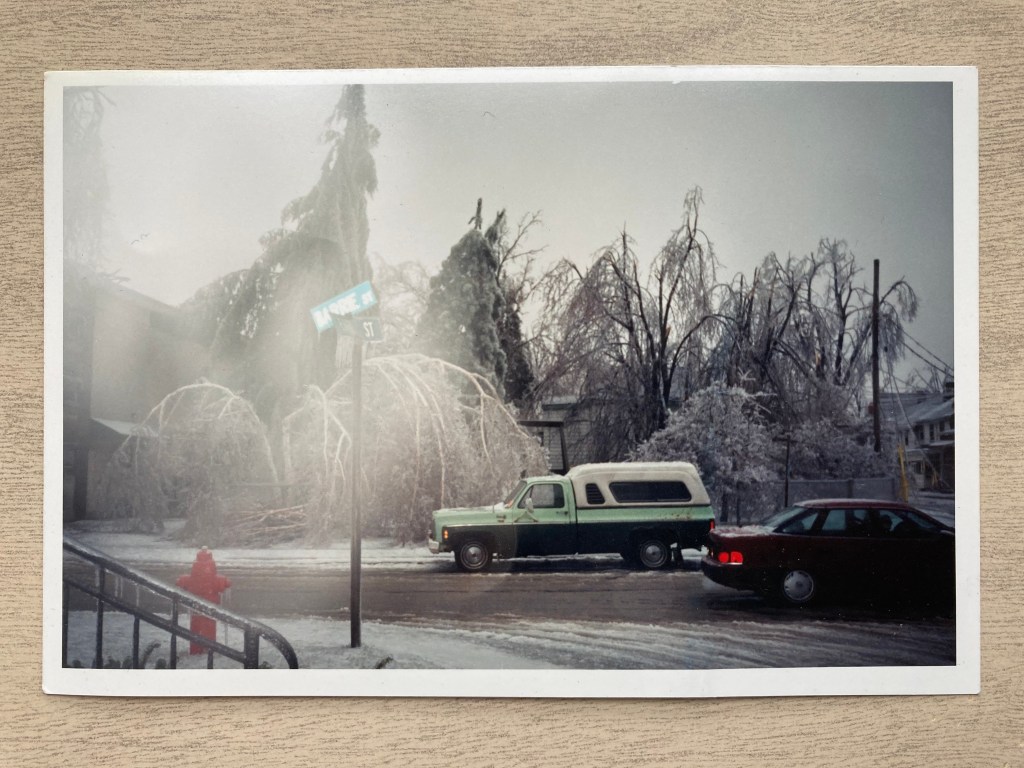
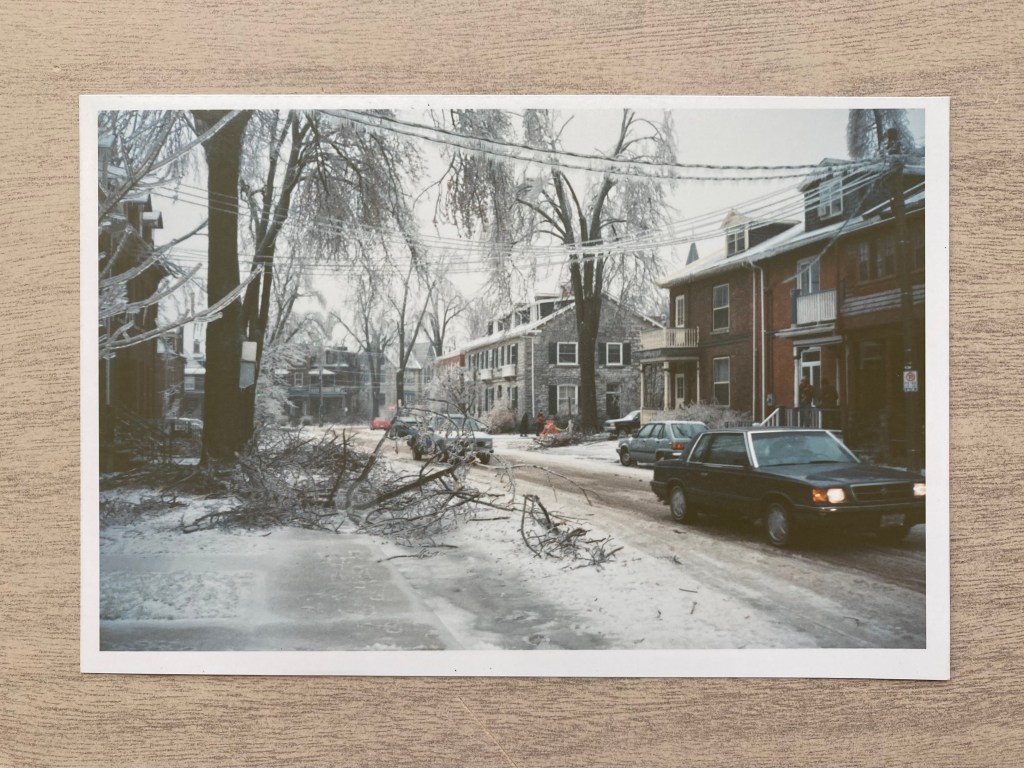
The next morning was grey but bright, the rain had stopped. The entire city was encased in ice. Completely hazardous but also beautiful. The front steps, the railing, the sidewalk all like glass. On the street the safest place to walk was down the centre of the road. Hedges crystallised, every twig encased. Birch trees arched double, their top branches touching the ground. Cars crumpled under fallen maples. I took detours to avoid the power lines draped across the road.

At the university campus there was electricity. I had some coffee and hung out at the art building for a while. A few people had stayed over on sofas in the studios. I found my camera there, and took some photos on the way home. By the time I got to the house the power was on there too. 

The house wasn’t too cold. I put on the tape of Nico in my room. As it got dark again I remember ‘Ari’s Song’, so terrifying and reassuring all at once.

Sail away, sail away, my little boy

Let the wind fill your heart with light and joy

Somehow the unknown didn’t seem that bad. For the past year I’d had a profound feeling of being stuck. Maybe I was in the wrong town. The wrong university. Some of the people on my course were my closest friends – they still are – but maybe it was the wrong course.

In a roundabout way, Nico had led me there. In school I’d seen pictures of her with Andy Warhol in books about Pop Art. I loved The Velvet Underground & Nico album instantly. I’d imagined art school as one long Exploding Plastic Inevitable. But happenings weren’t really happening in the small art department of a conservative university.

Too often our professors had that peculiarly Canadian censoriousness – that anything sexual was pornography, that weirdness and vulnerability were kinds of weakness. It’s so unhelpful when you’re 21 and trying to figure out what you want to do. I’d swing between different reactions. Sometimes I’d paint a perfunctory still-life. Other times I’d write expletives across my studio wall. Neither approach really lead anywhere. 

I’m not sure I believe in self-expression, but any sort of sustained work has an element of obsession. You set yourself a problem you can never completely solve, and the joy is in coming at it from different angles again and again. 

Can you follow me? 

Can you follow my distresses?

The winter became a normal winter. The ice melted and branches were cleared away. It snowed and that snow melted.

I started making paintings of Kingston. I walked around taking photographs of all the buildings that I found oppressive. The Plaza Hotel strip-club on Montreal Street. The Econo-Coin Laundromat where I’d have to wait for hours. The concrete bulk of the Princess Towers looming over town. The canvases were primed in black gesso, then oil paint, building up layers of cold earth-tones and sludgy greys. All the skies the colour of dirty snow.

I even started driving around the city looking for other buildings to paint. One day I kept going into the country and found myself in a strange place. Along one side of the road, what had been a pine forest, but with every tree snapped off at the base. Now a field of jagged stumps. On the other side there was a steep gravel embankment falling away. At the base of the slope where the gravel met the grass there were about a dozen coyote skeletons. The bones clean and white so not so new.

Back in the studio, I listened to The Marble Index on headphones as I painted. Music is great while working but it’s not like the painting will necessarily transcribe a mood or translate sounds into pictures. It’s just a way of tying up those verbal and rational bits of your brain that might get in the way.

In the morning of my winter

When my eyes are still asleep

Across the songs there was a weather in the lyrics – frozen and windy, with rain and snow. The same weather as Kingston. Sometimes the music almost seemed medieval, but then the strings would screech like car alternator belts on a cold morning.

I loved the album so much but for some reason I never played it for anyone there. It was a private space. I didn’t want anyone to laugh at its extremes, and I don’t think I had the language to defend it. No-one else ever coyly mentioned that they’d been listening to Nico.

Walking home one night from the art building I found our cat a few streets from the house. She was wandering around in the middle of an intersection. It was quiet. The traffic lights were just flashing because it was so late. I scooped her up to carry her home. She settled into my arms and purred.

When I finished the new paintings of Kingston I put them up in the hallway outside the studio. I was happy with them. They’d started in frustration but they’d become more open than that. Maybe they still looked like student work. But there was something there, something that relates to the paintings I make now. The simple volumes, the tonal palette, the specific and familiar buildings. 

There’s nothing more to sing about

Not now or when they carry me away in the rain

Now, all these years later, I really want to find the tape. The cover made of a folded photograph of clouds, the titles written inside. My fingerprints in oil paint on the clear cassette. But maybe it’s long gone. I did find a box with my photographs of the ice storm. Shot on colour film, a little underexposed. They miss some details but catch the disorder and the cold of that day. There was also a photo of the cat in my room, and this reminds of how that winter term of art school ended.

One morning in April, we heard a horrible yowling right outside our house. Our cat had been hit by a passing car. She was conscious and alert but unable to stand up. The next few hours were a blur of getting her inside, phone calls to vets, trying to make her comfortable, driving to one vet, then another, and then finally the tough decision to put her down. 

Afterwards we drove to the spot with the broken pine trees. We parked on the side of the road. The three of us made our way down the embankment awkwardly, carrying the cat. We found some branches to serve as a marker. We dug a hole at the edge of the gravel and buried our cat beside the coyotes.


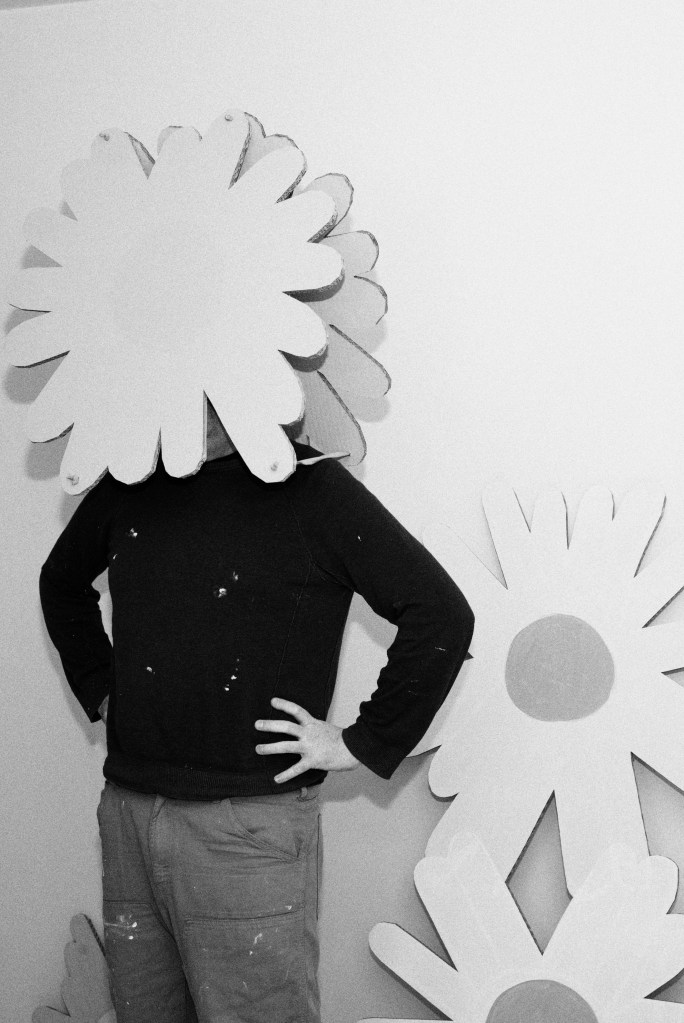
Mark Beldan is a London-based painter originally from Toronto, Canada. His work explores the strangeness of familiar places and things. Often painting small houses, in 2025 he also made a stage set of big flowers for the dance company Corali. 

Photograph taken by Jon Archdeacon.

Midnight Mandrax by Philip Best

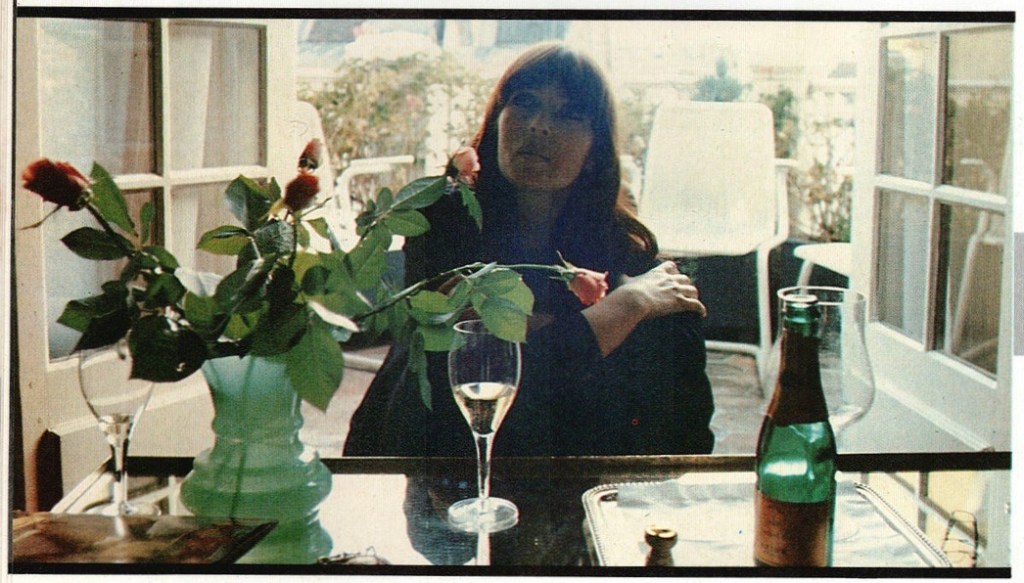
Nico. Near the end.


Philip Best’s most recent work, “Pure Evil, Pure Innocence: The Maggie Dunlap Story” is available now from Amphetamine Sulphate. “Midnight Mandrax” is an extract from “No Safety”, his forthcoming book about Nico.

Midnight Winds by Richard Cabut

Nico, New York, 1970 by Brigid Berlin.

Earlier this year, I was asked to discuss Nico for a film to accompany a version of  Femme Fatale on an album released in support of the Teenage Cancer Trust. 

I talked on camera about my friendship with Warhol silver Factory photographer Nat Finkelstein (his picture of Lou Reed features on the back sleeve of the VU and Nico LP), who I stayed with in NYC over one crazy summer in the 80s (fictionalised in my novel Looking for a Kiss). He hated most of the Factory crowd, but respected Nico. I also talked about the strongest version of her voice – a new poetry of bleakness and sorrow – found on Janitor of Lunacy from the LP Desert Shore; and the pre-historical pagan magic (definitely disorderly magic ) that filters up in Evening of Light – my favourite Nico song – soundtrack to a short 1969 film featuring a young Iggy Pop by director François De Menil.

I also asked: where do the midnight winds go? 

And I thought, and still think, about:–

Chelsea Girls on a slow/fast loop, with screen-printed souls, silver fluorescent haze, ghosts of Superstars in broken looking glass. Femme fatale in a turtleneck of shadows, lip-curl velvet, existential bravado – Nico; the kind of person you meet, in whatever way, and emerge transformed to some degree. 

Beat drops. Patti-Smith bite. Siouxsie eyeliner like a midnight scythe. Clash-cut rhythm, downtown hymn – 1976, first time her voice slid into my room – contralto made of smoke, from ash and cathedral shadows – a voice too low for the baby-girl 60s, too dark for the sunshine pop factories. A voice like the world’s last cracked prayer. 

Old Europe twilight. Disorderly Magic forever. 

Nico sings like snowstorm silk, atonal, androgynous, thick with centuries, thick with Dresden flames impossible to forget. Wearing beauty like an insult and tossing it away like a match – one that lit bonfires. Beauty denounced as casual tyranny – darkness as armour, mystery as oxygen. Feeding flames.

And style as wound, wound as song, and song that can outlive every/any man who ever tried to claim/tame/shame.

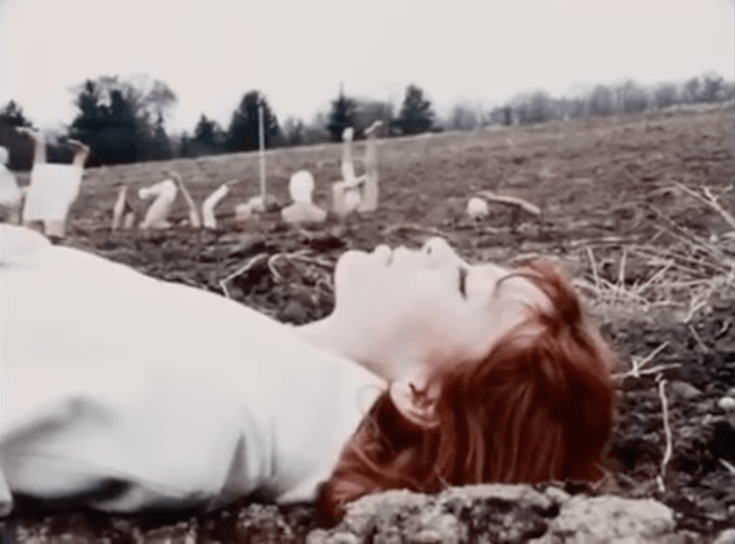
Iggy said she taught him Beaujolais and art-school tricks disguised as lullabies. He filmed her in a field for Evening of Light, a crack-between-worlds moment where mandolins ring to viols singing, and the midnight winds land as warning. Berlin-ashram meets Michigan-gutter. Music collapsing into beautiful violence. A tribute wrapped in awe, and regret, and the kind of affection and affectation, too, that can only exist between two people who might survive, for however long, their own mythologies. 

A shining light for every singer who ever needed to drop their voice below pretty, or permission; or anyone who felt that a woman doesn’t need to shine to illuminate; and who treats beauty as something breakable, burnable, something you could set down and walk away from without saying how very sorry you are; above all anyone who wants a different way to carry their own shadow.

And I am hearing dreamscapes full of dark echoes and erotic street energy. Cosmic ennui that reflects the myth back to the crowd like a funhouse mirror. In a voice that comes from somewhere deeper than the throat – somewhere prehistoric. Silence that knows too much. Whispered in harmonium breath and lullabies sharpened into razors. 
Midnight winds circle.

I am also thinking 60s/70s Avant-Garde/Berlin School harmonium drones, tape hiss, proto-industrial rich deep minimalism, European nocturne atmospheres. Cold wave pulses, cabaret limelight dimmed, war-memory spectrality. All of it transposed over the years to Ibiza, New York, Los Angeles, London et al as a poem that moves like a Super-8 reel found in a basement in Kreuzberg, or somewhere like that. Yes, begin with a hiss. Analog snow falling across a broken tape. A low oscillator trembling. A train leaving some empty cold station at 3 a.m. – slow, metallic. 

Then: contralto voice carved from coal-dust. The sound of a city learning to breathe after the bombs stopped but before the memory ever could.

Pulses flicker – messages to forgotten futures. Where the streets are half dream, half gaping wound, and art is the only currency. Reverberation as survival strategy. 

Christa Päffgen, with Factory scars under her coat, Warhol apparitions, spirits and spooks deep in her pockets, and a harmonium strapped to her soul as life and death-support machine. Dressed all in black because colour is hope, and hope is sin. 

This is not pop. This is architecture. Built from absence, steel, and memory, perhaps. Nico steps into the drone. War Memory as Original Drone. Repetition becomes revelation. Revelation as trance. Grammar of ruins turns into ritual.

I thought, and am thinking, about slick pavements, streetlamps rattling and failing like old ballroom pianos struggling to project their tone. In the silence between footsteps you can hear the rumour that darkness is not the absence of light but the cradle of it – and that some voices do not break – they remain unbroken, untranslated forever.

Where do the midnight winds go? To the end of time, of course, honey, to the end of time. 


Richard Cabut is a London-based author, whose CV includes the sister books, the popular work of modern literature/poetry Disorderly Magic and Other Disturbances  – ‘subterranean scenes, picturesque ruins, neon glowing, Chelsea Girls, the damned, the demimonde, the elemental, being on the edge of being pinned down by our ghosts’ – and Ripped Backsides (both Far West Press),  a dreamlike, dislocated and fragmentary Situationist drift through the noir cities. Also, the Freudian 80s cult novel Looking for a Kiss (PC-Press), which has been adapted for screen. And, Punk is Dead: Modernity Killed Every Night (Zer0 Books).

He’s also a journalist – ‘NME, BBC, anarchy’ – a former punk musician, a cultural theorist, playwright and long-time chronicler of the underground. richardcabut.com

St. Nico – An Invocation by Jarrod Campbell 

Nico in Exploding Plastic Inevitable (1967).

Bless us, St. Nico, we who need a mirror when no one else on earth understands. Save us, your flock, from threats of dreaded normalcy. Especially faggots like me – reared in the deep, rural south, suffering through adolescence starved for a savior anti-Madonna fierce enough to hold her own. We once were lost but your evening of light helped us see. 

Give us strength these days to confront unforgotten failures on our own. Your mercy doesn’t wash away the sins but instead lends credence and visibility to our disgrace. Through no intention of your own but because of who you were then, are now and will forever be, you are canonized as a patron saint to jilted lovers, downtrodden vagabonds, misunderstood, unwitting geniuses, the woman underestimated by men of art and industry. You remain many things for many people, yes, again, even an impetuous, lowly faggot like me, and so many more who find themselves on the other side of popular prayer. 

Never one to be eclipsed or upstaged by so many men with half your divinity and faculties, you showed us a path to perpetual salvation. And though the road leading to the lawns of dawn be paved with the best intentions that trick the feet with false feelings of comfort and success, your gospel grants the reassuring guidance necessary to leave overdrawn caresses as we continue our pilgrimage through this travesty called life.

And through thorough examination of your documented life journey, we find that you had faults of your own, all too common prejudices of your day and age. You, too were human. Too late to forgive and too grievous to forget. We address your own sins to show how failures of flesh and mind exist even in the holiest of people. Base level skin and bone shells are capable of only so much. With this recognition we more easily see our own faults and become grateful for what life we have left to correct our mistakes and right our wrongs. We add a prayer here for you, St. Nico, that you have or will realize and reckon with these trespasses. 

Your art, Elysian. Your influence, limited but crucial for us who know…we, the innocent and vain. We’ve got the gold and with this transmutation we now have a way to wrap our troubles in dreams. May our holy headphones make us mediums for your message of insouciant misery, your promises of ways around instead of directly through adversity with little confrontation. 

We close this prayer to thee, Teutonic saint of uncompromising individuality, with waves of gratitude lapping at your detached, disinterested and icy shore. You come into our lives when we need you most. You offer salvation in the form of an unfeeling monotone that warms when we recognize a shared__________________. You imbue us with the power to suffer, resilient and beautiful, any hardship the world throws our way. You point us in the truest direction, we see and go wherever your gaunt fingers command. All this and much more which we will never be truly worthy. You fell on accident and hemorrhaged for our sins. We know this and we hate ourselves for this interpretation. Solace comes when we listen to your songs. Forgiveness comes when we sing along as if these hymns have the power to restore. Transcendence comes when your droning voice overshadows our own and lifts us up with you in heaven before sending us crashing back down to reconvene our suffering here on earth. But highly blessed, strengthened and remade by your redeeming grace. 

And the people said: My Heart Is Empty


Jarrod Campbell is a writer living in the northern Virginia suburbs of Washington DC. His fiction, essays, poetry, non-fiction and reviews have appeared in print and online with Heavy Feather Review, Northwest Review, Boner World (Berlin), Modern Literature, and more. A collection of short stories, The Reason I’m Here, (Stalking Horse Press, June 2023) was named an anticipated LGBTQIA+ read by Lambda Literary the month of its release.

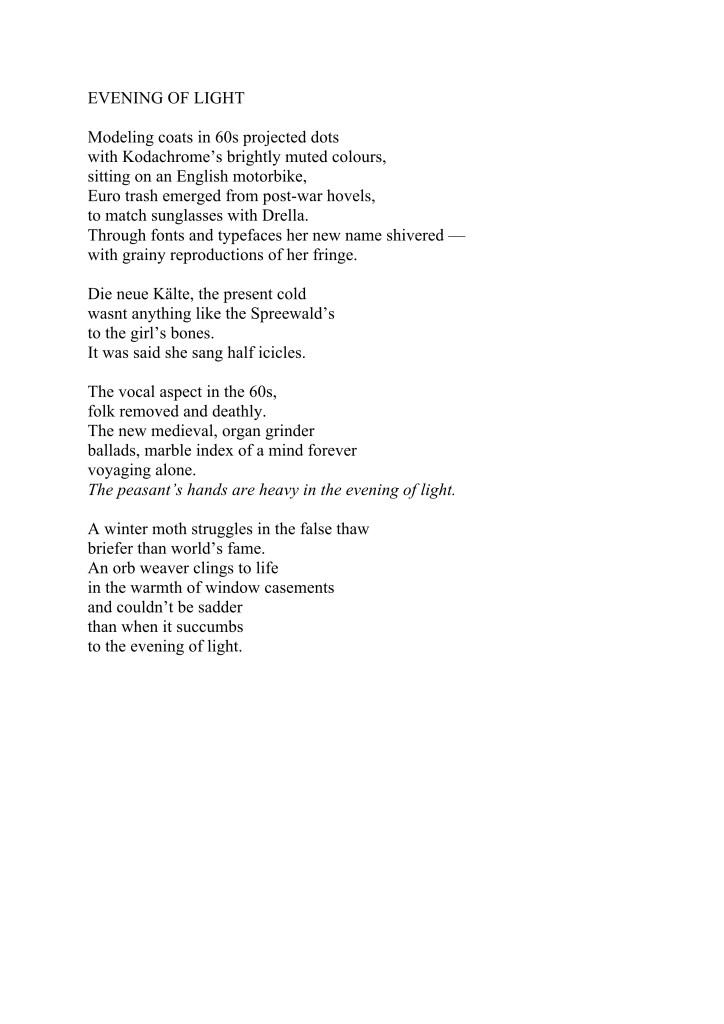
EVENING OF LIGHT by Jesse Hilson

Evening of Light music video (1969).


Jesse Hilson is a writer and artist living in the Catskills in New York State. His work has been published in venues like Hobart, X-R-A-Y, Maudlin House, Apocalypse Confidential, Expat Press, and others. He has published two novels, Blood Trip and The Tattletales; a short story collection, The Calendar Factory; and a poetry collection, Handcuffing the Venus De Milo. He can be found on Instagram at @platelet60 and he runs a free Substack newsletter called Chlorophyll & Hemoglobin.

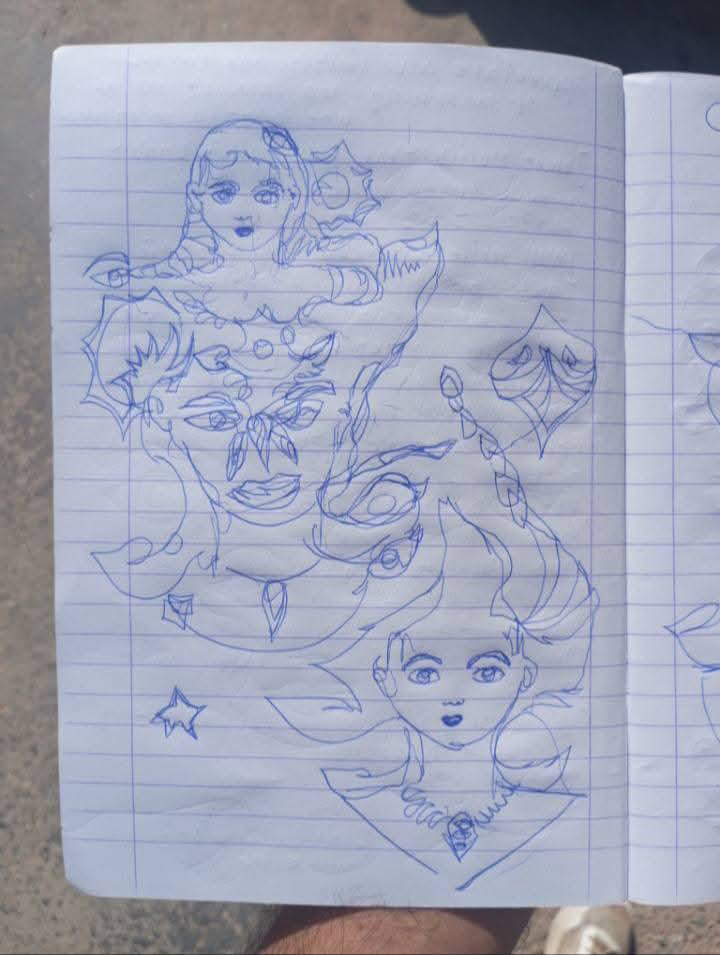
Shirt with Stripes by Charalampos Tzanakis 


Charalampos Tzanakis is an artist/writer from Greece. His first book is called All Out in the Open.

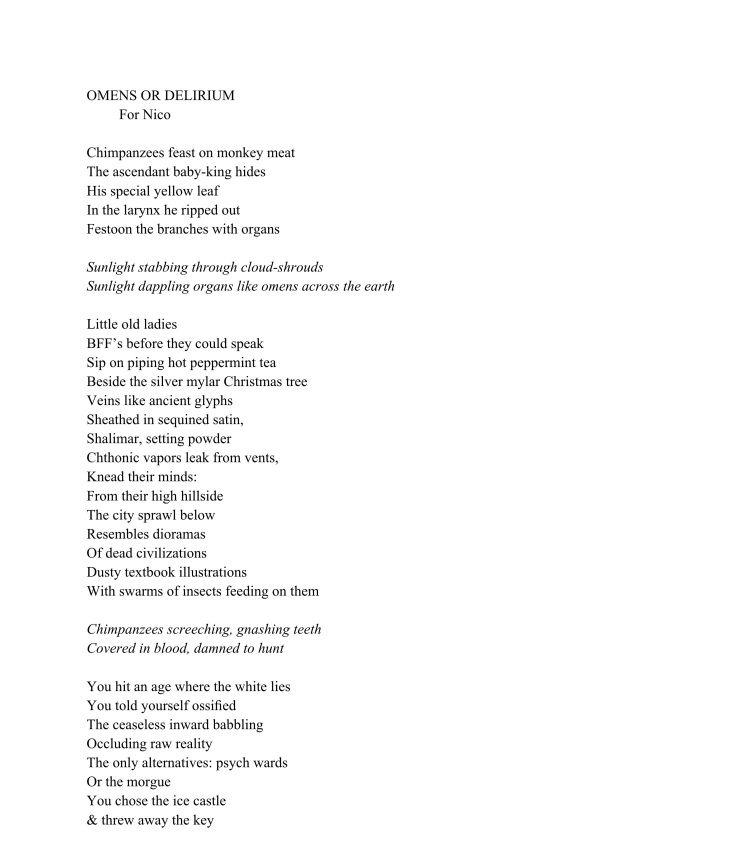
OMENS OR DELIRIUM by Logan Berry

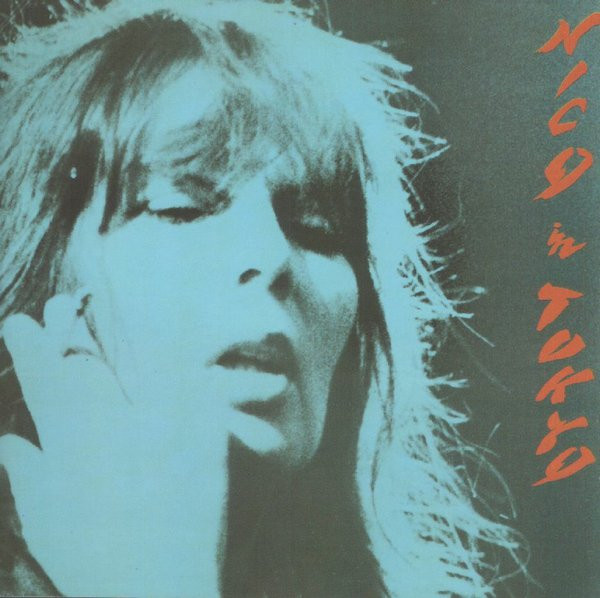
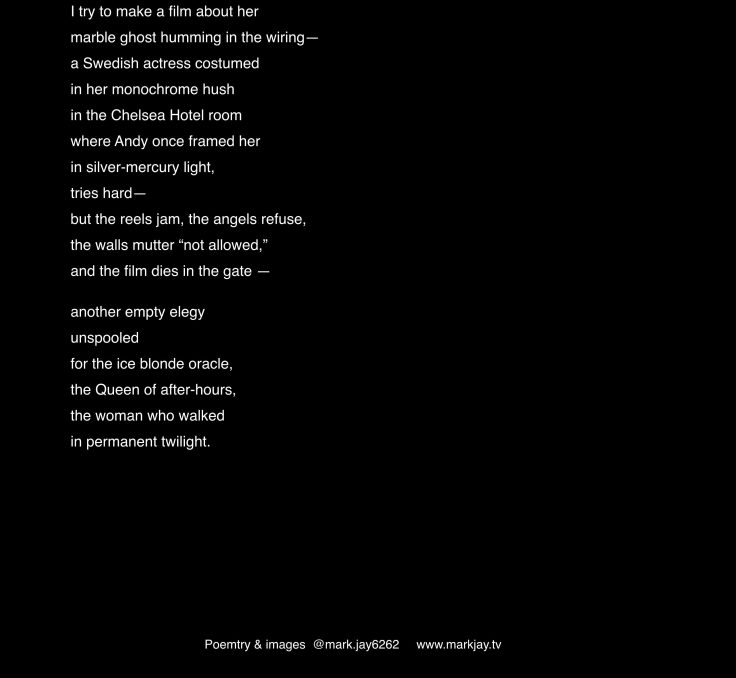
Nico in Tokyo album cover.


Logan Berry is the author of several books, including Doom is the House Without a Door and Ultratheatre: Volume 1.

When John Waters Met Nico by Graham Russell

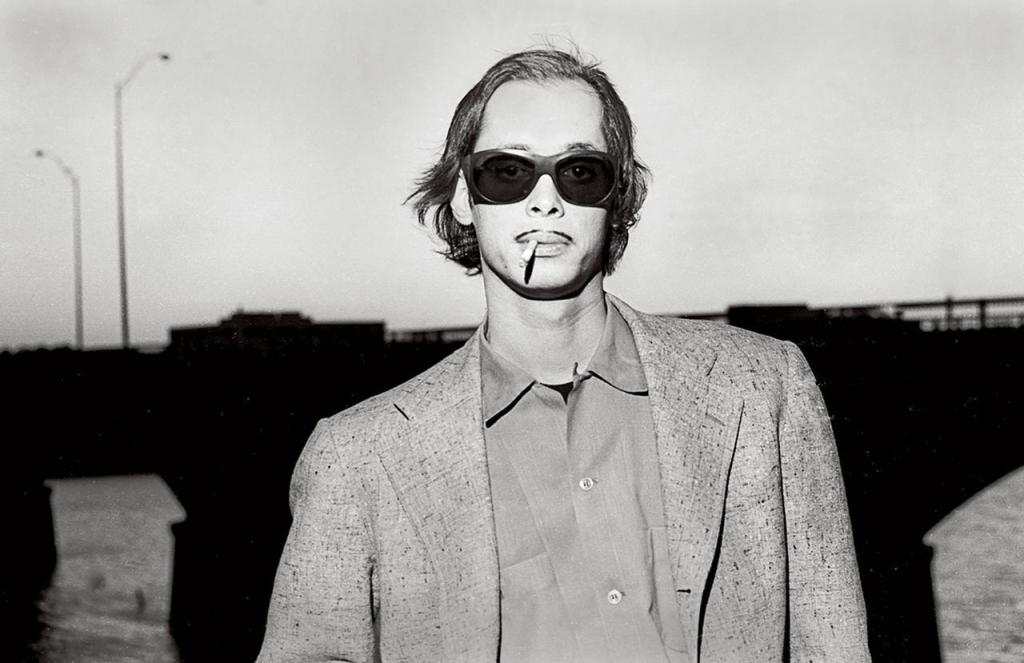
John Waters by Nicolas Russell, Austin, Texas, January 1976.

For so many of us malcontents, the riotous 1981 book Shock Value: A Tasteful Book about Bad Taste by cult filmmaker extraordinaire John Waters represents a sacred text. (I would have first bought it in the late 1980s as a university student, and it’s been a profound cultural touchstone ever since). In the chapter entitled “Sort-of-famous” the peoples’ pervert writes “I know you’re supposed to name-drop in these kinds of books, so here goes: People I Always Wanted to Meet, Did, and Wasn’t Disappointed …” and proceeds to list the likes of Andy Warhol, David Lynch, William S Burroughs and Douglas Sirk. But most tantalizingly for me, he recalls encountering …

“… Nico, my favourite singer, who was so out of it when I met her that she asked, “Have I ever been here before?” (I had to tell her I really had no idea).”

I yearned to know more about this historic meeting between cinema’s Sleaze King and the heroin-ravaged Marlene Dietrich of punk. Flash-forward to December 2010: I interviewed Waters for the sadly long-defunct art and culture magazine Nude in December 2010 when he was in London promoting his book Role Models, so I finally had the opportunity to get him to elaborate on his encounter with Nico. 


So here it is: when John Waters Met Nico…

Graham Russell: Tell me about the time you met Nico.

John Waters: Nico … I met her when she played in Baltimore. Well, (before that) I saw her play with The Velvet Underground at The Dom on St Marks Place (in New York) with The Exploding Plastic Inevitable. I have the poster still. But I met her much later when she had her solo career, which I loved. She was a total heroin addict. Did you ever read that book The End(The 1992 book is a jaundiced and not exactly objective account by her former keyboardist James Young). It’s so hilarious. It was that – although it wasn’t that, that was later when she was touring England. She played at this disco, and I went. And people went, but not a lot, it wasn’t full. And she was heavy and dressed all in black with reddish dark hair, and she did her (he makes guttural moaning noise). Afterwards I said, “It’s nice to meet you, I wish you’d play at my funeral”, and she said (mimics doom-laden Germanic voice), “When are you going to die?” I told her, “You should have played at The Peoples Temple; you would’ve been great when everyone was killing themselves!” Then she said, “Where can I get some heroin?” I said, “I don’t know.” I don’t take heroin, so I don’t know. But even if I did, I wasn’t copping for Nico!

“But that was basically it. But I’ll always remember her, and I love Nico. I remember when she died, when she fell off the bicycle (in 1988). Every summer my friend Dennis and I, we play Nico music on the day she died (18 July). I saw that documentary Nico-Icon (Susanne Ofteringer, 1995), which was great. It’s a shame: she was mad about being pretty! She was sick of being pretty, being a model. And I remember her when she was in La Dolce Vita (1960), even before. Nico … great singer; and even The Velvet Underground hated having her. And her music can really get on your nerves. You have to be in the mood. Sometimes it gets on my nerves. You have to be in the mood to listen to it. To put on a whole day of Nico can be … my favourite song of Nico ever, and I only have it on a tape that someone made, it’s a bootleg. Did you ever hear her sing “New York, New York”? It’s great! I wish she’d done a whole album of show tunes! Like “Hello Dolly” or “The Sound of Music”! (Mimics Nico singing “Hello Dolly”).


Like the Shangri-Las song, Graham Russell is good-bad, but not evil. He’s a trash culture obsessive, occasional DJ (Cockabilly – London’s first and to date, only gay rockabilly night), and promoter of the Lobotomy Room film club (devoted to Bad Movies for Bad People) at Fontaine’s bar in Dalston. As a sporadic freelance journalist, over the years he’s contributed to everything from punk zines (MAXIMUMROCKNROLL, Flipside, Razorcake) to The Guardian and Interview magazine and interviewed the likes of John Waters, Marianne Faithfull, Poison Ivy Rorschach, Lydia Lunch, Henry Rollins and Jayne County.

Nico Restored by Nicholas Rombes

A young Nico in Berlin, photographed by Herbert Tobias.

Nico Restored

I.
Because Nico could not foresee the danger ahead.
She was not careful, she was a child.
Above her Hell’s Sun
moved blackly—How far away? Shall I touch it?–
Like some shiny wet ink spot, or a stuck wet leaf.

II.
Before her journey back Nico slept and slept and
dreams: back then it was all right.
Back then it was a wall of black crickets and her baby
sitter’s ventriloquil voice.
As she slept It watched over her, and
loved her in Its brief, iron-lung heart.
It did not want to let her go, but knew, but knew.
It did not think of itself as lost, it did not think of itself at all.
It just was. It just wanted.

III.
Nico did not think of herself as lost
she did not think of herself at all.
She just was. She just wanted.
Christa wanted.
It has changed, she thinks.
Nico’s Nico. Come for Nico. She just
wanted the image of her lost face.
Herself. For a moment Nico could not imagine Nico, nor recall
the green of green, the hum of wires,
the flash of fires, the sound of sound
had come apart

IV.
It has changed.
She was nowhere.
Her heart. Inside her.
Christa wanted gravity. The thing that was not flat
watched her from behind a red cliff.
When she laid her white hand across her red heart Its mouth opened.
Her ears could not catch her own dripping sound.
She said her name to hear it, the sound
When It moved Its knotted head It pushed Itself out of gravity.

V.
Nico says: When I stand on the roof of the opera it’s amazing I don’t fly off.
Nico sits atop a red cliff, atop an expanse of red sand.
As red as far as the eye can see.
She is red, too, from the sand, mixing with her sweat.
She takes off her sweater, and
tosses it aside.
She takes off her shoes, and lies back.
She touches her body. It has changed. Her body is red.
Afterwards she leans forward to shake her hair
until grains of sand fall out like thunder.

VI.
Nico marvels that although she has not eaten she is not hungry.
It has fed her food while she slept, careful to remove each and every
crumb from her face with tweezers. It has spent an eternity
using its tweezers to move
mountains, grain by grain.
It does not want Nico to escape, but It does not know how to stop her.
The thing it does best is observe. It does not know how to stop things.
Back then it was all right.

VII.
Back then, Nico, thinks, it was all right.
It finally comes for Nico while she sleeps, curled in the sand.
It cleans her face, grain by grain, not even touching her skin.
It spread its wings over her to measure her size.
It considers its sack full of potions.
It worries she is dead and leans close in to her face.
It loves her so gently.
Take me back to back then.

VIII.
The marble index of a mind forever.
Christa wanted.
To free her mind, because it was caught.
I wouldn’t want a different variety, thinks Nico.

Nico thinks in shapes
more and more.
Round and Square.
Truth or Dare

are not shapes.

Not sound.
Not gravity.
The Absolute Zero.

Nico’s mind is a shape that comes
to free her mind, because it was caught
with Its claws
and retraces her footprints
she just wanted to free her mind, because it was caught
with Its claws
retraces her footprints
squares and triangles, circles and cones.

Her own shape, the pattern of sunlight
just wanted to free her mind, because it was caught
with Its red mountain claws and triangular imagination,
circles and cones.

Fright and dread, fear and bones, Wehrmacht dreams.
Her own
but a King.

Come for Nico.
But a King.
Come for Nico.

Her very own body in the night,
beneath the Ibiza sheets, the shape her hands make.
The real Nico, more real than real, her old self

a Sleeping Beauty for some fierce Prince
but It is not a Prince.
Shape, the pattern of moonlight upon
more and more, the hospital floor.
Her very own body in the night
beneath the light, the shape the world makes.

The real Nico, more Nico than Nico, her old self
a Sleeping Beauty for some fierce Prince.

But It is not a Prince.
Come for Nico, no fangy King
beneath the sheets
the shape her hands make.

The real Nico, more real than real, her old self
a Sleeping Beauty for some fierce Prince.

She just wanted to free her mind to be
the hunting thing with claws of shade.
Where It went, Nico wonders, and retraces her footprints.
Sleeping and murder.
Squares and triangles.
Fright and dread, fear and bones.
Her own melodic shape, the pattern of moonlight upon
the institutional floor. Her very own body in the night
beneath the white cold sheets, the red triangulated claws
of Greek thought.

The real Nico, more real than real, her old self
but this thing–this It–is not a Prince.
Rather a King.
Come for Nico.

Sleeping Beauty for some fierce Prince.
But this thing—this It—is not a Prince
rather a Devil.
come for Nico.

She just wanted to free her mind, because it was
a trick and retraces her footprints
squares and triangles, circles and cones.
She just was. She just wanted.
Christa wanted.

Her own shape, the pattern of moonlight upon
the hospital floor. Her very own Nico in the night,
beneath the sheets
she just wanted to free her mind, because It was caught
with Its Trick
and retraces her footprints, Squares and Triangles
circles and cones
fright and dread fear and bones.
Her own shape
Red-sanded body and mountain side
her cold linoleum floor.
Her very own body in the night
come for Nico.

IX
Back then it was all right.
Take me back.

Come for Nico.


Nicholas Rombes is author of the novels The Absolution of Roberto Acestes Laing (Two Dollar Radio), The Rachel Condition (CLASH Books), and Lisa 2, v 2.0 (Calamari Archives). He co-edits TIMECODES (Bloomsbury), a film book series dedicated to slow criticism and is author of 10/40/70 (Zer0 Books). He’s an English prof. in Detroit, Michigan.

Boy or Girl by James Nulick

Nico in his The Velvet Underground & Nico shirt.

My name is Nico. It has always been Nico. It felt like a good name when I tried it on. My mother named me after a singer most people my age don’t even know. On most days it sounds like a boy’s name, though on some days, usually a Sunday morning, it sounds like a girl’s name, but I’m definitely not a girl. My name sounding like a girl’s name doesn’t bother me anymore. It used to, like when I was a kid, hey faggot, how come you got a girl’s name, but not anymore. There aren’t very many Nicos, maybe a barber once in one of those ghetto barbershops where everyone is tripping over themselves to look cool, a skin fade kid with a Wahl in one hand and a girl’s digits in the other, grey sweatpants and black Vans and a drooping eyelid that’s somehow endearing, I’m stealing glances of him while in the chair waiting for the next call, hoping he’s the one, the double quicksilver echoing my reflection in a thousand shop windows, I’ll be your mirror, and when you have an unusual name like mine you always pay attention to others you share it with, like when you notice all the cars just like your car, my mother’s favorite song, Sunday morning, a song father approved of, when my days were laid out for me, my life simple because everything was preplanned, I didn’t have to think of what to wear, what to say, deciding if I was a boy or a girl, the fate of the nation trapped in the web of my lattice fingers. I pull on my threadbare brown corduroy pants and a green cardigan mother found at Goodwill for 12.99, so today I will be a boy. 


James Nulick is the author of several highly acclaimed novels including Plastic SoulThe Moon Down to Earth, and Valencia. He is working on a new novel. 

consecrated to the gods by Misha Honcharenko


Misha Honcharenko is a Ukrainian writer based in Todmorden, West Yorkshire. Their debut novel, Trap Unfolds Me Greedily, was published by Sissy Anarchy in 2024, following their first poetry collection, Skin of Nocturnal Apple (Pilot Press, 2023). Their work has been featured in Vogue Ukraine, Erotic Review, i-D, AnOther, Tank, Worms, Manchester Review, and minor literature[s].

In the Dark by Nate Lippens

Still from the film Athanor (1972) by Philippe Garrel

In the dark room at night, the walls enameled black, so dawn arrives as a violation, she smokes. She smokes without conviction, almost without need, but then deeply as if to prove something to herself. Flicks the butt into the grate of the ruined fireplace, heaped with little cartons, each cigarette emptied and smoked, each added to a mountain. A plate of ashes. She makes sure, twice, that her cigarette is extinguished before she does this. Philippe scolded her. Ari found one smoldering and rubbed it out on the floor. How could Philippe be angry? When they moved from the Montparnasse Hotel into this apartment, he gutted the place, tore out the twentieth century and some of the nineteenth too. Gone: gas, electricity, hot water, heater, lighting, furniture, carpets. A penitentiary but there are no locks. 

She yearns to go back to New York though nothing good comes to or from there. The not-good is familiar. She needs that now with her mother dead. Can still smell the air’s heavy scent in the room where she knelt before the empty bed and cried. She hadn’t wanted it to be like that and knew her aunt Helma blamed her for not visiting the last two years of her mother’s life. It had always been hard, then became impossible. The immobility she feels now, lying in bed undead, waiting for light to come in the room and peepshow the mess. Philippe shifts beside her, groans. They are covered by his overcoat which doubles as mattress and bedding, sleeping partly on it, partly on the floor, the faint smell of piss. Ari makes sounds across the room, asleep or awake, she can’t tell. She’s never alone lately but never accompanied either. Everything has fallen to repetition. They score, they get high, they have no money, no need for food after they’ve fed, only to make certain the boy eats, he must eat. Then they go to museums or wander the docks, up and down the same streets of Paris. Was it last week or the one before—prior has no hold here, all is prior but there is no history, only the past—that she saw someone, a London person from New York, who startled at her appearance and said what did you do to your hair. The blonde dyed crimson, bluntly cut. You like it, she responded, nearly leering, surfacing from the not-slumber, suddenly awake on the street in the face of that collaged ghoul made of the spare parts, all mean, all pushing, all saying her songs weren’t good, she needs a manager, she needs to be blonde again, she needs better clothes, not these ugly robes and caftans Philippe sewed himself for the film. The film! They hate it, just the idea of it. A woman and a man and a child in the desert, shot across three—Sinai, Death Valley, and Iceland. All blend together to her. She knew they weren’t one. Each had its own qualities and peculiarities, but like people, places were mostly the same. You met one or two and you’d met all of them. The man on the street, upset or disappointed by her appearance, had scurried off, back to his little life, perhaps some lunch in a café. The thought made her feel ill. 

She would get back to New York and show them, she would book some gigs. She practices the harmonium every day now and she has new songs. The best she’s done, she’s sure, or thinks she’s sure, but can already see the faces of Danny and Paul and others who will tell her what is wrong with them, not knowing they are about her mother, Jim, the deserts, Brian’s death. Misadventure by accidental drowning, the coroner’s report stated. She knows no accidents and no misadventures. Dark spirits, yes. A man goes for a swim and never surfaces as himself again. A woman in a bar, her face cut, a fury and a glass thrown and stitches. The voices of New York, seeing Lou in a rehearsal space, having to flee, first to New Jersey, then the country. Shows canceled. Back to this room. Can she ever escape this room. Will she look over and find Ari is now a man and Philippe is dead or nearly, and they will still get up and find dope and not eat and wander the streets and walk the docks and pretend to see new things, pretend they are attuned to things other people don’t register. And the people don’t but they do see two junkies and a child and worry for the child and maybe they will do something about it or call someone to do something about it. Maybe they will make a problem, make her become a problem. Then what, when someone appears to ask about the child and she doesn’t even have blonde charm now, or good skin. Cheekbones still but hollow not haughty. This is why Ari must be a man. It is better for twenty years to pass this morning, the hour before dawn or is it. The black night and room seem to have changed a bit, added a bit. Not the usual things she sees on these mornings. Not the nights Philippe taught her to liquefy and use the needle, not broth and Coca-Colas in the palace, not the circle of fire in the desert and the boy unable to cross it to his father, not all the words she wrote only moments before she spoke them to the camera, the way time slid in and out of view in those long shots, hours stretching, and one day no longer waiting for Philippe to yell cut, just riding, swaying slightly on the horse’s back, the sound dropped out, and the sky grown dark but never like the room or the nights here. A vast star-punched ongoingness. Her mother’s bed in the sand, Ari the boy hungry always hungry, Pierre Clémenti naked and ranting lines, a pleasant body, good cock, eyes like Brian’s, Jim passing in his car not recognizing her, a box of books beside him, then the news of his death later that night, the long line, the drone she had found she could follow and it would vary, it would create the sound she craved, defeat. No one else heard it. They heard failure. Defeat is not failure. It isn’t surrender. There is no grace or wisdom or beauty in it. Defeat holds itself. A friend at last. She wants another cigarette. She can make out the outline of the pack. Dawn but not yet light. One more cigarette before the day again. 


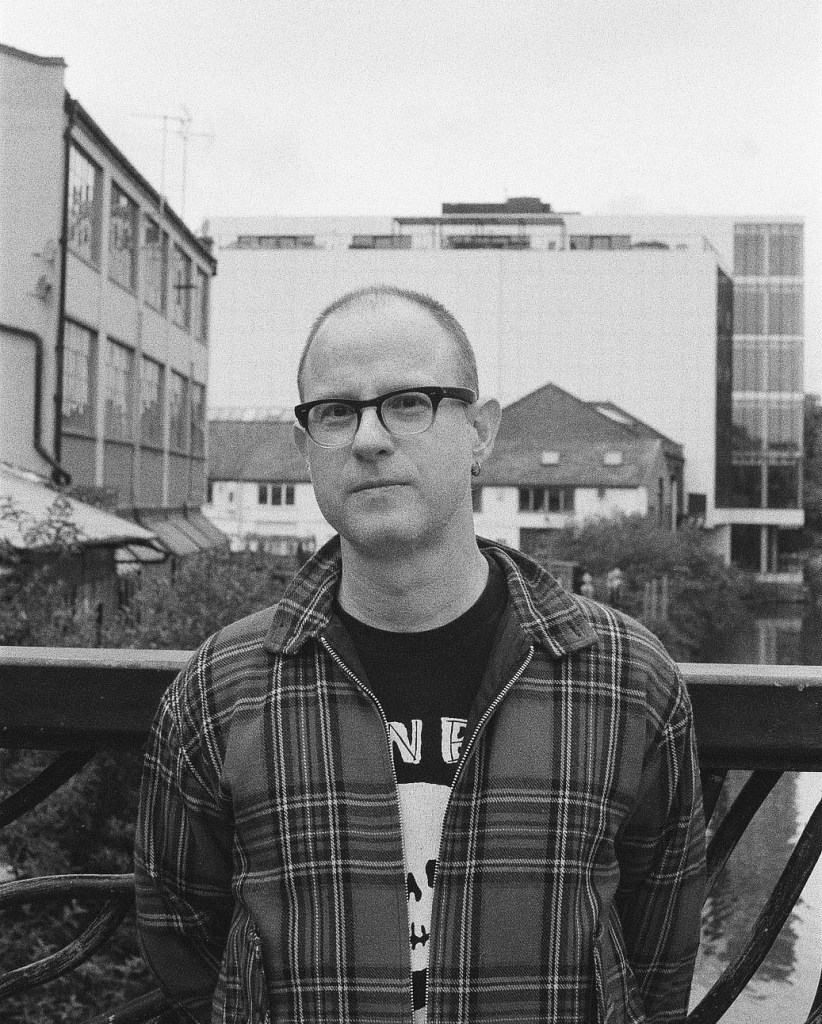
Nate Lippens is the author of My Dead BookRipcord, and two forthcoming novels, Box Office Poison, co-written with Matthew Kinlin, and Bastards

Author photo from Carolyne Loreé Teston.

Nico in The Closet (1966) by Graham Russell

Nico and Randy Bourscheidt in The Closet (1966)

The Closet (1966) was Nico’s first film with cadaverous Pop Art visionary Andy Warhol and thus represents her cinematic unveiling as a Warhol Superstar. It would be a fruitful relationship. As the Factory’s inscrutable Garbo / Dietrich equivalent she would star in several more Warhol films (most famously Chelsea Girls (1966)) while also featuring as chanteuse for Warhol’s proto-punk “house band” The Velvet Underground.

The  Closet’s “plot” is absurdist and minimal: a couple living in a closet kill the time (they make small talk, split a sandwich, share a cigarette, kvetch about their cramped surroundings) and contemplate leaving but never do.

For the first few moments the camera is focused on the exterior of the shut closet door in grainy black and white as we hear only their voices (audible but muffled; in fact the sound remains muffled for the rest of the film, poor sound quality being a stylistic trademark of Warhol’s films at the time). Creeping horror that the entire 66-minute film will stay like this is averted when the door belatedly does open and we are finally permitted to see Nico and leading man Randy Bourscheidt (a cute, preppy art student-type) seated inside the closet surrounded by hangers, ties, clothes, etc. While the couple talk or sit in silence, Warhol’s camera either sits totally stationary or prowls restlessly and randomly.

The film is unscripted: instead, we get an improvised, wandering conversation between the duo who have obviously been instructed to ad-lib for the 66-minute duration. Most Warhol Superstars were amphetamine-fuelled, garrulous motormouths and exhibitionists; Nico and Bourscheidt are atypically more reticent. Both seem shy and hesitant, and their conversation is often stilted but characterized by a genuine sweetness on both parts. Some viewers have deciphered the hint of a physical attraction between them which is complicated by the pretty, long-lashed and collegiate-looking Bourscheidt’s apparent homosexuality (The expression “coming out of the closet” was already in use in the 1960s and could be a relevant coded meaning to the film’s title).

Certainly Bourscheidt seems dazzled by Nico, which is understandable: The Closet presents her at the height of her flaxen-haired beauty. It also reveals the complexity of her persona. The performers in Warhol films are essentially playing themselves, so The Closet is a snapshot of Nico the woman at this particular point in her life rather than an actress performing a role. She looks like a statuesque Nordic Amazon but is wispily spoken, reserved and uncertain rather than intimidating or forbidding — her sweetness dispels the cliché of Nico as ice maiden. And her voice – routinely described as guttural or “Germanic” – is infinitely softer than you expect.

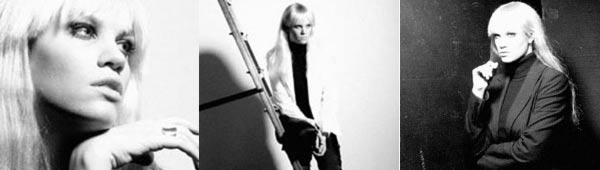
As an avant-garde filmmaker Warhol withholds most of the conventional pleasures audiences expect from films (narrative, character development, editing, technical proficiency , etc) but with his Superstars in lead roles he does provide one of the enduring attractions of film-watching: scrutinizing beautiful people. So, while “nothing happens” in The Closet, we do get to appreciate the physical attractiveness and hip wardrobes of both Nico and Bourscheidt at great length. Nico wears what was then her signature look: an androgynous white pantsuit, turtleneck sweater and boots combo that would be the pride of any Mod boy, feminized by a curtain of long blonde hair.

Nico would have been in her late twenties by the time of The Closet, and Bourscheidt (at a guess) between 19 and 21. She speaks to him in tones that shuttle between maternal concern and big sister-ly teasing. Both seem vaguely embarrassed and self-conscious on screen, but unlike Bourscheidt Nico possesses the poised armour of sophistication: by 1965 she travelled the world as an in-demand fashion model, spoke several languages, acted in films like La Dolce Vita (1959) and Strip-Tease (1963) in Europe, was the mother of a young son, and had started her singing career.

In addition to this hauteur, Nico utilizes her experience as a seasoned model: she is clearly un-phased by the camera’s roaming gaze and is skilled at graceful self-presentation. She has a neat trick of looking down moodily so that her long blonde bangs obscure most of her face and then suddenly looking up and tilting her head, dramatically revealing sculpted cheekbones, Bardot lips and sweeping false eyelashes.

“Are you afraid of me?” Nico suddenly asks Bourscheidt towards the end of their awkward filmic encounter. He looks startled and doesn’t know how to reply. “I’m not trying to embarrass you!” she assures.

At the film’s conclusion Bourscheidt teasingly asks Nico if she’s forgotten his name. Indeed, she has, and tries to cover by asking him, “Is it Romeo?” He says no and she answers, “Why not?” He asks if she wants him to be Romeo and should he get down on one knee. She replies, “Oh, no. You be Juliet and I’ll be Romeo.”


Like the Shangri-Las song, Graham Russell is good-bad, but not evil. He’s a trash culture obsessive, occasional DJ (Cockabilly – London’s first and to date, only gay rockabilly night), and promoter of the Lobotomy Room film club (devoted to Bad Movies for Bad People) at Fontaine’s bar in Dalston. As a sporadic freelance journalist, over the years he’s contributed to everything from punk zines (MAXIMUMROCKNROLL, Flipside, Razorcake) to The Guardian and Interview magazine and interviewed the likes of John Waters, Marianne Faithfull, Poison Ivy Rorschach, Lydia Lunch, Henry Rollins and Jayne County.

Blog at WordPress.com.

Up ↑