
… the Soul of a philosopher, poet and criminal. I am all three, I swear…
AL-FATIHAH
… This then is a book of travels in an impalpable country, an enchanted country, from which we have all risen, and towards which we are still rising. It is, as it were, the chart and history of one little kingdom of the Soul,––the Soul of a philosopher, poet and criminal. I am all three, I swear, for I have lived both the wild and the social life. And I have thirsted in the desert, and I have thirsted in the city: the springs of the former were dry; the water in the latter was frozen in the pipes. That is why, to save my life, I had to be an incendiary…
BOOK THE SECOND: IN THE TEMPLE
CHAPTER IV: THE LAST STAR
Is it not an ethnic phenomenon that a descendant of the ancient Phœnicians can not understand the meaning and purport of the Cash Register in America? Is it not strange that this son of Superstition and Trade can not find solace in the fact that in this Pix of Business is the Host of the Demiurgic Dollar? Indeed, the omnipresence and omnipotence of it are not without divine significance. For can you not see that this Cash Register, this Pix of Trade, is prominently set up on the altar of every institution, political, moral, social, and religious? Do you not meet with it everywhere, and foremost in the sanctuaries of the mind and the soul? In the Societies for the Diffusion of Knowledge; in the Social Reform Propagandas; in the Don’t Worry Circles of Metaphysical Gymnasiums; in Alliances, Philanthropic, Educational; in the Board of Foreign Missions; in the Sacrarium of Vaticinatress Eddy; in the Church of God itself;––is not the Cash Register a divine symbol of the credo, the faith, or the idea?
“To trade, or not to trade,” Hamlet-Khalid exclaims, “that is the question: whether ’tis nobler in the mind to suffer, etc., or to take arms against the Cash Registers of America, and by opposing end––” What? Sacrilegious wretch, would you set your face against the divinity in the Holy Pix of Trade? And what will you end, and how will You end by it? An eternal problem, this, of opposing and ending. But before you set your face in earnest, we would ask you to consider if the vacancy or chaos which is sure to follow, be not more pernicious than what you would end. If you are sure it is not, go ahead, and we give you Godspeed. If you have the least doubt about it––but Khalid is incapable now of doubting anything. And whether he opposes his theory of immanent morality to the Cash Register, or to Democracy, or to the ruling powers of Flunkeydom, we hope He will end well. Such is the penalty of revolt against the dominating spirit of one’s people and ancestors, that only once in a generation is it attempted, and scarcely with much success. In fact, the first who revolts must perish, the second, too, and the third, and the fourth, until, in the course of time and by dint of repetition and resistance, the new species of the race can overcome the forces of environment and the crushing influence of conformity. This, we know, is the biological law, and Khalid must suffer under it. For, as far as our knowledge extends, he is the first Syrian, the ancient Lebanon monks excepted, who revolted against the ruling spirit of his people and the dominant tendencies of the times, both in his native and his adopted Countries…
Read the complete novel here.
***
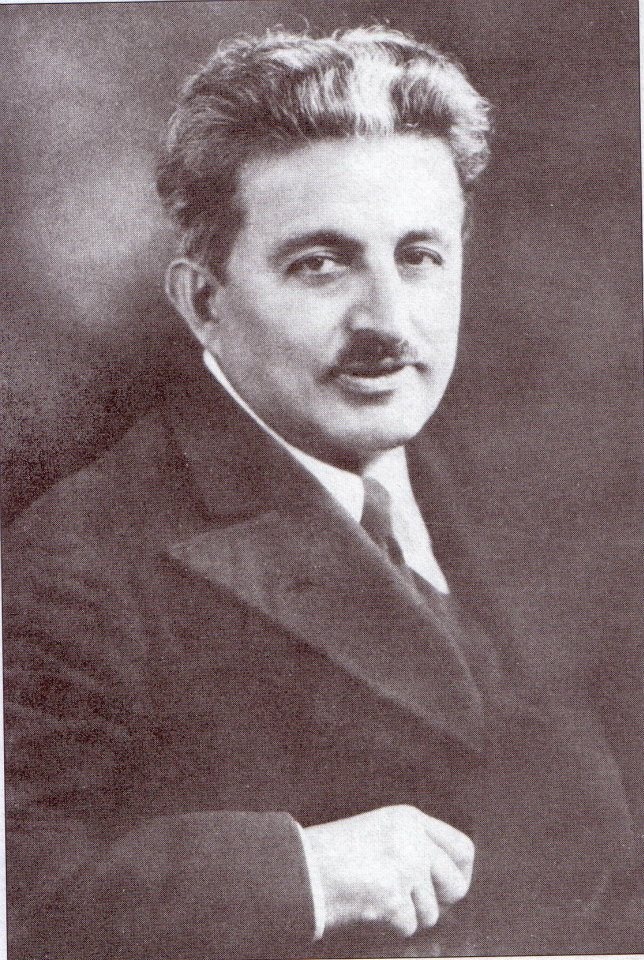
Ameen Rihani (1876-1940) was a Lebanese American writer and activist who lived in Lebanon and the US. He was a key figure in Arab American literature, the Mahjar movement, and Al-Rabita Al-Qalamiyya (trans: The Pen League) in New York. The Book of Khalid, published in 1911, is widely recognized as the first Arab American novel.
 BURNING HOUSE PRESS